


Villcamping
Intro

Få land i verden tilbyr samme grad av frihet til å slå opp et telt for natten, selv på uproduktiv privat grunn. Noen av de mest minneverdige opplevelsene i Norge kommer ikke fra hoteller eller campingplasser, men fra rolige kvelder ved en fjord, elv eller fjellsjø, der man sovner til lyden av vann mot strandkanten mens midnattssolen langsomt blekner. For mange syklister blir villcamping en av de definerende delene av reisen og fanger en følelse av frihet og eventyr som det moderne liv sjelden gir lenger.
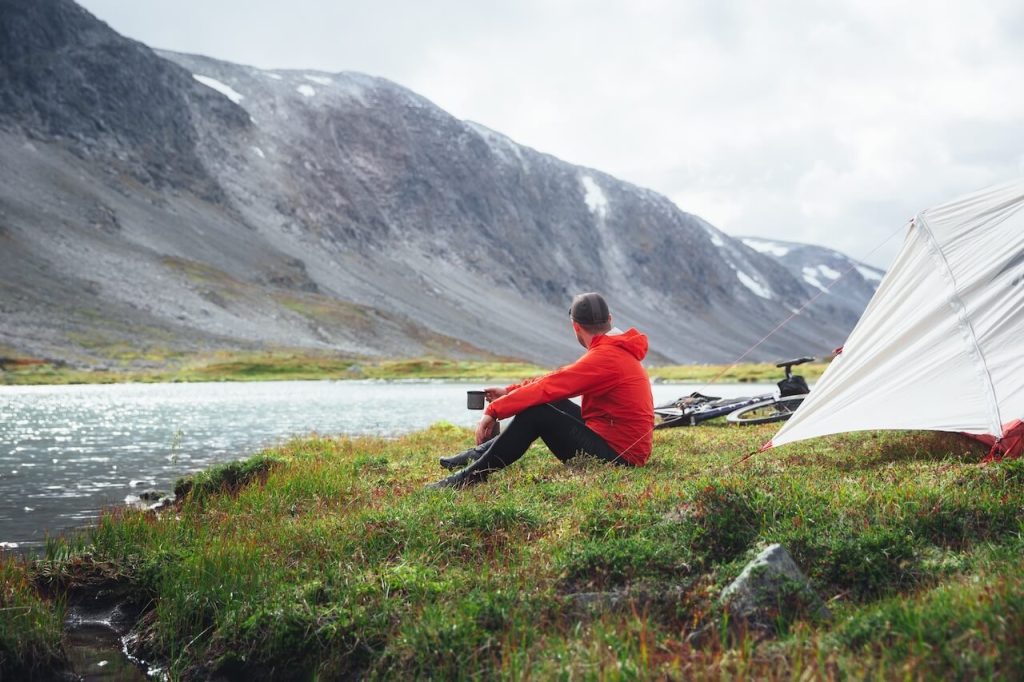
Denne friheten kommer imidlertid med et viktig ansvar. Norges allemannsrett, kjent som allemannsretten, er nesten utelukkende bygget på tillit og gjensidig respekt. Fra ung alder lærer nordmenn viktigheten av å beskytte naturen, respektere privat eiendom, etterlate ingen spor og oppføre seg ansvarlig ute i naturen, slik at alle kan fortsette å nyte denne unike tilgangen til landskapet.
Som besøkende er det viktig å forstå at dette systemet bare fungerer fordi det store flertallet av mennesker behandler naturen med varsomhet. Dårlig oppførsel, forsøpling, uansvarlig camping eller forstyrring av husdyr og lokalsamfunn truer den balansen. Teltliv i Norge handler ikke bare om hva du lovlig har lov til å gjøre, det handler også om å forstå kulturen og ansvaret som følger med den friheten.
Allemannsretten
Regler for vill camping: Allemannsretten – Friluftsloven (1957)
- Regel nr. 1: Kun tillatt på utmark som ikke er gjerdet inn. Som for eksempel skog og mark, fjell, myr og strender. Allmenning er alt mennesker har bearbeidet, som for eksempel åker (med eller uten avling), eng og beitemark, hager, byggetomter og industriområder.
- Regel nr. 2: Du må være minst 150 meter unna fra nærmeste bebodde hus eller hytte.
- Regel nr. 3Små områder med ukultivert mark innenfor oppdyrket mark regnes ikke som friluftsområde. For eksempel er det ikke greit å sette opp teltet på en liten flekk med ukultivert mark mellom to gårder.
- Regel nr. 4: Hvis du ønsker å overnatte mer enn to netter på samme sted, må du ha tillatelse fra grunneieren, unntatt i fjellet eller i svært øde områder.
- Regel nr. 5: Bål er forbudt fra 15. april til 15. september. Unntak er områder med lav brannfare ved sjøen eller på godkjent bålplass. Du bør alltid sjekke at det ikke er fare før du starter. I perioder med ekstrem tørke kan grilling, gassbrennere og campingkjøkken være forbudt. Hvis du lager et bål, ta med ved hjemmefra eller fra en butikk eller dødt treverk på bakken. Ikke sag eller brekk friske grener.
- Regel nr. 6Noen områder i nasjonalparker, naturreservater, populære naturlige turistattraksjoner og verdensarvsteder vil ha restriksjoner. Du må følge alle skilt og lokal informasjon. Bøtene kan bli høye.
- Regel nr. 8: LA INGEN SPOR – Når du drar, skal det ikke være mulig å se at du har overnattet der.
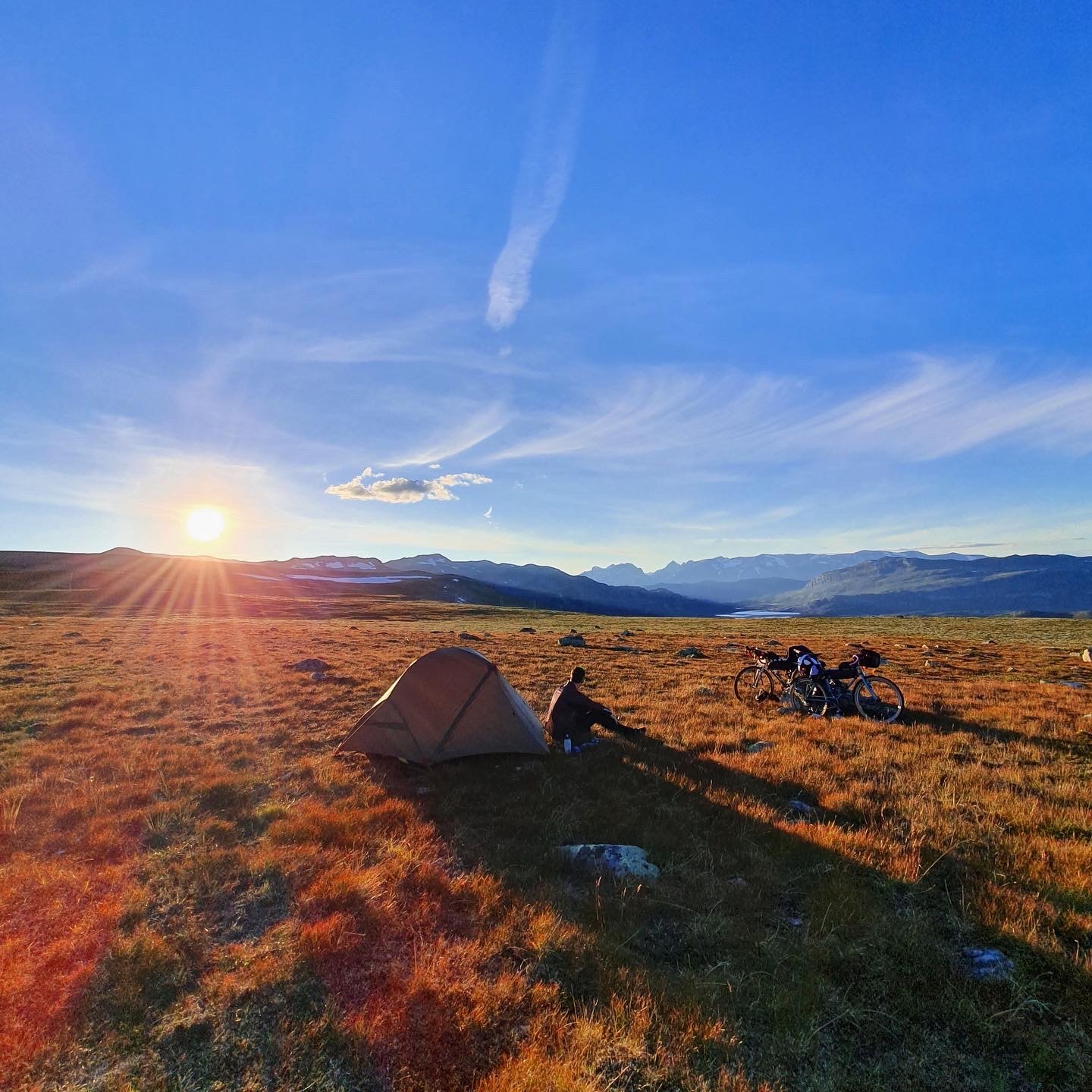
Villcamping i Mjølkevegen
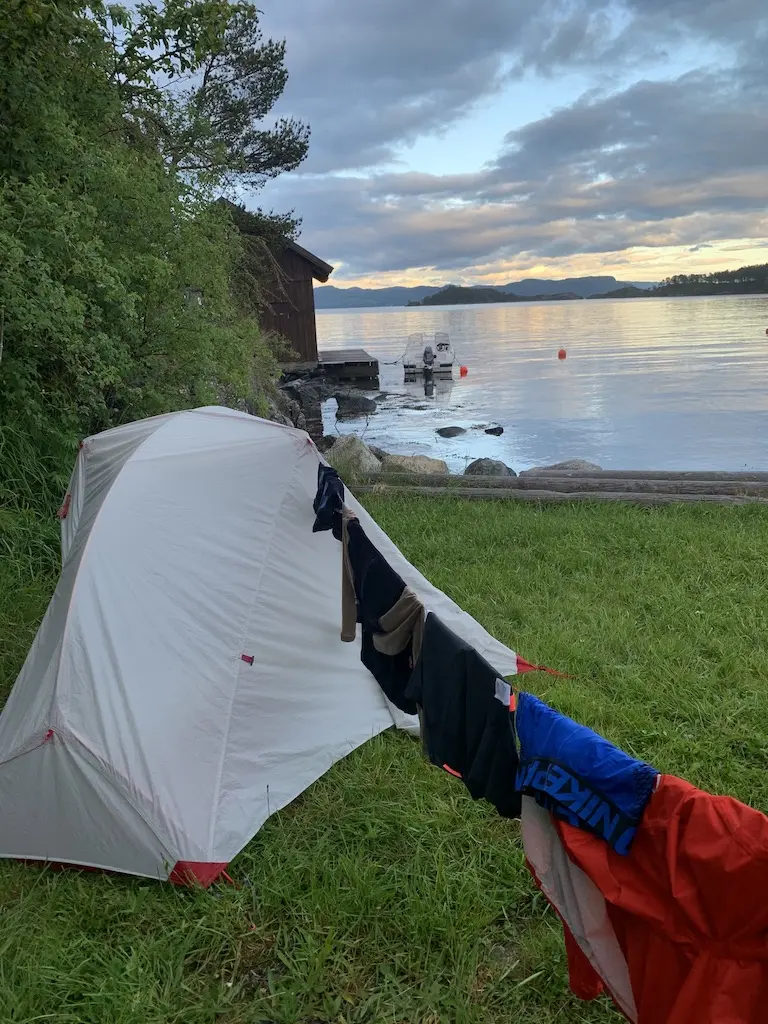
Profftips – Ta med deg en klessnor
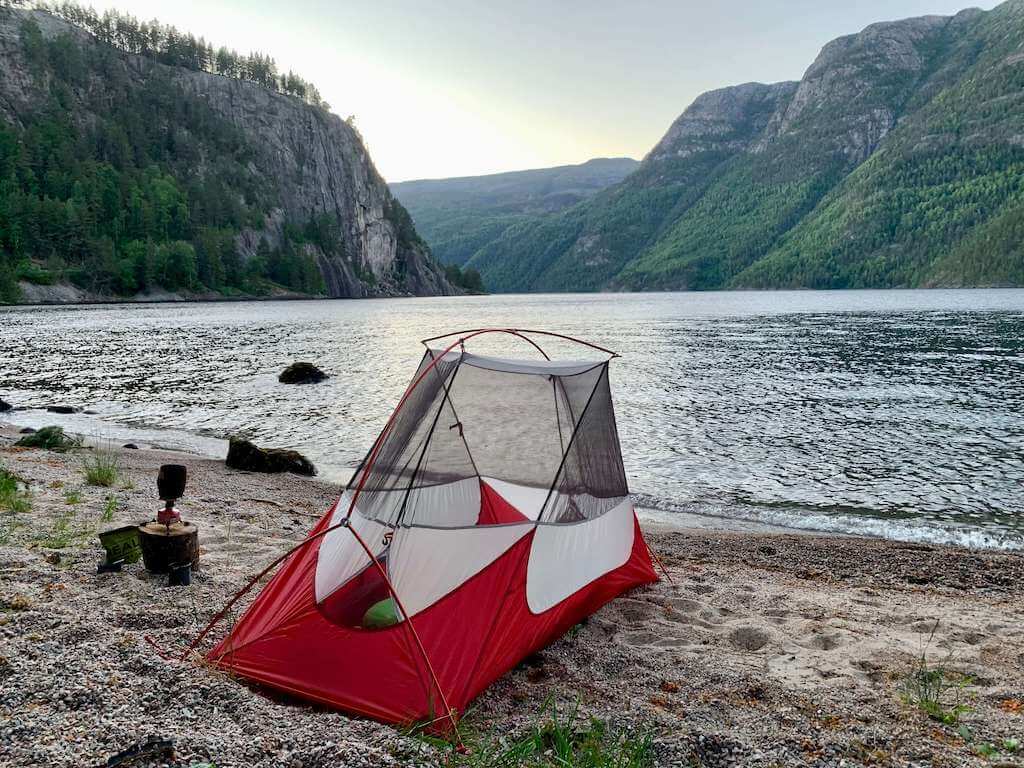
Camping ved Ferskvann i Telemark.
Lås opp alt innhold
Bli medlem for å få full tilgang til:
- Detaljerte etappeseksjoner og omkjøringsalternativer
- GPX-filer og interaktive kart med interessepunkter
- Transportalternativer og logistikk
- Overnattingsanbefalinger
- Sikkerhetstips, høydepunkter og mer
Ikke klar til å bli med ennå?
Meld deg på nyhetsbrevet vårt og få gratis planleggingsressurser:
-
Pakkliste

PDF -
Grus kart
Forhåndsvisning -
Sykkelkode
i Norge


De fantastiske selskapene bak oss