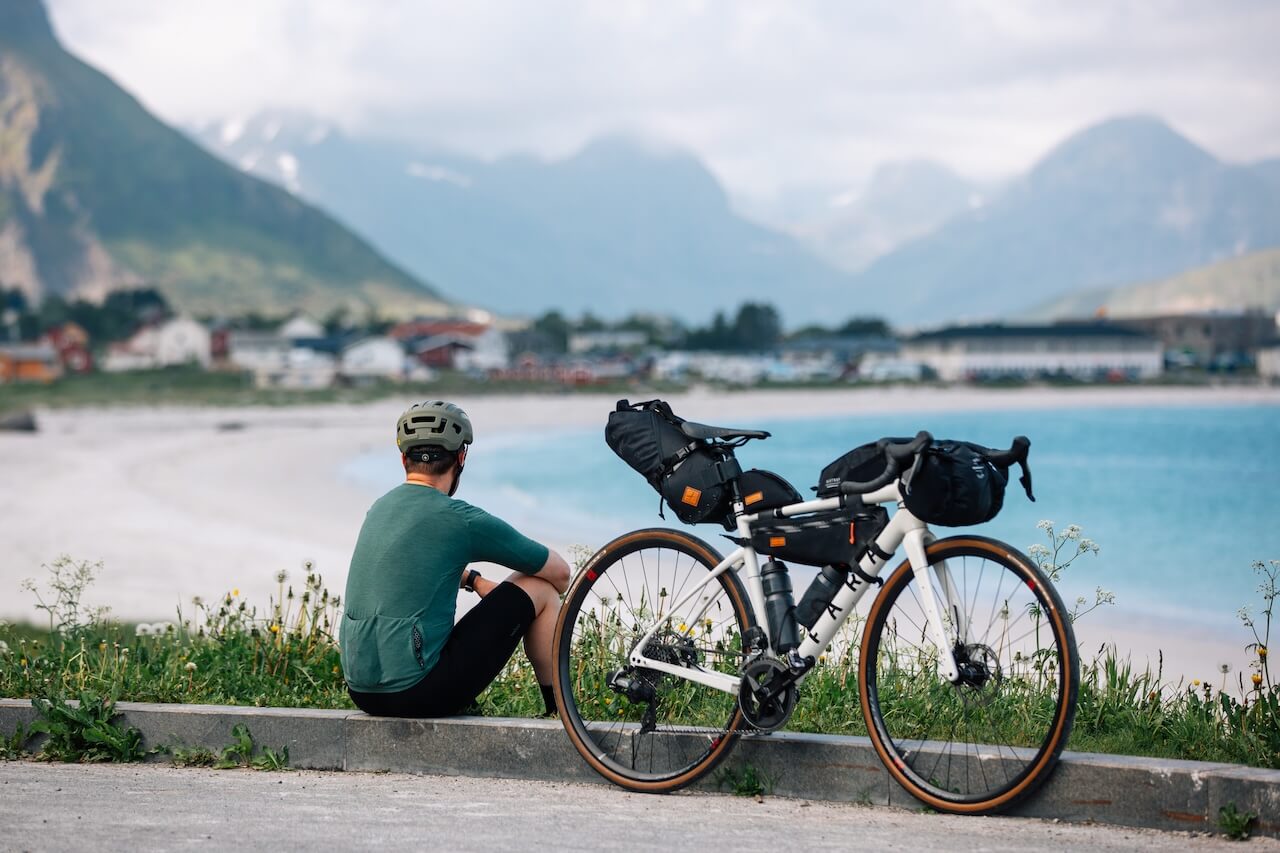
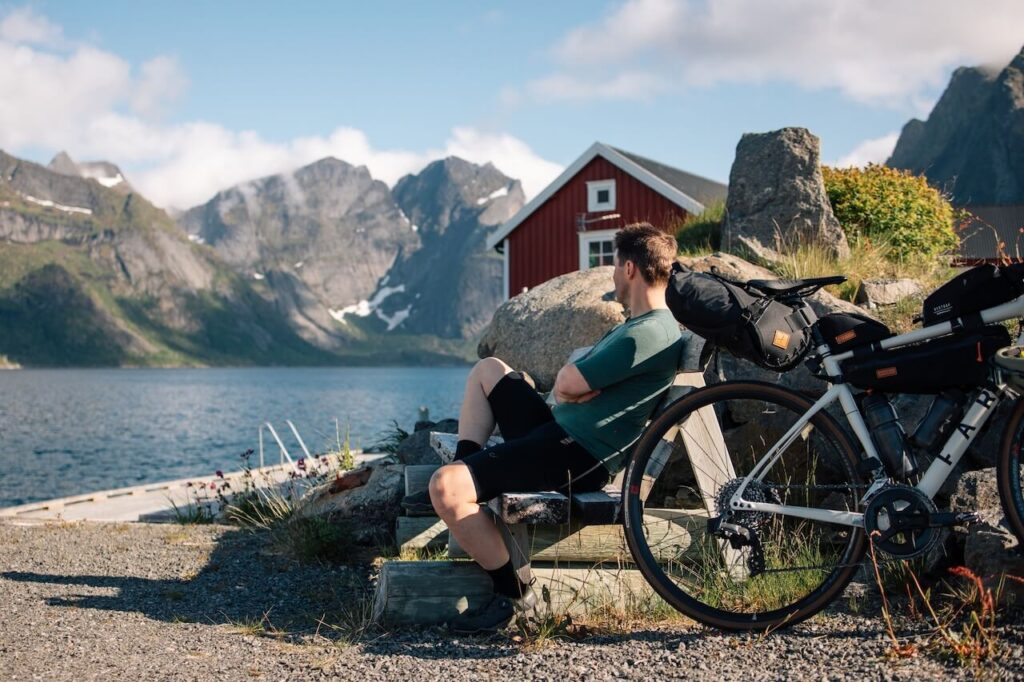
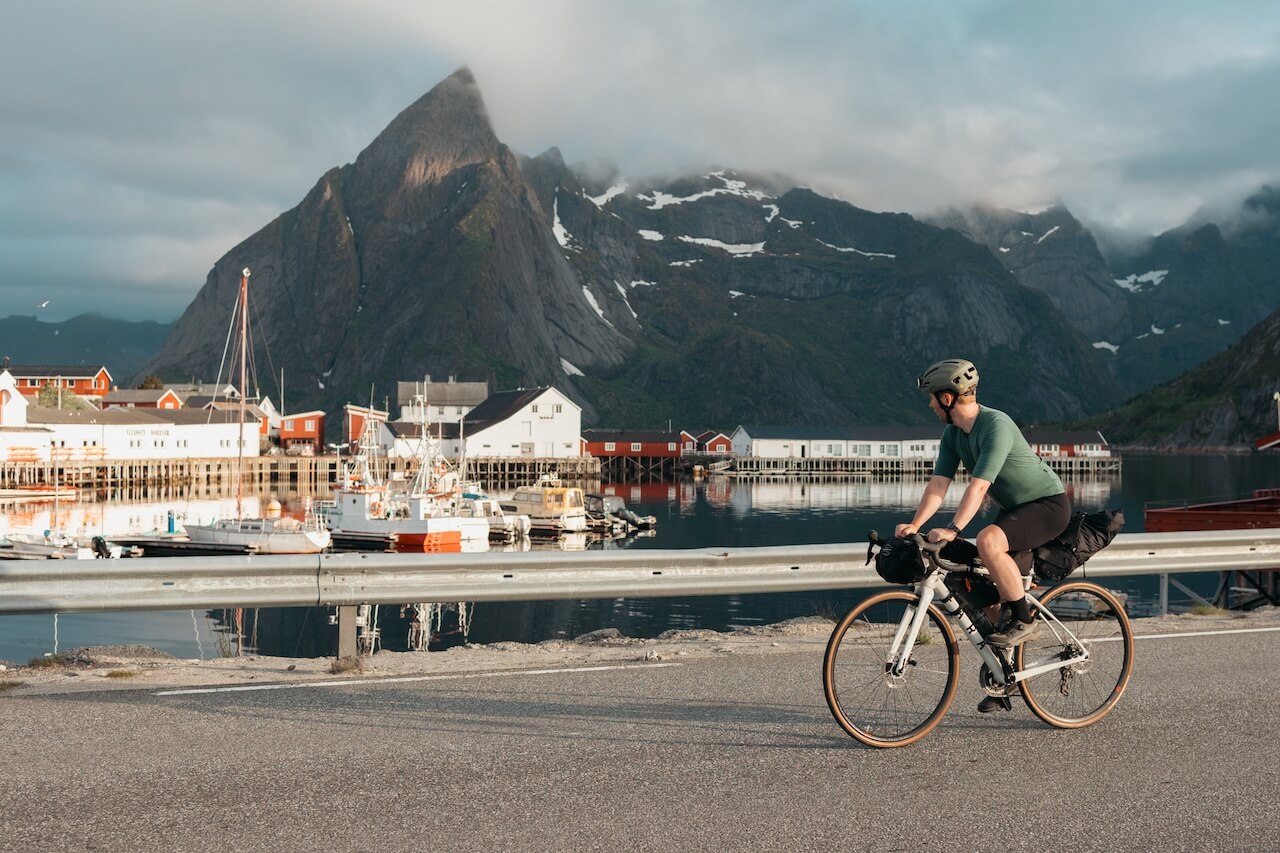
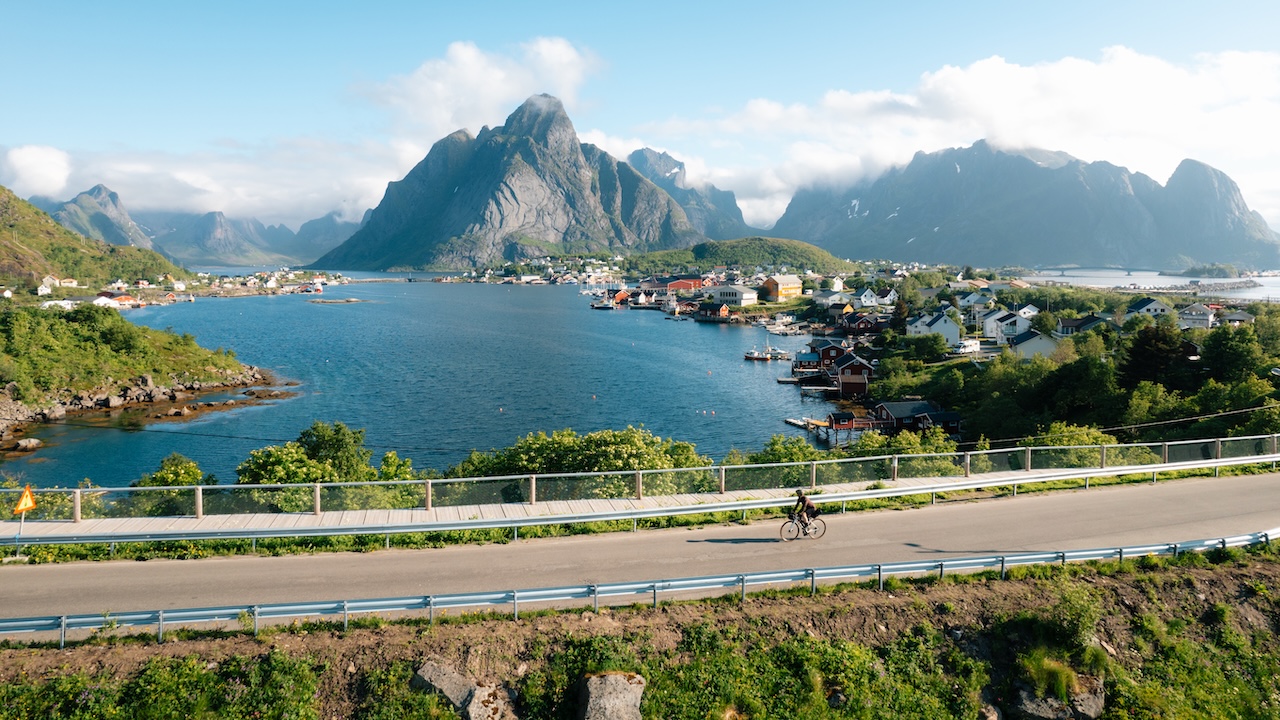
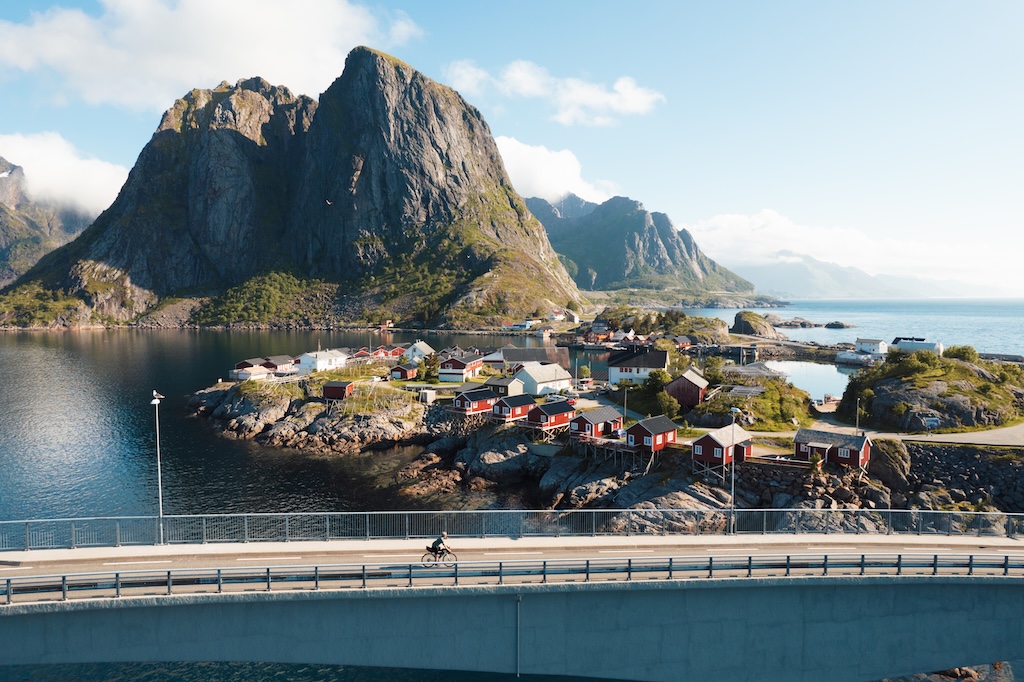
If you start this route in Bodø, your first target is Moskenes at the southern tip of Lofoten, widely regarded as the most striking part of the entire chain. “Wow” is the word people use because there isn’t a better one. Ten kilometres later, you reach Reine, the most photographed village in the Arctic. Steep, broken mountains circle a quiet fjord, and the red fishing cabins sit exactly where you always imagined they would. This is the postcard version of Norway, only real.
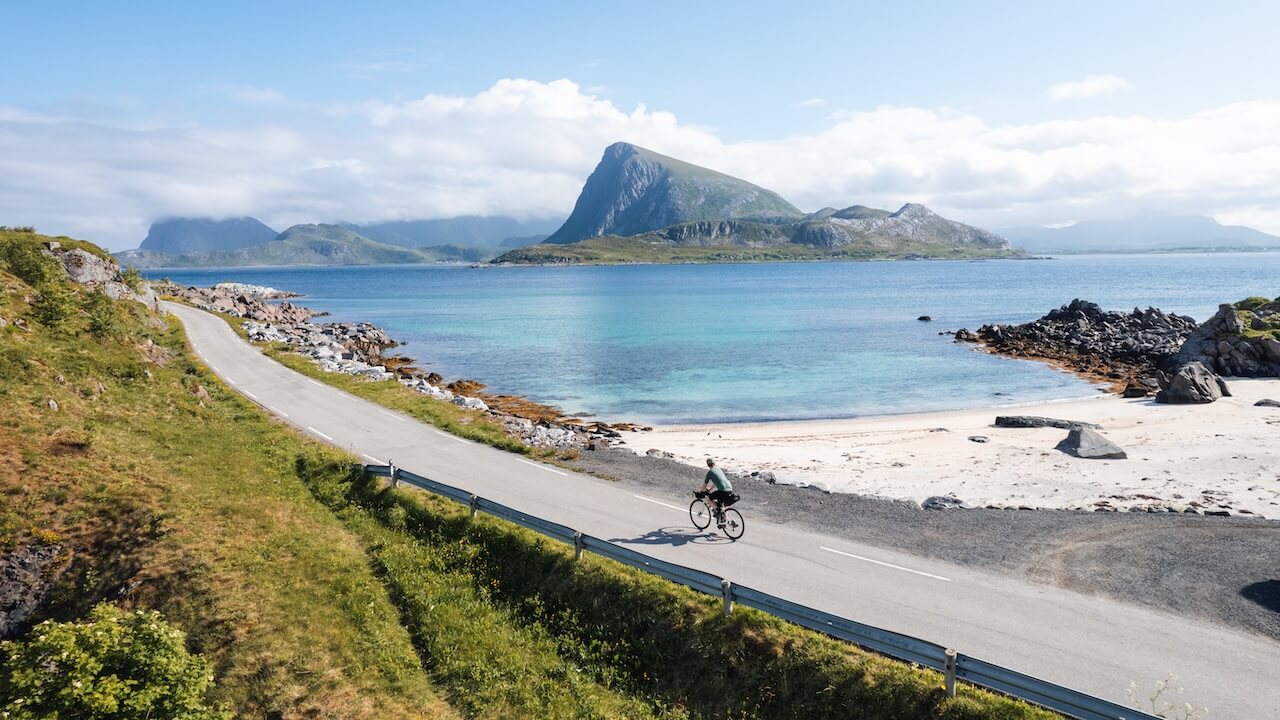
Of course, every tourist knows this too. The main road through Lofoten carries traffic in high season, and for long stretches you’re stuck with the E10. There’s no alternative. Fortunately, drivers understand that cyclists belong there, the pace is generally slow, and it shouldn’t feel dangerous for most of the journey. Two excellent side roads take you away from the E10 and are reason enough to visit Lofoten on their own. On top of that, several dead-end roads lead to silent beaches and small coves that most visitors will never see.
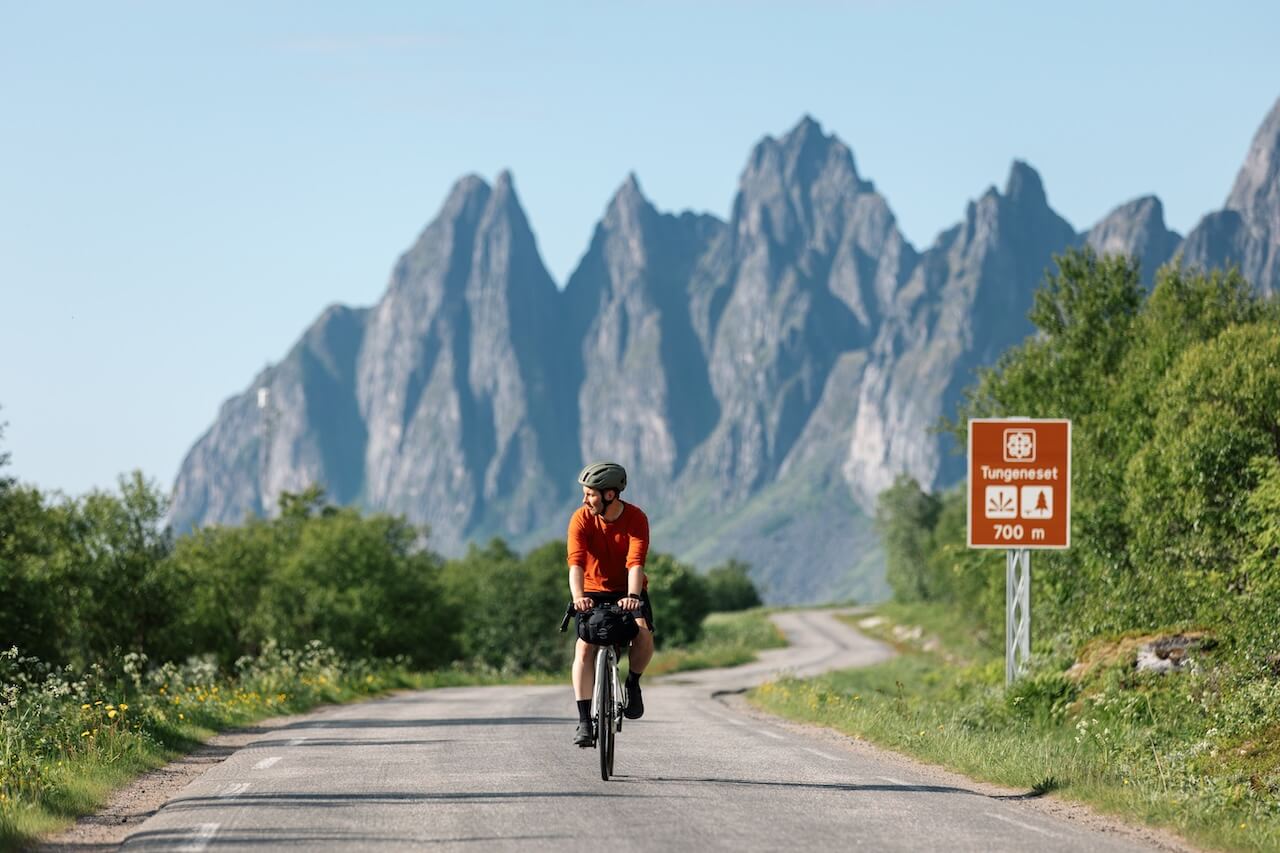
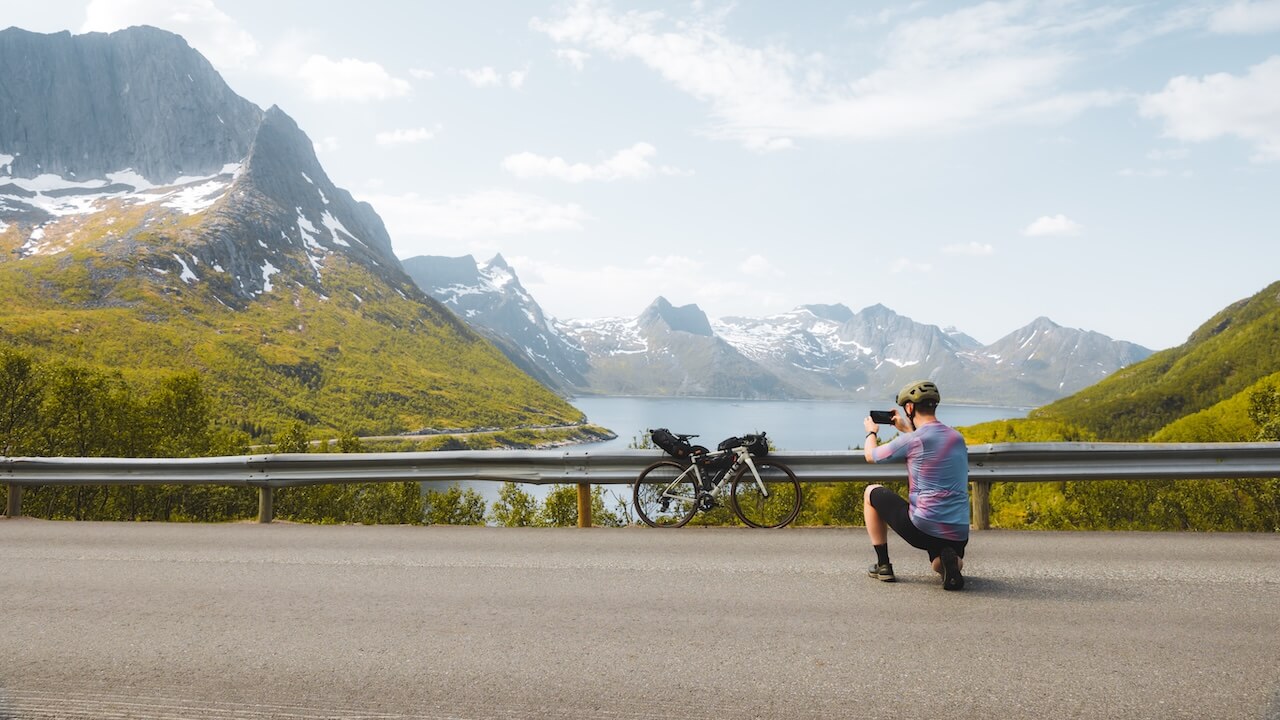
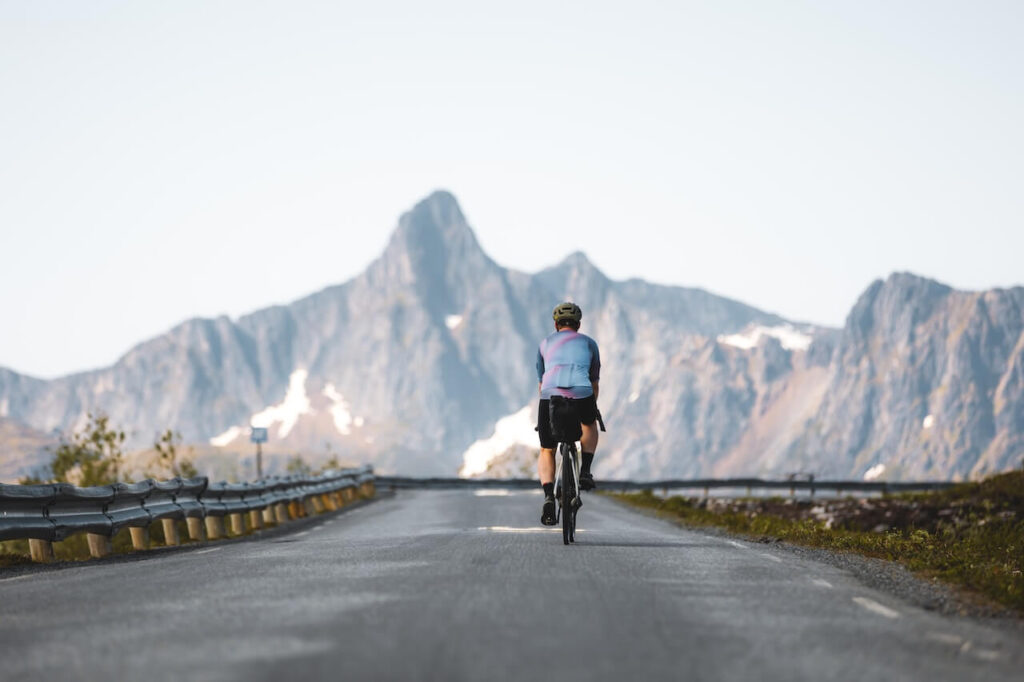
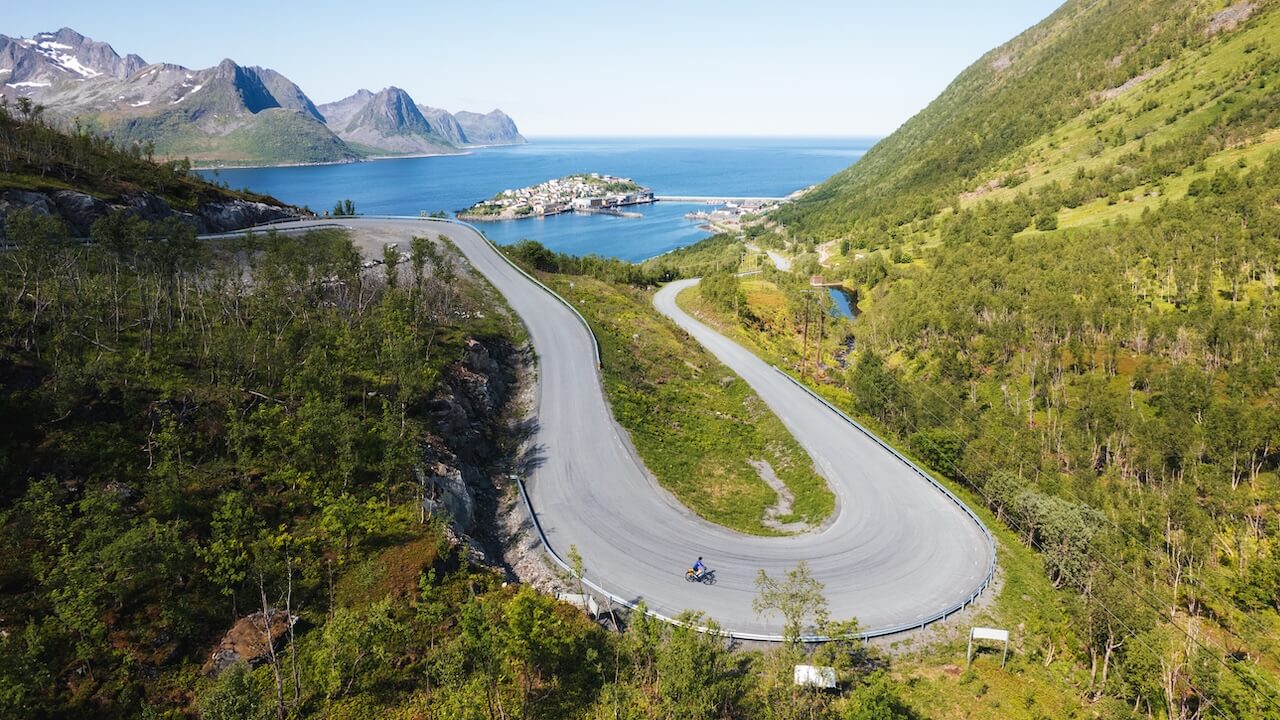
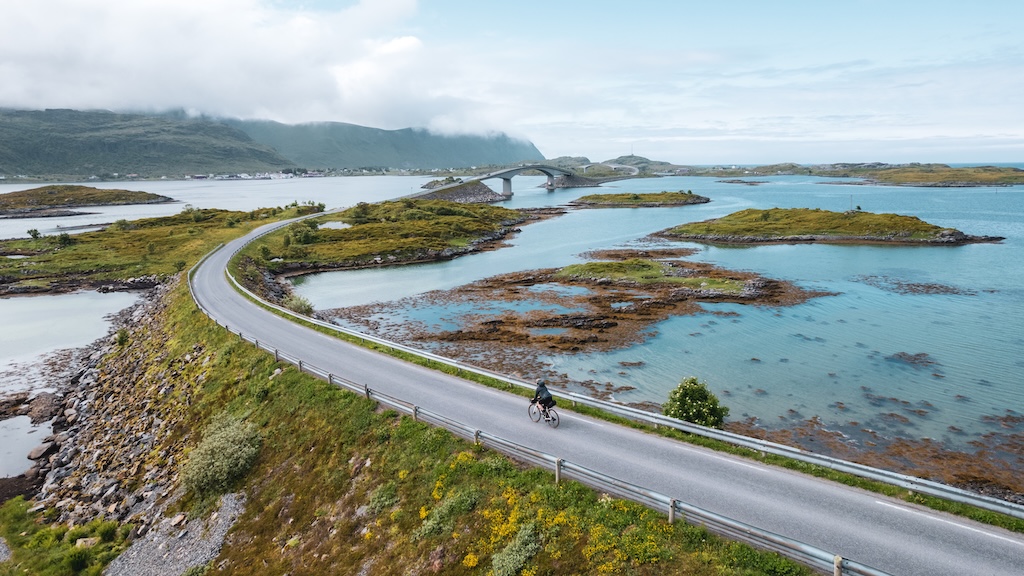
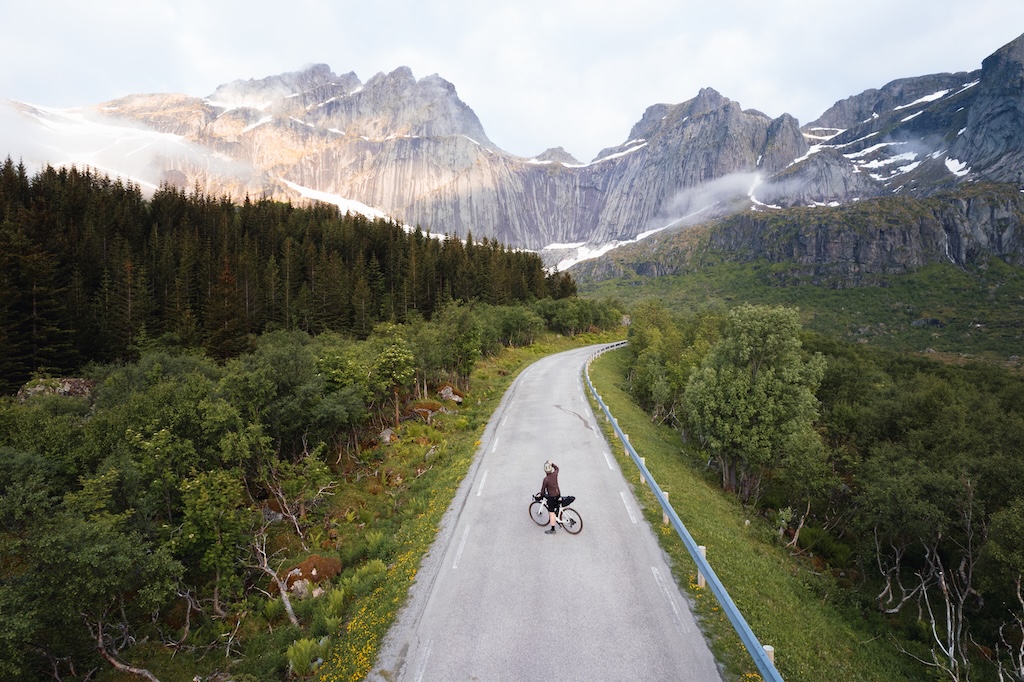
Once you finish the roughly 200 kilometres across Lofoten, a ferry takes you to Vesterålen, another island group with far fewer tourists. The roads quieten immediately, and the final leg up to Andøya is spectacular. From there, a long ferry ride connects you to Senja, Norway’s second-largest island and arguably one of its most beautiful. The western loop, Road 820, stands alongside any road in the country for scenery: deep fjords, sharp mountain silhouettes, and pale beaches that feel almost tropical until the cold air reminds you where you are. Senja deserves time — it’s not an island to rush.

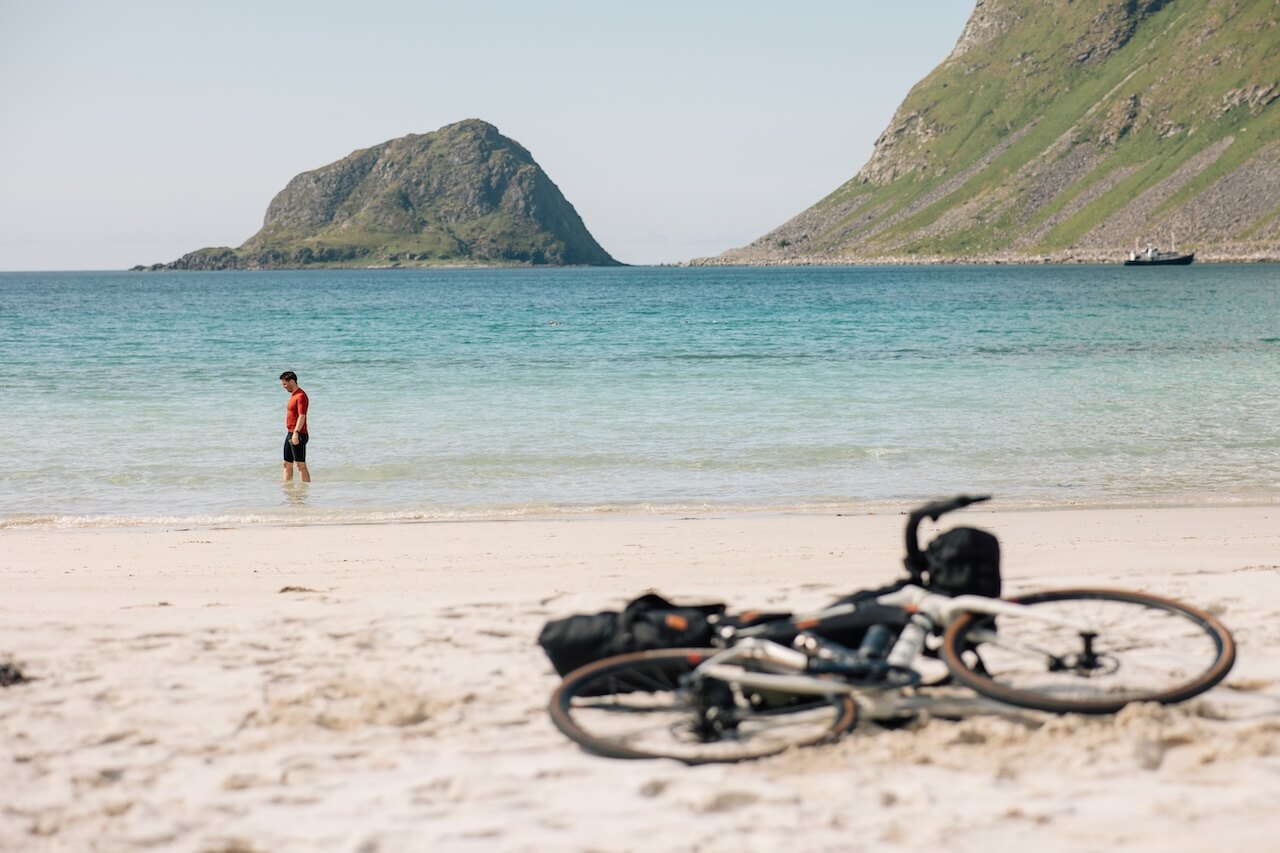
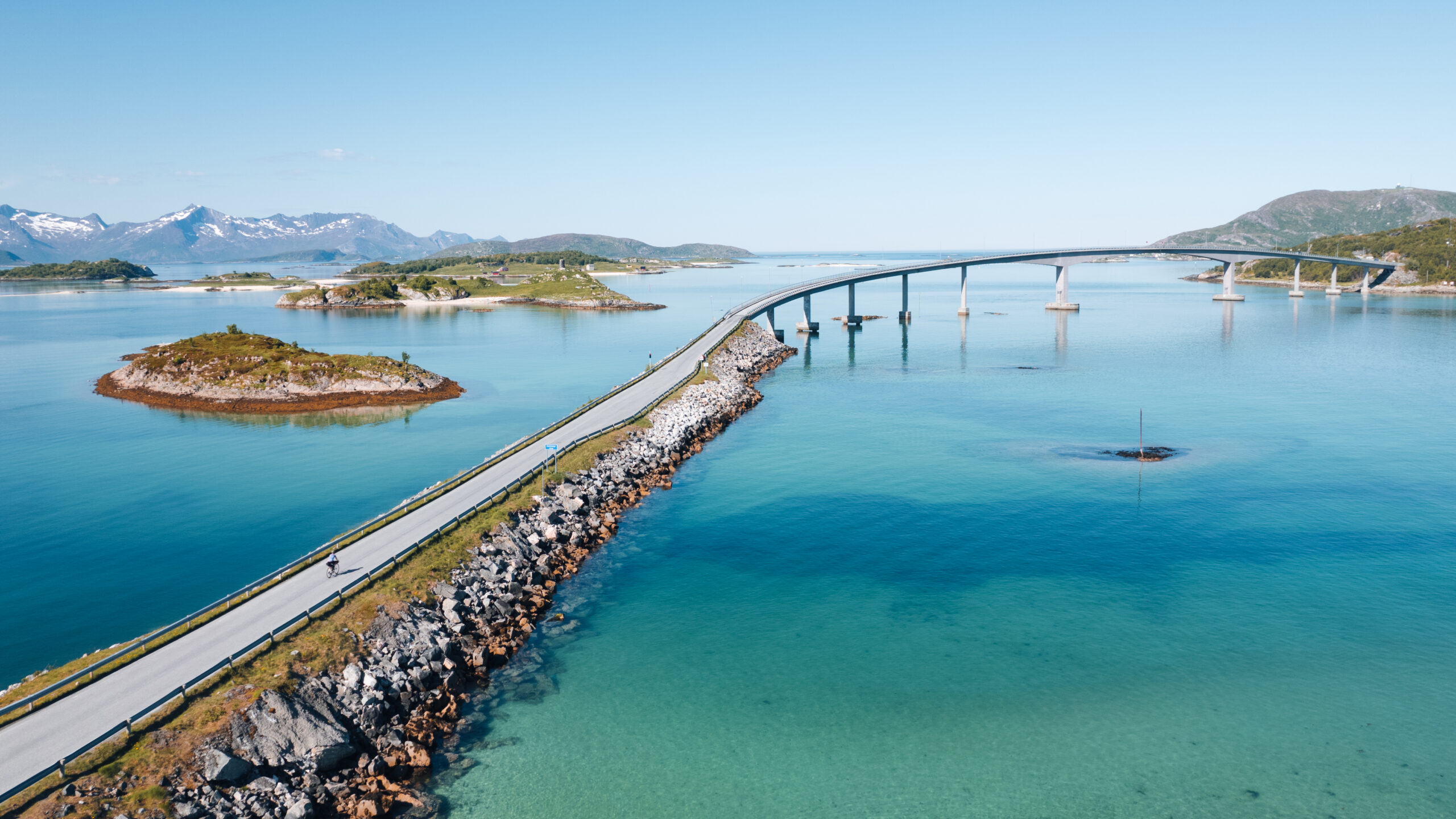
The ferry off Senja connects you to another lesser-known island Kvaløya. This is the island that gets no attention but deserves its own page. Connected to Kvaløya by a set of bridges is Sommarøy (below) a compulsory detour if the weather is settled. Imagine French Polynesia in the Arctic! After a beautiful ride along Kvaløya, you will finally reach the impressive bridge that takes you onto Tromsø’s Island. Riding into the world’s most northern city having experienced the jewels of the Arctic will have no comparison. Sadly, you can only ride it for the first time once!
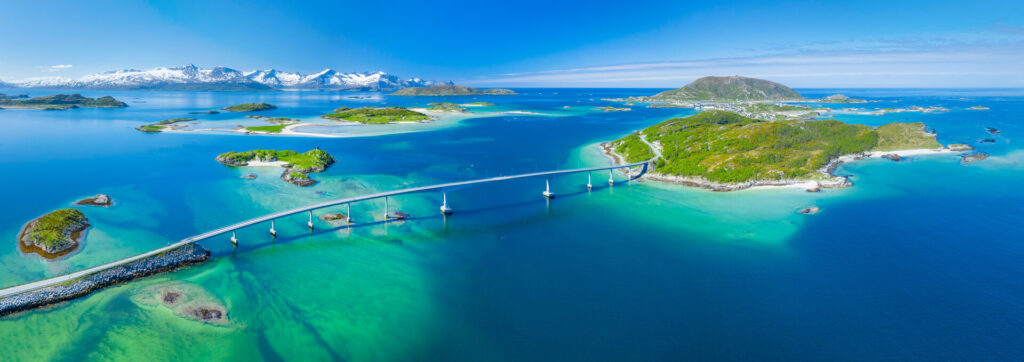
Sommarøy Islands on a bright summer day: Vidar Moløkken – Visit Norway
We have given this a rating of 4/10. I would consider this one of the flattest long-distance routes in Norway. There is some traffic on parts of Lofoten, and on certain days, there can be strong gusts of wind coming off the Atlantic Ocean. However, overall it’s a comfortable and spectacular journey.
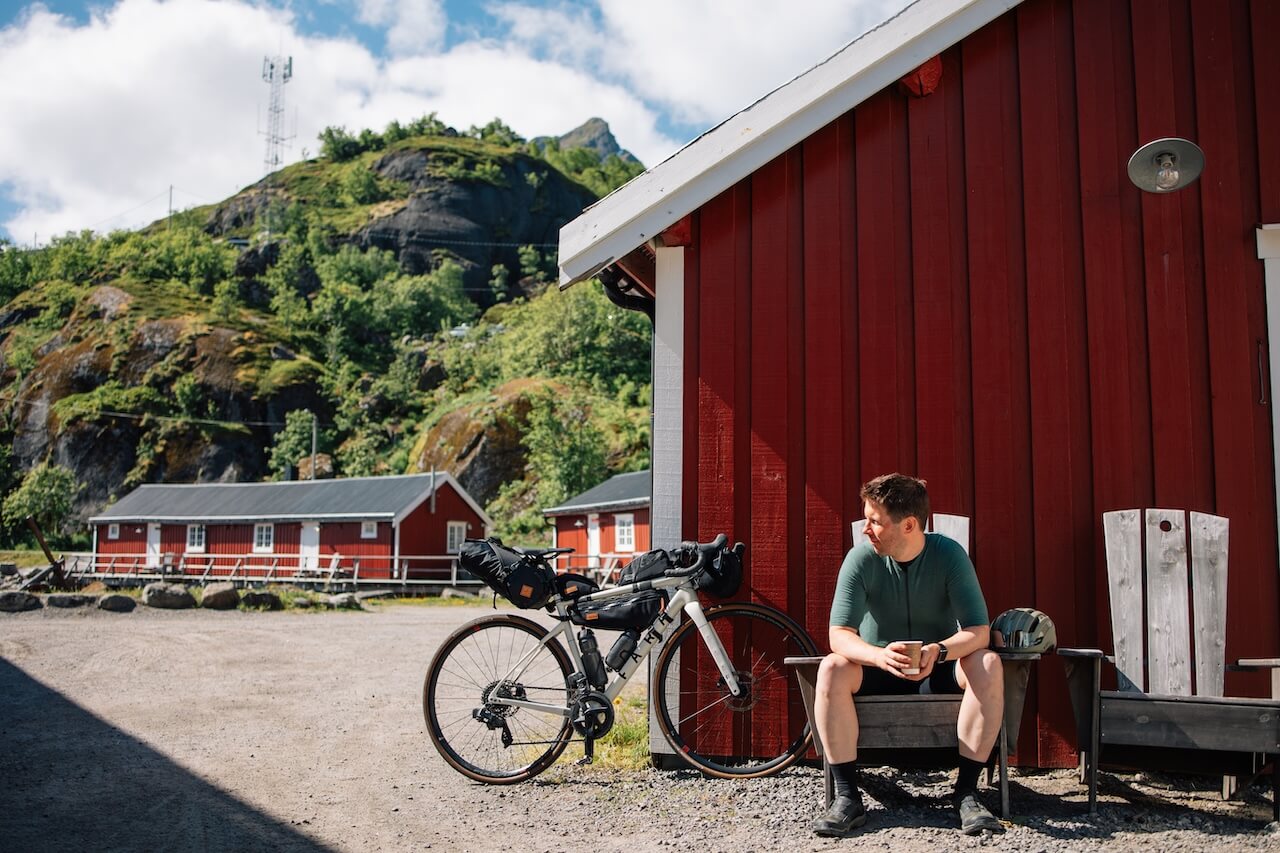
Lofoten’s famous rorbuer, the traditional red fishermen’s cabins perched on stilts above the water, are one of the defining experiences of visiting the islands. Originally built to house seasonal fishermen working the cod fisheries, many have been renovated into comfortable self-contained cottages while still keeping their simple, old-world character.
They’re popular because they put you right on the shoreline, often with views straight out to the mountains and sea, and they offer a quieter, more authentic alternative to standard hotels. Prices vary, but for two people, you’re generally looking at €120–€200 a night in shoulder season and €180–€300+ in peak summer, with the more scenic cabins costing more. Most rorbuer can be booked through familiar platforms such as Booking.com, and it’s worth securing a place early if you’re cycling Lofoten in July or August — the best ones go fast.
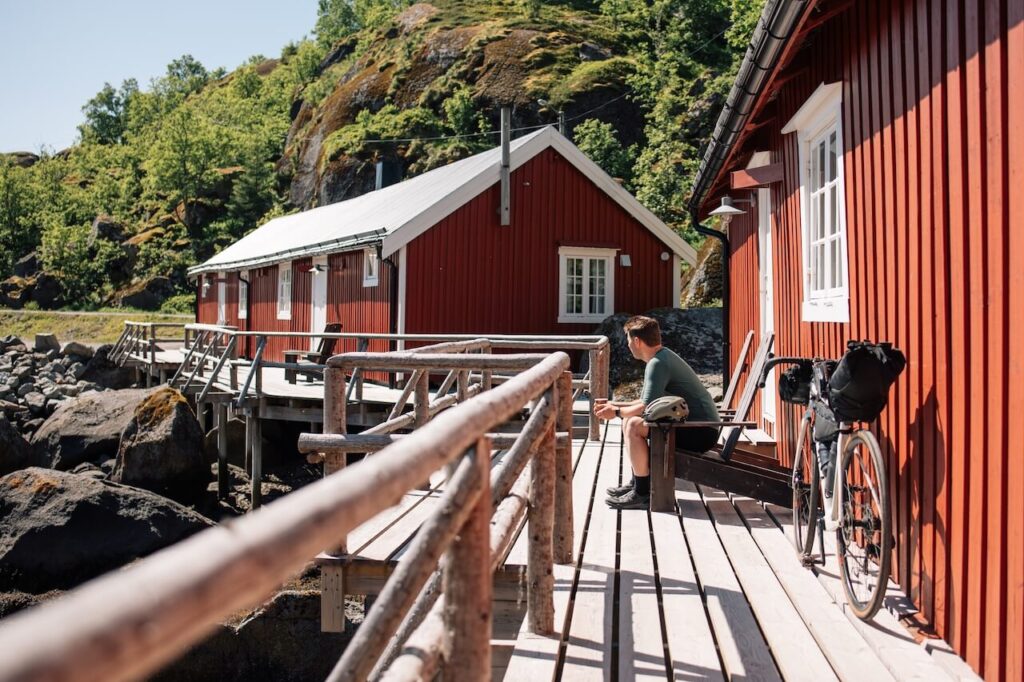
Nusfjord village is famous for its Rorbuer!
Hiking is the perfect companion to cycling in Lofoten, Andøya, and Senja. The trails on these islands climb quickly from sea level to around 300–600 metres, so you get big views for relatively little time. Most routes can be done in an afternoon and start close to the road, making them ideal for anyone travelling by bike.
The best season is from late May to early October when the routes are normally free of snow. Even short hikes require proper footwear with good grip (not road cleats), a warm layer, a waterproof jacket, water, snacks, and a fully charged phone. Lock your bike at the trailhead and leave no valuables worth stealing, pack light, and be ready for sudden weather changes – the Arctic tends to remind you who’s in charge.
If you’re unsure about leaving your bike at the trailhead, find a nearby campsite and leave it there and try and hitch a ride (if safe to do so) to the trailhead. Remember, you leave your bikes at your own risk. Bikes have been stolen before in popular Lofoten locations
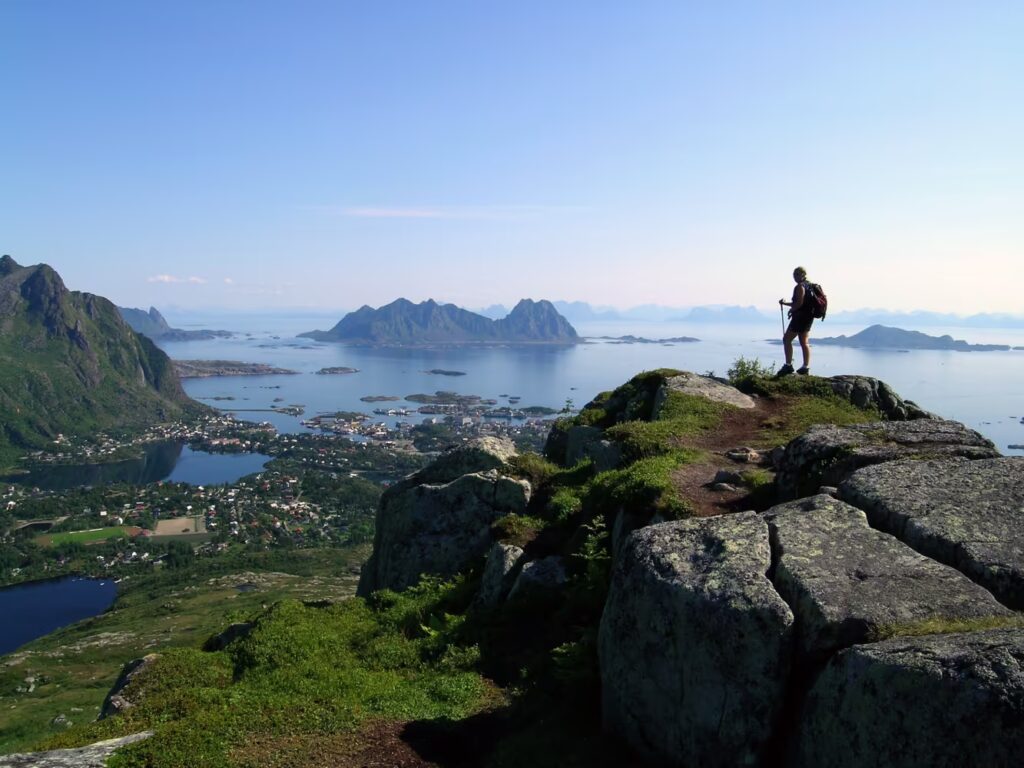
Photo: Christine Baglo – VisitNorway
Gets very busy during the day, recommend hiking up early morning or late evening.
Start: Reine / Ramsvik parking.
Time: 2–3 hours return.
Bike parking: Lock your bike at the edge of the car park or at the bike racks by the trailhead. Note: Bikes have been stolen before from the trailhead, so consider leaving them somewhere secure in Reine, which is a short walk away.
Why go: Famous Sherpa stone steps leading to one of Norway’s most photographed views:
Reine, Hamnøy, fjords, and jagged peaks all in one panorama.
More info: Reinebringen hike guide
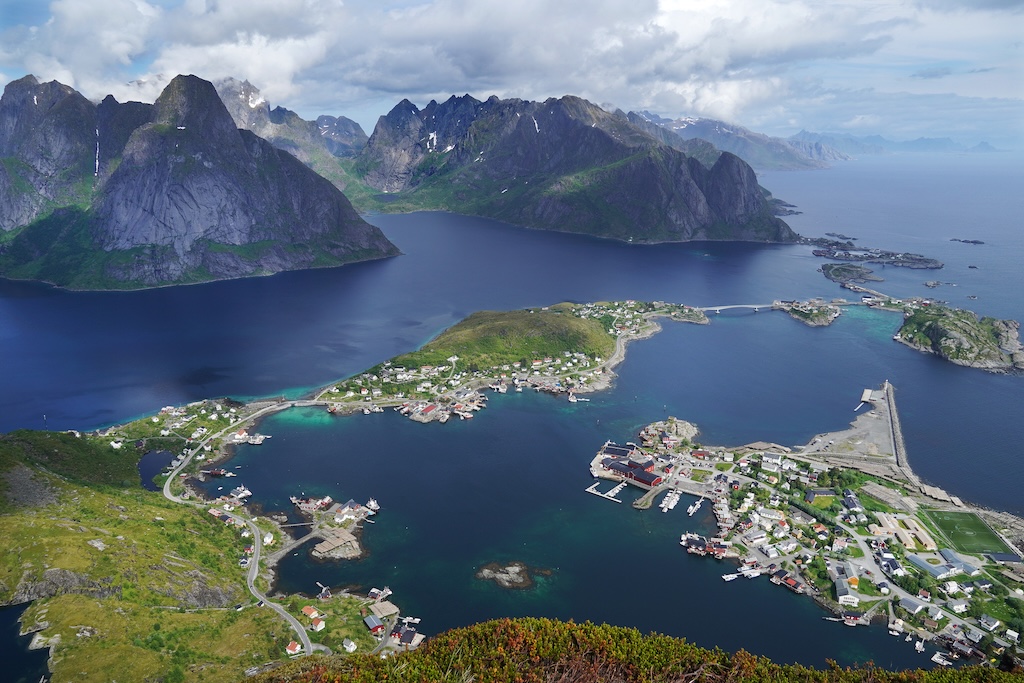
Photo: Christine Baglo – VisitNorway
Start: Fredvang (signed parking area by the trailhead).
Time: Around 3 hours return (1.5 hours each way).
Bike parking: Easy to lock your bike at the car park or fence line.
Why go: A classic Lofoten route to a remote sandy beach backed by steep cliffs – wild,
exposed, and far more dramatic than it looks on a map.
More info: Kvalvika Beach hike guide
Start: Bergland or Fredvang trailhead (both signed).
Time: 3–4 hours return.
Bike parking: Lock the bike at the trailhead parking area.
Why go: Higher viewpoint above Kvalvika Beach, with the famous “cliff edge” photo spot
and wide views along the coast.
More info: Ryten hike guide
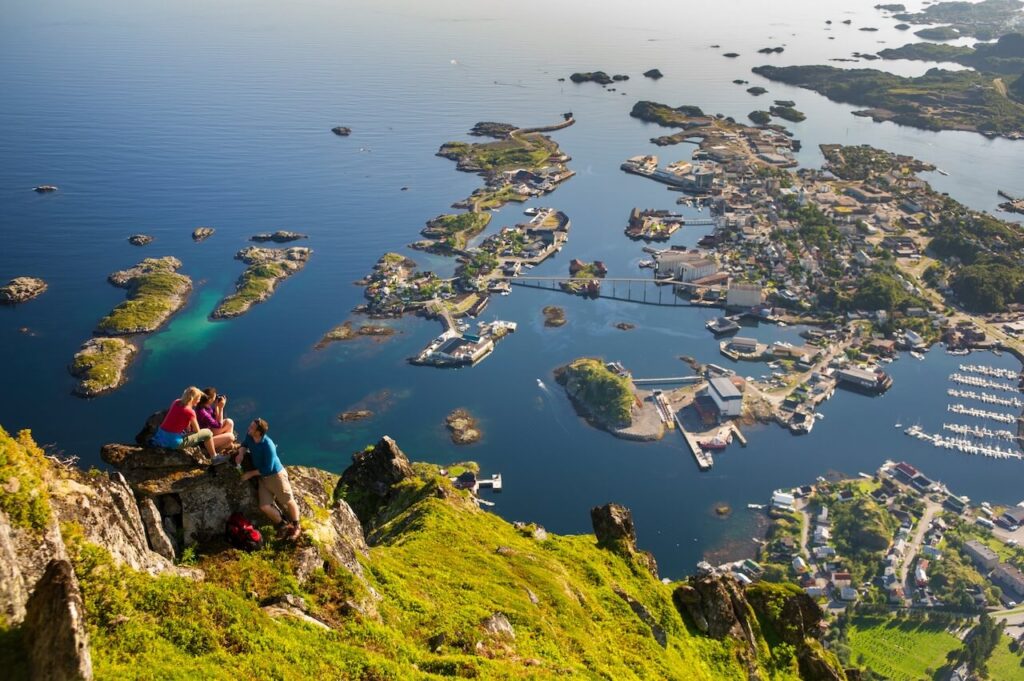
Photo Fredrik Ahlsen – VisitNorway.
Start: Svolvær (the trail begins behind the industrial area above town; well used and easy to follow).
Time: 2–4 hours return, depending on whether you continue to Fløya.
Bike parking: Leave your bike in Svolvær somewhere safe, like a hotel storage room or tourist information centre. The trail starts close to the town.
Why go: Steep but rewarding route to the “Devil’s Gate” rock formation, with excellent
views over Svolvær and the surrounding islands. Continuing to Fløya gives an even bigger panorama.
More info: Djevelporten & Fløya hike guide
Start: Trailhead west of Henningsvær (small roadside parking area).
Time: 2–3 hours return.
Bike parking: Lock the bike at the trailhead car park or nearby fence posts.
Why go: A quieter summit with wide views over the coastline and scattered islands –
a good alternative when the more famous hikes are crowded.
More info: Glomtinden hike guide
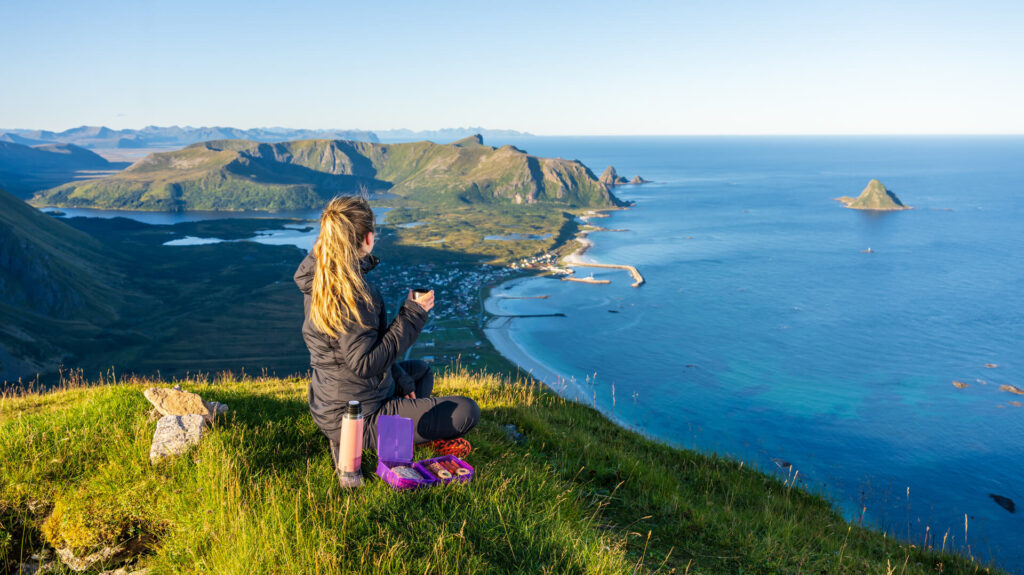
Photo: Fredrik Ahlsen – VisitNorway.
Start: Eastern side of Andøya (signed trailhead and small parking area; see map for exact point).
Time: 2–3 hours return.
Bike parking: Lock your bike at the edge of the parking area or a nearby fence.
Why go: One of the best viewpoints on Andøya, with long views over the outer coast and
the island’s beaches.
More info: Røyken hike guide
Start: Fjordgård (dedicated parking at the edge of the village).
Time: Around 3 hours return.
Bike parking: Lock the bike at the main car park or in the village close to the trailhead.
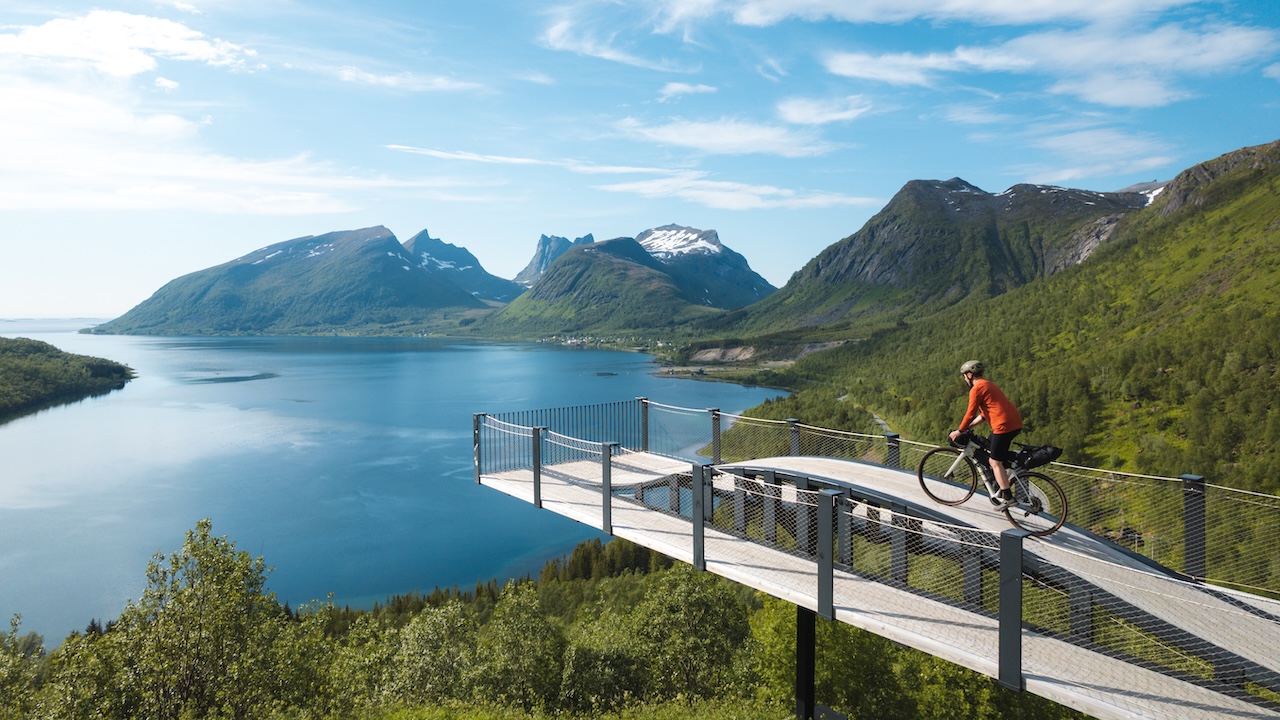
Why go: The most famous peak on Senja, rising like a vertical blade straight out of the
fjord – a serious contender for Norway’s most dramatic day hike.
More info: Segla hike guide
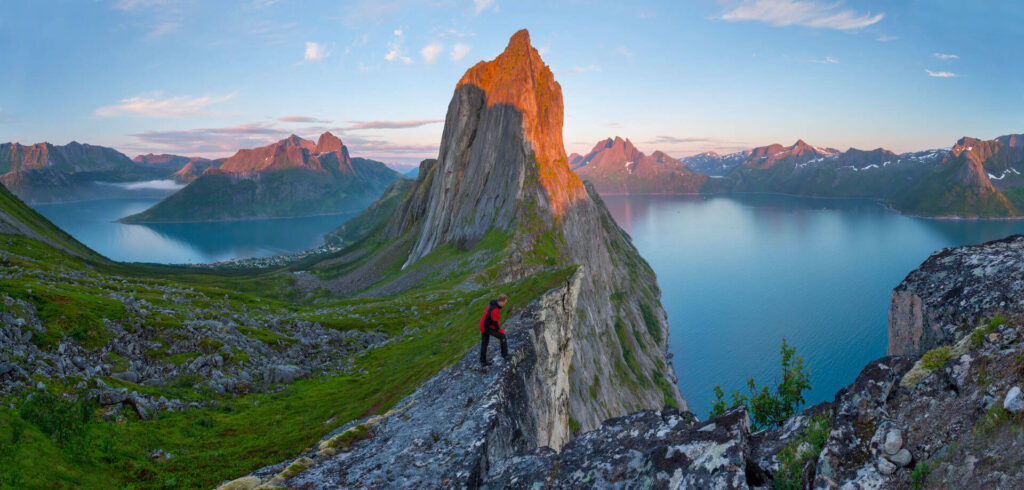
Photo: Vidar Moløkken – Visit Norway
Start: Same parking area as Segla in Fjordgård.
Time: 2–3 hours return.
Bike parking: Lock your bike in the Segla parking area.
Why go: Best viewpoint of Segla itself. From the ridge you look straight across at the
peak and down the fjord – usually a better photo spot than Segla’s summit.
More Info: Hike Hesten
You will find all the locations and plenty of other options on the interactive map above – (Hiking Troms Tab)
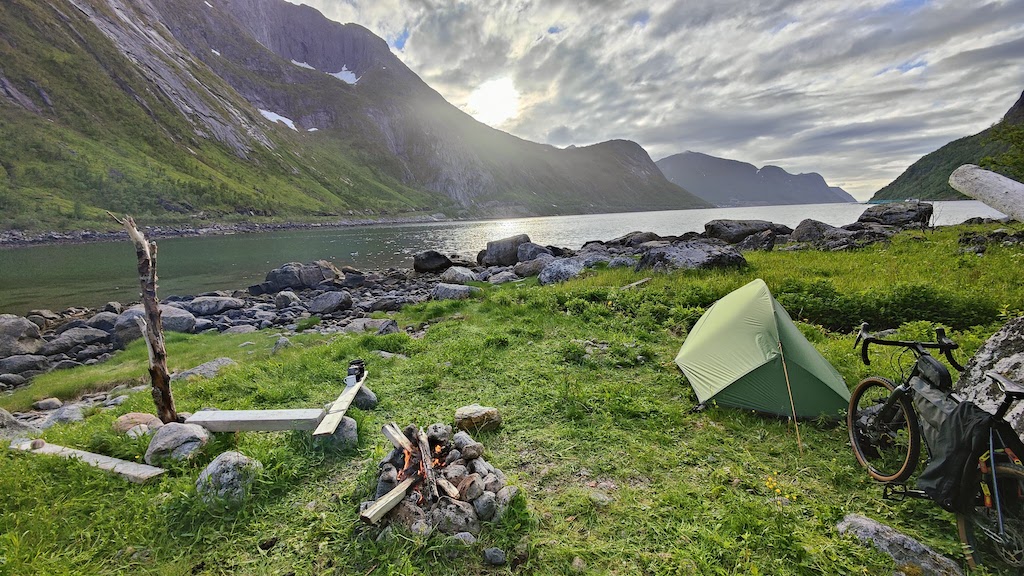

See our Main POI Map above for Accommodation Options (Accommodation & Camping Troms Tabs)
Wild Camping
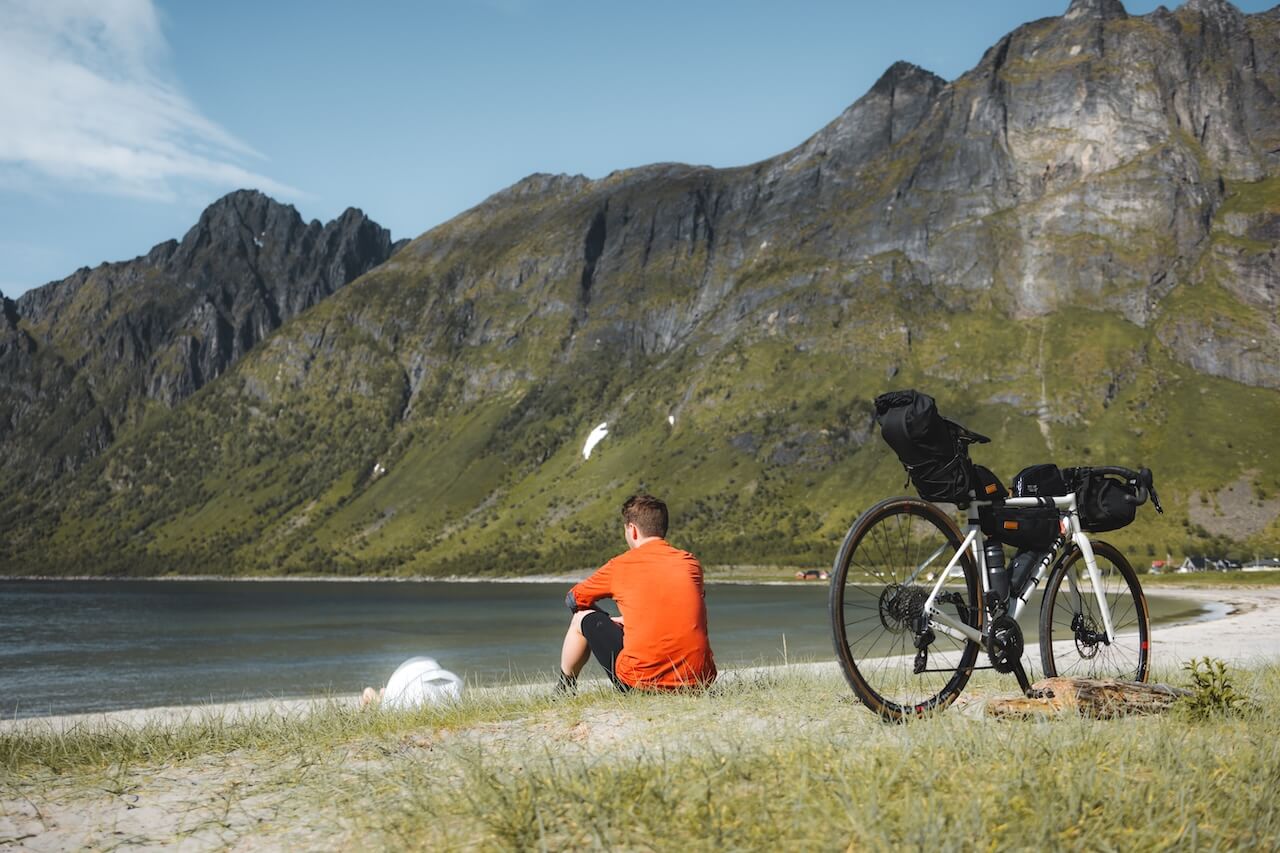
I strongly recommend not wild camping directly along the main cycling route in Lofoten. With more than a million visitors each year, the obvious roadside spots have been overused, leading to littering, erosion, and confrontations with locals. Several former camping areas have now been closed by the council for exactly these reasons. If you do want to wild camp in Lofoten, your best option is to take detours onto the quieter side roads and head toward the more remote coastal areas. These places still offer space, solitude, and a much lower chance of disturbing residents or running into problems. For true wild-camping freedom, the islands further north, Vesterålen, Senja, and Kvaløya, are far better. They’re quieter, more spacious, and far more welcoming to low-impact camping.
Campsites & Cabins
Lofoten has several large campsites, and carrying a tent gives you flexibility and keeps costs down. In peak season, though, cabins are often booked out months in advance, and even tent plots can be limited on smaller sites. Calling ahead is wise if you’re travelling in July or early August. Further north, Vesterålen has a few quiet campsites, but on Senja and Kvaløya paid options along the route are scarce. Plan your overnight stops carefully.
Hotels & Hostels
Accommodation in Lofoten is difficult during summer. Hotels, rorbuer, guesthouses, and hostels are often fully booked and priced accordingly. The northern islands are easier, but last-minute bookings are still risky everywhere. Sommarøy is especially busy during July when Tromsø locals take their holidays.
Airbnb
Airbnb availability follows the same pattern: early bookings disappear quickly, and the remaining options are expensive. Do not rely on finding something last minute — book ahead if this is your preferred accommodation style.
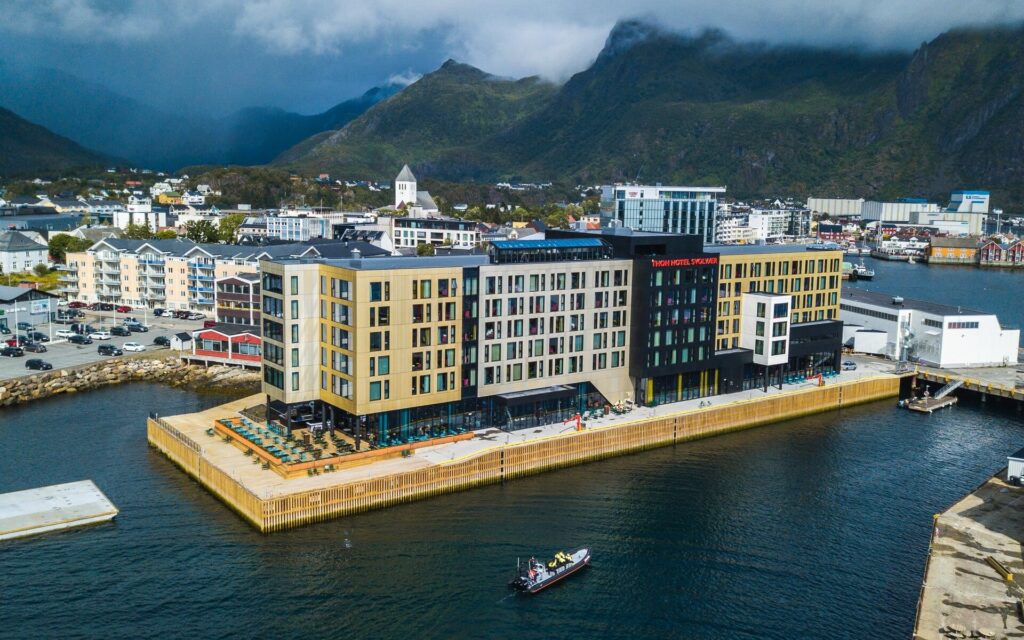
In recent years, many large brand hotels have been built on the islands to keep up with demand. Photo: Andres-Duran-Thon-Hotel-Svolvaer
Staying Flexible With Accommodation
Lofoten’s popularity creates a challenge for cyclists: you want freedom to adjust your daily distance, but you’re travelling through one of the busiest tourist regions in Norway. The key is to balance advance bookings with smart flexibility.
Book Strategically, Not Blindly
You don’t need every night booked months in advance, but there are certain areas — Reine, Hamnøy, Nusfjord, Henningsvær, Svolvær, Leknes — where accommodation disappears quickly in July and early August. For these hotspots, booking ahead is sensible. You can leave gaps between these bookings to give yourself open days where you choose your distance.
Use Free-Cancellation Policies
A simple trick is to book rooms with free cancellation or flexible dates. This gives you:
room to stay longer if you like a place
the option to shorten your day if the weather turns
the freedom to ride further if traffic or crowds push you on
protection from last-minute price spikes
Many hotels, cabins, and Airbnbs in Norway offer cancellation until 24–48 hours before arrival. Use this to your advantage.
Ride With a Plan, Not a Schedule
Because you’re on a bike, your needs change daily — headwinds, weather shifts, heavy traffic, or a place you unexpectedly love. Having one or two fixed points on Lofoten (like a first-night booking near Moskenes and another midpoint booking near Leknes or Svolvær) gives you stability while still letting the rest of the trip flow naturally.
Use Side Roads for Spontaneity
Even if Lofoten’s main hubs are fully booked, detouring onto the quieter coastal roads often reveals smaller guesthouses, cabins, and campsites with space, especially in late afternoon or evening. These areas are much calmer than the E10 and easier for last-minute stops.
Consider Mixed Accommodation
A realistic strategy for cyclists is:
1–2 pre-booked nights in busy areas
1–2 nights in campsites (no booking required)
Wild camping only on remote side roads and coastal points
a few flexible nights with free cancellation accommodation
This combination keeps your budget under control, avoids unnecessary stress, and gives you options.
Beyond Lofoten: Easier Booking
Once you reach Vesterålen, Andøya, Senja, and Kvaløya, accommodation becomes noticeably easier to find. Prices drop, availability improves, and you can safely book closer to the date — sometimes even same-day. But don’t take chances, keep an eye on booking sites to see availability and if unsure, always book something in advance. You could end up spending most of the day trying to find accommodation instead of enjoying your ride.
The 4 Car Ferries on the Route (most were free for cyclists in 2023)
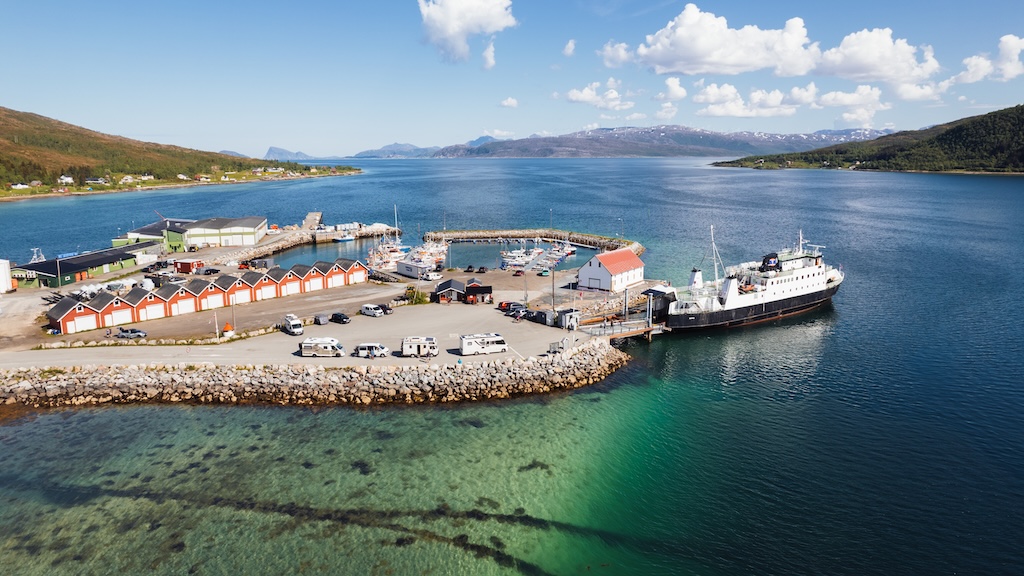
COVID-era rules made most of these ferries free for cyclists. Charges have returned on the Bodø–Moskenes ferry, but cyclist pricing can still be inconsistent.
*Update from Cyclist in 2025: “I recently took the ferry from Bodø to Moskenes with my bicycle free of charge. You can book online for 250 NOK to secure a place, but when I arrived without a booking, they only asked me to register on their website and did not require payment.”
Other Options:
If you need to shorten your journey, a passenger-only express boat connects Bodø – Svolvær in Lofoten, saving around 150 km of riding: Bodø – Svolvær Express Boat
Lofoten is one of Norway’s busiest summer destinations, and the traffic reflects it. In July and August the main road, the E10, carries a steady flow of camper vans, rental cars, and tour buses. You can’t avoid this road entirely, every cyclist has to ride sections of it, but you can ride it smartly.
The most important rule is simple: ride early or ride late. With 24-hour daylight, the best windows are 05:00–10:00 and 19:00–23:00. During these hours the roads are noticeably quieter, drivers are more relaxed, and the whole experience feels closer to what Lofoten should be. The busy period is late morning to late afternoon, when tourists move between beaches, hikes, and village stops.
Certain areas naturally see more congestion: Reine, Leknes, Svolvær, and the turnoff to Henningsvær can feel chaotic at peak times. North of Svolvær, the E10 becomes straighter and faster, and traffic speed increases; it’s manageable, but better tackled outside the main hours.
Another thing to be ready for is the ferry convoy effect. When a ferry arrives (Bodø–Moskenes, for example), 40–60 vehicles often roll off together and drive in a tight line for the next 10–15 kilometres. If you happen to be on the road at that moment, you’ll get passed by the whole pack in one go. Sometimes it’s worth simply pulling over for a minute, letting the convoy clear, and then enjoying peaceful riding again. It’s a small tactical pause that saves a lot of stress.
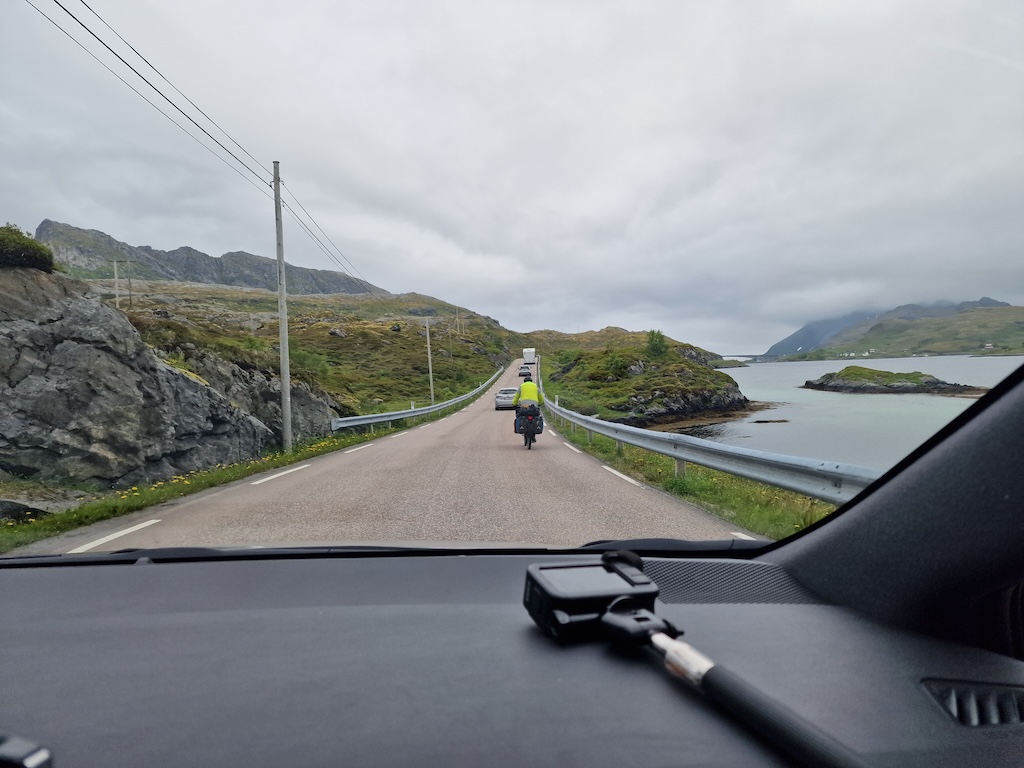
Away from the E10, the story is very different. The side roads have light traffic and are far more enjoyable, often giving you the classic Lofoten experience people imagine. These quieter routes are where the islands show their real charm.
Ride with the rhythm of the islands, use the quiet hours, and don’t fight the traffic patterns. Do that, and Lofoten becomes one of the most rewarding places you can cycle.
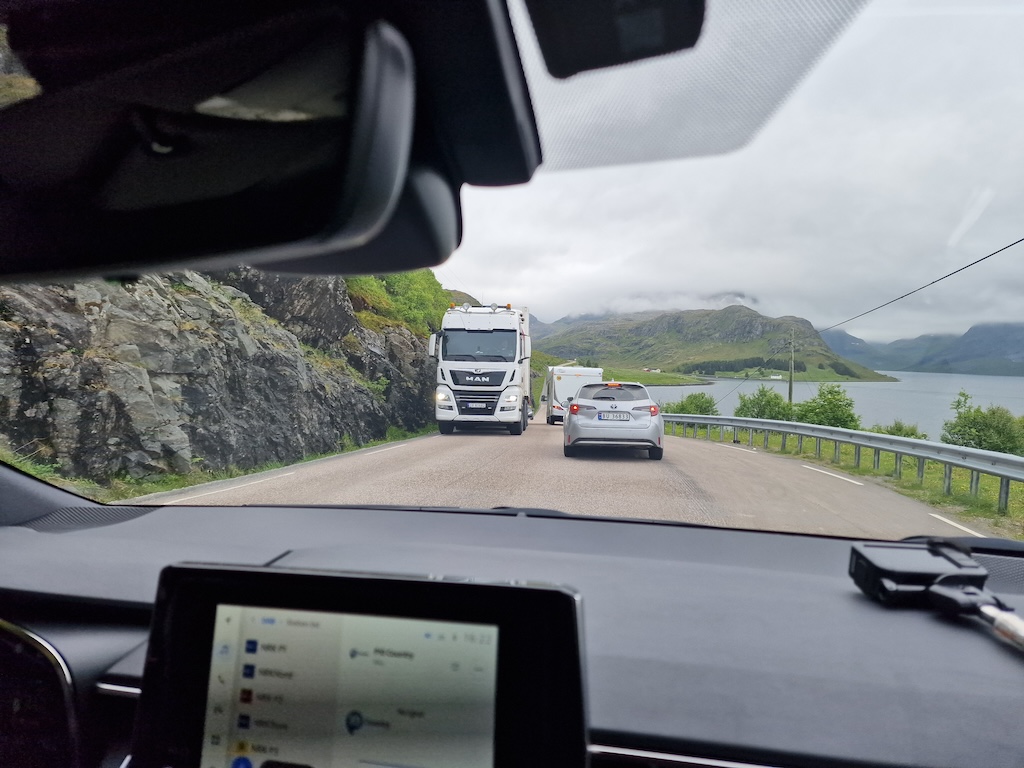
Photo: The main E10 road at peak time during early afternoon
“Be Prepared: Cycling in the Lofoten Islands is no longer the great experience it once was. I rode there in 2018 and again this year, and the difference is striking. The roads are now dominated by rental campers and caravans, creating stressful and at times dangerous conditions. While local drivers generally respect safety norms, the sheer volume and behaviour of rental campers have gotten out of control. The scenery remains spectacular, but for cyclists, the experience has become far less enjoyable. It’s important to be aware of this reality before planning a trip.”
This is why following our advice is essential to maximise your trip. The 5 am ride on the E10 with the sun low and the mountains slowly waking up from their shadows was very special.
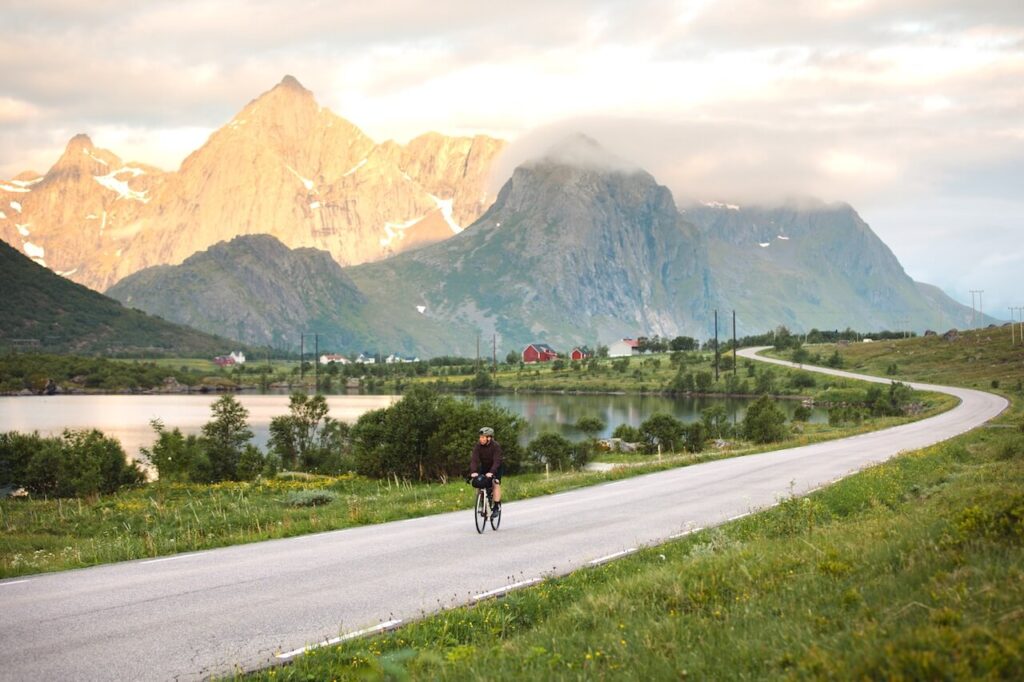
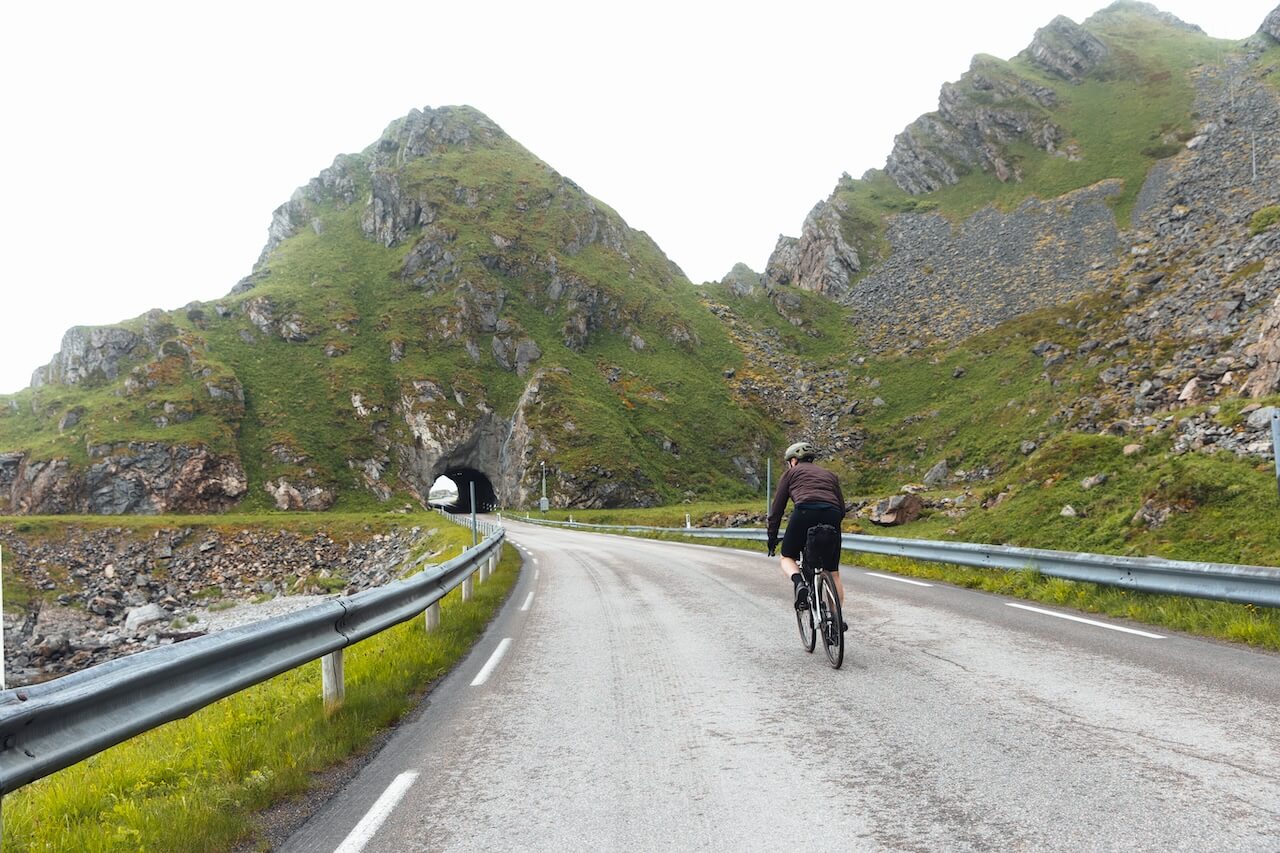
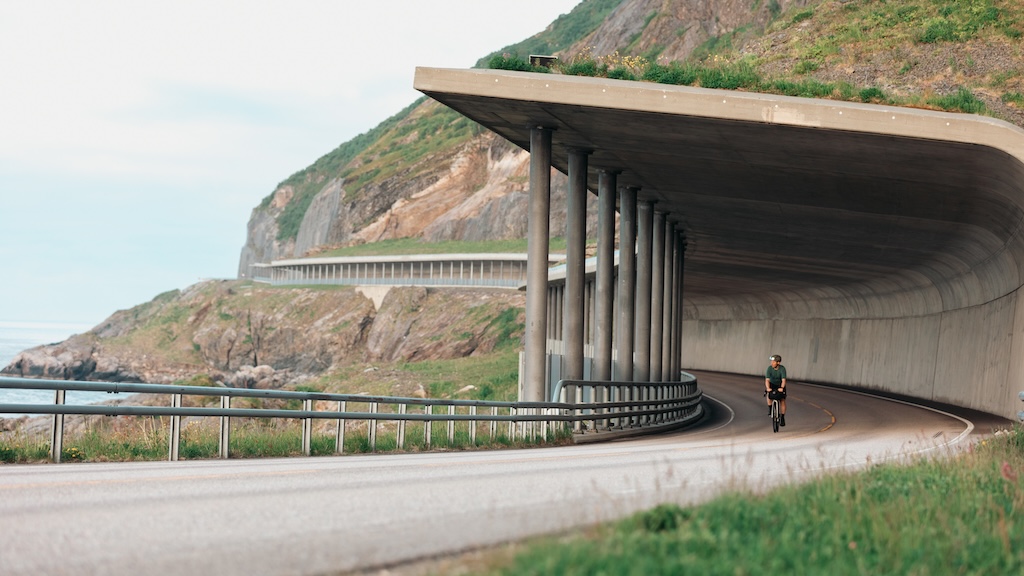
There are around 20 tunnels on this route. Lofoten offers scenic bypasses for many of its tunnels, while Senja requires you to ride through most of them. The longest tunnels have a button to activate “cyclist in tunnel” flashing signs, and several provide free reflective vests at each end.
Lofoten
From Moskenes, the first four tunnels can all be avoided via coastal paths. The main challenge is the Nappstraumtunnelen (1776 m) – picture below, a steep sea tunnel dropping roughly 200 metres below sea level. It’s loud but safe, and there’s a separate sidewalk that makes the climb out easier.
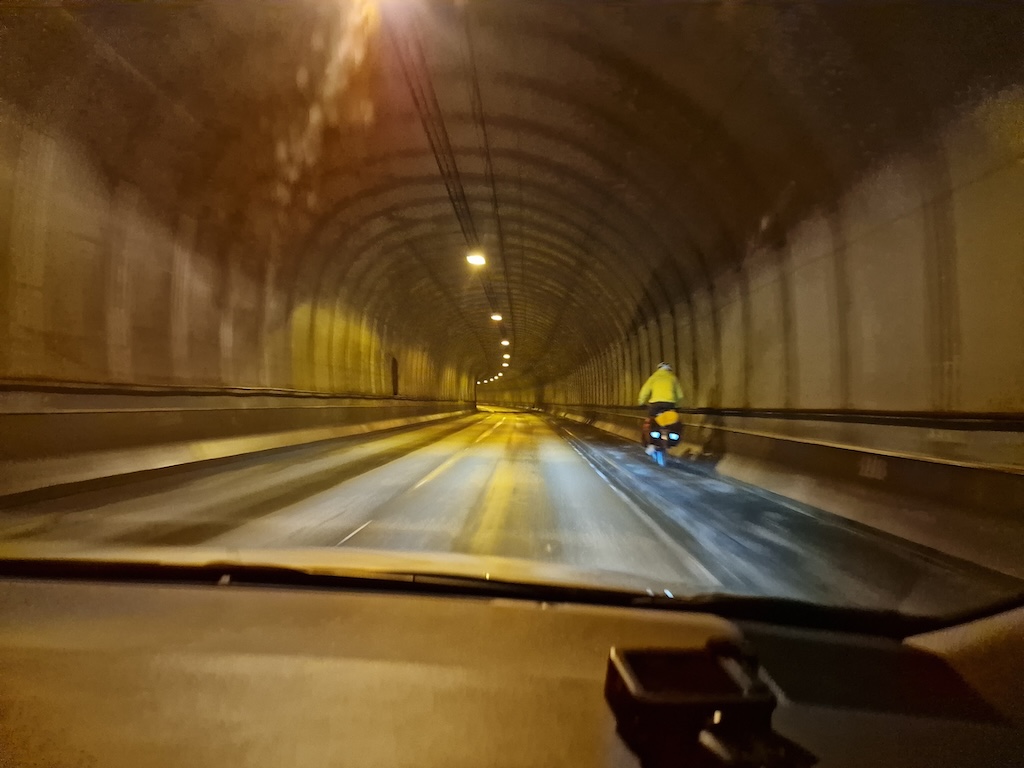
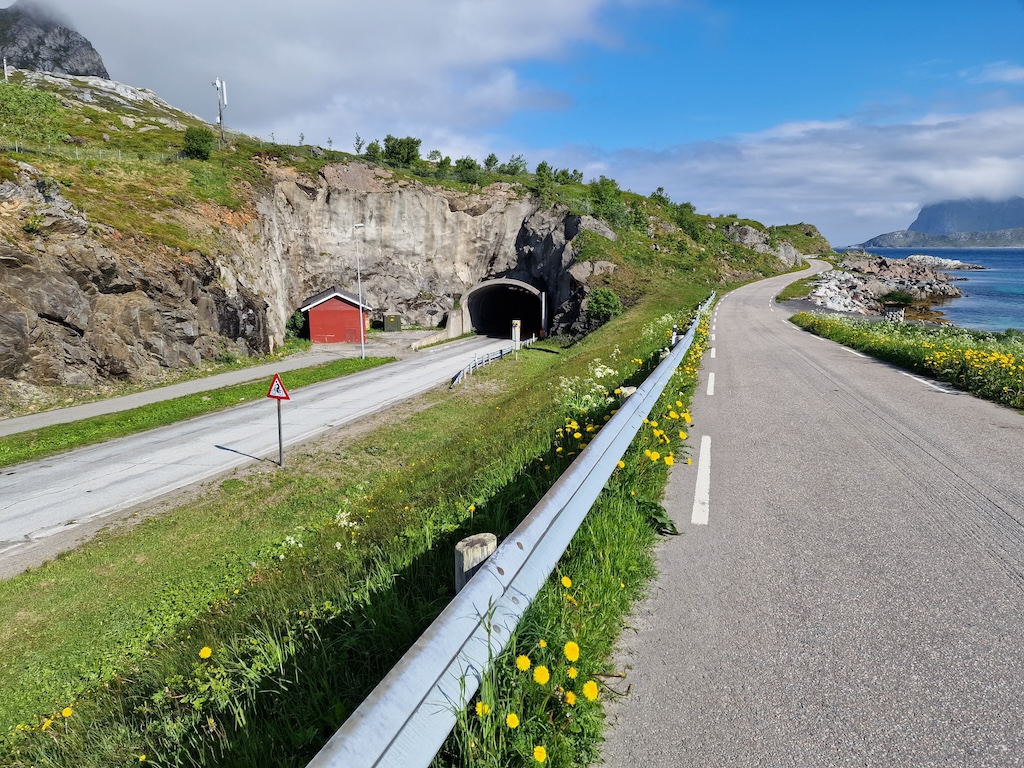
Nappstraumtunnelen – The road to the right (picture) comes to a dead-end.
Update (August 2025):
Nappstraumtunnelen is undergoing safety upgrades and is closed 23:00–06:00 until December 2027. Two-night through-passes are allowed at 00:00 and 03:00. Daytime traffic is guided by a pilot car.
Alternative route:
A once-daily Nusfjord–Ballstad ferry runs at 10:00 (from Ballstad) and 11:00 (return). Booking required: https://www.ballstadgutt.no
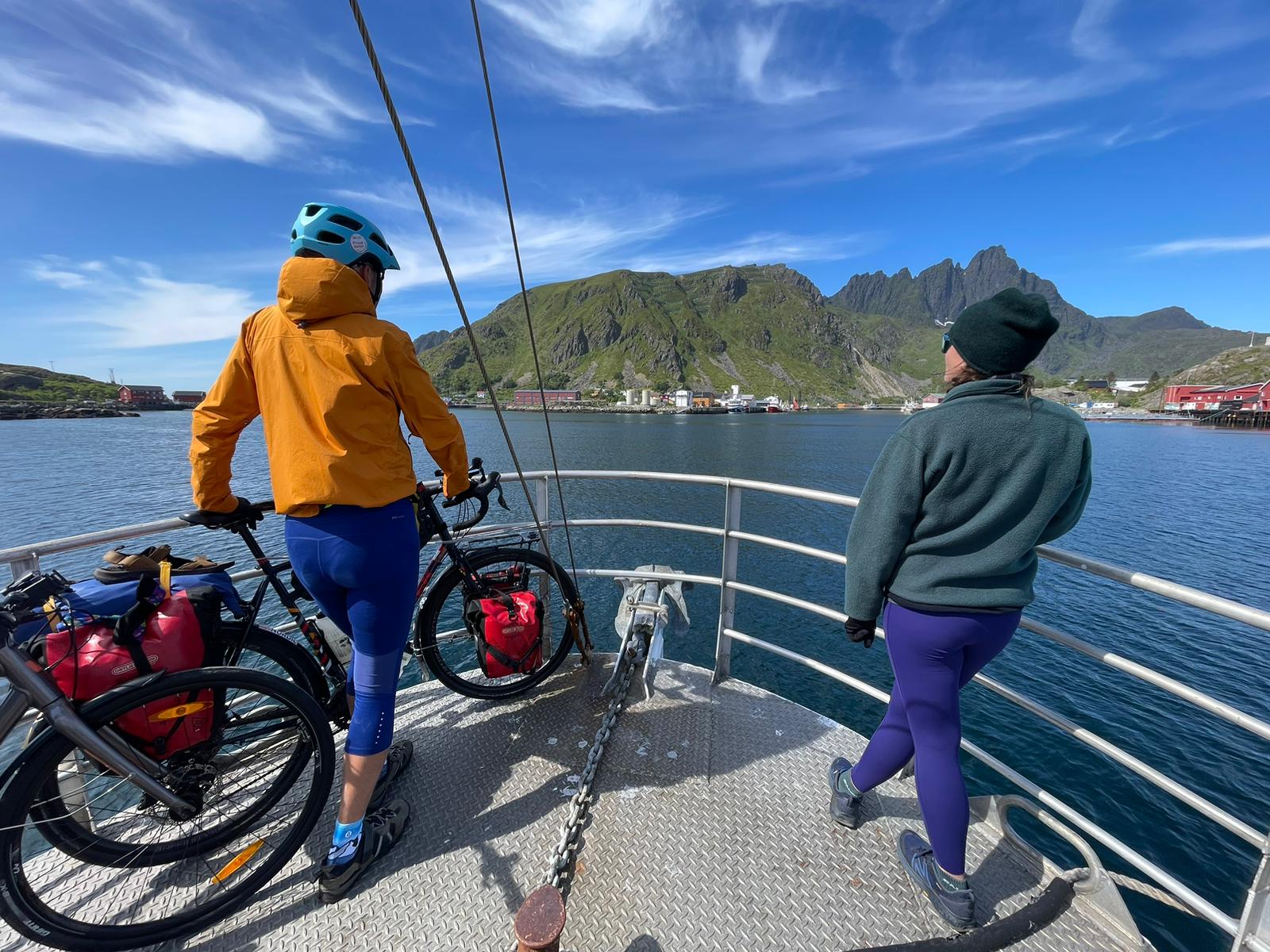
Bicycle Boat to Ballstad
Other Lofoten tunnels worth noting:
Rørvikskartunnelen (726 m) – Straight and well lit
Three small Svolvær tunnels – Short and simple
Vesterålen
No tunnels of concern.
Senja
Senja has nine tunnels, including three long ones that require more attention. They are old, narrow, and the surface inside can be in poor condition in places. Cars usually travel slow, and they should feel safe, but they are not a pleasant experience to cycle:
Skalandtunnelen (1890 m)
Geitskartunnelen (2147 m)
Steinfjordtunnelen (1265 m)
All have cyclist warning buttons and reflective vests available at both entrances. Press the button, and two lights start flashing above the sign. This makes cycling through them feel safer. Wear the vest and deposit it at the other end in the box.
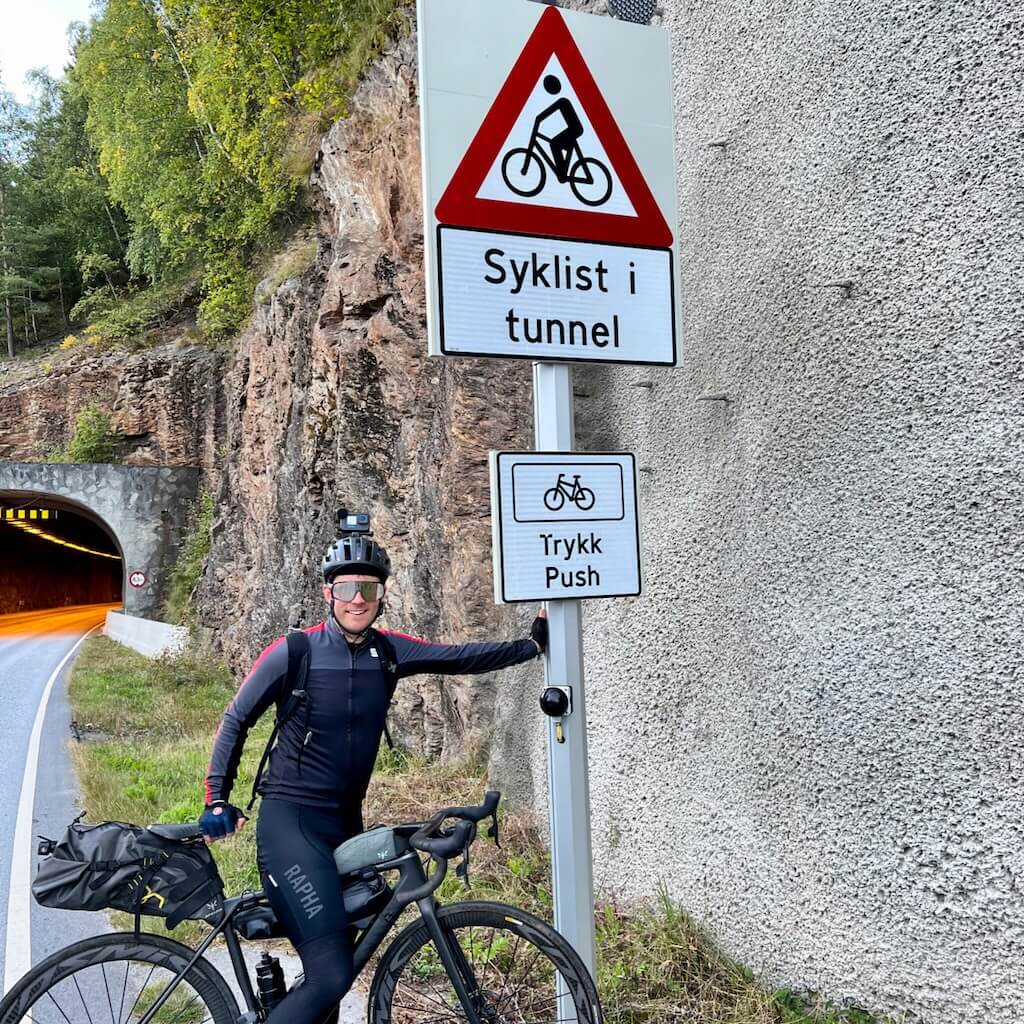
Kvaløya
Only one: Oterviktunnelen (607 m) on a quiet road.
Other Roads to Mention
Weather
Conditions change fast in the Arctic. Expect sudden shifts from warm sun to cold wind, heavy showers followed by clear skies, and a noticeable temperature drop when crossing from Lofoten to Vesterålen due to the move from oceanic to Arctic climate systems. Dress for all weather, even in July.
 English English
  Norwegian
 German
 French