Bergen – Trondheim

The Atlantic Coast (Eurovelo 1)
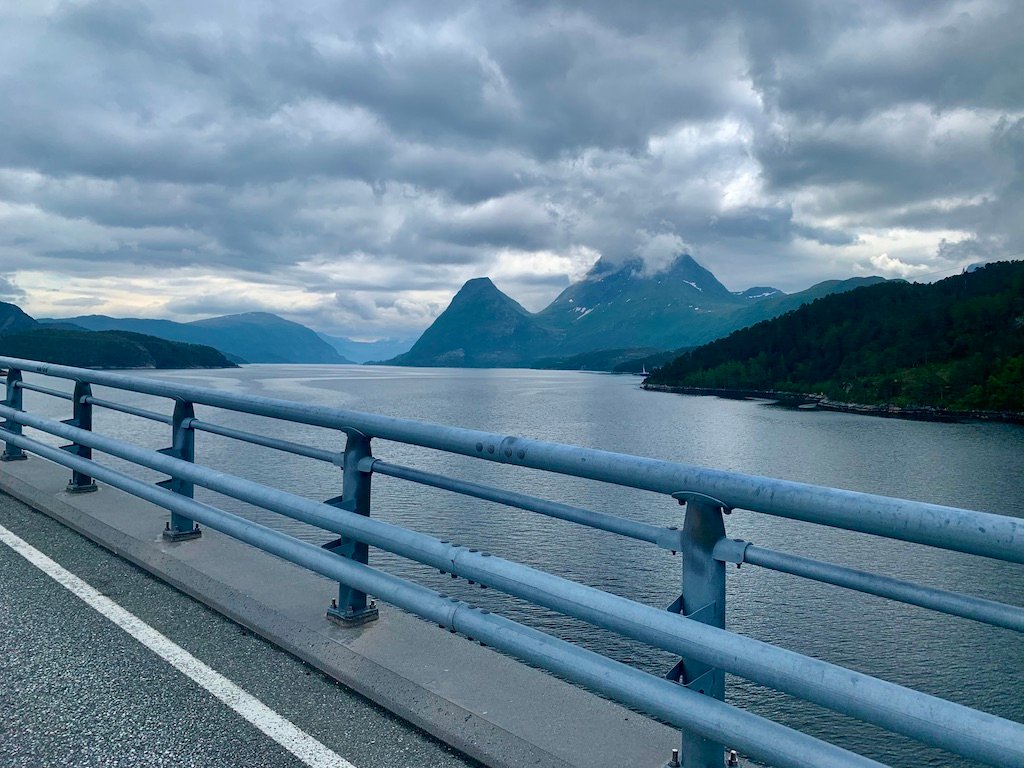
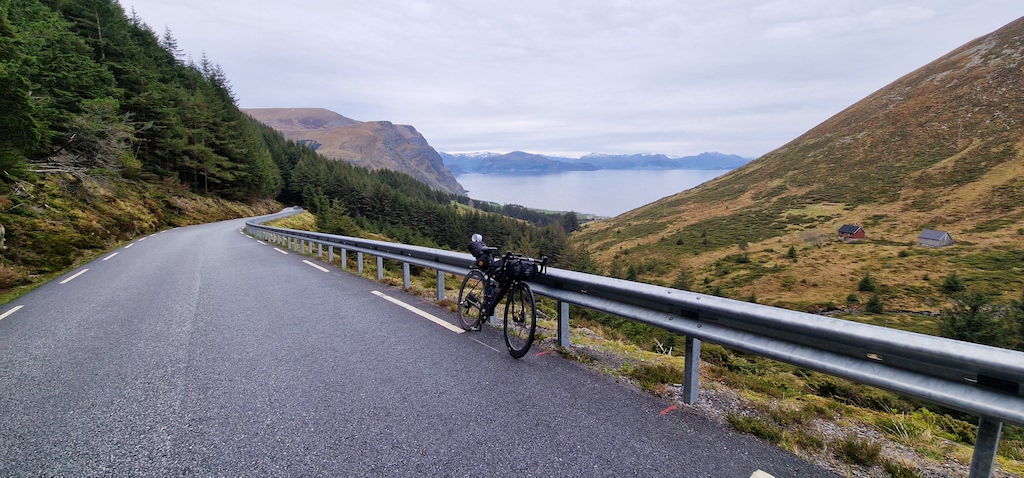
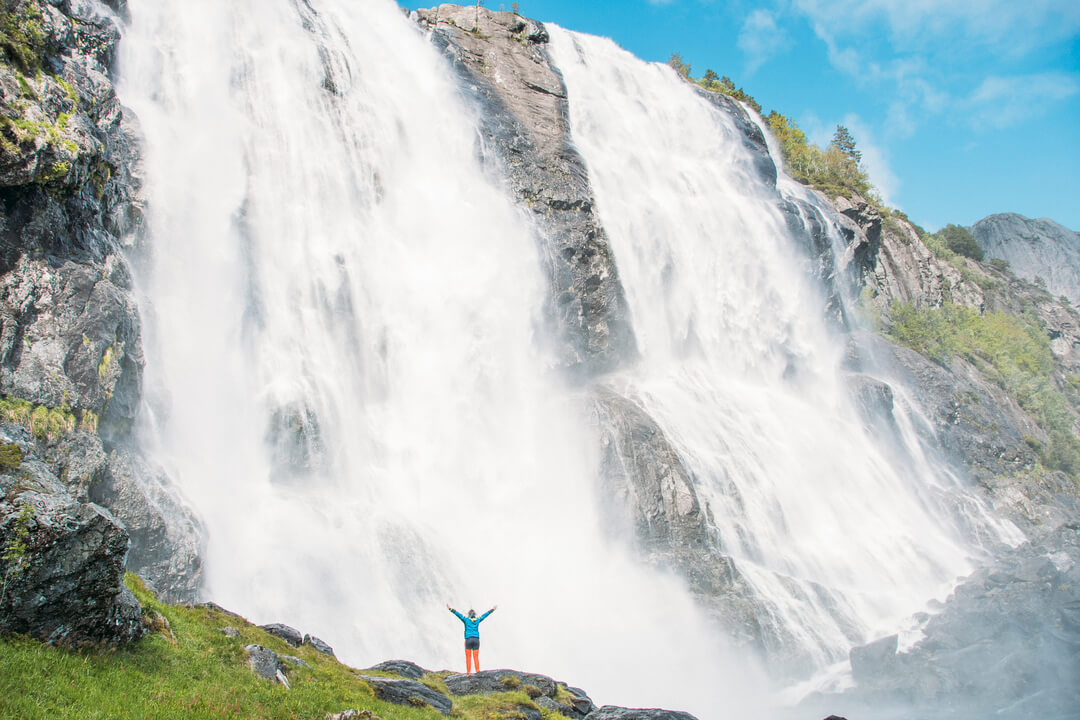
The quieter roads of Fjord Norway, are not to be underestimated. Few people get to experience this area of Norway, which offers great ocean views, fresh sea air, and plenty of quiet islands to hop over and explore.

When

Late April - September

Written by

Matthew Tolley

Distance

995km

Days

6-15

High point

486m

Difficulty

5/10

Unpaved

<5%

Total Ascent

11513m

Ferries

11

Tunnels

20+

The Quieter Side of Fjord Norway

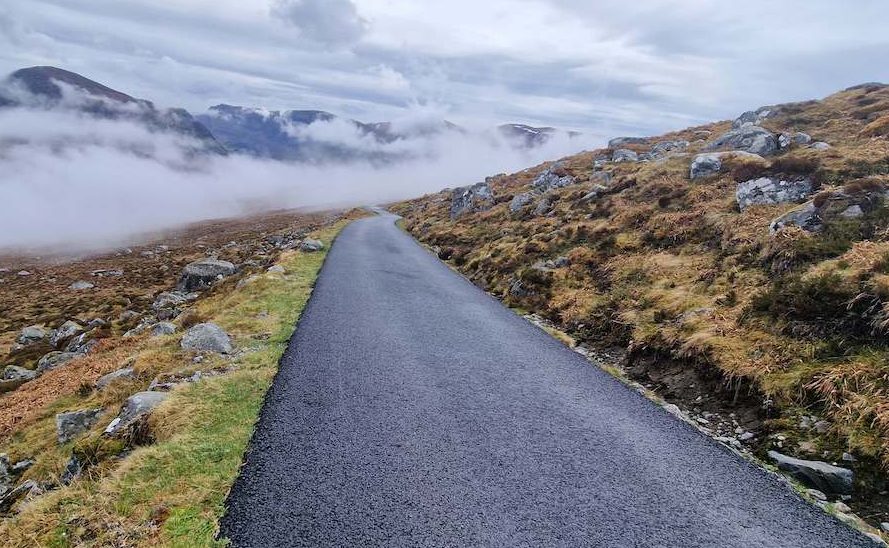
The coastline of Fjord Norway is truly one of a kind, a rugged stretch of deep fjords, scattered islands, and quiet coastal roads far removed from the bustle of mainland Europe. It offers a rare sense of freedom and open space, perfect for those who crave solitude and adventure. The route is clearly marked from Bergen to Sognefjorden and further north from Ålesund to Kristiansund, making navigation straightforward. Most of the journey follows smooth, paved roads, with terrain that alternates between gentle flats and rolling hills, rarely becoming too demanding.

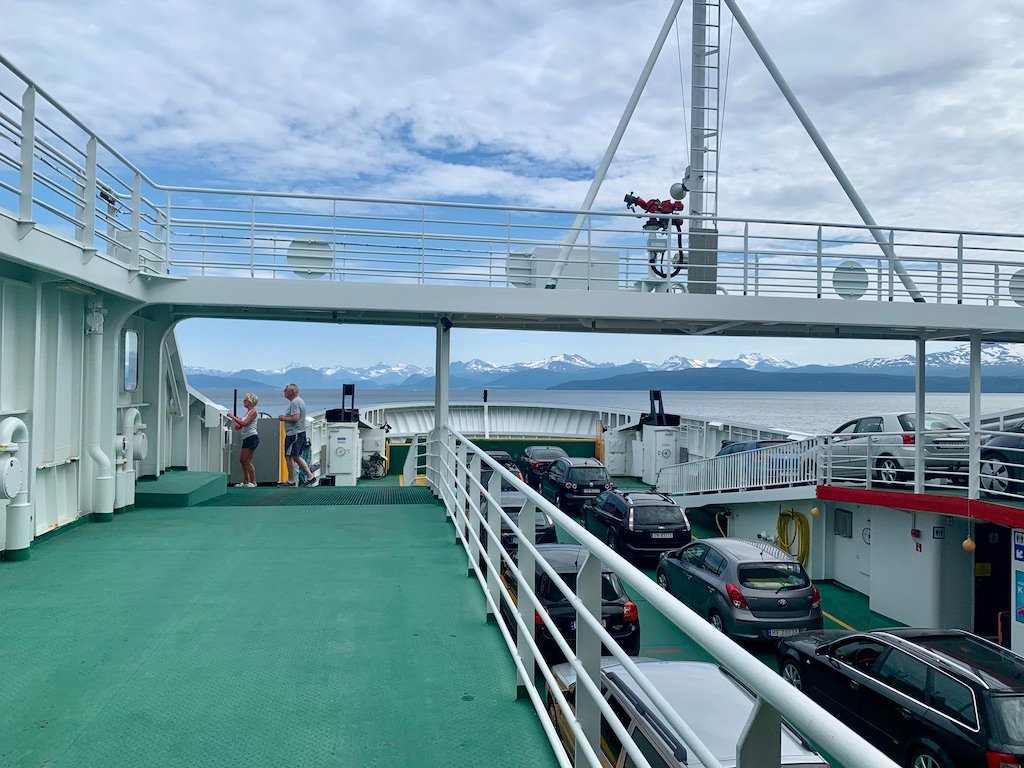
One notable exception is a 500-metre climb required to avoid a long tunnel. The stretch of Road 5 after Førde can also feel uncomfortable at times due to a few busy tunnels. Still, these are brief interruptions on what is otherwise a peaceful ride through dramatic scenery where few tourists travel. Frequent ferry crossings offer ideal breaks to rest and refuel, and if the weather turns or your legs need a pause, you can easily shorten the route by hopping on a local ferry or the Hurtigruten coastal service.

Map


City and Rural Combine

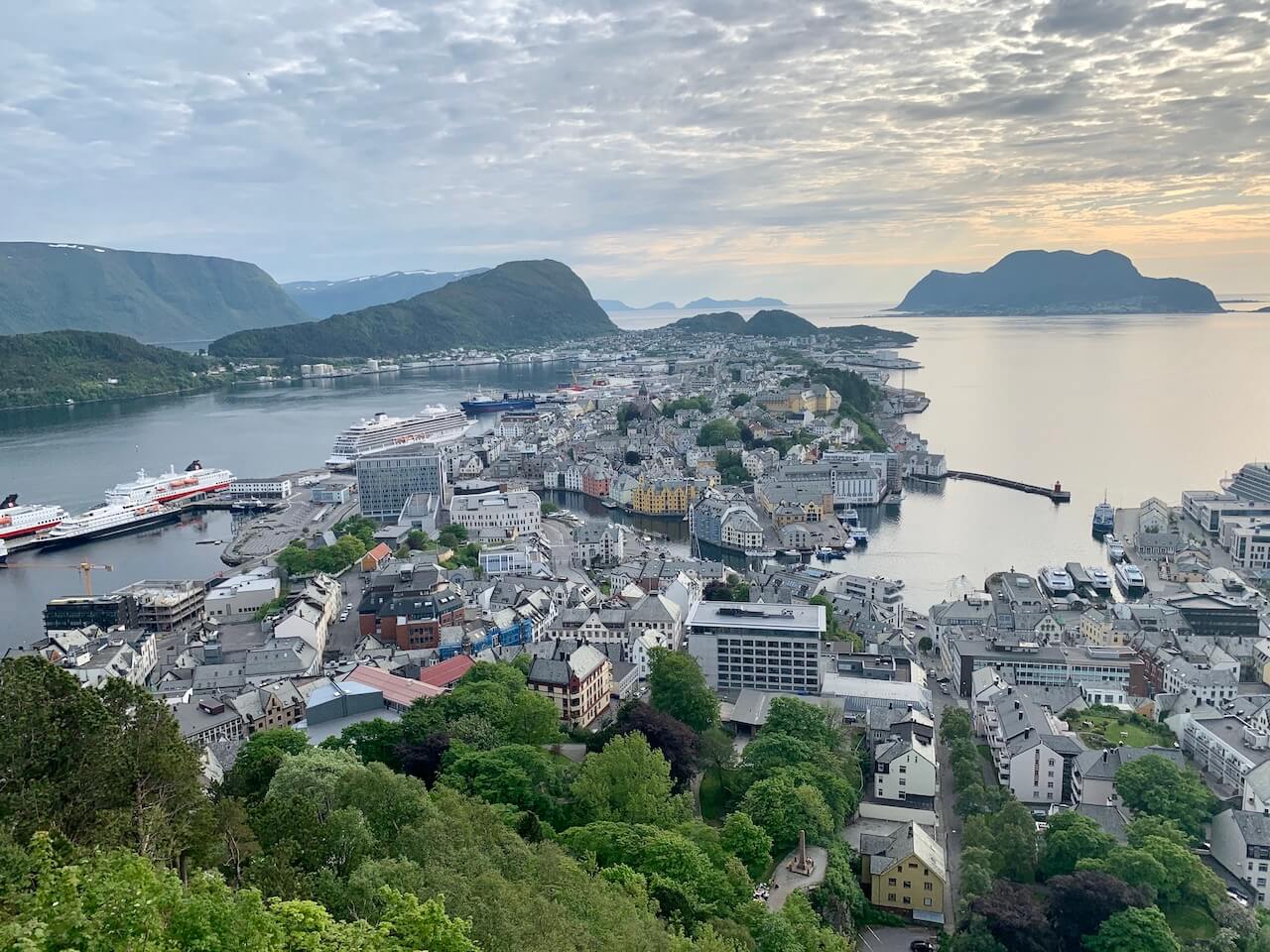
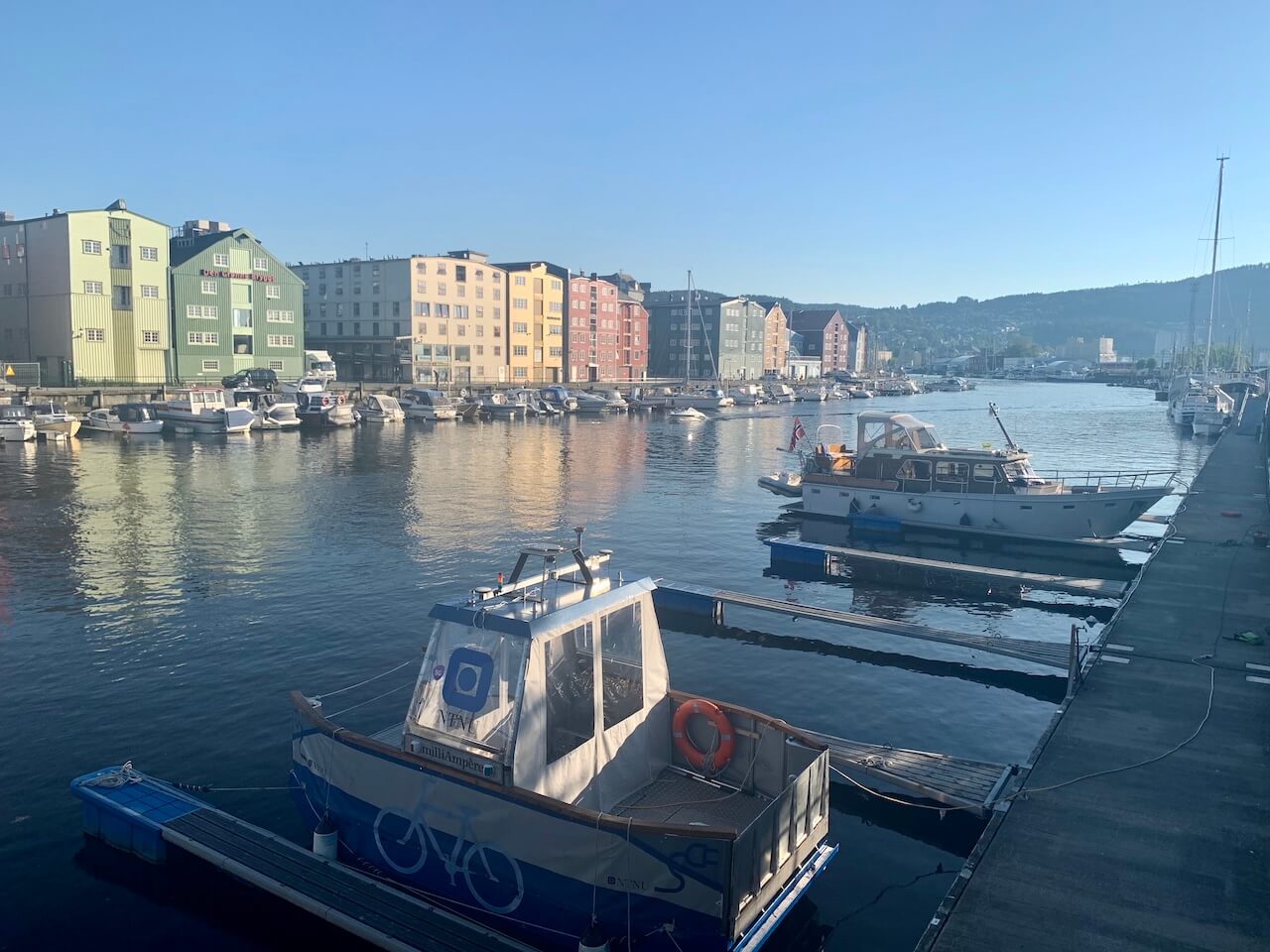
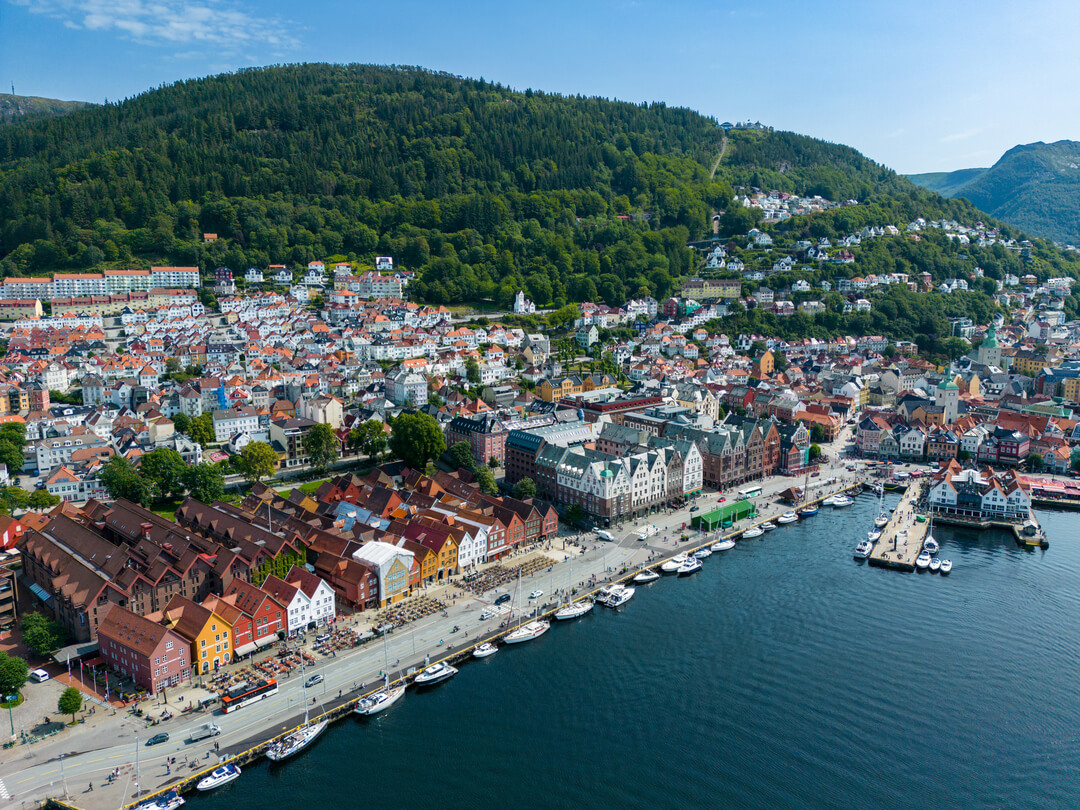
The route passes through four of Norway’s great west-coast cities, Bergen, Ålesund, Kristiansund, and Trondheim — each with its own distinctive character and rhythm of life. From Bergen’s colourful wooden wharf to Ålesund’s art nouveau architecture and Kristiansund’s proud maritime traditions, these are places worth lingering in for a day or two. Trondheim, with its cathedral, cobbled streets, and student energy, marks a fitting end point or beginning to the journey.
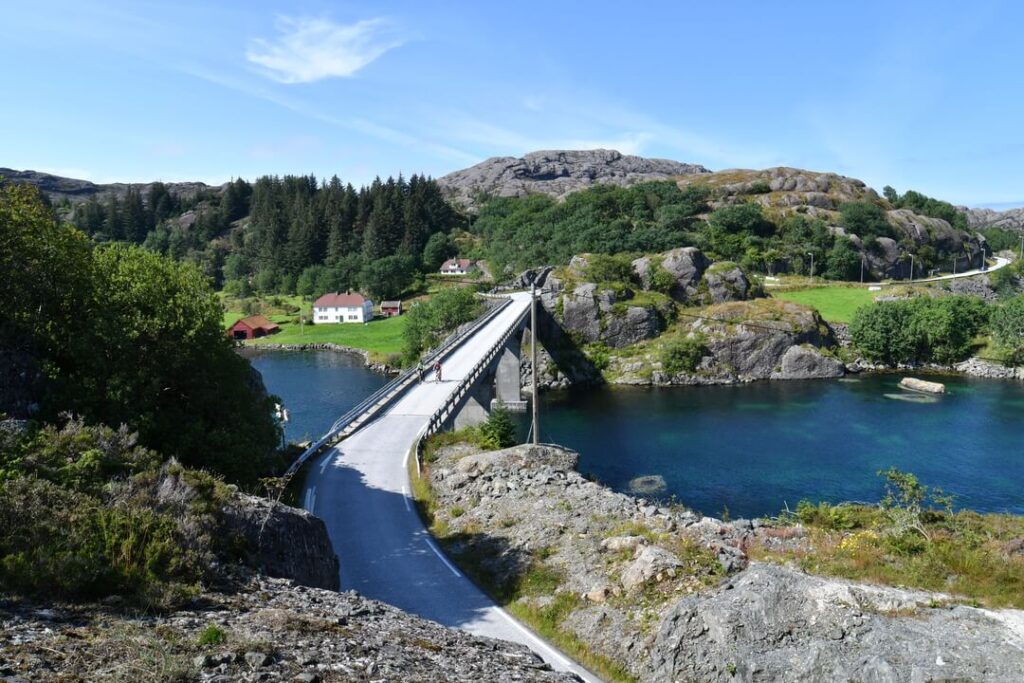
Photo: Fjord Norway AS

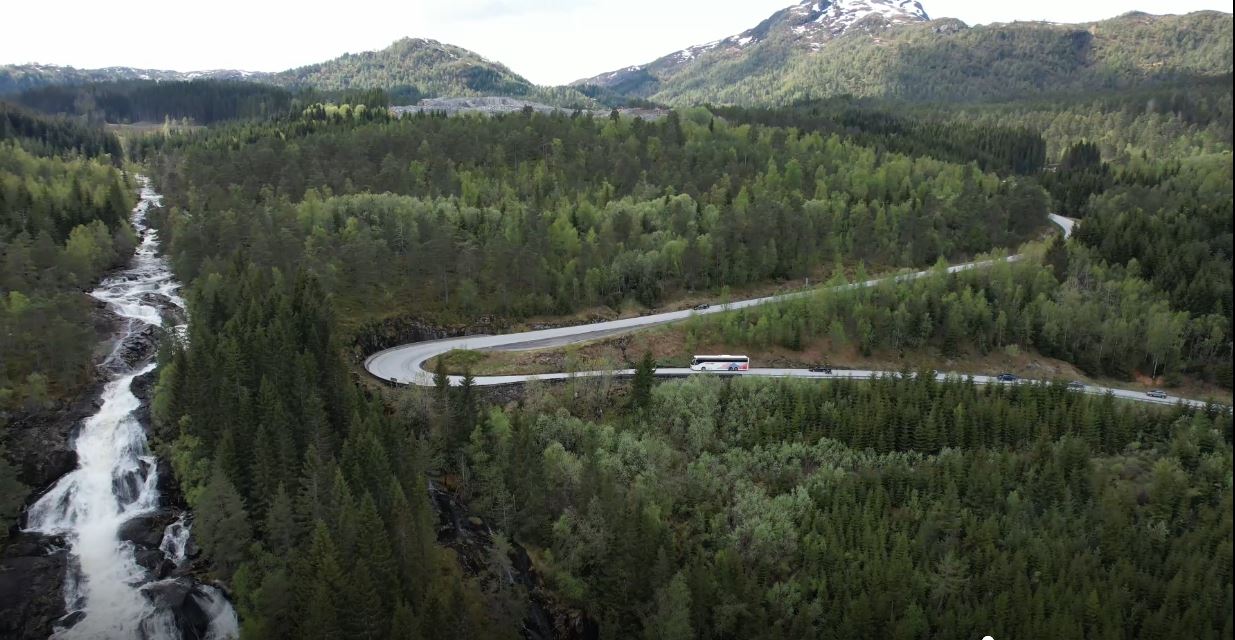
Between these cities, the road quiets. You’ll spend long stretches cycling through open countryside where the air feels clean and still, and where the only movement might come from sheep grazing on the slopes or a lone farmer cutting grass for winter feed. It’s a peaceful rhythm broken only by the occasional ferry, village, or local café. Despite the sense of isolation, you’re never far from what you need. Small shops, campsites, and cabins appear at regular intervals, making it easy to plan food and accommodation as you go.
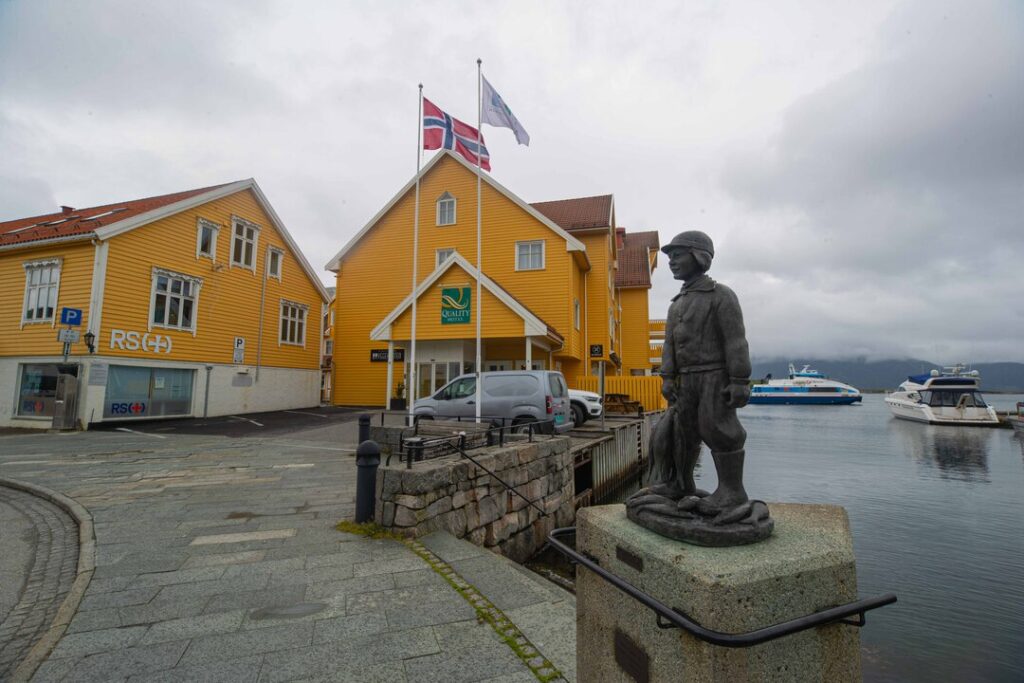
Florø – Visit FjordKysten og Sunnfjord

At just under 1,000 kilometres, this is a journey of endurance rather than intensity. The terrain is mostly gentle, but the combination of ferry crossings, shifting weather, and long distances can make for demanding days. This region is known as one of Europe’s wettest, and the weather often sweeps in straight from the North Atlantic. You might have glorious sunshine one moment and driving rain the next. I was lucky — only one wet day — but it’s wise to prepare for more.

If time allows, take a few detours from the main route. The west coast hides some extraordinary corners: the white sands of Hoddevik, a tiny surf village set between steep cliffs, or Vestkapp, where the land rises 496 metres straight out of the ocean. These are places where the raw spirit of Norway’s coast can truly be felt — vast, untamed, and unforgettable.



Gallery

The Atlantic Ocean Road is, for many, the crown jewel of this route. Known as “The Road Across the Sea,” it’s a marvel of engineering — a series of sweeping bridges that leap from islet to islet over the storm-lashed Hustadvika Bay. Riding it on a calm day feels surreal; on a windy day, it’s a battle between man and nature, with waves crashing below and gulls cutting through the salt air above. It’s an experience that captures the wild, untamed spirit of coastal Norway.

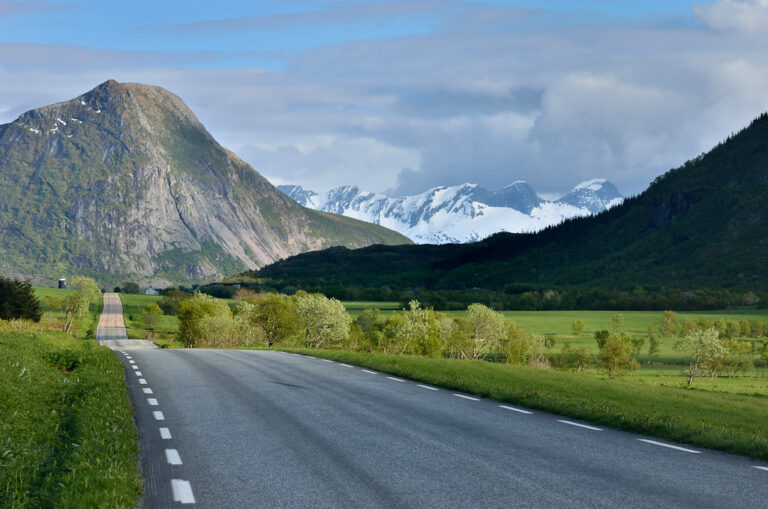
Yet, to be honest, there are countless other sections that may linger in the memory even longer. For me, the stretch from Kristiansund to Trondheim was the real revelation — a quiet, little-known part of the country where few tourists venture. The landscape softens here: deep forests, tranquil lakes, and rolling farmland give the impression of a Norway untouched by time. The roads are near empty, the air heavy with pine and earth, and there’s a serenity that settles in after days of travel along the sea.

If the full 1,000 kilometres feel daunting, there are excellent shorter options that still deliver the essence of the journey. The section between Bergen and Ålesund (around 550 km) offers a perfect balance of fjords, ferries, and open coastline. From Ålesund, you can easily connect by bus to Åndalsnes and continue by train to Oslo, making for a seamless return trip. Alternatively, the famed Hurtigruten coastal express provides a more relaxed way to head back south to Bergen — a fitting end to a ride defined by water, wind, and the quiet rhythm of Norway’s western shore.

Some photos provided by Fjord Norway, VisitBergen, & Visit FjordKysten og Sunnfjord. Photographers: Thomas Green, Lillian Herland, Mathias Falcone

P.O.I Map

Here, you will find a comprehensive overview of points of interest along this route. There are plenty of food and accommodation options, making this journey comfortable.


Coast and Mountains

When: June - September

If you're looking to see some of the famous inland areas of the fjords & mountains, this is a nice alternative that gives you the best of both worlds. Note that there are some long tunnels after Ålesund and a difficult mountain gravel section that make this route considerably harder.


You can skip Ålesund and reduce over 150km by taking the ferry from Hellesylt down Geiranger and cycling road 63 to Trollstigen. There is also the option to take part of the Fjord Norway route over Gamle Strynefjellsvegen and Dalsnibba to Geiranger.


Vestkapp Detour

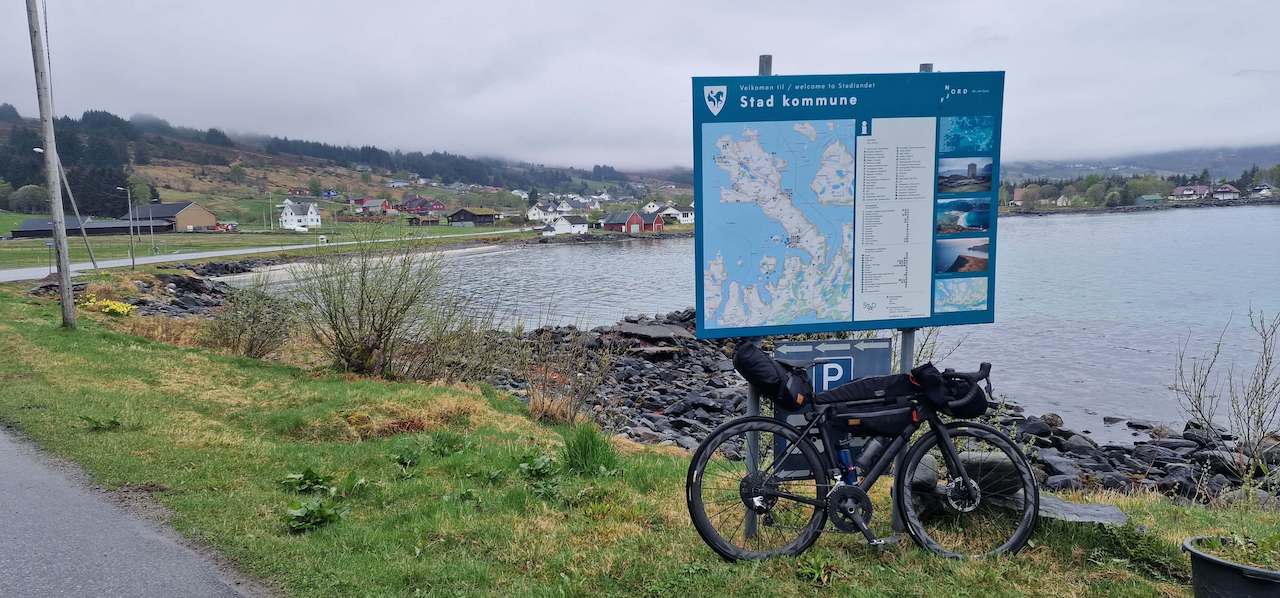
The Stad peninsula (Stadlandet) is a spectacular detour with outstanding natural beauty along many of it's roads. The two main highlights are the roads leading to Vestkapp (a 450M climb onto a mountain plateau over looking the North Sea) and the winding road to the surf beach at Hoddevik.

Highlights

Please take a look at the main map above for locations.

Cities & Towns

  • Bergen — Norway’s most beautiful coastal city, framed by seven mountains and a harbour alive with colour and history.
  • Ålesund — A city of islands and Art Nouveau architecture, rebuilt in elegant style after the 1904 fire.
  • Kristiansund — A lively fishing port spread across islands, full of character and maritime charm.
  • Førde — A mountain town with a relaxed pace, good services, and easy access to nature.
  • Florø — Norway’s westernmost town; small, welcoming, and perfectly placed between fjord and sea.
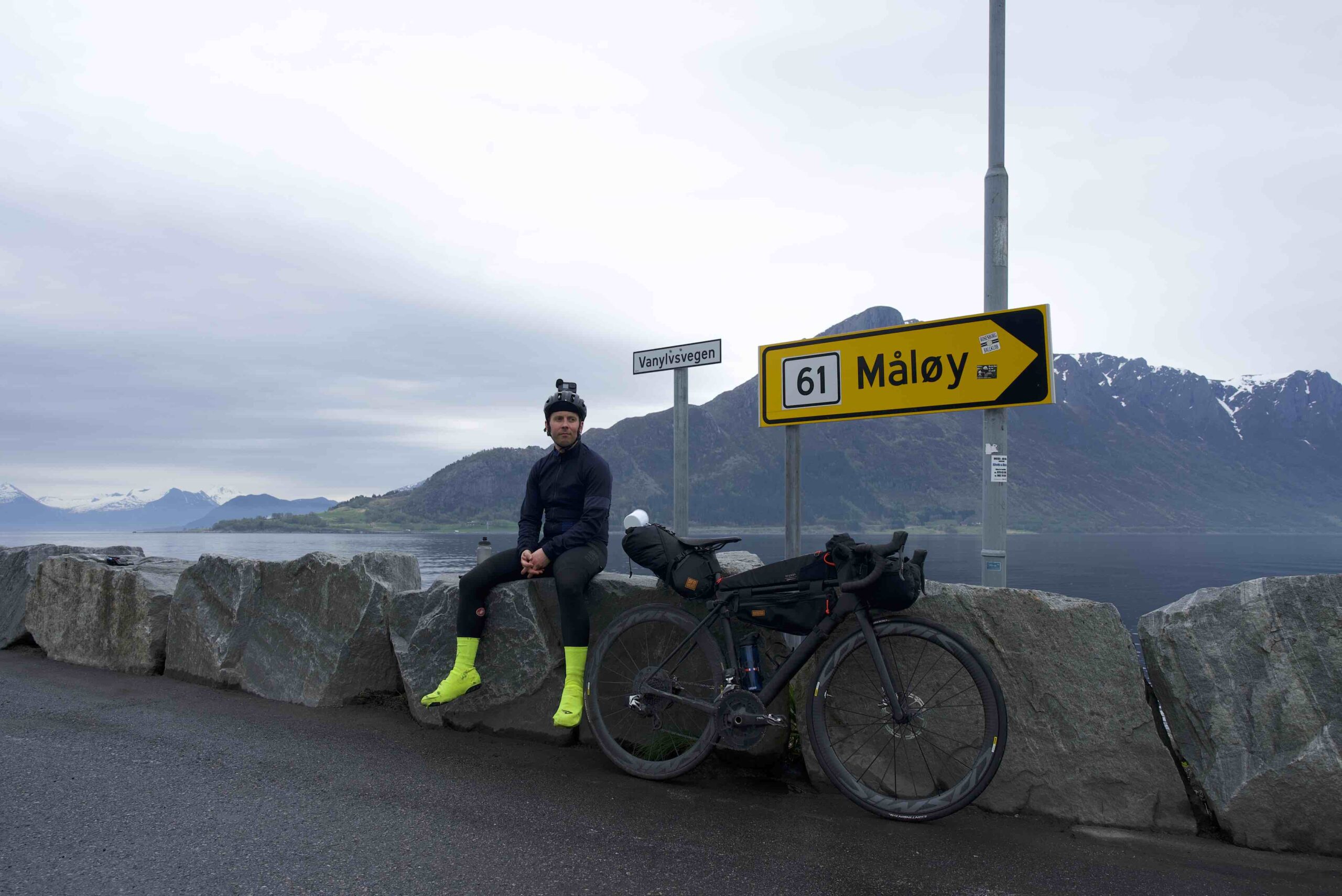
  • Måløy — Compact coastal town with supermarkets, cafés, and harbour views.
  • Molde — Known as “The Town of Roses,” offering cafés, shops, and sweeping fjord views.
  • Trondheim — The final destination, rich in culture and history.

Roads, Bridges & Scenic Engineering

  • The Atlantic Ocean Road — The legendary “Road Across the Sea,” connecting islets and reefs with dramatic bridges across the Hustadvika Bay.
  • Myrbærholmbrua — A graceful bridge and one of the Atlantic Ocean Road’s most photogenic points.
  • Fløibanen — Bergen’s historic funicular railway climbing to Mount Fløyen, where views stretch over the entire city and fjord.
  • World’s Longest Custom-Built Cycling Tunnel — A 3-kilometre tunnel built especially for cyclists, an innovative symbol of Norway’s cycling future.

Culture & History (Expanded List)

  • Fløien Folkerestaurant — A Bergen landmark offering classic Norwegian dishes and unbeatable views from Mount Fløyen.
  • Textile Industry Museum, Bergen — Located in Salhus just outside Bergen, this museum showcases Norway’s industrial heritage and the golden age of textile production.
  • Bryggens Museum, Bergen — Built directly over medieval ruins, this museum offers a fascinating insight into Bergen’s Hanseatic history and daily life 900 years ago.
  • Jugendstilsenteret & KUBE, Ålesund — Norway’s national Art Nouveau museum, housed in a beautifully restored building that tells the story of Ålesund’s dramatic rebirth after the great fire of 1904.
  • Måløyraid Senteret, Måløy — A powerful WWII museum commemorating the daring Måløy Raid of 1941, with detailed exhibits and personal stories from the operation.
  • Nordmøre Museum, Kristiansund — A collection of historical buildings and exhibitions highlighting coastal culture, fishing traditions, and everyday life in the region.
  • Nidaros Cathedral, Trondheim — Norway’s national sanctuary and the northernmost medieval cathedral in the world, a stunning example of Gothic architecture and spiritual history.
  • Sverresborg Trøndelag Folk Museum, Trondheim — An open-air museum featuring over 80 historic buildings from across Trøndelag, offering a vivid look at Norwegian rural life and traditions.
  • Kvernes Stave Church, Averøy — A beautifully preserved 14th-century stave church overlooking the fjord near Kristiansund; a peaceful and atmospheric detour.

Must know

  • Getting Here and Away: Flying into Bergen or taking a train from Oslo from Oslo is very straightforward, and the same goes for Trondheim. If you wish to start in Ålesund, there are no trains to the city, and your options are to fly, take a bus to Åndalsnes, where a train can connect you with Oslo or the Hurtigruten coastal liner from Bergen or Trondheim.
  • When to go: Early May to September is the prime time to ride this road. You could possibly ride it earlier in the season but you should check to see if all ferries are running. It may also be very cold early in the season with cool air coming from the Atlantic. Every month has its fair share of rainfall, but May and June are, in general, less wet than July and August.
  • Food & Supplies: you shouldn’t need to carry more than 1 day’s worth of food with you at any one time. Shops are plentiful but most will be closed on Sunday.
  • Water: It should be very easy to find water along the route. Churches, gas stations, supermarkets, public toilets, etc, are scattered all along the route. You’ll also have fast-flowing streams in the remote areas to keep you topped up.
  • Bike Type: You can use any type of touring bike on this route (Road, Gravel, Mountain) but make sure it has some built-in comfort as long days on the road may await you. With limited climbing, you shouldn’t be too concerned with your cassette/gear selection.
  • Many businesses are closed on Sunday: stock up on food on Saturday evening.
  • Check ferry timetables: some run infrequently (see transport section).
  • Public Toilets: Many of the ferry ports and ferries will have free public toilets, and expect to find some in small communities along the route.
  • Sea Tunnel near Kristiansund: Use a local bus or taxi to navigate through it. Cycling through is not permitted. Buses run every hour and allow bikes. 

Accommodation

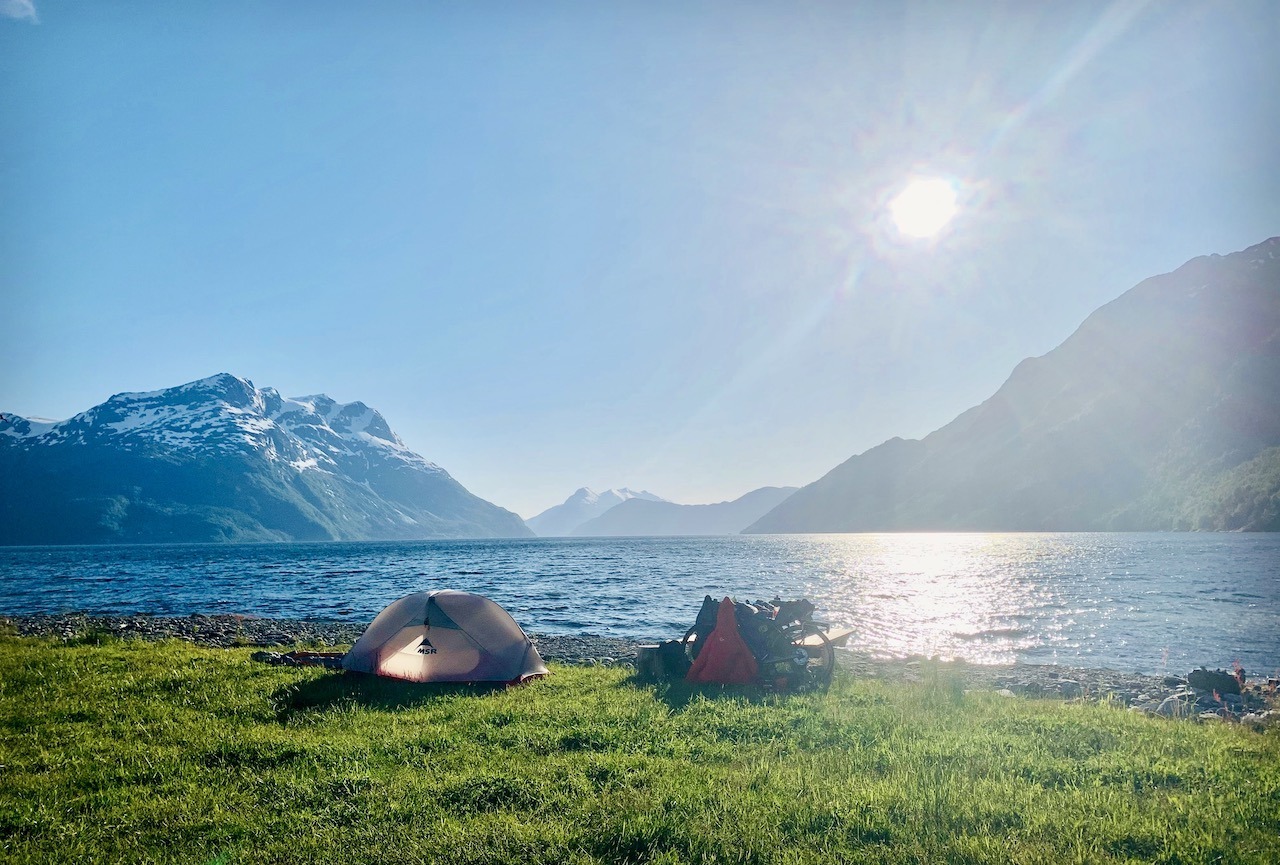
  • Wildcamping: It’s a long route, and much of the landscape is farmed or cultivated land. You will be able to find places to wild camp along the remotest parts of the journey. However, wild camping may not be easy in places, and you should consider campsites for convenience.
  • Campsites & Cabin: On the Norcamp app you will find over 20 campsites scattered along the route, and thus you should expect to find one every 50km or less. The map above also covers what is documented on Google Maps.
  • Hotels and Hostels: Every small town will have accommodation options and in the cities, you will have options from budget to boutique. It should be very easy to do this route with roof-only accommodation. A tent should not be required if you prefer a bit more comfort. Book in advance during peak summer (July & August)
  • Airbnb: There are plenty of options along the route. Especially in the towns and cities. Summer cabins are also available in remote locations, but these usually hold up to 6 people and will be expensive for individuals or couples.

Video

Transport

The 11 Car Ferries on the route:

All ferries are free to cyclists with the exception of the Ålesund – Hamnsund and Florø – Smørhamn.

Note: Links to the Car ferry timetable pages tend to change quickly. Not all web pages may be in operation.

Other Options:

  • Hurtigruten (& Havila) has daily boat services running up and down this coastline in the summer. It’s easy to hop on for less than 24 hours and bypass parts of the route if required.
  • Trains: There are no trains along this route. Only Bergen and Trondheim have train stations connecting with Oslo.
  • Buses: There are local buses connecting towns and villages. You can plan and book using local transportation apps.

Safety

Tunnels

There are over 20 tunnels on this route, which might sound like a lot, but considering the length, it’s only one every 50km. Many will give the opportunity to go around, but there are some whom you have no other option but to cycle. The road after the town of Førde heading North is the worst section with several unpleasant tunnels.

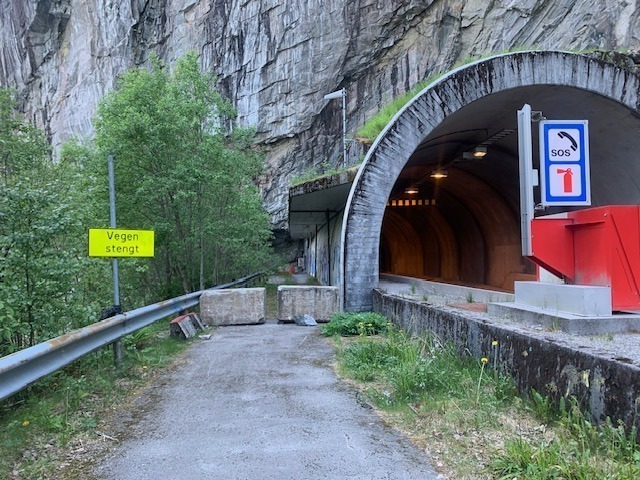
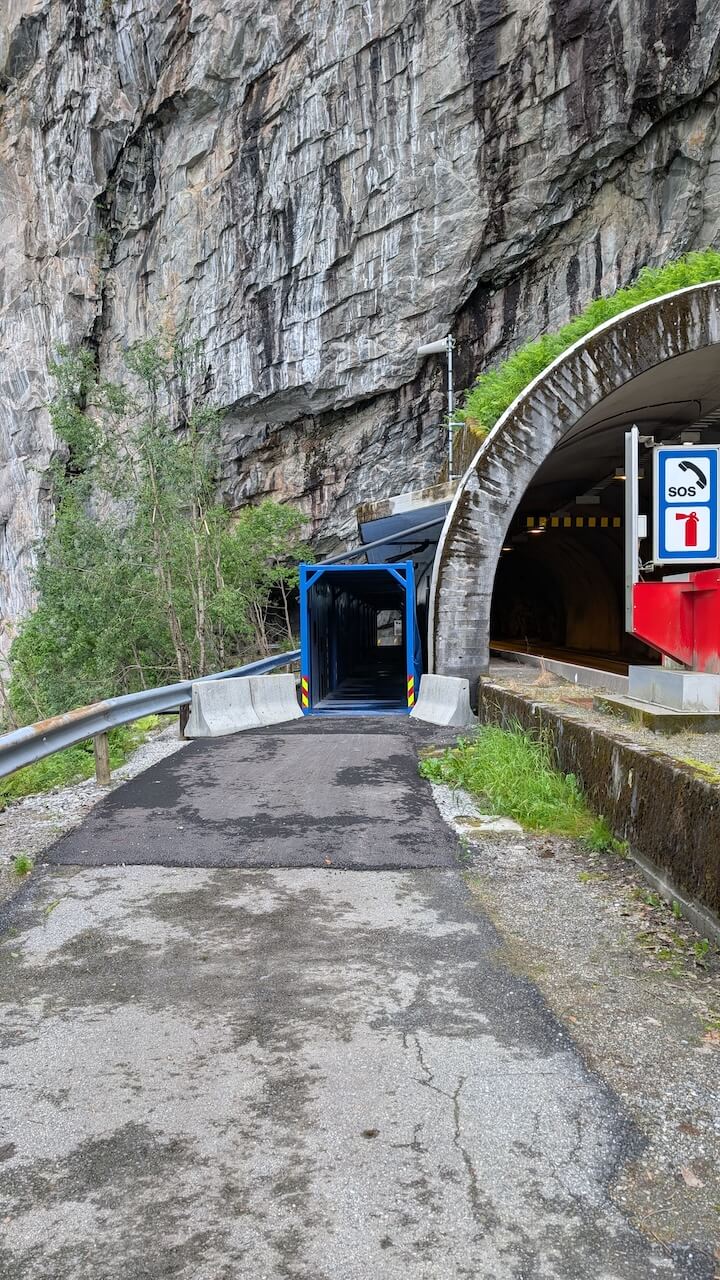
One to take extra care going through  – Sundafjelltunnelen (1883m): The old road has fallen into the fjord, so this tunnel is compulsory. It is rather wide but busy and climbs from Floro to Forde.

IMPORTANT UPDATE: One tunnel side road near Førde was closed due to a rockfall for several years. In 2025, they finally fixed it with this beautiful blue container, which really fits with the natural environment!

2024
2025
 

Busy Roads

  • Road 5: Connects Førde to Florø and is the only option in this area. It has cycle signs warning traffic of your presence. Unfortunately, supply trucks will be present and there are 6 tunnels on the road. Most are short but with traffic in the tunnels, this will be an unpleasant experience. Tip: If you can set off early on this road you will find it quiet and pleasant to cycle (spectacular views of the ocean).
  • E39: Near Trondheim, there is a short section on the main road. It doesn’t last long and traffic is usually light on this part of it.
  • Bergen, Ålesund, Kristiansund, Trondheim: There will be plenty of traffic as you enter the city areas. Luckily most have cycle paths and you should find it safe to get into the cities on designated cycle lanes. Note, Ålesund’s cycle lanes are old and confusing. You will probably get lost cycling into the city.

The Weather

When the weather is good this really is a slice of paradise. Nevertheless, when the weather is bad expect strong gusts of winds from the Atlantic, cold temperatures, and plenty of precipitation. You should be well prepared for all types of weather and plan your day’s travel accordingly. It can be frustrating cycling in bad weather and having a plan of action with different options to consider will allow you to mitigate the worst of the weather.


Further Reading

Clothes List

Public Transport

Gear list

Opening & closure of roads

Accomodation

Finnmark too has a certain mystique. Being about the same distance from Oslo as Istanbul, in some ways, it’s basically the last stop before the North Pole. The undoubted highlight of the journey is simply cycling the wild expanse of Europe’s last great wilderness. It will feel very lonely up here but isn’t that a reason to cycle it? The cycling heat maps of the world are full of well-ridden roads. Here you will join a small group of cyclists seeking something extraordinary. Passing wild herds of reindeer and perhaps not seeing another human for many hours is why you came – right? The ride comes to an end in the town of Kirkenes which has Russian road signs. This will indicate you have reached the boundaries of the Western world!

Transport

Finnmark too has a certain mystique. Being about the same distance from Oslo as Istanbul, in some ways, it’s basically the last stop before the North Pole. The undoubted highlight of the journey is simply cycling the wild expanse of Europe’s last great wilderness. It will feel very lonely up here but isn’t that a reason to cycle it? The cycling heat maps of the world are full of well-ridden roads. Here you will join a small group of cyclists seeking something extraordinary. Passing wild herds of reindeer and perhaps not seeing another human for many hours is why you came – right? The ride comes to an end in the town of Kirkenes which has Russian road signs. This will indicate you have reached the boundaries of the Western world!

Terms of use

Keep in mind

All cycling routes published on CYCLENORWAY.com are simply a planning resource to be used as a point of inspiration in conjunction with your own due-diligence. All route guidelines were prepared under diligent research. However, we can never for certain insure the complete accuracy of the routes. Cycling in Norway is in general very safe. Nevertheless, should you choose to cycle this route you do so at your own risk.


Check weather conditions

We advise that you check weather conditions along the route and look out for land/road closures. 

Check out this helpful video to see how the routes can be uploaded onto your mobile device and cycling computer.

Cycling long distance is tough, and you should not attempt routes that are beyond your level. 

Follow all rules and regulations when wild camping. 

If you discover any inaccuracies on this page, please let us know so we can correct them.

More routes in the area

Fjord Norway

This special and breathtaking route is full of climbs and descents… Spectacular views are everywhere, but you will need to have a good level of fitness to enjoy it. The highlights are never-ending, including many of Norway’s most famous roads.

Fjord Norway

This special and breathtaking route is full of climbs and descents… Spectacular views are everywhere, but you will need to have a good level of fitness to enjoy it. The highlights are never-ending, including many of Norway’s most famous roads.

Sognefjellsveien

This epic across Norway is the perfect route if you want to see as much contrast in scenery in the shortest space of time. Deep valleys, powerful glaciers, Nordic forests, and one of Norway’s best fjords are on show.

Sognefjellsveien

This epic across Norway is the perfect route if you want to see as much contrast in scenery in the shortest space of time. Deep valleys, powerful glaciers, Nordic forests, and one of Norway’s best fjords are on show.

Trondheim – Bodø

The journey to the Arctic awaits on one of Norway’s most popular long-distance routes. Beauty is around every corner.

Trondheim – Bodø

The journey to the Arctic awaits on one of Norway’s most popular long-distance routes. Beauty is around every corner.

Leave your thoughts below

Stay up to date with the latest from Norway’s cycling scene.

Subscribe To Our Monthly Newsletter

non-intrusive, offering informative news, blog posts, videos, and more.