
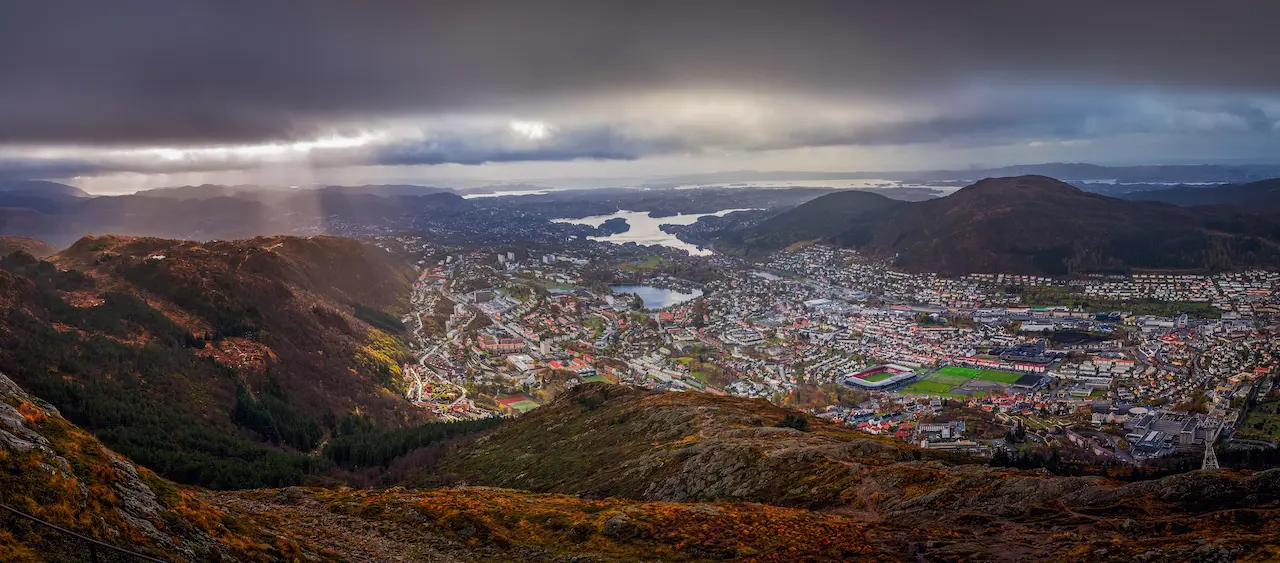
Bikepacking in Norway had been on the cards for a while. But the real questions were where and when, and our original plan quickly fell apart. I’d pictured wild camping beside mirror-still lakes and cruising along flawless tarmac and firm gravel, but before any of that could happen, there was the matter of admin. That’s where the trip began to go sideways.
Text and Photos by Stuart Gray, Bikepacker from the U.K.
Our first error is one I really don’t want anyone else to make: flying into Kristiansand with your bike is not, apparently, possible. At least, not for us. KLM simply wouldn’t let us book our bikes as luggage. There was no workaround, no exception – just a hard no. We didn’t even get a refund. Instead, we found ourselves rerouting to Oslo, starting our journey hundreds of kilometres from where we’d planned. In bikepacking, the first lesson is always the same: adapt or go home.
Our preparation, if I’m being honest, was minimal. I’d done a bikepacking trip through a European summer before, but my two friends were on their very first. Not just their first bikepacking trip – they’d never even done an overnight. We were not the sleek, ultra-efficient adventurers you might imagine. This was a learning curve for all of us.
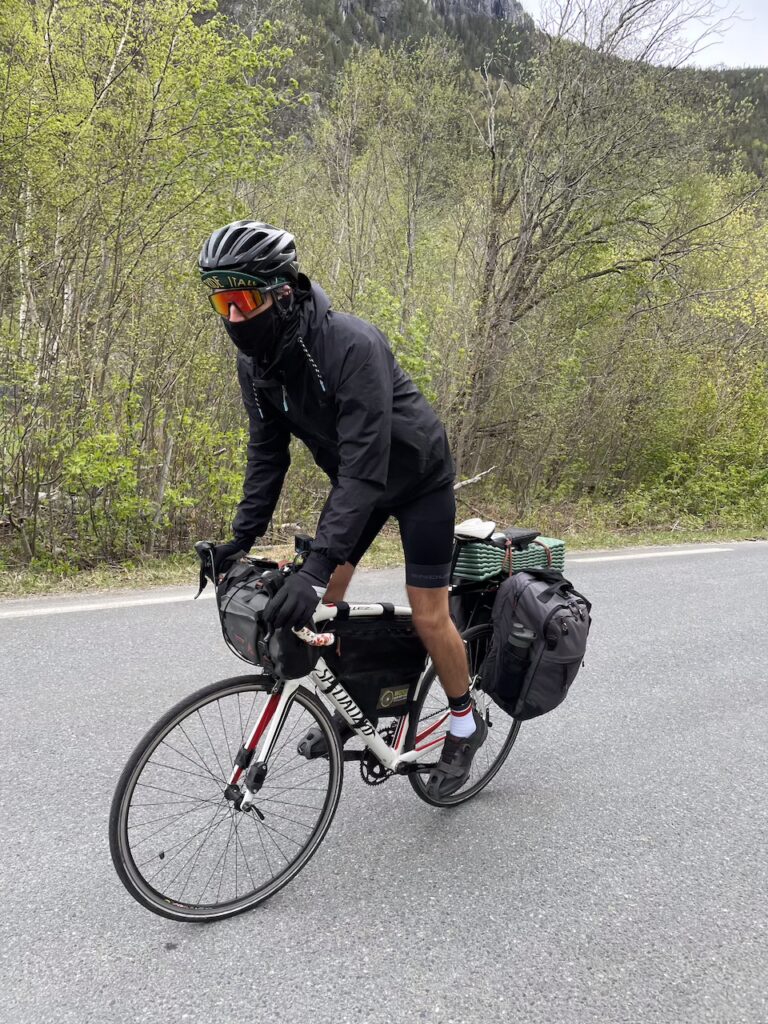
We’d booked the first week of May for the trip. That meant unpredictable weather, still-snowy peaks, and the chance of sub-zero nights. The plan was simple: one-way, Oslo to Bergen. I prefer one-way journeys; you feel like you’re really moving through a landscape rather than circling back on yourself. Originally, we were going to take the train to Kristiansand and ride up the coast, but the lure of the mountains was too strong. We knew that at this time of year we couldn’t cycle all the way through them, but we wanted to get as far in as we could. We were lucky with the weather – not the sort of luck you can plan for, and it coloured the whole trip.
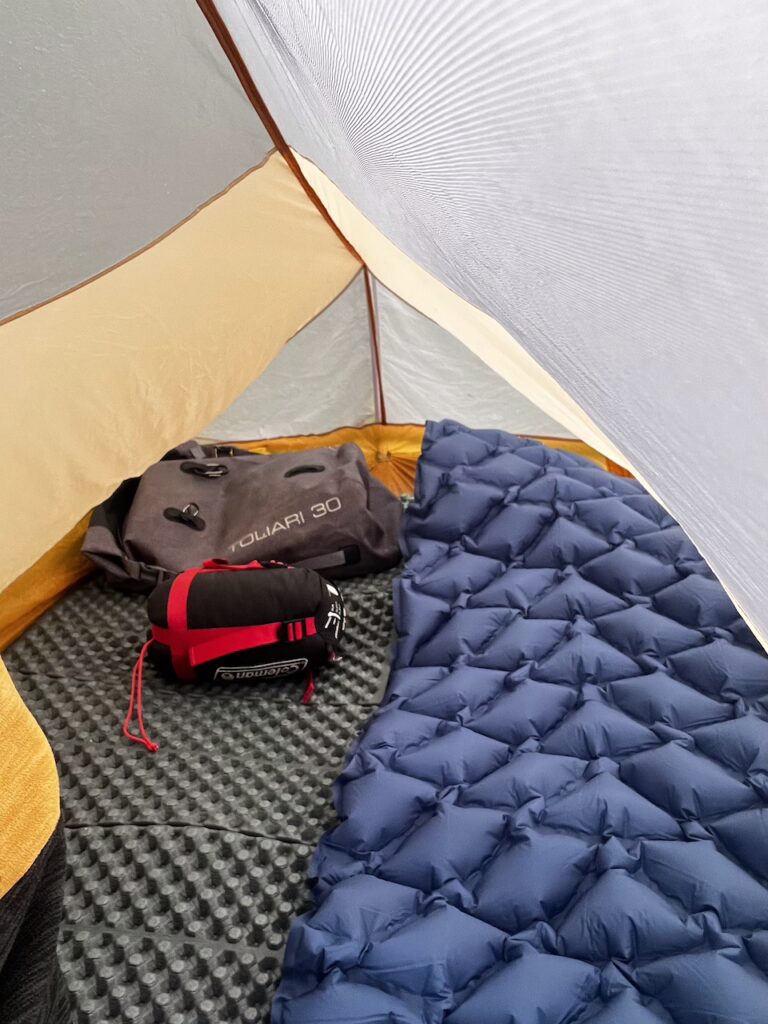
Packing was straightforward. Between the three of us we carried two tents (a one-person and a two-person), two stoves, and a couple of changes of clothes each. We packed light but kept it sensible – never more than an hour from civilisation. I’ve always found it reassuring to ride close to a train line, especially when you’re new to bikepacking. My essentials were simple: a tent, a sleeping mat (I like the egg-crate style because they bungee easily to the bike), stove and gas canister (readily available in Norway in both screw and clip styles), neck warmer for the wind, warm layers for the cold nights, and an eye mask because even in early May it’s light until almost midnight and again by three in the morning.
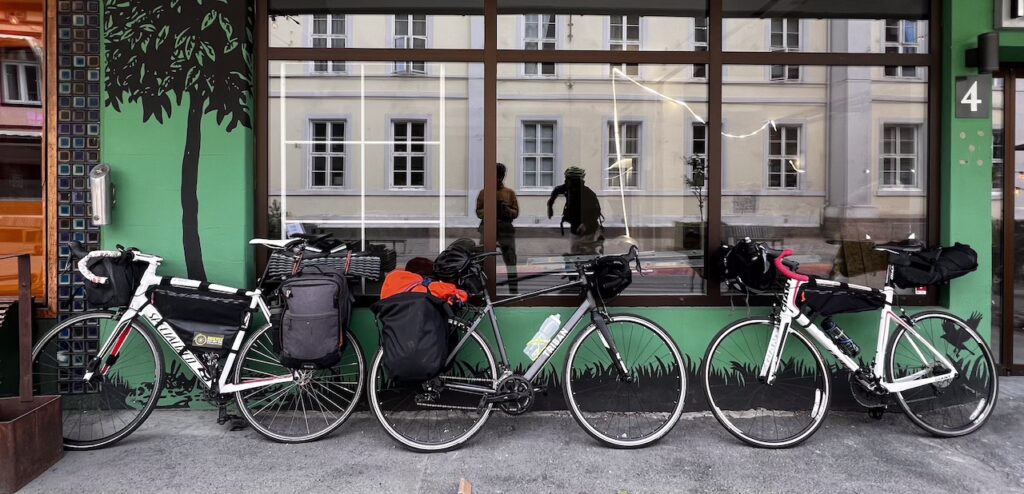
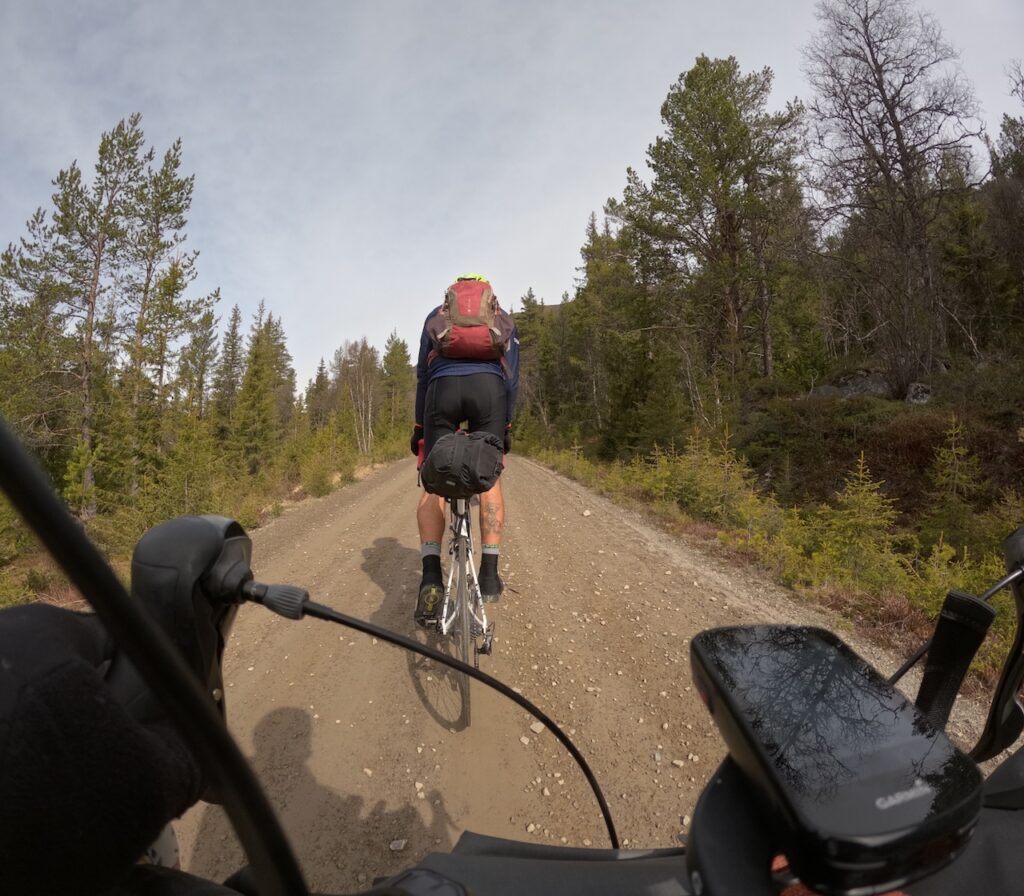
All of us were riding road bikes of various ages and specifications – no £5,000 gravel setups here. We hit some gravel roads along the way, but nothing the bikes couldn’t handle. In truth, it was the careful bikepacker’s route. We had no mechanical failures, though luck probably played a role there too.
The route follows some of Cycle Norway’s Oslo to Bergen route and some of the National Cycle Route 6. It was pretty loosely put together and aimed at just hitting the towns along the way using road signs. The best way to cycle between Oslo – Bergen is to follow the tried and tested routes you find on this site. We perhaps could have done that better, but in early May, the traffic is light, and that gave us some flexibility.
We rolled straight from Oslo airport onto a short train to Drammen. The Vy app made buying tickets simple, just don’t forget to buy one for your bike too. That night we wild-camped on a small island in the river. People walked past with dogs, but no one seemed to mind. The sun had been warm, the air golden. Then darkness fell and the temperature collapsed. Our sleeping bags weren’t rated for 2–5 degrees, and layers didn’t help. We barely slept, and by morning our breath hung in clouds over the tents.
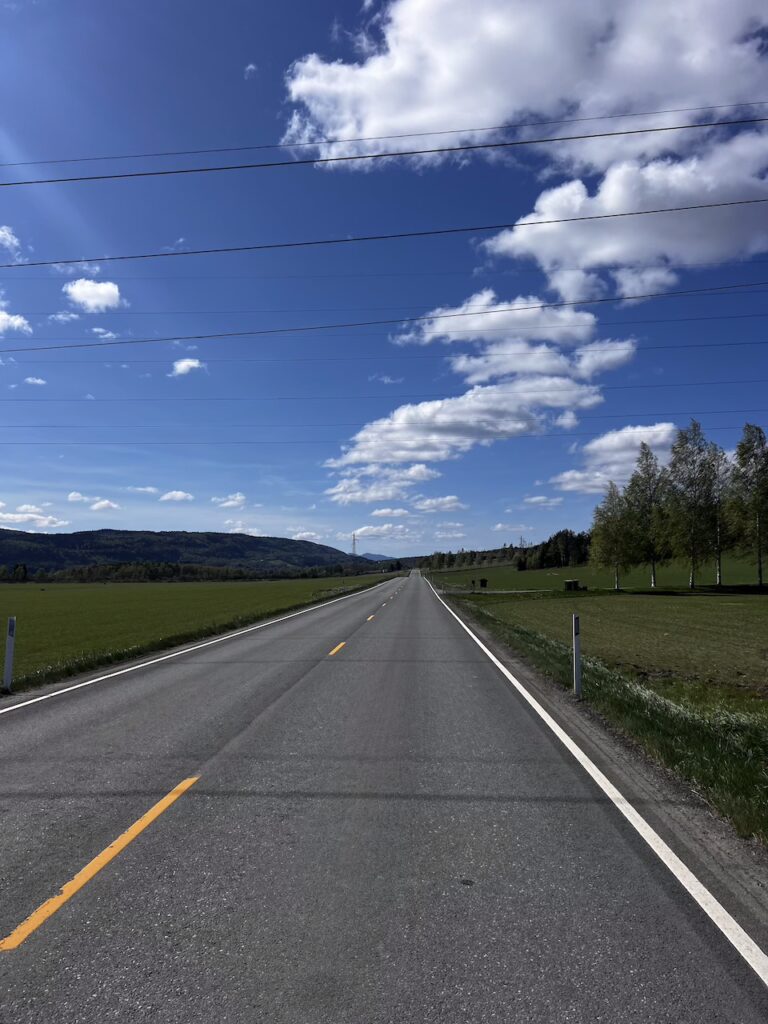
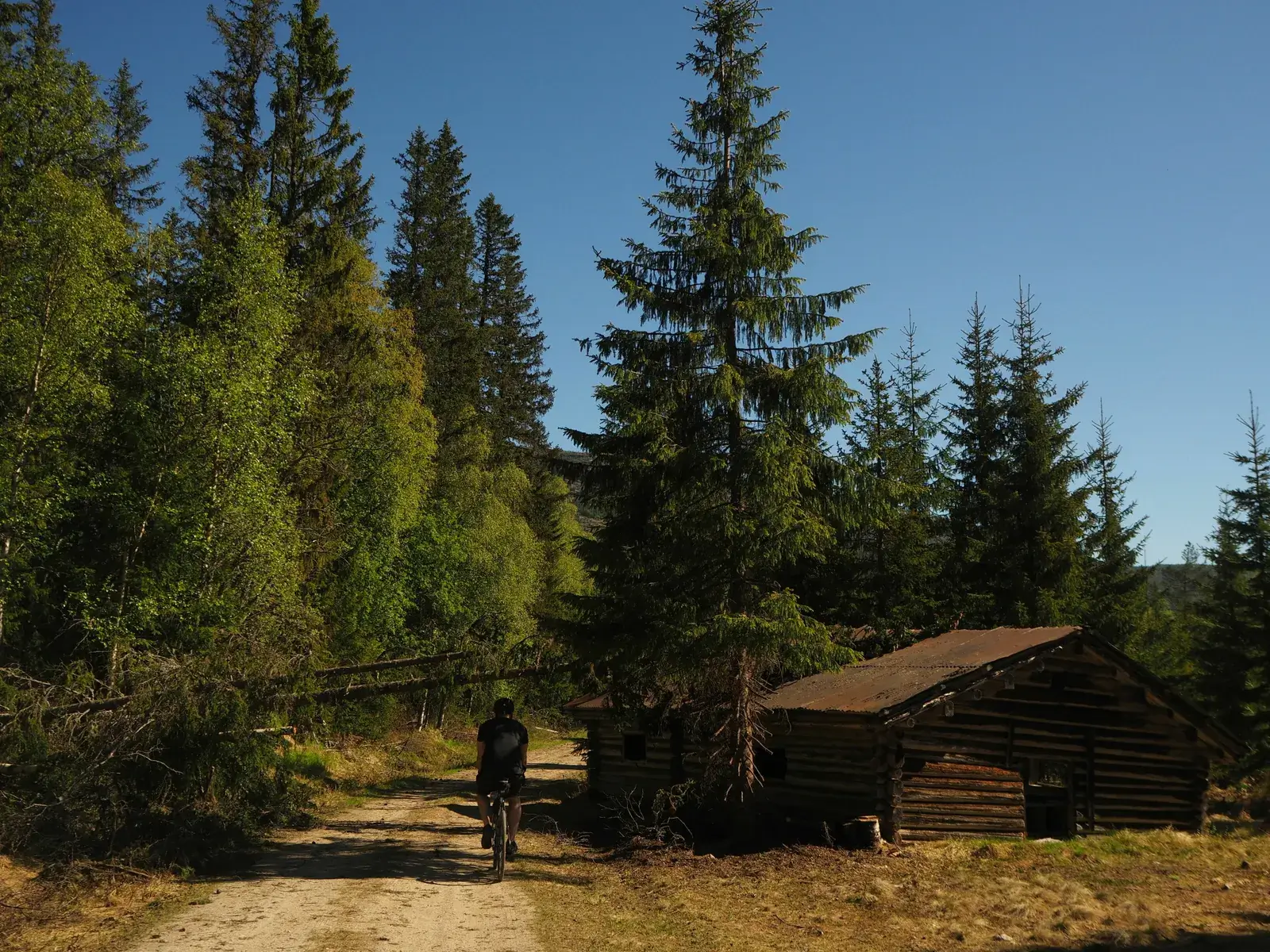
The ride from Drammen took us into forests and along some of the most perfectly surfaced roads I’ve ever seen. We didn’t rush – stopping for snacks, photos, and to thaw out in the sun. We asked a local where we might camp that night and were told, vaguely, to “camp down by the church.” That suggestion turned into one of the trip’s warmest moments. By evening, the pastor himself had taken us in, sparing us another frozen night in the tents.
From Rollag, the valley began to rise. It was an all-day climb but never too steep – just a constant uphill pull. We dipped on and off the main road, following side routes that took us past quiet farms and small lakes. The tarmac stayed smooth and, when the wind dropped, we could ride three abreast and chat. But as we passed the dams, an icy headwind slammed into us, strong enough to grind the conversation to a halt. That night we gave in to the cold and booked a cabin. Split three ways, it cost less than £30 each and came with hot showers, a warm bed, and a kitchen – luxury in the Norwegian mountains.
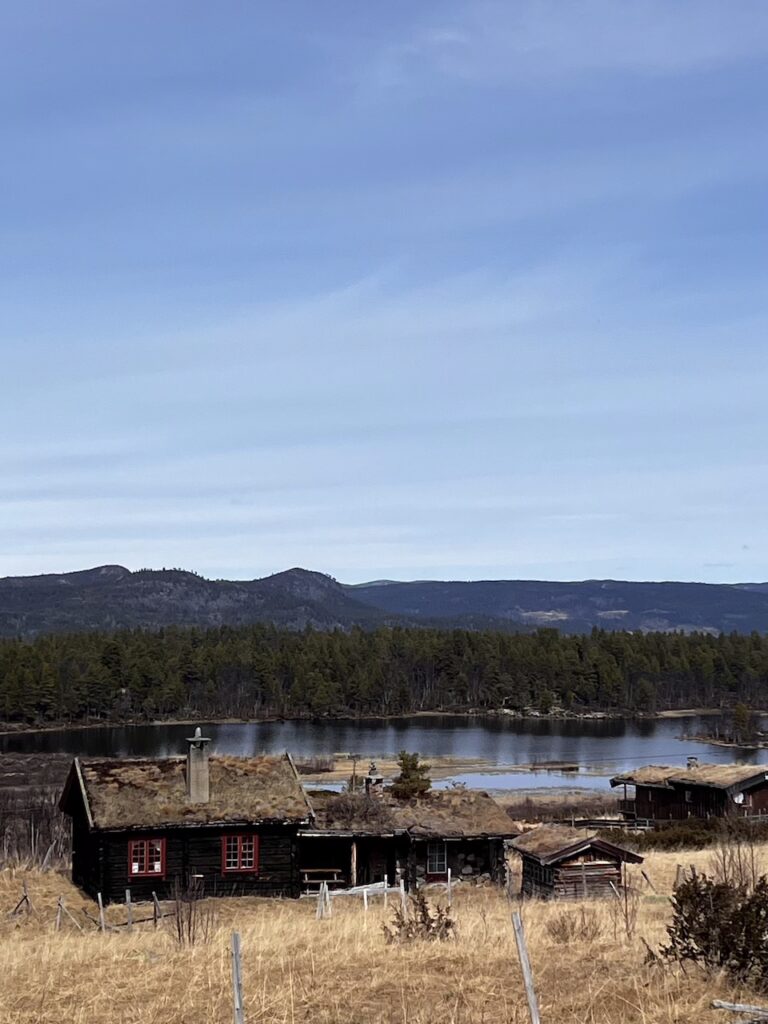
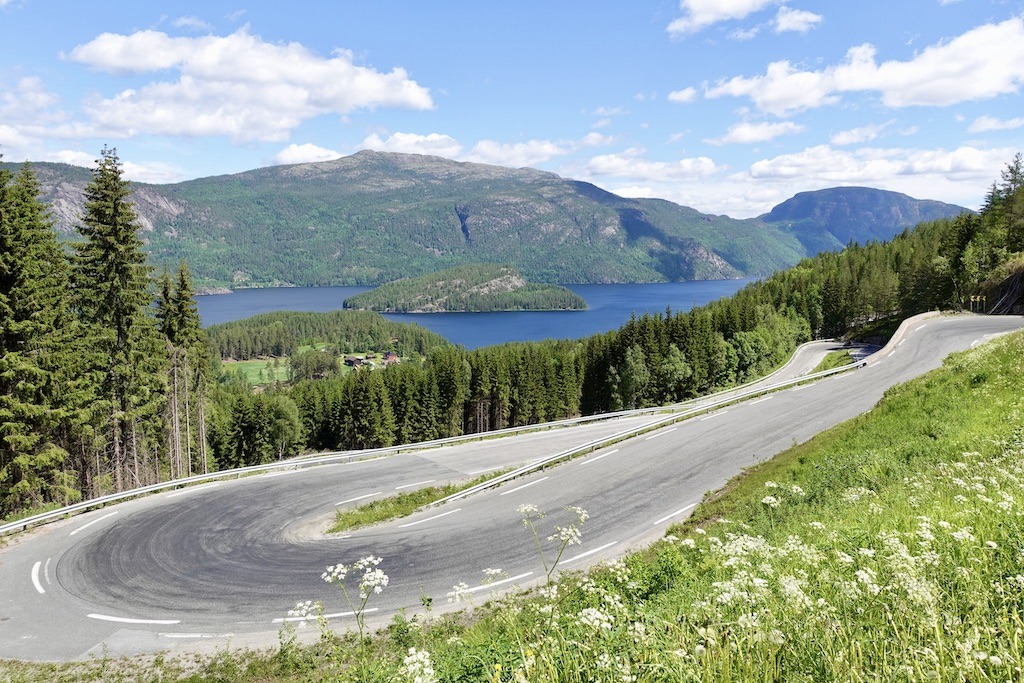
The next day the scenery shifted again. Snow-capped peaks appeared on the horizon, framed against a perfect sky. Gravel paths led us into long, flowing descents where the road curled away beneath us, the air rushing colder as we dropped. Twice we had sweeping descents into Geilo, each one framed by mountains that seemed close enough to touch. Geilo felt like salvation – a proper town with supermarkets, accommodation, and the train line we’d been aiming for since Oslo.
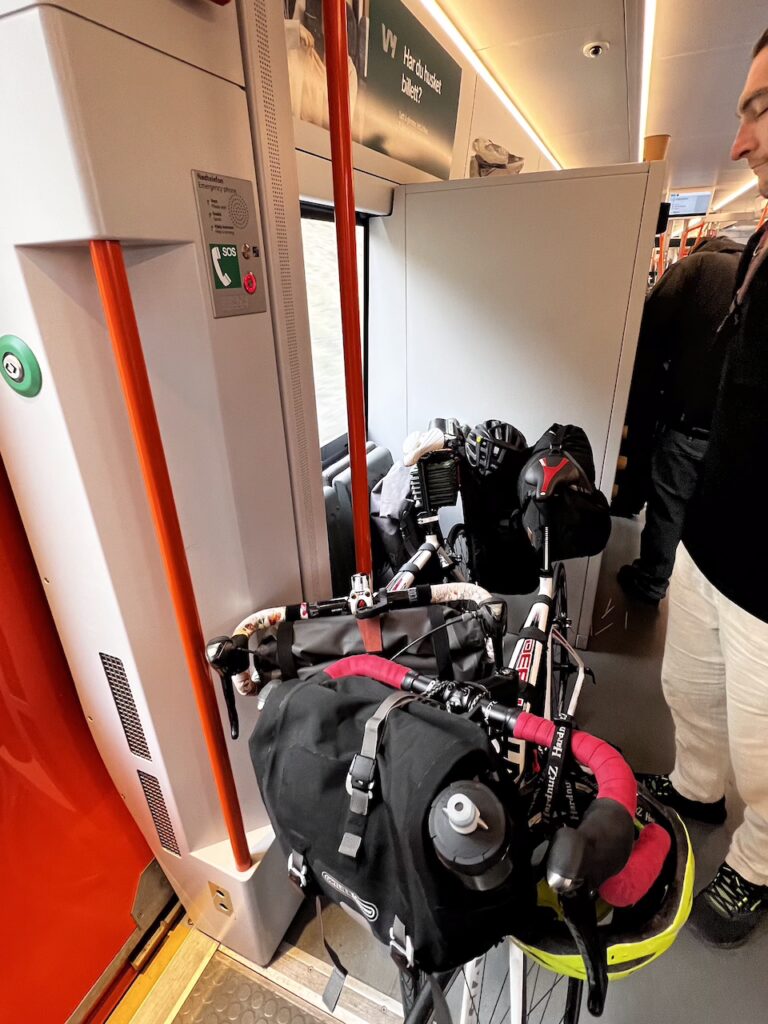
We boarded the train west and I was glad for it. Early May isn’t the time to ride through the Hardangervidda plateau unless you enjoy snowdrifts and icy headwinds. From the window we saw frozen rivers, still lakes rimmed with ice, and vast white expanses stretching to the horizon. Dropping down into Arna felt like sliding into another season. The fjord lay flat and silver, the air heavy with salt. We followed a farm track to a hidden bench right on the water, complete with a diving board for the fearless – none of us were tempted. Later, we rolled to a campsite beside the fjord, the mountains hemming us in on three sides.
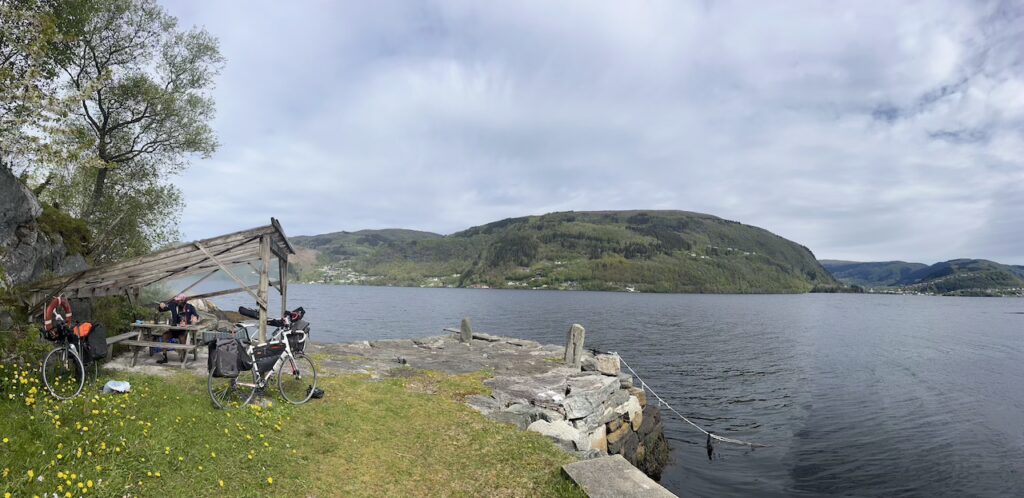
The next morning, we pointed our wheels north, away from Bergen, to chase some of Norway’s famous bridges. We joined the EuroVelo 1 route, well-signposted and easy to follow. The bridges are feats of engineering, arcing over deep blue channels, each with a separated cycle lane. The roads between them carried more traffic than we were used to, but the views were worth it. We looked for wild-camp spots but most were overlooked by houses or too exposed, so we opted for a campsite again. It had hot showers, a kitchen, and a warm communal space where we could linger after sunset.
Our last ride was the short roll into Bergen. The city has some excellent cycle routes, especially if you’re coming from the south, and we took our time. At the Trek shop, we collected bike boxes we’d reserved earlier in the week. The staff even told us how to get them back to our hostel on the bus, another small kindness in a week full of them.
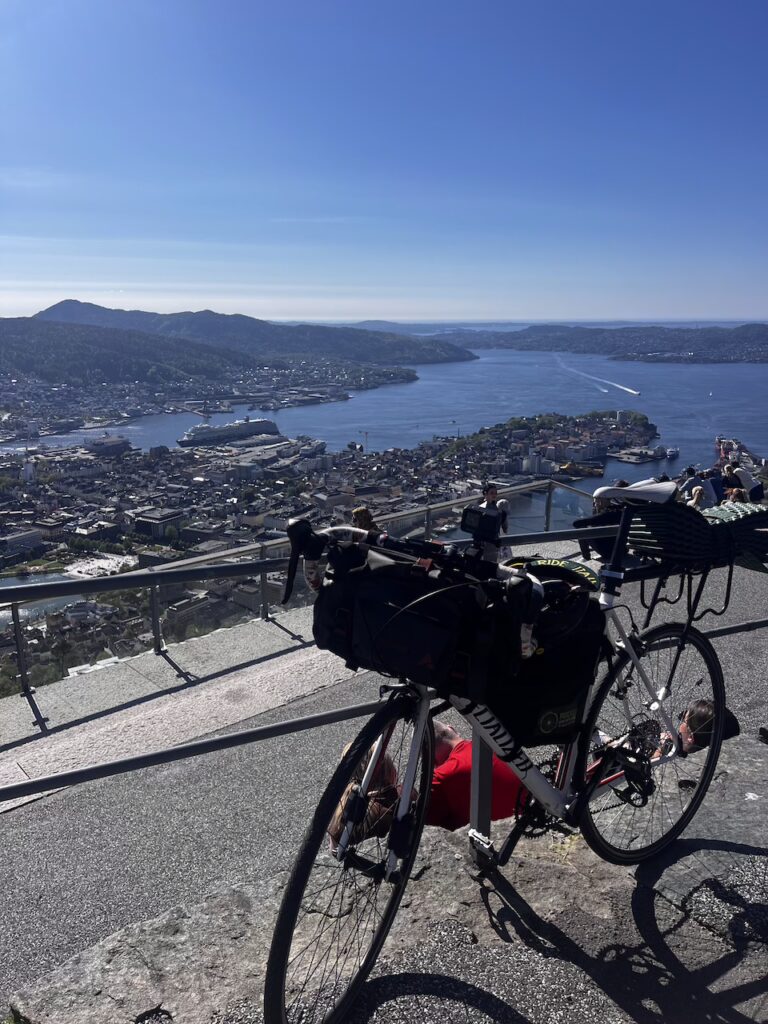
Looking back, the trip was a mix of contrasts: hot sunshine at midday, freezing nights that bit through our gear; empty roads through silent forests, and the roar of wind on the dams; kindness from strangers, and long, solitary climbs. If you go, wrap up warm, especially at night. Don’t worry about having the perfect bike; ours were far from it, and they did the job. Plan your route, but don’t cling to it. Trust the signs. Don’t be afraid to take the train; in Norway, it’s not cheating.
Bikepacking here isn’t just about the distance or the climbs. It’s about the smell of pine on a still morning, the way the light lasts almost until midnight, the quiet satisfaction of rolling into a new town with everything you need strapped to your bike. It’s a place that rewards those willing to adapt, and if you let it, the road will change you.




Leave a Reply