



I do a lot of consultation calls throughout the year, helping cyclists plan their trips across Norway. After a while the conversations blur together, different routes, different faces, different ambitions, all coming through a screen. You rarely expect any of it to step out into real life.
Last August, on a warm, bright day in Oslo, I was walking down towards the central station when I saw four men ahead of me dragging oversized bike boxes across the pavement. Anyone who works in cycle tourism knows that look: jet-lagged, half-excited, half-nervous, with a long road ahead.
My first thought was a familiar one, will they recognise me from YouTube or the website?
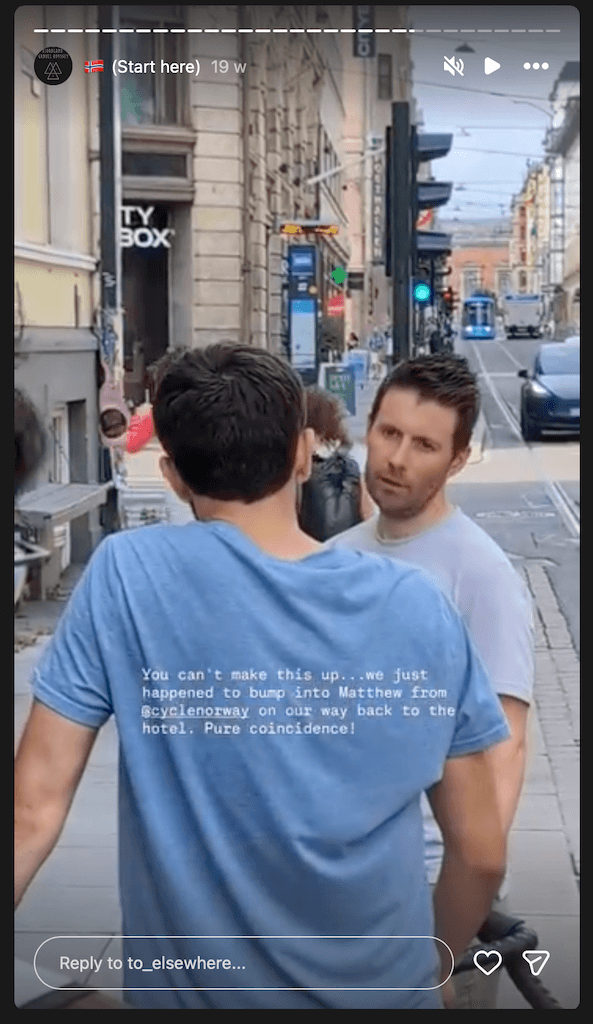
Then one of them turned and called out, “Are you Matthew?”
Instagram above credited to: https://www.instagram.com/to_elsewhere/
That confirmed it. But as he got closer, something else clicked. I knew this face. Not from the street, but from a screen.
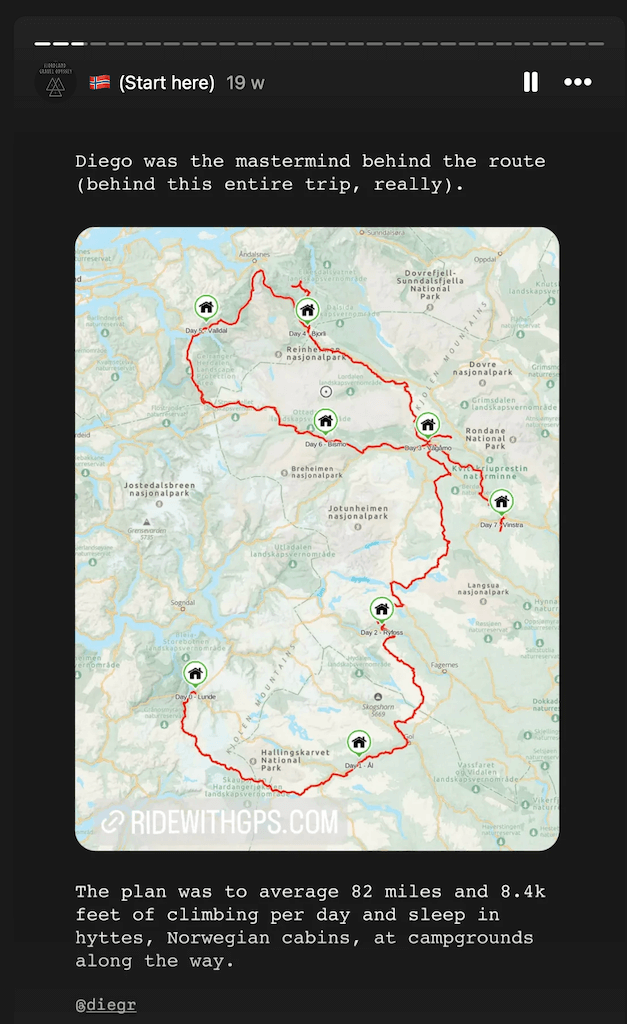
It was Diego from New York. We’d spoken months earlier on a consultation call while he was planning a demanding bikepacking route across Norway’s central highlands. Back then he’d been a voice in a headset, a map on a screen, a set of questions about weather, water crossings, and whether certain mountain roads were even rideable.
Now he was standing in front of me in Oslo, helmet clipped to his backpack, ready to find out. We talked for a few minutes there on the pavement while travellers streamed past us. He introduced me to the rest of his crew, Kyle, Remi and Arun, all from New York, all about to head north into some of the roughest and most beautiful riding Norway has to offer.

That’s when it really hits you what this work is. Most of the time it’s emails, GPX files, video calls and advice sent into the void. But sometimes, very rarely, the digital world folds back into the physical one, and the people you helped plan a journey are suddenly right there, bike boxes in hand, about to go and live it.
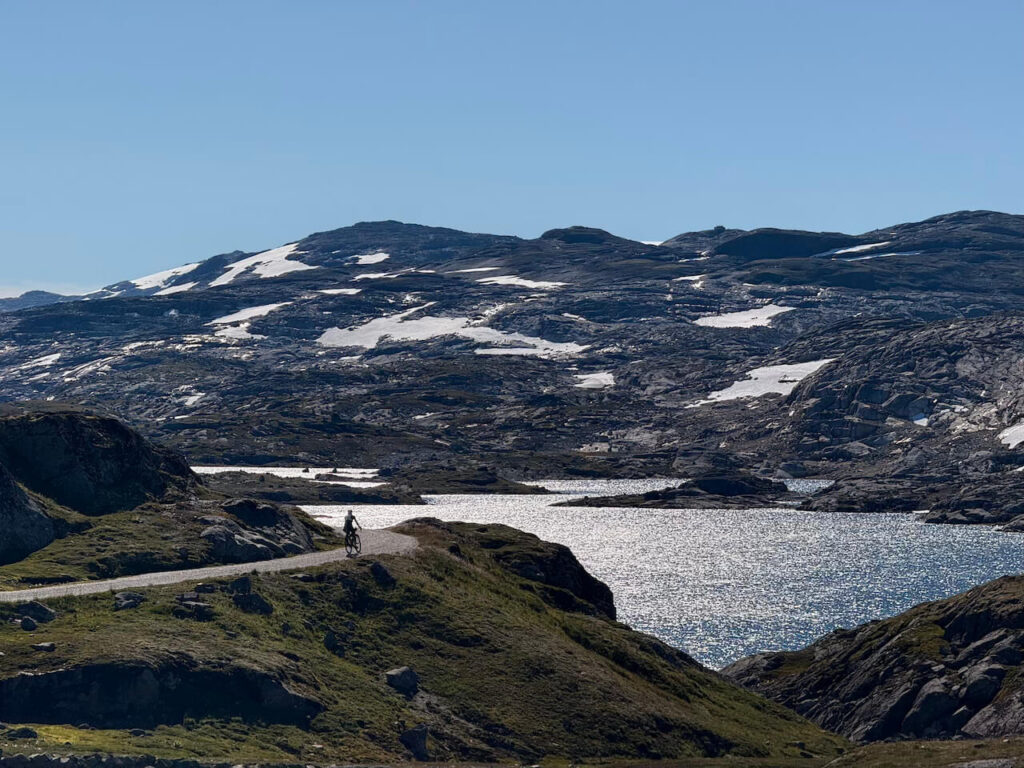
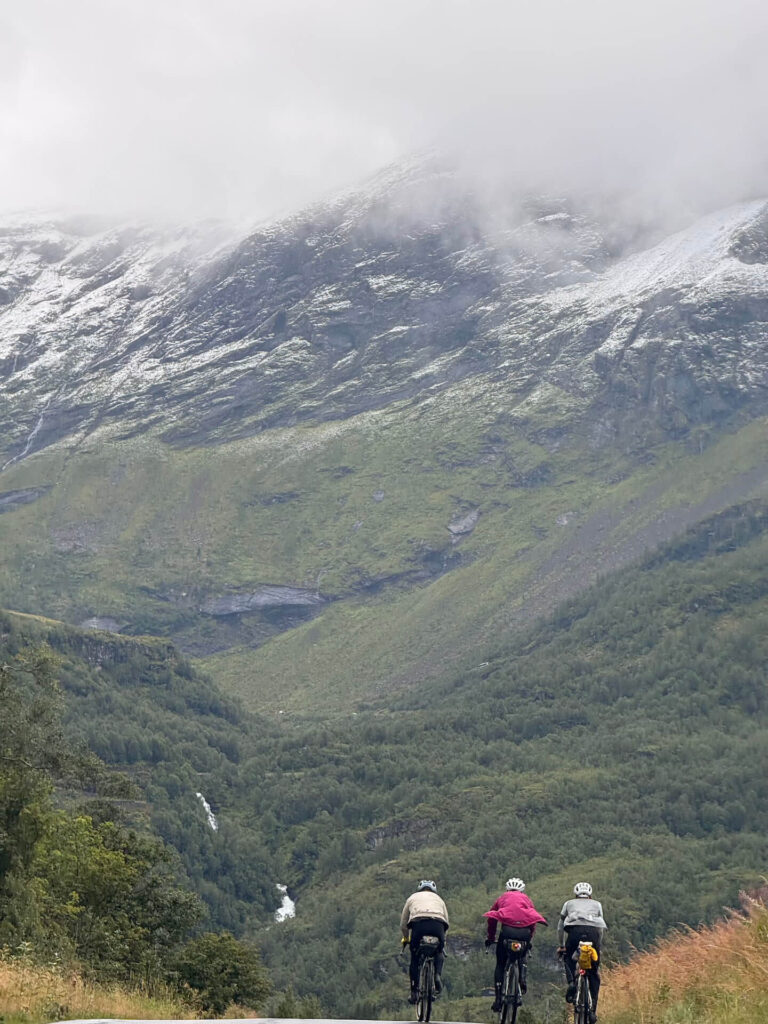
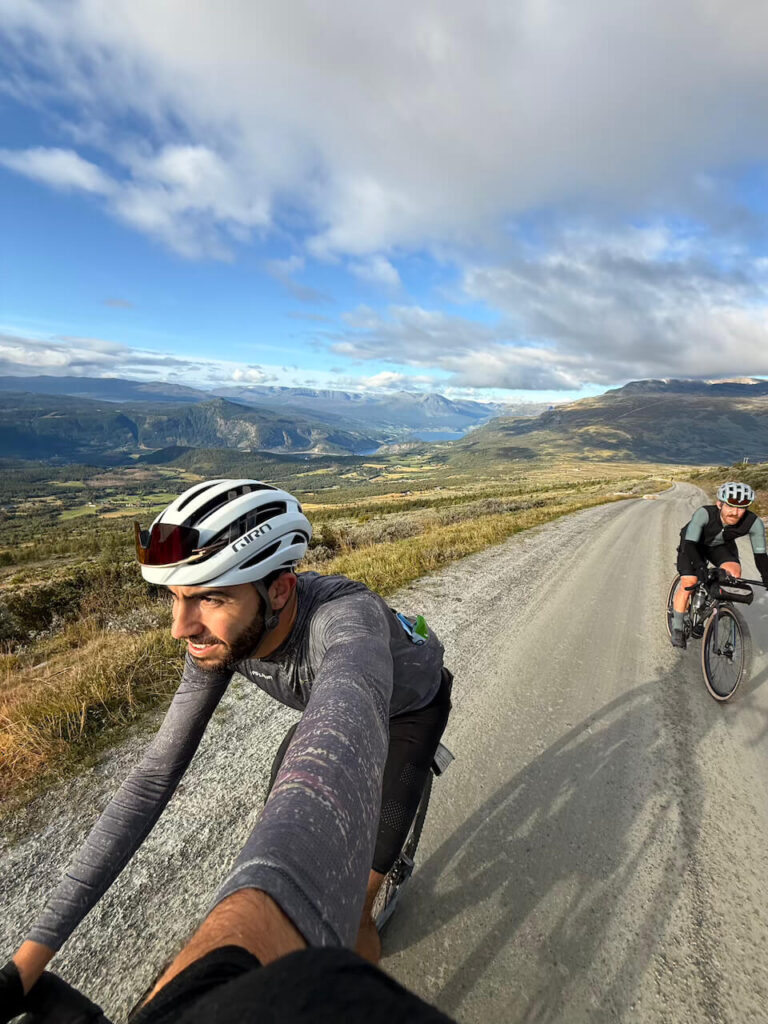
And for the next seven days, that’s exactly what they did. I followed their journey through Instagram as they rode deeper into the Norwegian highlands. Diego’s photography did an exceptional job, not in a glossy, tourism-board way, but in a way that actually showed what riding here feels like: big weather, long roads, small human figures moving through vast terrain. It was Norway as bikepacking really is.
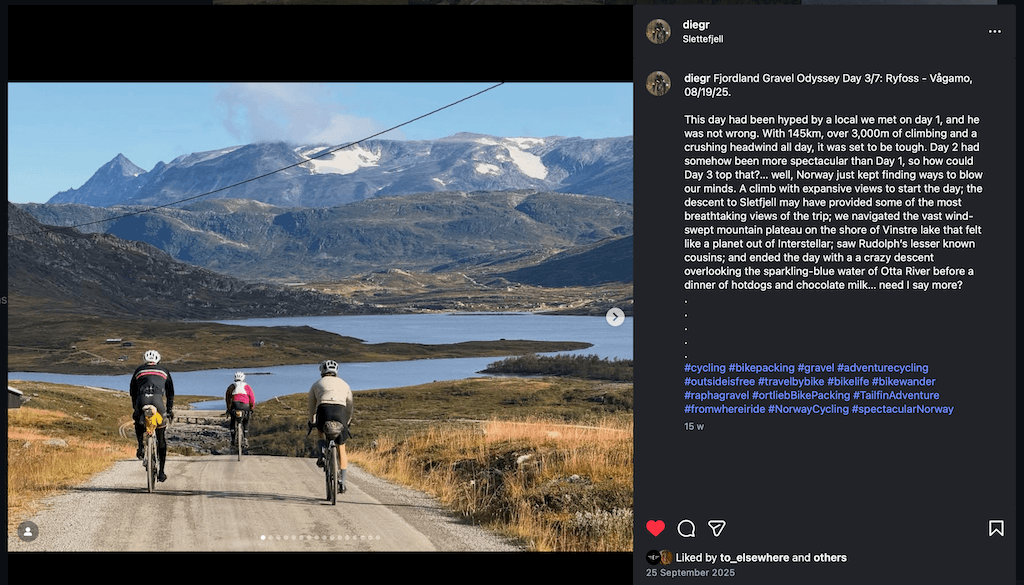
When they rolled back into Oslo, we met for a beer and I finally got to hear the full story. They had experienced the full spectrum. The first two days were blue skies and perfect riding, the kind of conditions people imagine when they dream about cycling here. But as they pushed into the inner fjord region, the mountains reminded them who’s in charge. A freak weather system moved in, and it even snowed on Trollstigen in August.
“That’s not typical, but it’s also not unusual. In the Norwegian mountains, anything can happen, at any time. I’ve learned that the hard way more than once.“
Diego has since written a full account of the trip for Other Means Magazine. It’s an honest, grounded piece, not just about the beauty, but about the fatigue, cold days, and what it really takes to ride a route like that. I’ve been permitted to share an excerpt here; the full story will be in the next issue of the magazine at othermeansmag.com, alongside work from riders and writers from around the world.
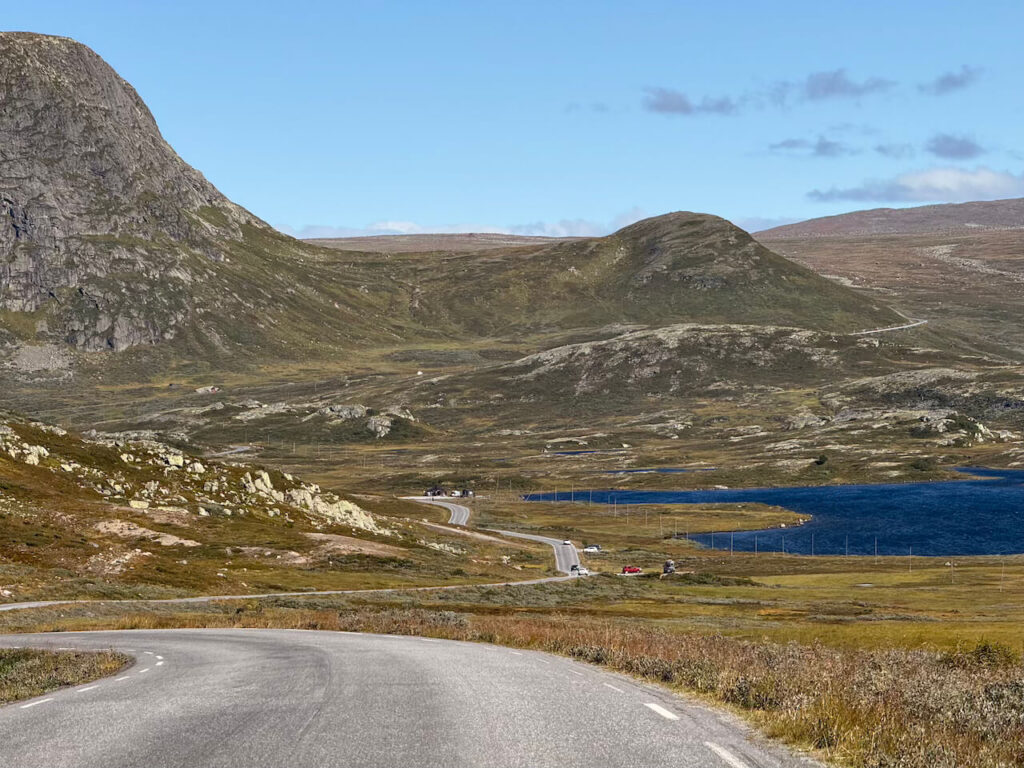
If you’re thinking about a serious bikepacking trip in Norway this summer, it’s well worth reading. It won’t sell you a fantasy — it will show you what the country actually gives you when you go in deep.
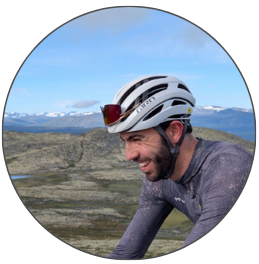
We dove into the first open café, bodies shaking uncontrollably, steaming like livestock.
– Diego Rodriguez
Geiranger – the queen stage, the storm, the fear.
Text and photos by Diego Rodriquez
We woke up in Valldal to rain so heavy it drummed the cabin roof like war. There was no other way but through. The day would be a game of hide-and-seek, trying to catch a weather window and ride it to the next stop. The fog swallowed the mountains on our descent to the Eidsdal ferry – snow-capped peaks towering over the fjord. Rain hammered us on the first mountain pass, temperatures plummeted and our soaked gloves proved useless as our fingers froze around the brake levers on the descent to Geiranger. We dove into the first open café, bodies shaking uncontrollably, steaming like livestock.
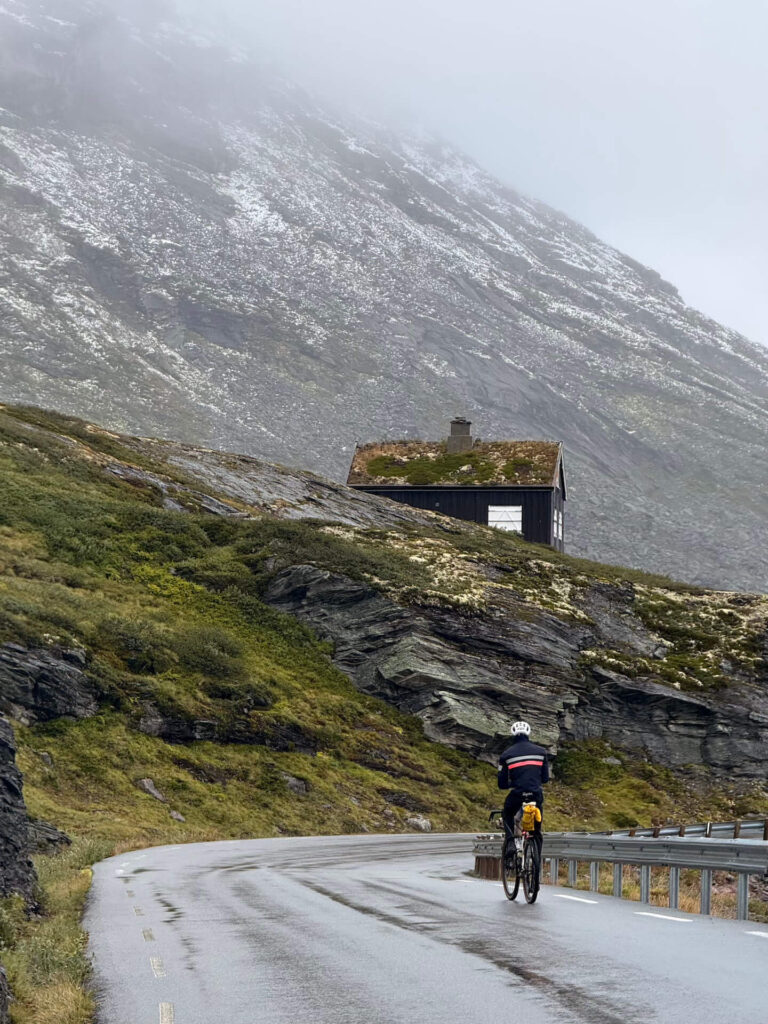
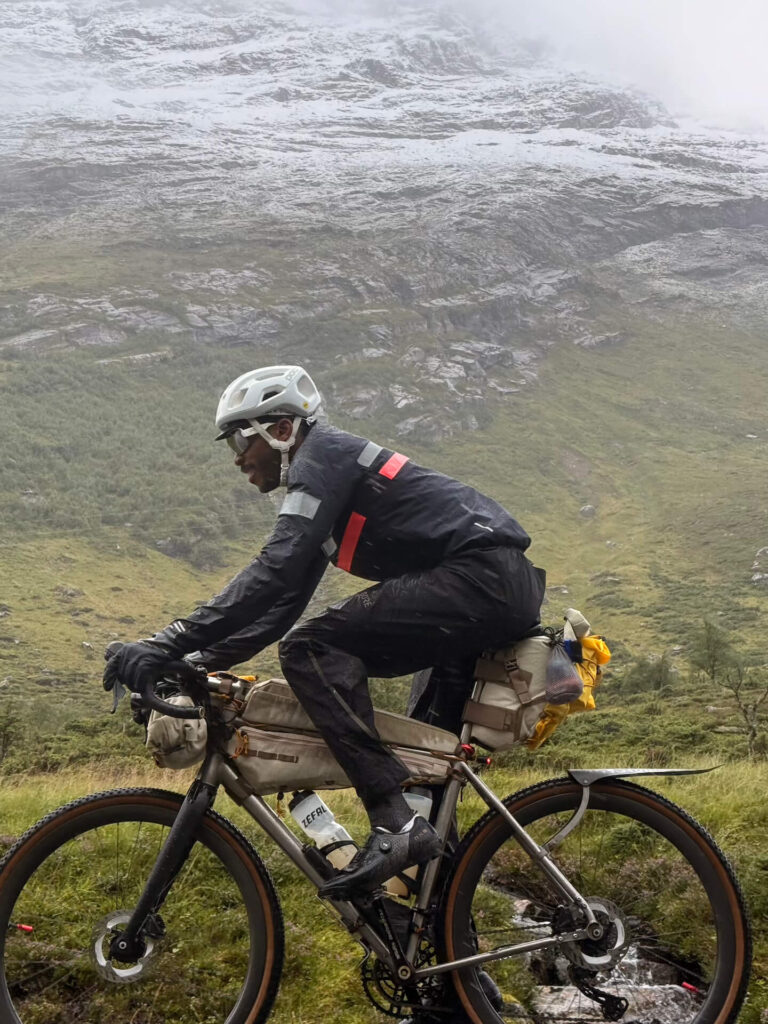
We stayed there for hours, terrified of the climb out which would take us above the snow line. We knew the valley on the other side of the pass was waiting for us with warmth and dry weather, but was it possible to get across safely? There was no way out – no buses or ferries that could carry us to safety. Could we convince some local to drive us across the pass? Would there be a place to hide at the top if worst came to worst? Google Maps insisted there was a café open on Djupvatnet, but on previous days we had run into so many “open” spots that were in fact closed “for the end of the summer season” – could we trust this one? It became a running joke, did åpent really mean anything?
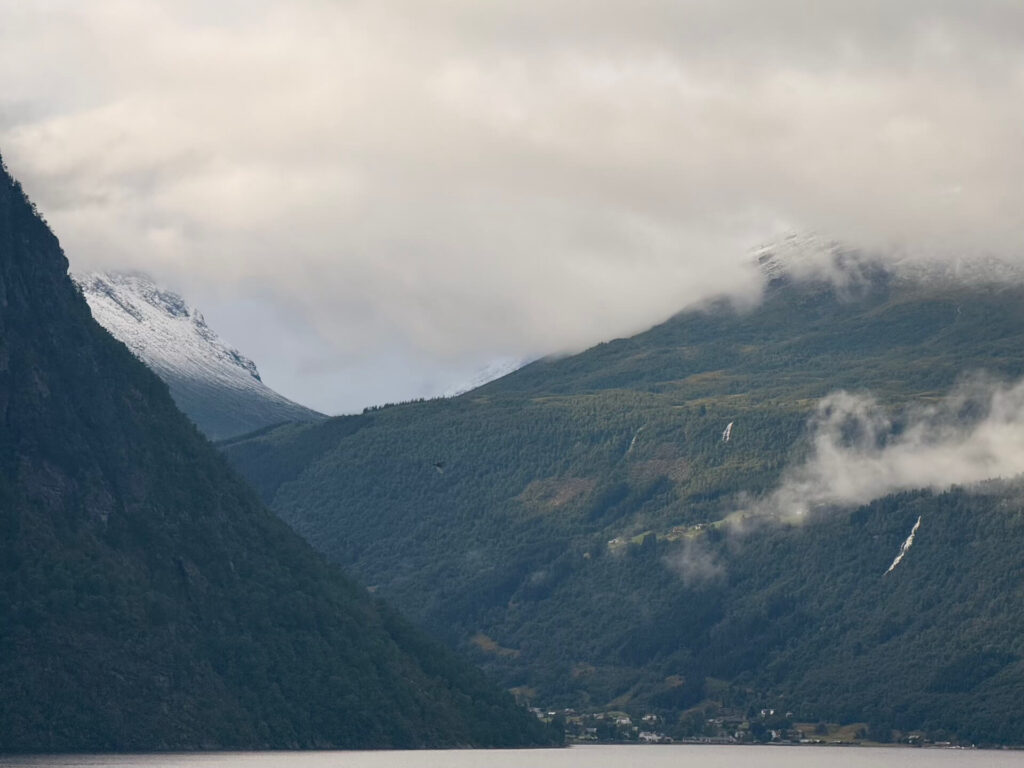
When a small tear in the clouds finally appeared, we took it – kitchen gloves on our hands as a last hail Mary to stay dry. “VeloTipz” we called them, an homage to the silicone wonder protecting our feet. Ridiculous. Necessary.
Climbing out of Geiranger together felt like a pilgrimage. The fjord dropped away behind us as we climbed towards the snow line, and the fear we’d carried dissolved into awe. Near the top we were engulfed by the clouds and snow began to fall, but with the warmth of the climb in us, it felt like stepping through a magical wardrobe. At the top, we hustled into the miraculously open café just as the whiteout storm swallowed the world outside.
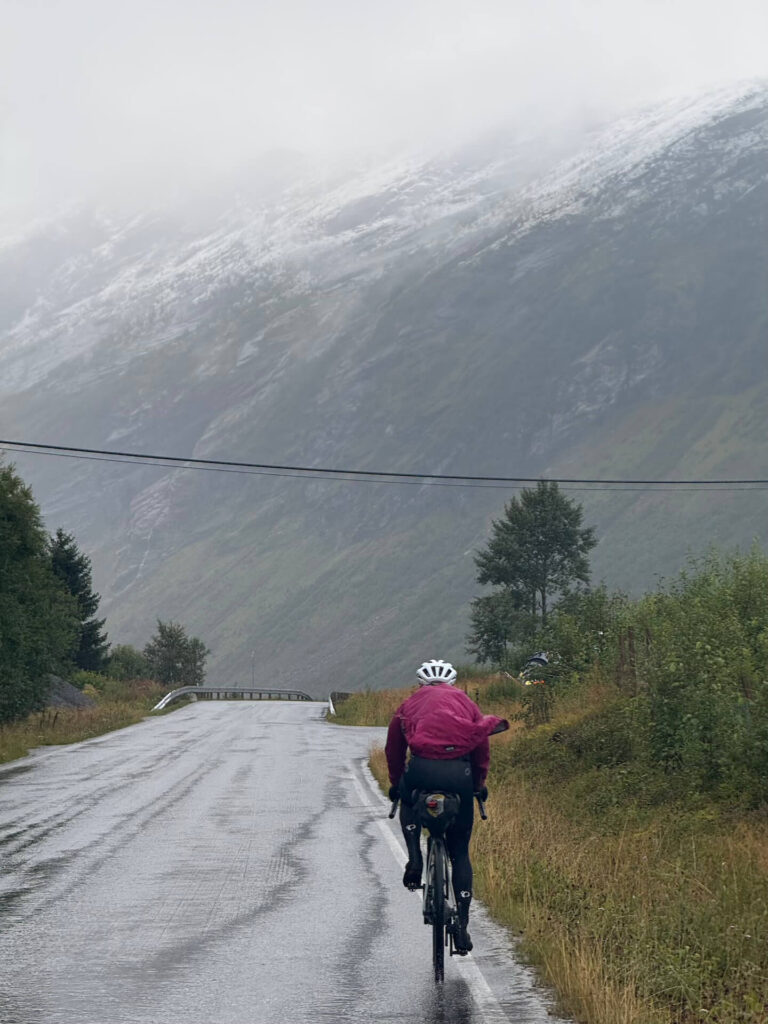
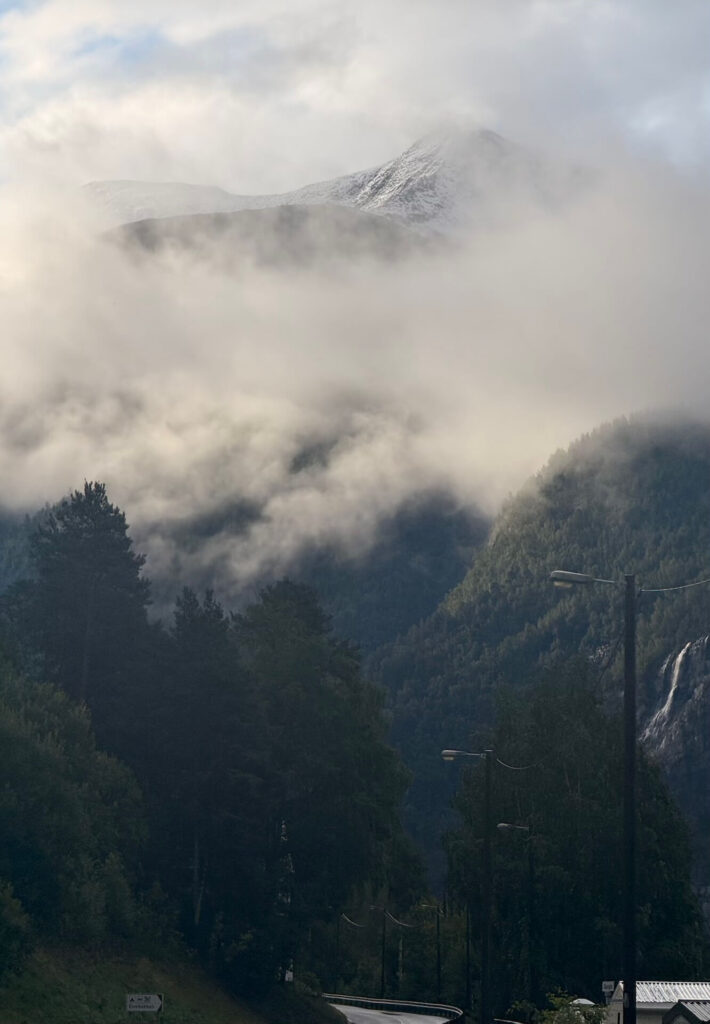
The café eventually closed, and we had no option but to ride into the cold. As we got further from the coast and left the high mountain behind, we descended into sunshine and dove off the main road onto small gravel paths – and Norway rewarded us with some of the best riding of the trip. Fast, flowing, golden. Even winking at us with the fleeting shadow of a moose darting across the path.”
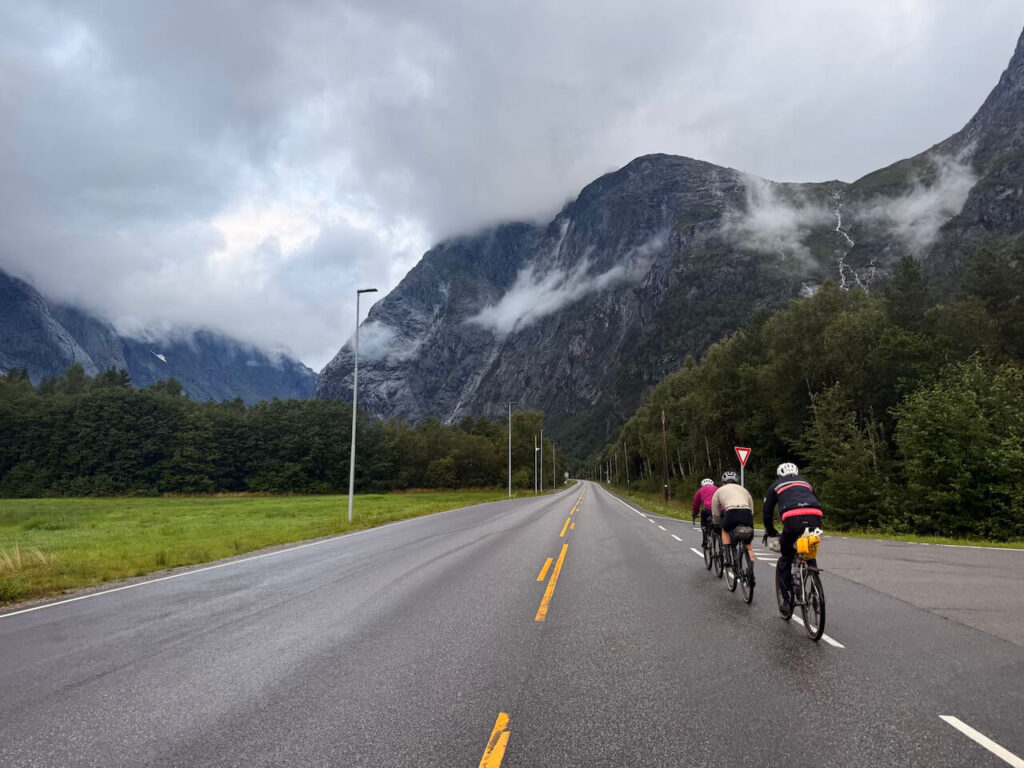
The full story will be in the next issue of the print magazine, available to order soon at othermeansmag.com.




Leave a Reply