


When
Late June - September
Written by
Knut Myking & Matthew Tolley
Distance
246km
Days
2-5
High point
1301
Difficulty
8/10
Unpaved
80%
Total Ascent
4659
Ferries
Tunnels
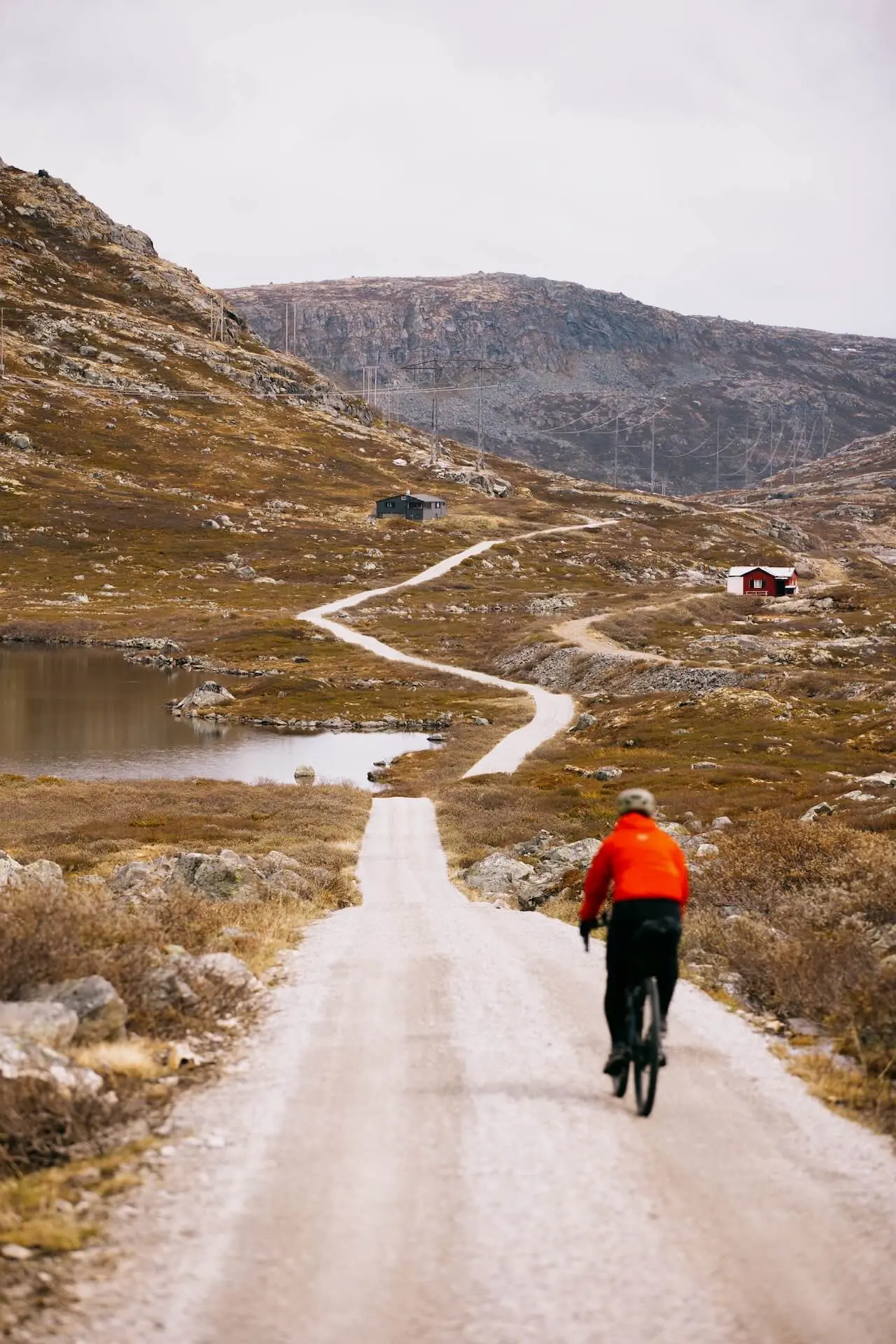
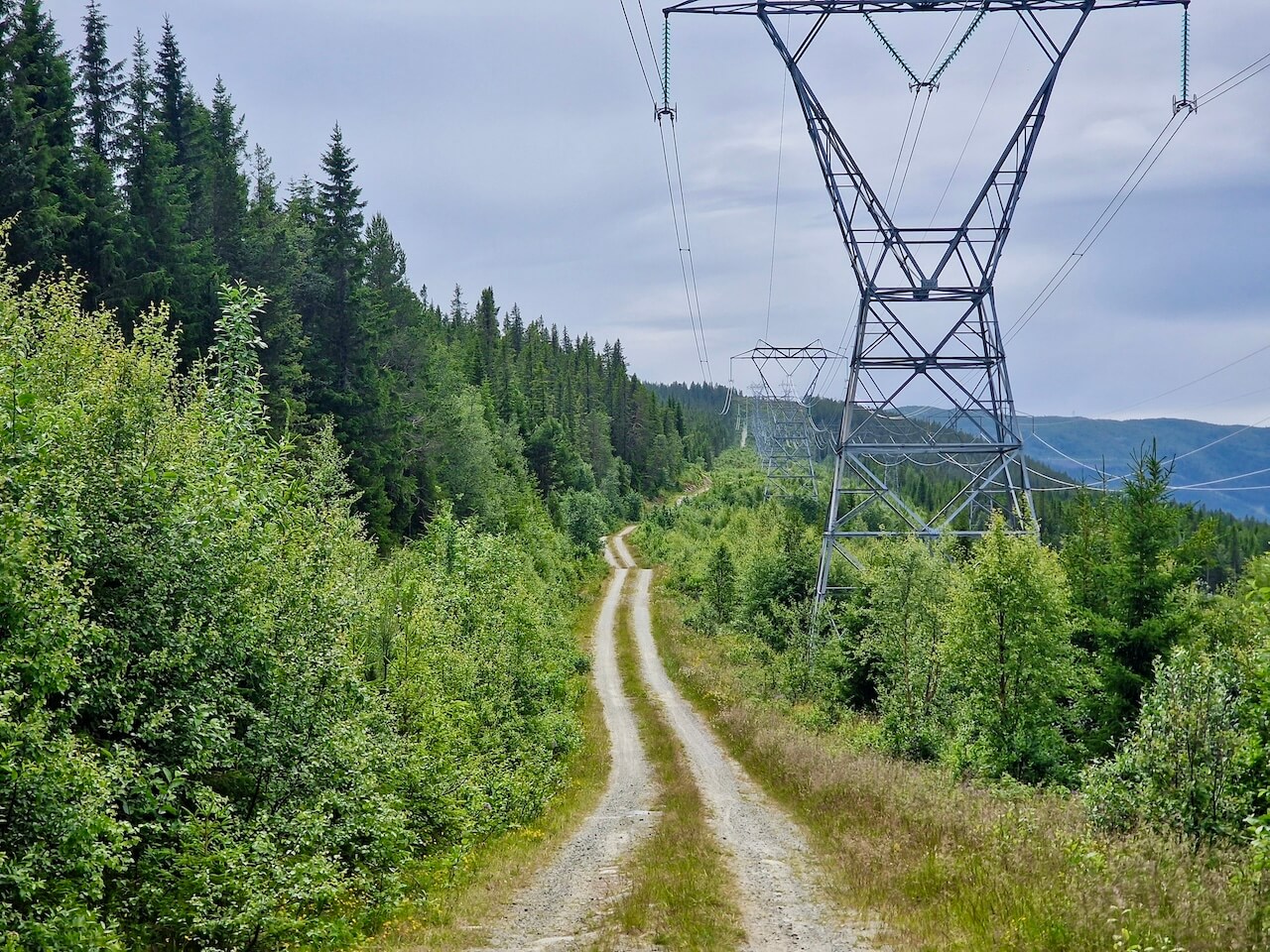
Electric pylons aren’t exactly the highlight of any landscape. Most of the time, they’re just steel skeletons marching across valleys, dragging cables toward some factory or city on the edge of nowhere. Normally, I’d avoid them. But in Norway, they tell a different story. Here, those same steel towers don’t guide you to industry – they guide you into the wild. They lead you up into the heart of the mountains, across high plateaus where no roads should exist, yet somehow do. They trace a path to remote hydropower stations perched over 1000 metres above sea level, and they quietly tell the tale of one of Norway’s greatest feats of modern engineering.
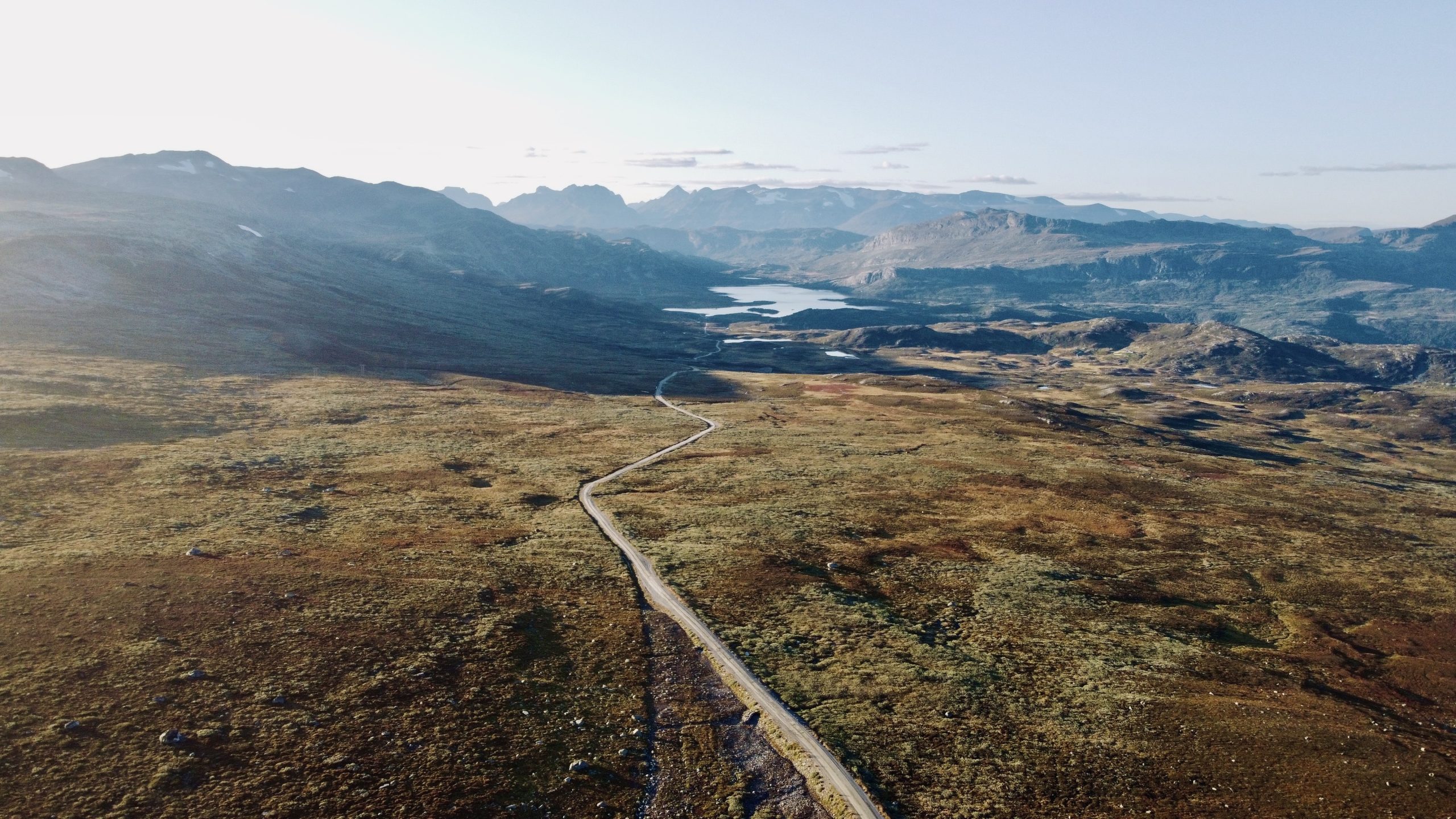
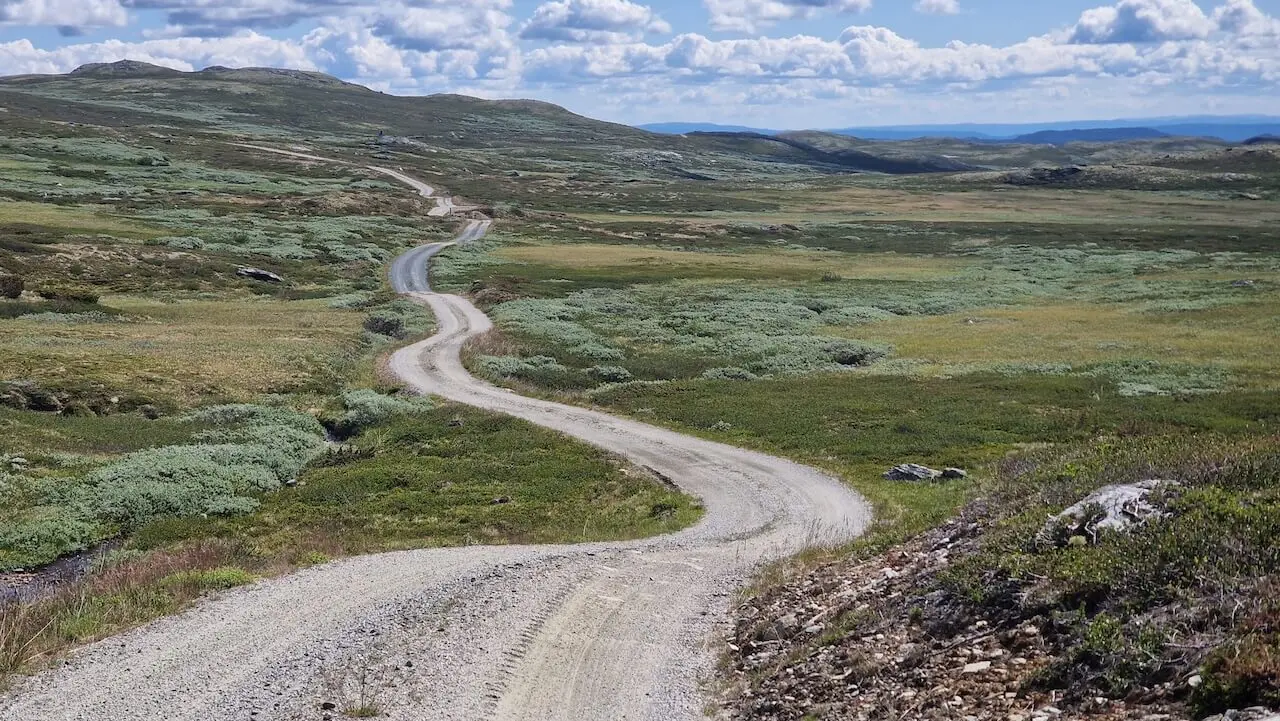
If you’re after a rugged, rewarding gravel adventure that weaves together Norway’s hydropower legacy, mountain culture, and raw natural beauty, the High Voltage Route is worth your attention. This demanding three-day, 250 km loop climbs into the dramatic highlands of Hallingdal – a region shaped as much by nature as by the infrastructure built to harness it. The route follows service roads originally carved out for dam and power line maintenance. Today, they offer cyclists rare access to remote terrain even locals don’t see. Expect long climbs, high-altitude exposure, and remote stretches where you might not see another soul for hours.
Beyond the scenery, the loop is also a clever way to connect two of Norway’s most famous cycling routes – Rallarvegen and Mjølkevegen – but with a far more adventurous twist. It’s not a detour for the faint of heart, but for those with the legs and mindset for real bikepacking, it might be the highlight of your entire trip. Steel towers never looked so good.
The loop connects four towns, Nesbyen, Ål, Hol, & Hemsedal, via a network of gravel roads, scenic mountain paths, and the occasional stretch of asphalt. What makes this loop unique isn’t just the quality of riding but the deep interconnection between landscape and infrastructure.
Since the 1920s, Hallingdal has played a central role in Norway’s hydropower development. Large dams built in the post-WWI era required construction of roads into remote valleys and mountain zones. These roads, originally built for dam maintenance, are now open to the public. While cars must pay tolls, cyclists enjoy free access, one of Norway’s unsung treasures.
Add to that older trails once used by farmers to reach their summer mountain pastures, and more recently, a web of access roads for cabin development and ski tourism, and the result is a dreamlike patchwork of ridable backroads stretching across the region.
Fun Fact: The region’s hydropower facilities generate a significant share of the electricity used in Oslo, making this loop not just scenic, but symbolically charged with the energy that powers Norway’s capital.
While Hallingdal is flush with natural beauty and outdoor infrastructure, the loop also raises questions, subtle but unavoidable—as you ride. On one hand, you’re pedaling through a wealthy region whose municipalities benefit greatly from energy production. Public services like education, healthcare, and cultural initiatives are well-funded.
Yet the traditional backbone of the region, local food production, is fading. Once full of small farms raising goats, sheep, and cows in the highlands, Hallingdal now hosts only a handful of active producers. Many meadows lie quiet. The signs of modern wealth are instead seen in the luxury cabins, ski lifts, and tourist resorts that dot the higher elevations.
It’s a stark contrast: nature being preserved in one form, and consumed in another. Riding through it gives time to reflect. You’re tracing the contours of Norway’s past and future, powered quite literally by the rivers beneath your wheels.
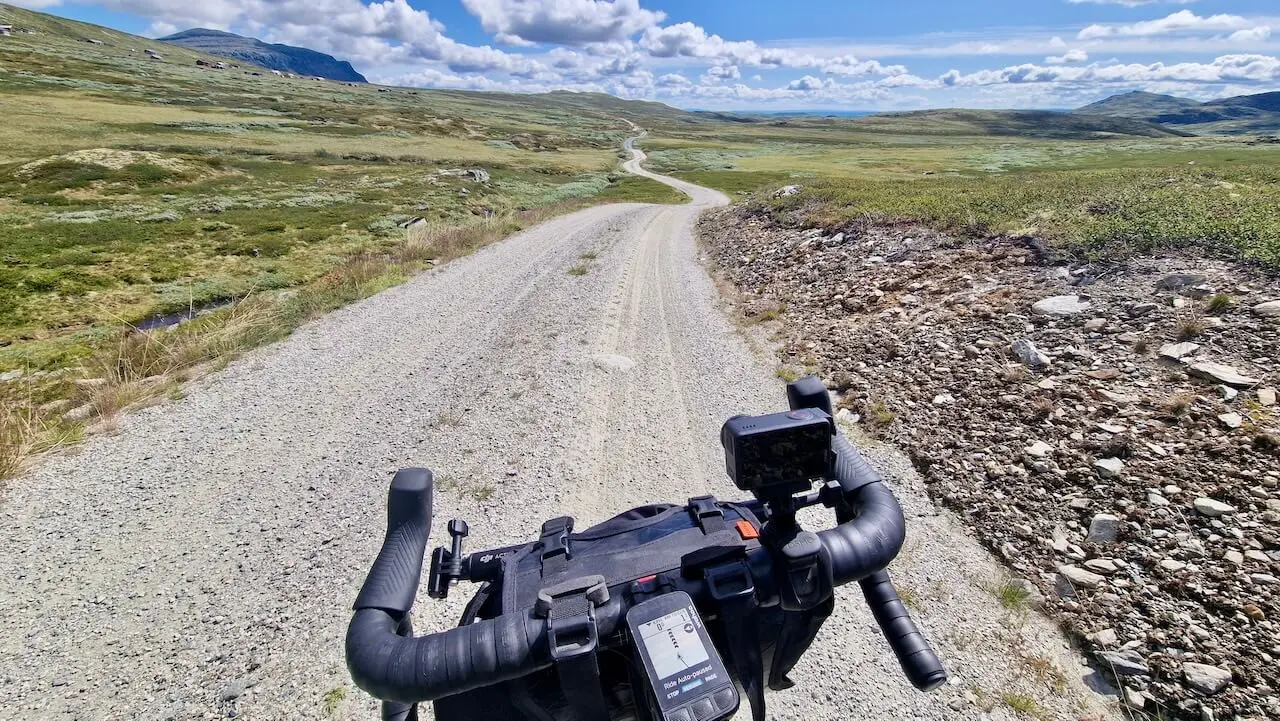
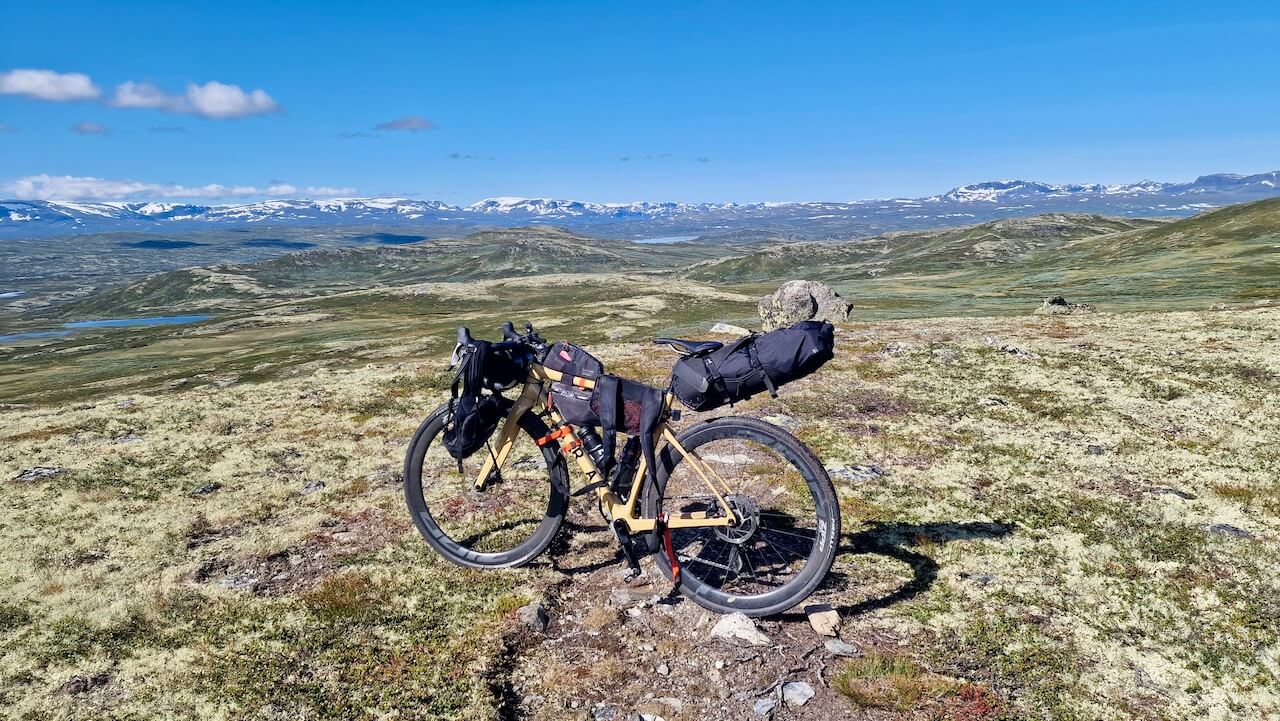
This is a tough and demanding gravel route, with nearly 80% on rough and challenging terrain. It’s not suitable for bike touring – this is a lightweight bikepacking-only route. I completed it in two days, but three would have been a better fit. The first 60 km includes over 2000 meters of climbing, and you’ll reach nearly 3000 meters by the 100 km mark. Progress is slow as you climb and descend through remote forest and mountain terrain.
The 3.5 km hike-a-bike section takes about an hour. If you do the route clockwise, which we recommend, you’ll face a steady uphill push, followed by a gentle descent to the road. It’s not the hardest hike-a-bike I’ve done, but it requires stamina and strength. A solid level of fitness and prior mountain experience are essential for this route.
A locally produced documentary, Det kvite gullet (The White Gold), was released a few years ago, telling the story of hydropower development and its impact on the Hallingdal region. The title refers to the white, rushing water, once seen as a key source of wealth before Norway discovered oil (the so-called “black gold”). Though the film doesn’t have English subtitles, it’s a powerful and insightful look at how this natural resource shaped local communities. It also served as the inspiration for Knut Myking to create the route you’re now viewing.
If the weather holds, crossing the Hallingdal ‘High Voltage’ plateau to link the iconic Mjølkevegen and Rallarvegen routes is a brilliant choice. But if conditions turn rough, it’s wiser to stick to National Cycle Route 5 through the valley between Gol and Haugastøl. If you want to skip the main road 7 from Gelio to Haugastøl, you could cycle road 50 from Hol to Aurland (many tunnels) and then cycle Rallarvegen in reverse, ending at the train station in Haugastøl.

Hemsedal makes a great base for a day or two of exploring. Just outside town, a network of remote side valleys leads to dead-end gravel roads with tough climbs, big views, and a real sense of solitude.
Another great base ride to do from Hemsedal is the Milky Loop, which can be done in two days. A big portion of the loop follows the well-known Mjølkevegen track, but breaks off and makes a nice loop on both sides of the Hallingdal and Valdres region.
If you’d rather ride from Oslo than take the train, this epic gravel route is a perfect extension, leading you through the vast forests and rugged mountain landscapes of eastern Norway on your way to Hallingdal Valley. This route also follows part of our capital-to-mountain route.

This is the original High Voltage Loop (Høgspentruta) created by Knut Myking. It reduces the climbing and gives you more resupply options. In addition, it starts in Ål and can be shortened by finishing in Gol if you want to cut down on distance. The route passes through Torpo, a key highlight for Knut, featuring a good bike shop, MTB trails, the iconic stave church, and a 24/7 grocery store.
Riders will pass through varied environments each day, lush valleys, alpine passes, lakeside meadows and always with some reminder of how this region balances progress with tradition.


There are none on this route
From Oslo
There are no tunnels on this route
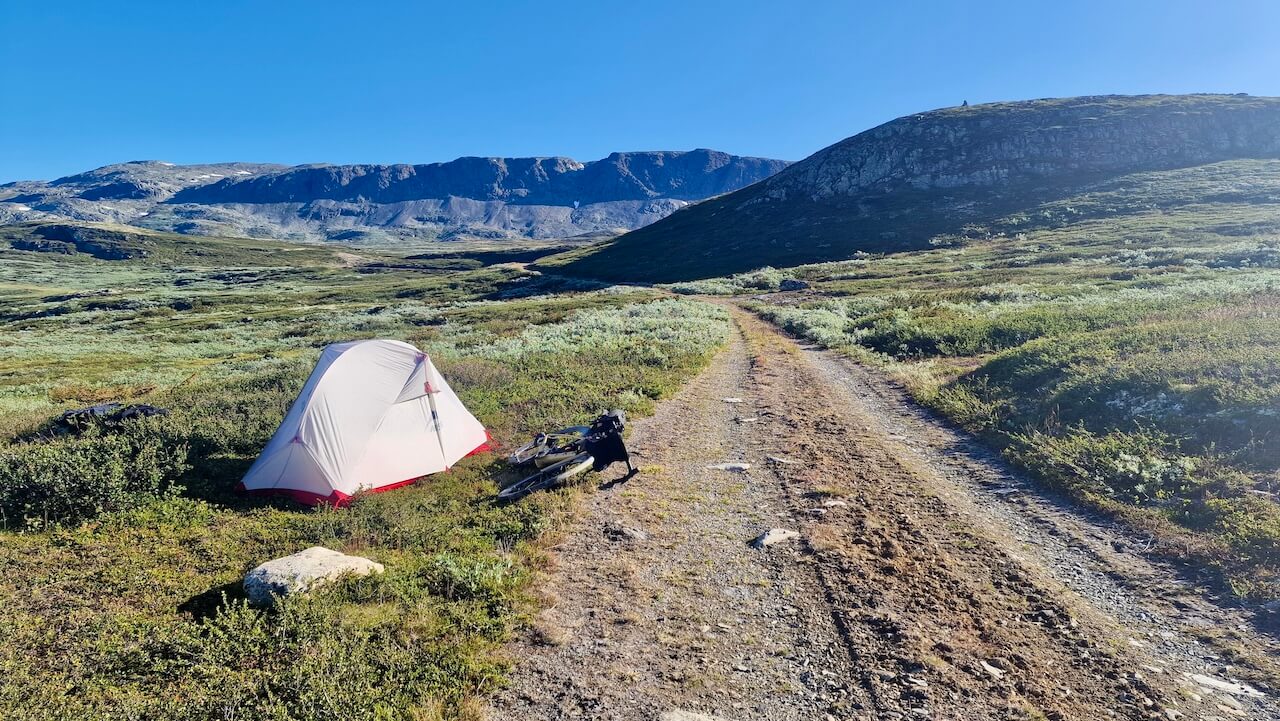
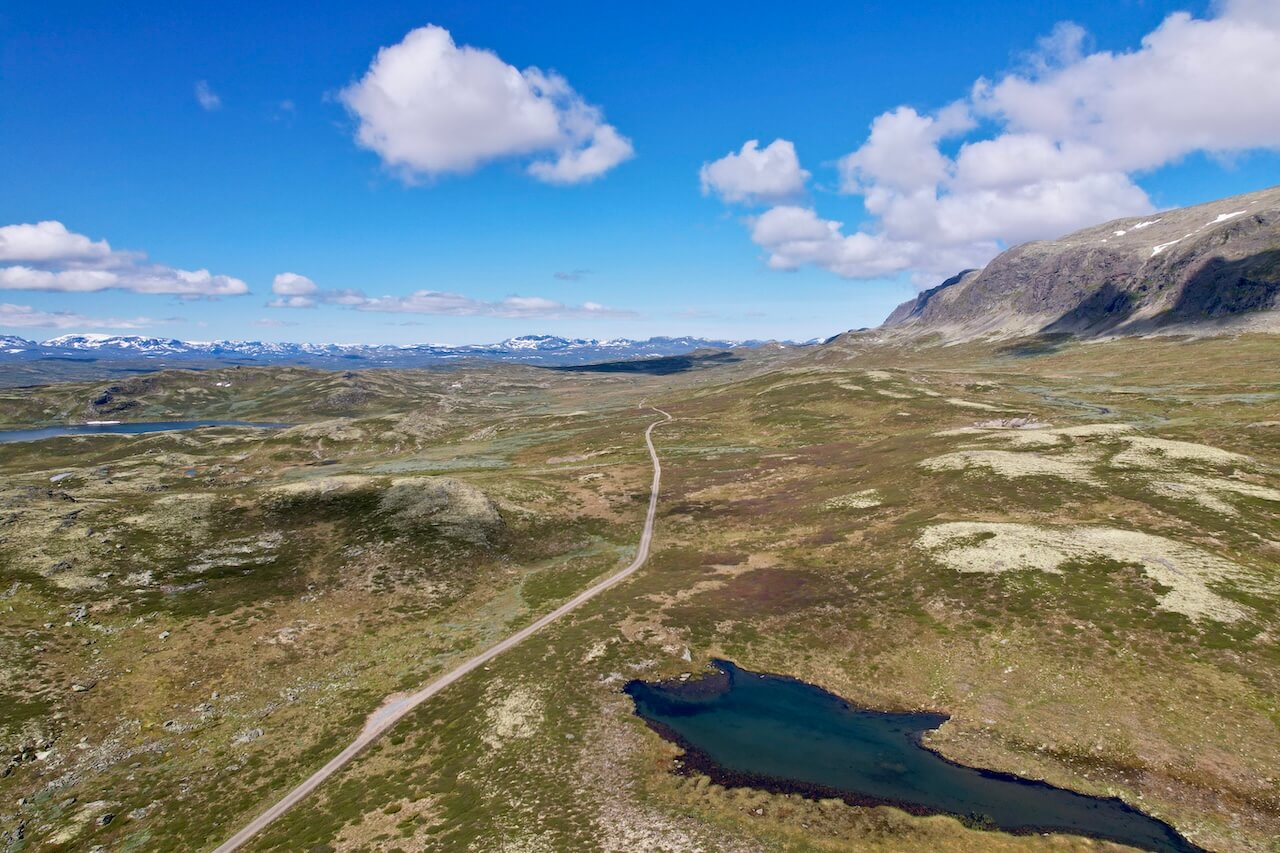
The south gravel road was damaged by flooding and in 2025 was thick with sand, dirt, and rocks that made it very challenging to cycle in places. The photo is misleading – the ground is very soft, and your tires will sink into the surface

This route climbs above 1200 metres, so be prepared for rapidly changing weather and temperatures. Pack warm gloves, overshoe covers, and plan for three to four layers of clothing. If conditions are poor when approaching the Hallingdal mountain plateau, it’s best to wait or skip the crossing altogether. The hike-a-bike section takes around one hour in good weather, but if it’s wet, cold, and windy, it will take longer and expect soaked feet from some boggy sections.
Finnmark too has a certain mystique. Being about the same distance from Oslo as Istanbul, in some ways, it’s basically the last stop before the North Pole. The undoubted highlight of the journey is simply cycling the wild expanse of Europe’s last great wilderness. It will feel very lonely up here but isn’t that a reason to cycle it? The cycling heat maps of the world are full of well-ridden roads. Here you will join a small group of cyclists seeking something extraordinary. Passing wild herds of reindeer and perhaps not seeing another human for many hours is why you came – right? The ride comes to an end in the town of Kirkenes which has Russian road signs. This will indicate you have reached the boundaries of the Western world!
All cycling routes published on CYCLENORWAY.com are simply a planning resource to be used as a point of inspiration in conjunction with your own due-diligence. All route guidelines were prepared under diligent research. However, we can never for certain insure the complete accuracy of the routes. Cycling in Norway is in general very safe. Nevertheless, should you choose to cycle this route you do so at your own risk.
Check out this helpful video to see how the routes can be uploaded onto your mobile device and cycling computer.
Cycling long distance is tough, and you should not attempt routes that are beyond your level.
If you discover any inaccuracies on this page, please let us know so we can correct them.
non-intrusive, offering informative news, blog posts, videos, and more.