



And how to get there on a bike.
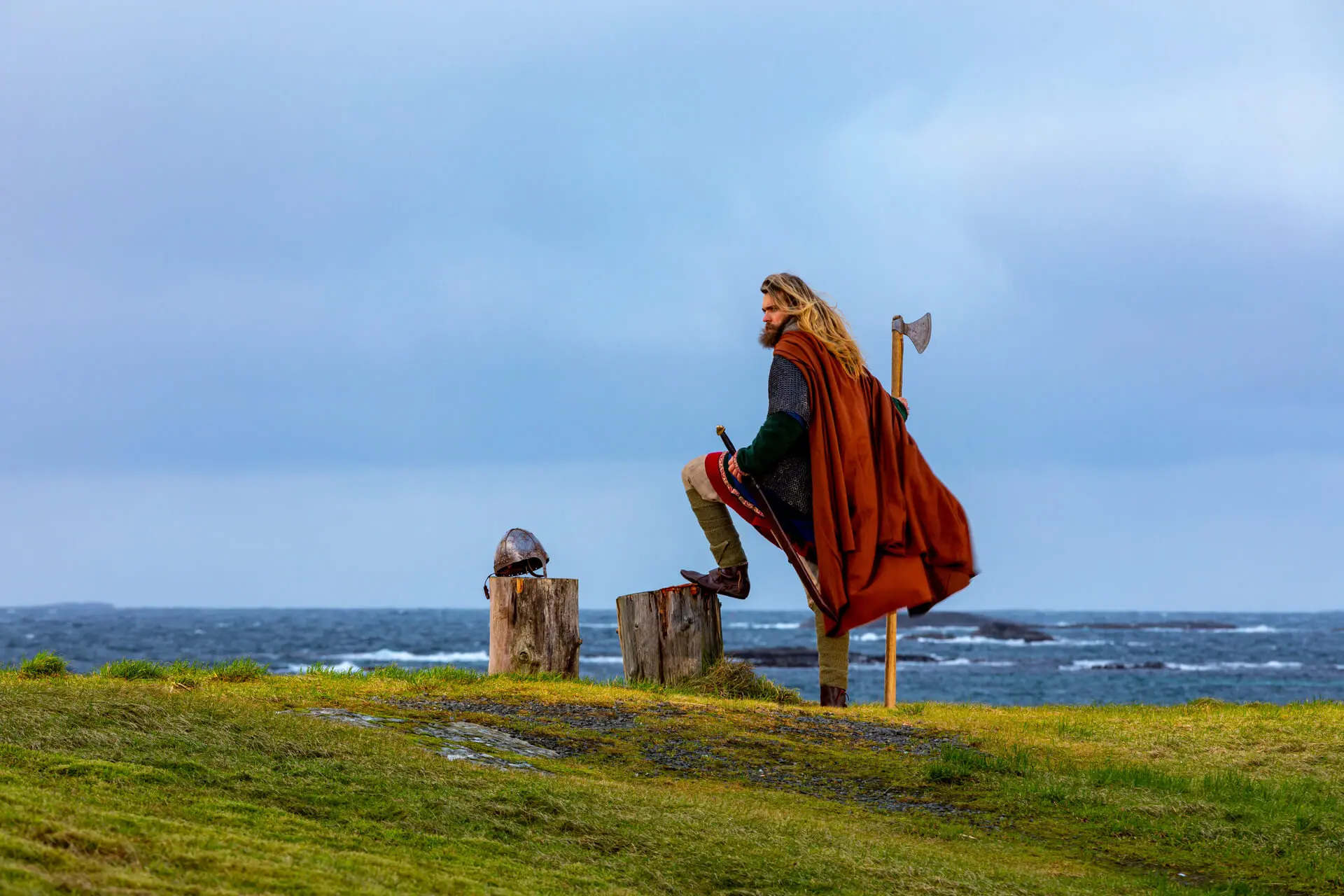
If you’re coming to Norway, it’s almost a rite of passage to experience something from the Viking Age. After all, who doesn’t enjoy a touch of history mixed with raw adventure? Scattered across the country are remnants of this legendary era, ancient settlements, fascinating museums, reconstructed villages where locals don full Viking attire, and longboats that still glide across the fjords.
The best part? Many of these sites lie right along Norway’s most scenic cycling routes, making it easy to weave a bit of Norse history into your journey on two wheels. Whether you’re pedalling through Oslo, exploring the fjords, cruising along the coast of Bergen, or chasing the midnight sun in Lofoten, you’ll find traces of the old Norse world waiting quietly to be rediscovered.
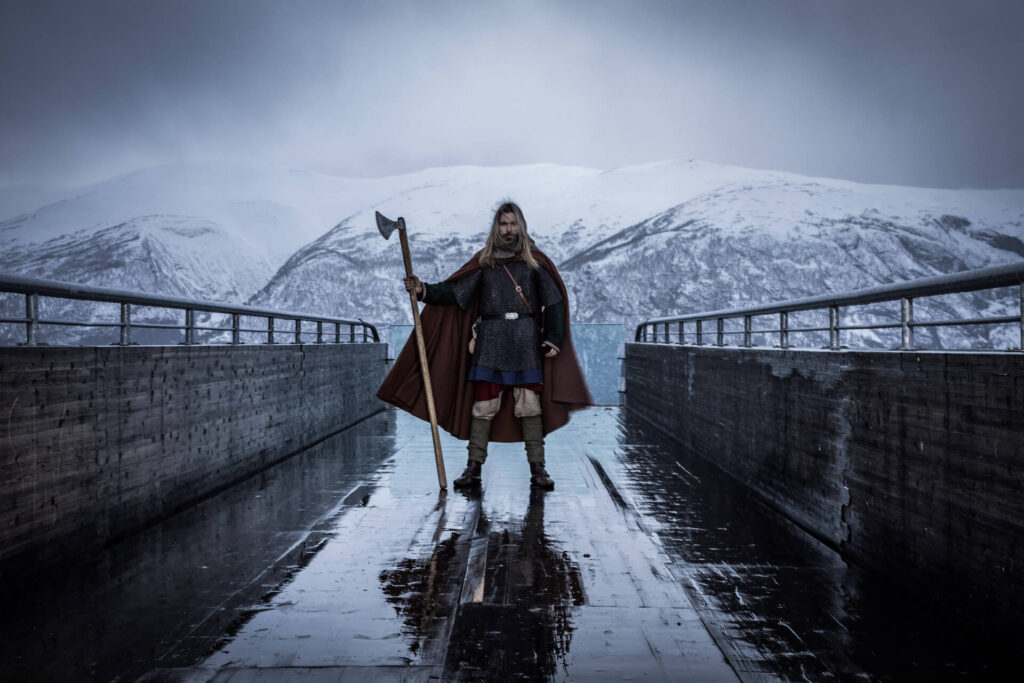
Exploring Norway through the lens of the Viking Age isn’t about tourist gimmicks; it’s about standing where history was lived, where sea voyages began, and where sagas still echo in the wind. For travellers who prefer substance over spectacle, here are six of Norway’s finest Viking-era experiences, places where the past still speaks, and where you might just feel that ancient spirit stir again.
1. Midgard Viking Centre, Horten
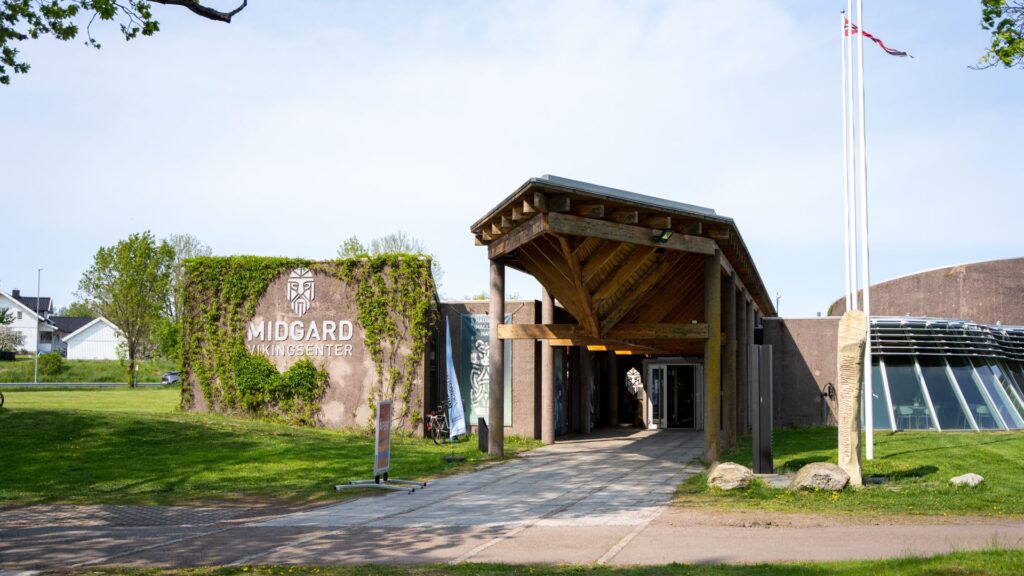
Just three to four hours ride south of Oslo, in the coastal town of Horten (Vestfold), lies one of Norway’s most evocative windows into the Viking Age, the Midgard Viking Centre. For cyclists following the Oslofjord Loop, this makes for a perfect stop, blending a physical journey through Norway’s landscapes with a deeper journey into its past.
The centre rises beside the Borre burial mounds, the largest collection of royal graves from the Viking Age in Scandinavia. This was once sacred ground, a place of kings, ceremonies, and ancestral worship. Today, you can walk among the ancient mounds, each rising like an earthbound monument to forgotten rulers, and feel the same quiet weight of history pressing through the grass.
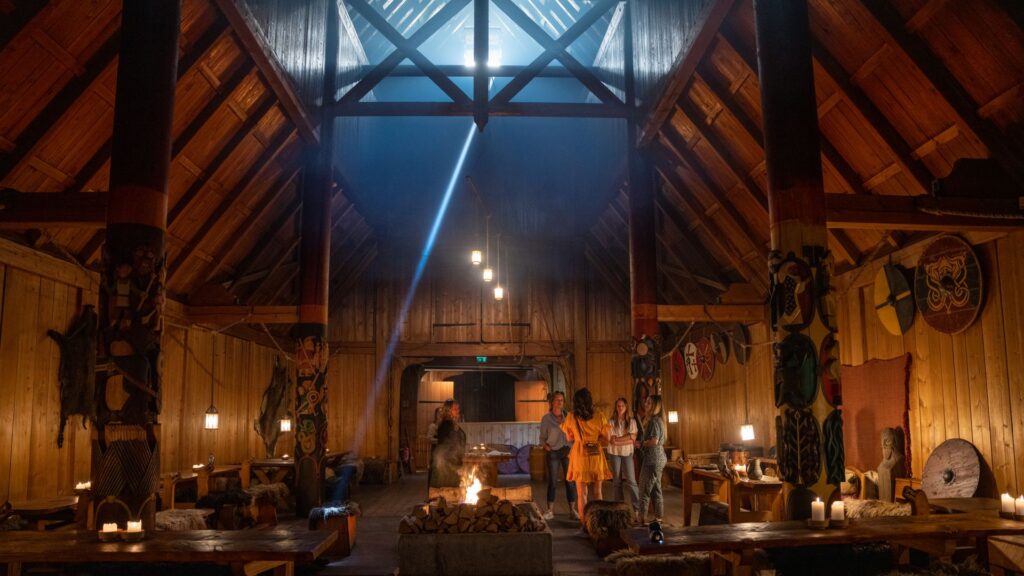
The highlight is the Gildehallen, or Feast Hall. It looks as though it’s been lifted straight from a saga: a towering timber structure with carved posts and flickering firelight that makes the air smell faintly of pine and smoke. Built using traditional methods, it’s a full-scale reconstruction of how a Viking chieftain’s hall might have looked, a place for storytelling, deals, and rituals.
Step inside, and you’ll find no plastic helmets or cartoon raiders. Instead, the exhibitions dig into the deeper truths of the Viking world: the spiritual life, craftsmanship, trade routes, and belief systems that held their society together. The tone is earthy and human, these were not just warriors, but thinkers, traders, poets, and seafarers who shaped much of the North’s identity.
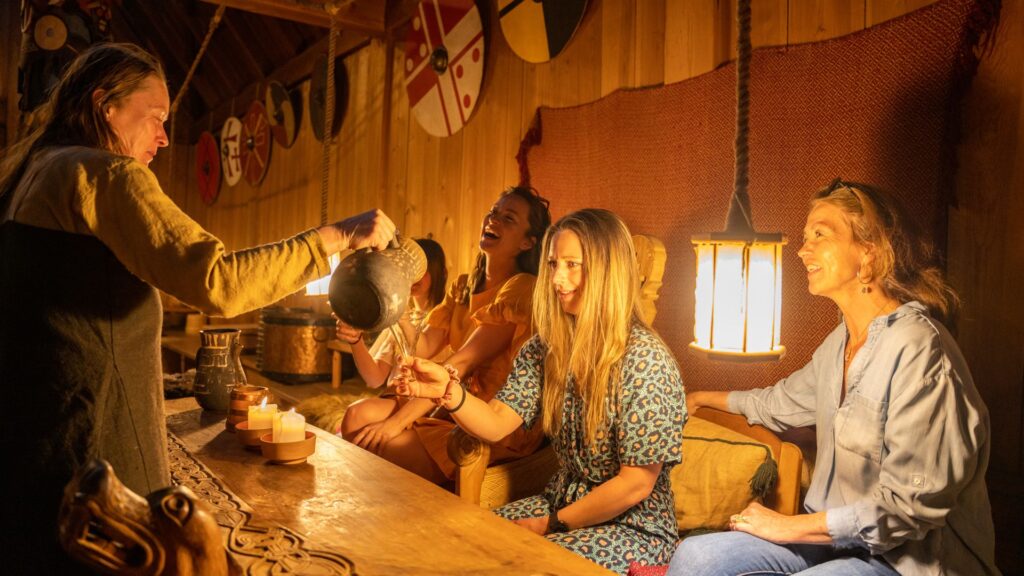
In summer, the surrounding park becomes an open-air classroom. You can watch demonstrations of wood-carving, archery, or even Viking bread baked on an open fire. The nearby Borre Park offers trails leading through burial mounds, old forests, and views of the Oslofjord, a reminder that Viking power was always tied to land and sea.
And if you continue south along the Oslofjord route, you can take your immersion even further with a Viking boat experience in Tønsberg, Norway’s oldest town.
2. Viking Boat Experience, Tønsberg
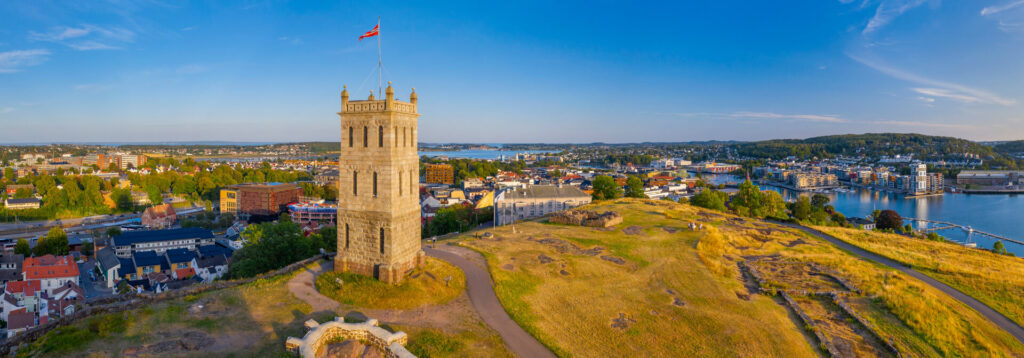
If Horten gives you the grounded, everyday side of Viking life, Tønsberg gives you the sea, the lifeblood of the Norse world. Often cited as Norway’s oldest city, Tønsberg carries its Viking roots not as museum pieces but as living memory, embedded in the harbour air and the rhythm of the tides.
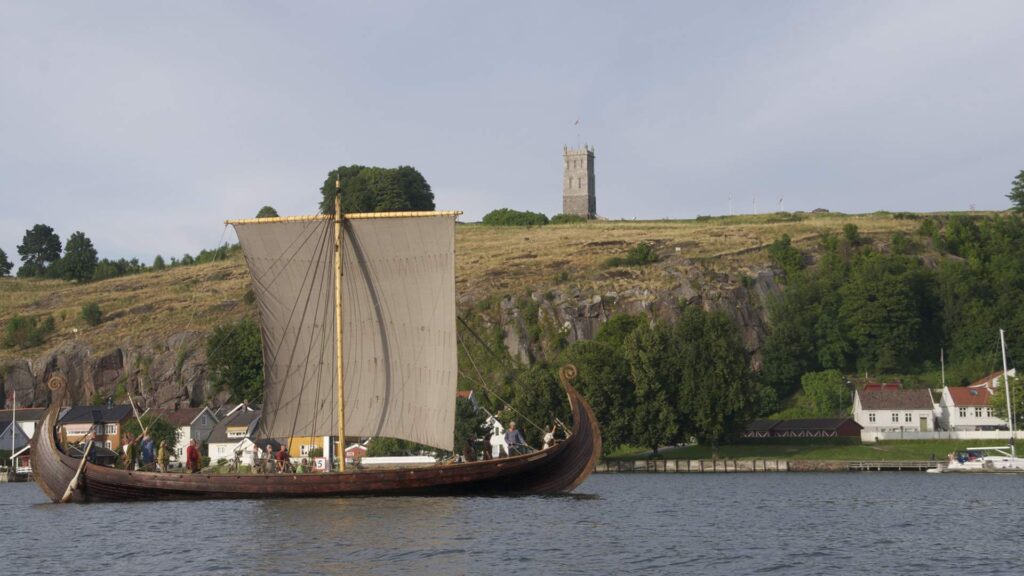
For cyclists following National Cycle Route 1, this stop is a natural continuation after Midgard, a journey that shifts from land to sea. As you roll into town, you’ll find Vikingodden, a small peninsula at the edge of the harbour where the Saga Oseberg, a full-scale Viking ship replica, rests proudly on the water. It was built using the same tools, materials, and methods as the original Oseberg ship found nearby in 1904, a feat of craftsmanship that connects modern hands to ancient minds.
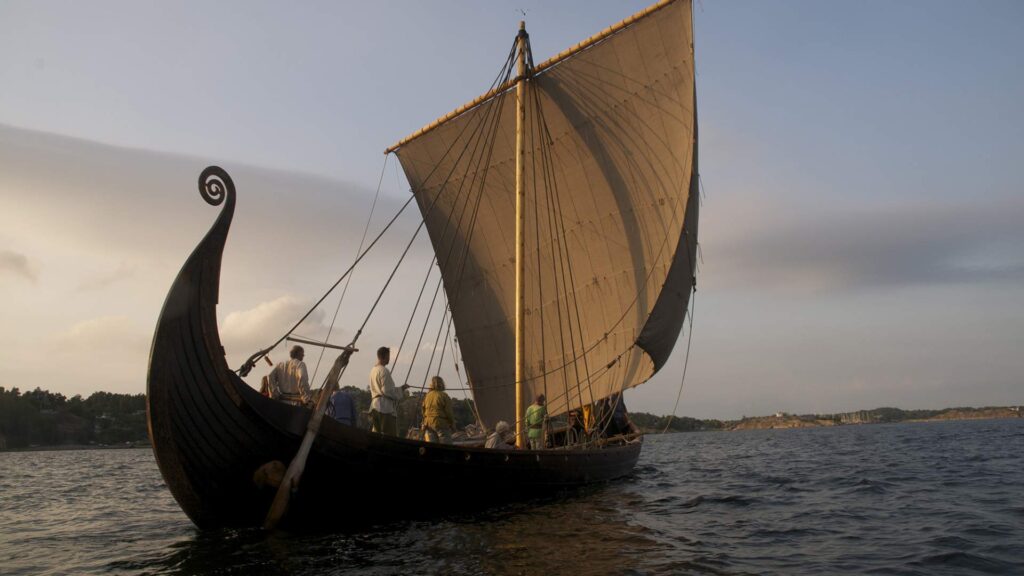
You can join a guided walk through the old harbour district, tracing the contours of what was once a bustling Viking marketplace, and then board the Saga Oseberg itself for a sail along the same waters that carried explorers, traders, and settlers across the North Sea. Out there, with the fjord breeze against your face and the rhythmic pull of the oars, the line between centuries blurs.
The Viking ship experience in Tønsberg costs from 700 NOK per person, which works out to roughly €60–65 depending on the exchange rate. Each trip lasts around two hours and runs from April to October, starting at Vikingodden in the harbour at Ollebukta 3. Participants receive a short briefing before setting out into the fjord, rowing together under the guidance of the crew. It’s an active, hands-on experience rather than a simple boat tour, so a reasonable level of fitness and mobility is helpful.
Because you’ll be out on open water, it’s best to dress for the weather, even in summer the sea air can be cool, and layers or a light windbreaker are recommended. The ship isn’t wheelchair accessible, and advance booking is advised since departures depend on weather and group size. For those seeking something more than a tourist ride, this is a rare chance to feel the rhythm and effort of real Viking seamanship, in the very waters where it once began.
3. Njardarheimr Viking Village, Gudvangen
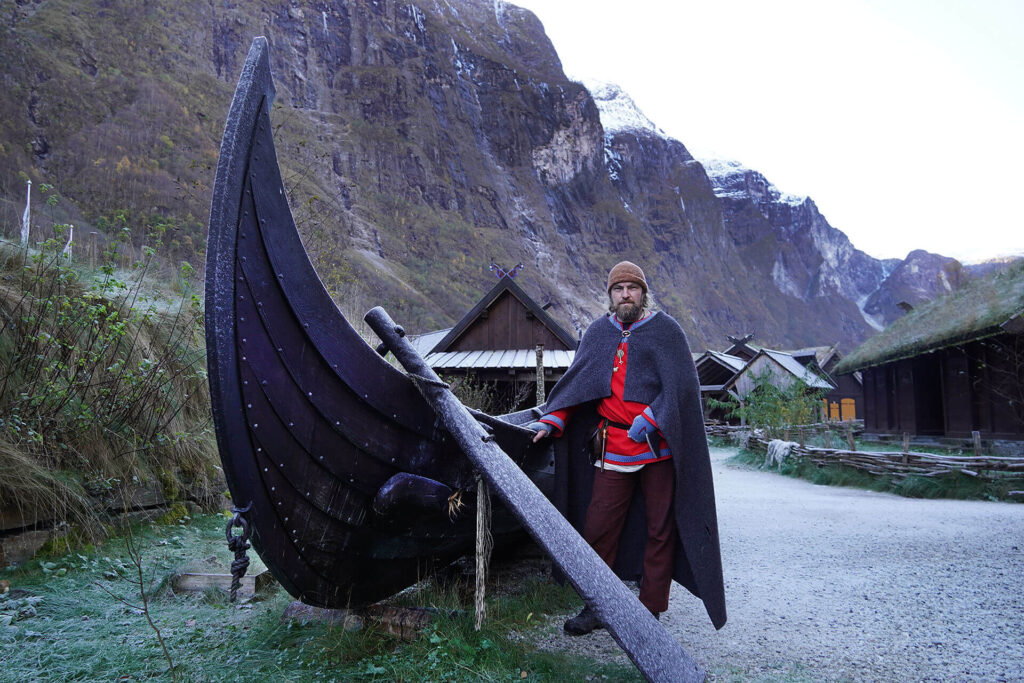
The Njardarheimr Viking Village in Gudvangen is one of Norway’s most authentic and interactive Viking experiences. Built as a full-scale reconstruction of a 10th-century Norse settlement, it sits at the head of the Nærøyfjord — a UNESCO World Heritage Site surrounded by sheer cliffs and waterfalls. The setting alone is enough to stir something ancient, but what makes Njardarheimr remarkable is how completely it immerses visitors in Viking life.
Inside the gates, more than 20 buildings have been constructed using traditional techniques, including longhouses, guard towers, workshops, and a chieftain’s hall. Every detail has been designed to reflect archaeological knowledge and historical accuracy, from the tools and clothing to the layout of the settlement itself. Around 60 to 80 “inhabitants” live and work here during the summer season, not as actors in costume, but as re-enactors who practice Viking crafts and skills every day. You’ll meet blacksmiths hammering out iron tools, weavers spinning wool into linen, cooks preparing food over open fires, and woodworkers carving shields and ornaments.
Visitors are encouraged to join in rather than simply observe. You can try your hand at axe throwing, archery, or crafting small items in the workshops. The inhabitants speak freely about their way of life, from Norse beliefs and rune lore to seafaring and social structure, answering questions as if the Viking Age never ended. Guided tours run throughout the day and help tie the experience together with historical context, explaining how Njardarheimr was built and what daily life in such a community involved.
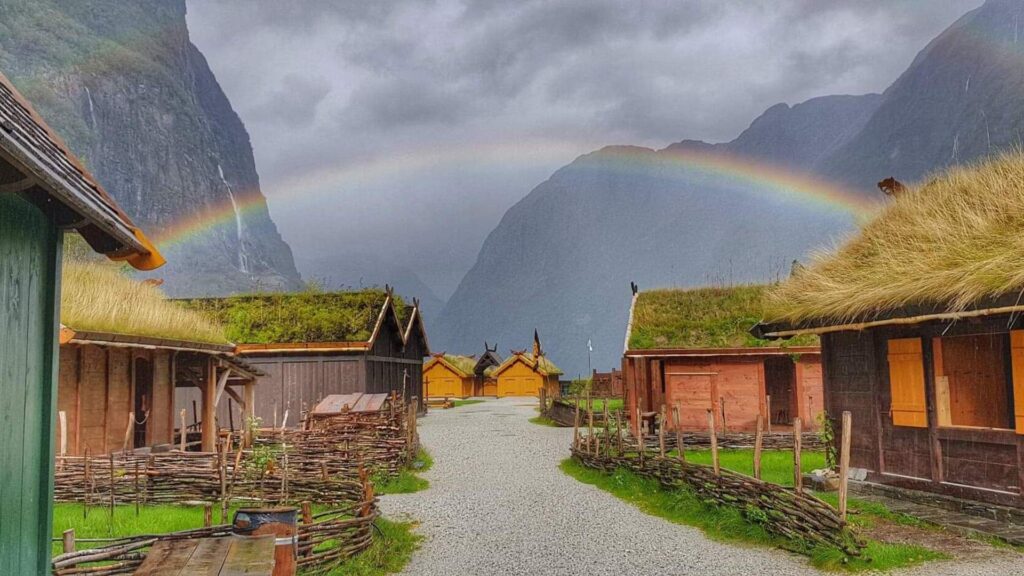
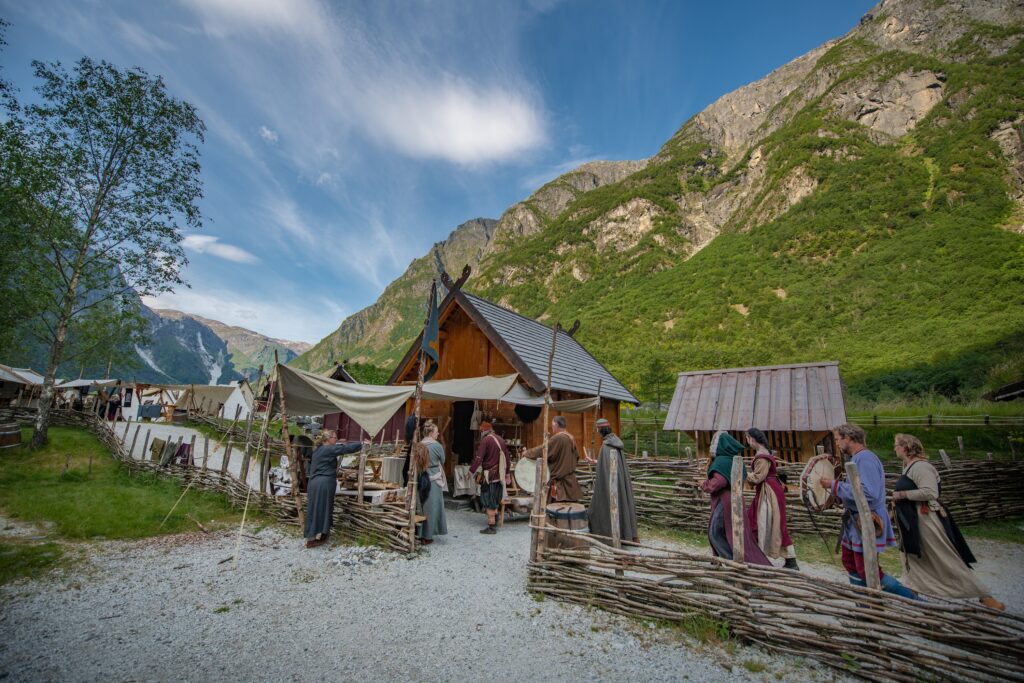
For cyclists, Njardarheimr lies within comfortable reach of Flåm as part of the Jondal Loop, a rewarding day trip that combines boat and bike through some of western Norway’s most striking landscapes. The journey begins with a ferry ride along the famous Aurlandsfjord and Nærøyfjord, where towering cliffs and waterfalls frame the water like a natural cathedral. Disembarking in Gudvangen, the road winds through a valley steeped in mythic grandeur, the mountains closing in on both sides as you complete a challenging loop, arriving back in Gudvangen a few hours later, where the Viking village sits waiting to be explored.
4. Lofotr Viking Museum, Borg (Lofoten)
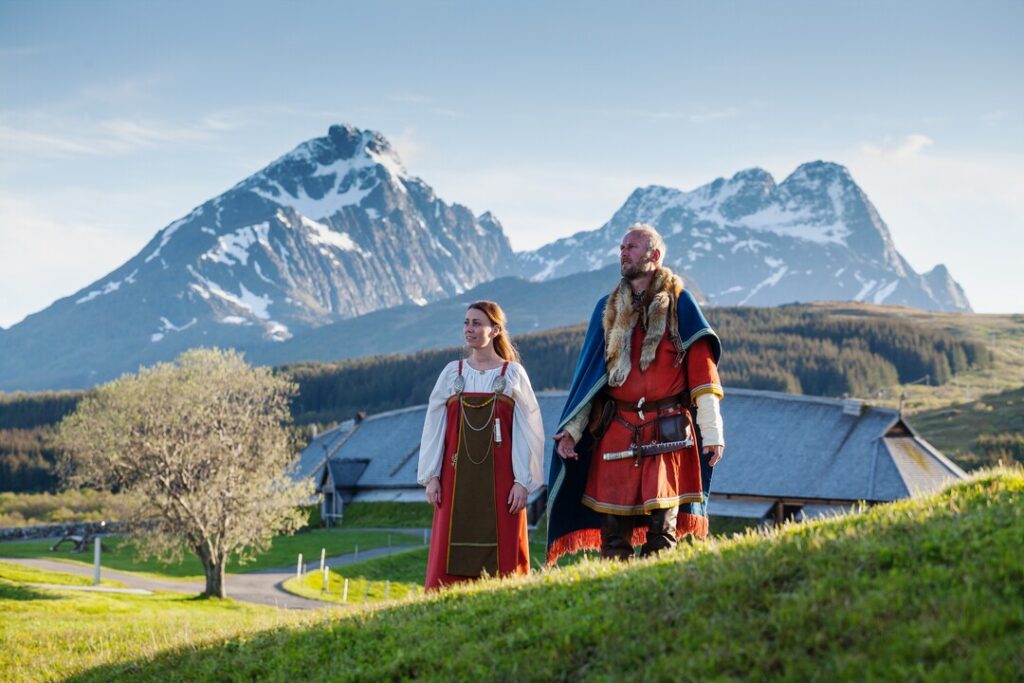
High in the Lofoten Islands, on the windswept island of Vestvågøy, stands Borg, home to the Lofotr Viking Museum, one of Norway’s most impressive archaeological reconstructions. Once the seat of a powerful Viking chieftain, the longhouse here stretches nearly 90 metres and offers a vivid glimpse into how life looked at the height of the Viking Age.
To reach Borg by bike, you’ll need to deviate slightly from the national cycling route and follow the E10 for a period of time. It’s an easy link-up that allows you to rejoin the main cycling route without making a major detour. However, be aware that the E10 carries more traffic, especially in summer. Riding early in the morning is the smartest move.
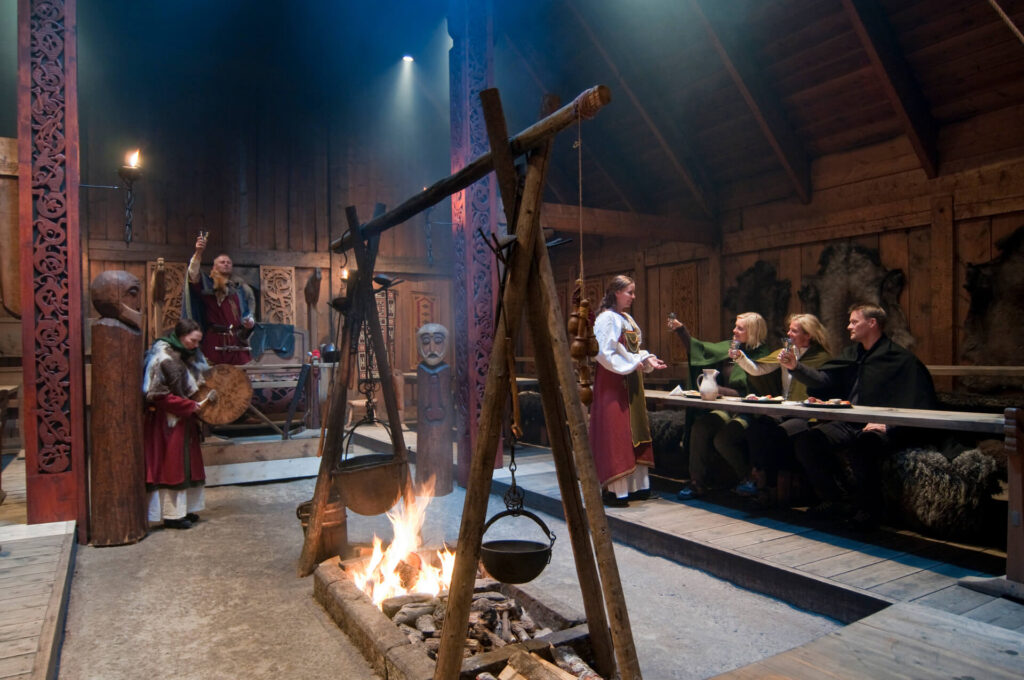
Once there, the Lofotr Viking Museum more than justifies the detour. The museum is built directly on the site of the original chieftain’s farmstead, dating from around 500–900 AD, and the reconstructed longhouse is a faithful recreation of what once stood here, 83 metres long and 9 metres wide, the largest known Viking building ever discovered. Archaeologists uncovered hundreds of artefacts on-site, including imported glassware, amber beads, iron tools, and jewellery, all pointing to a powerful and well-connected local leader who controlled trade and resources across the region.
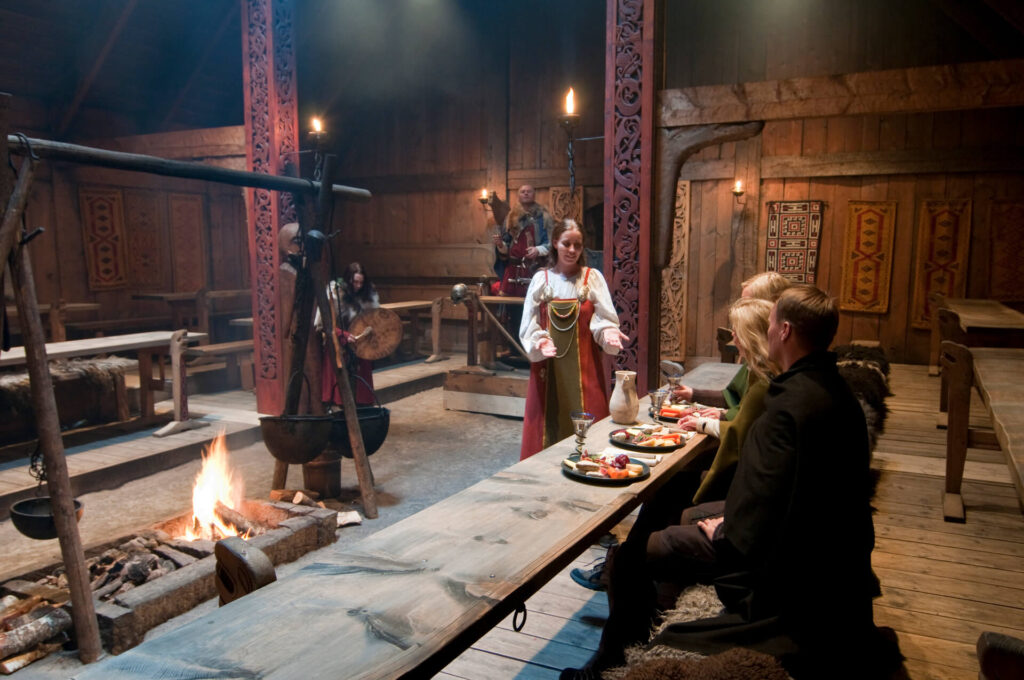
Inside the longhouse, the atmosphere is immersive. The fire pit burns low, smoke curling into the timber rafters, and costumed interpreters go about their daily routines, weaving, cooking, and working leather or iron just as people would have done over a thousand years ago. The exhibits detail every aspect of Viking life in the North: the mixed economy of farming, fishing, animal husbandry, and seasonal trade, as well as the sophisticated craftsmanship that defined the culture. Displays also trace how goods from this Arctic settlement reached as far as the British Isles and the Continent, proof of the Vikings’ wide-ranging networks long before modern transport.
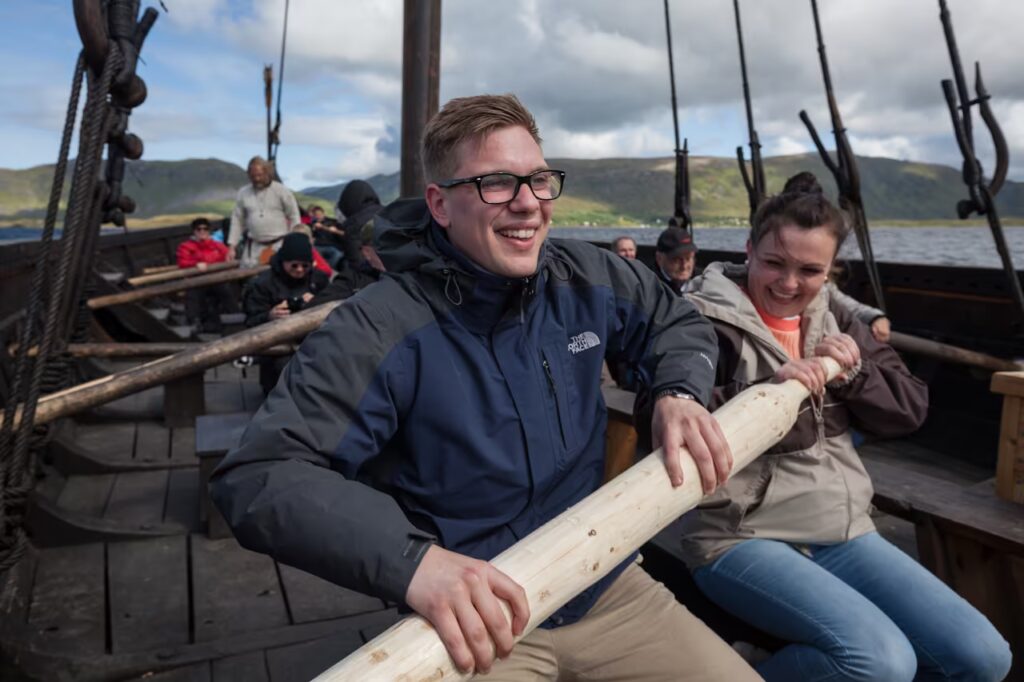
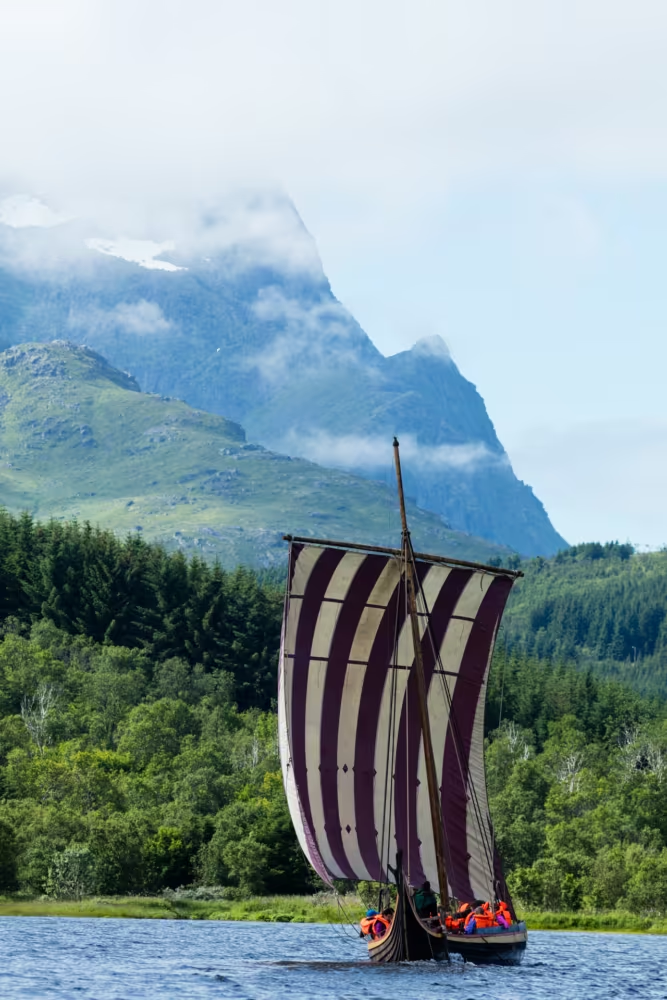
Step outside and the story continues. At the boathouse, you can board a replica Viking ship and row across Borgpollen Bay, following the same sheltered waters where real chieftains once trained their crews. The ship, a reconstruction based on 10th-century finds, handles lightly in the wind, and even a short trip reveals how deeply the sea shaped Norse life and imagination. Around the museum grounds, you’ll also find recreated boathouses, workshops, and animal enclosures, giving a full sense of a working Viking farmstead surrounded by the same mountains and ocean that framed their world.
Cycling in Lofoten, you’ll already be attuned to the rawness of the landscape, but Borg adds a layer of meaning. It reminds you that the Vikings weren’t just seafarers chasing glory; they were people who built, settled, and thrived in the very landscapes you’re riding through. The detour may take you onto the main road for longer than you’d like. Yet it rewards the effort with a vivid insight into how the Vikings lived and prospered in these same coastal landscapes more than a thousand years ago.
5. Urnes Stave Church
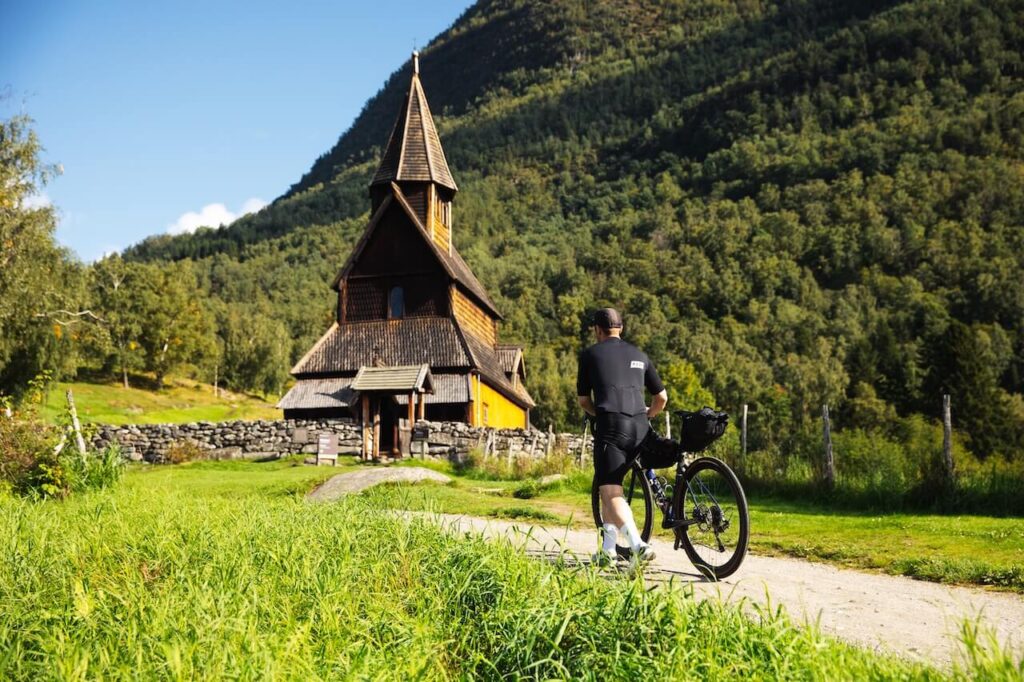
Perched on a quiet hillside overlooking the Lusterfjord, the Urnes Stave Church is one of Norway’s most profound cultural treasures, and the oldest of its kind still standing. Built around 1130, it bridges the transition between Viking art and early Christianity, with carved doorways that blend Norse mythological motifs with Christian symbolism. You can feel that tension, and harmony, in the wood itself.
Cyclists following National Cycle Route 6, which threads through this fjord region on the way toward Bergen, can easily include Urnes as a stop. The approach involves a short ferry crossing from Solvorn across the fjord, a tranquil crossing that adds to the sense of pilgrimage. The road on both sides is peaceful, with traditional farms and fruit orchards lining the slopes, and the scent of pine and saltwater drifting through the air.
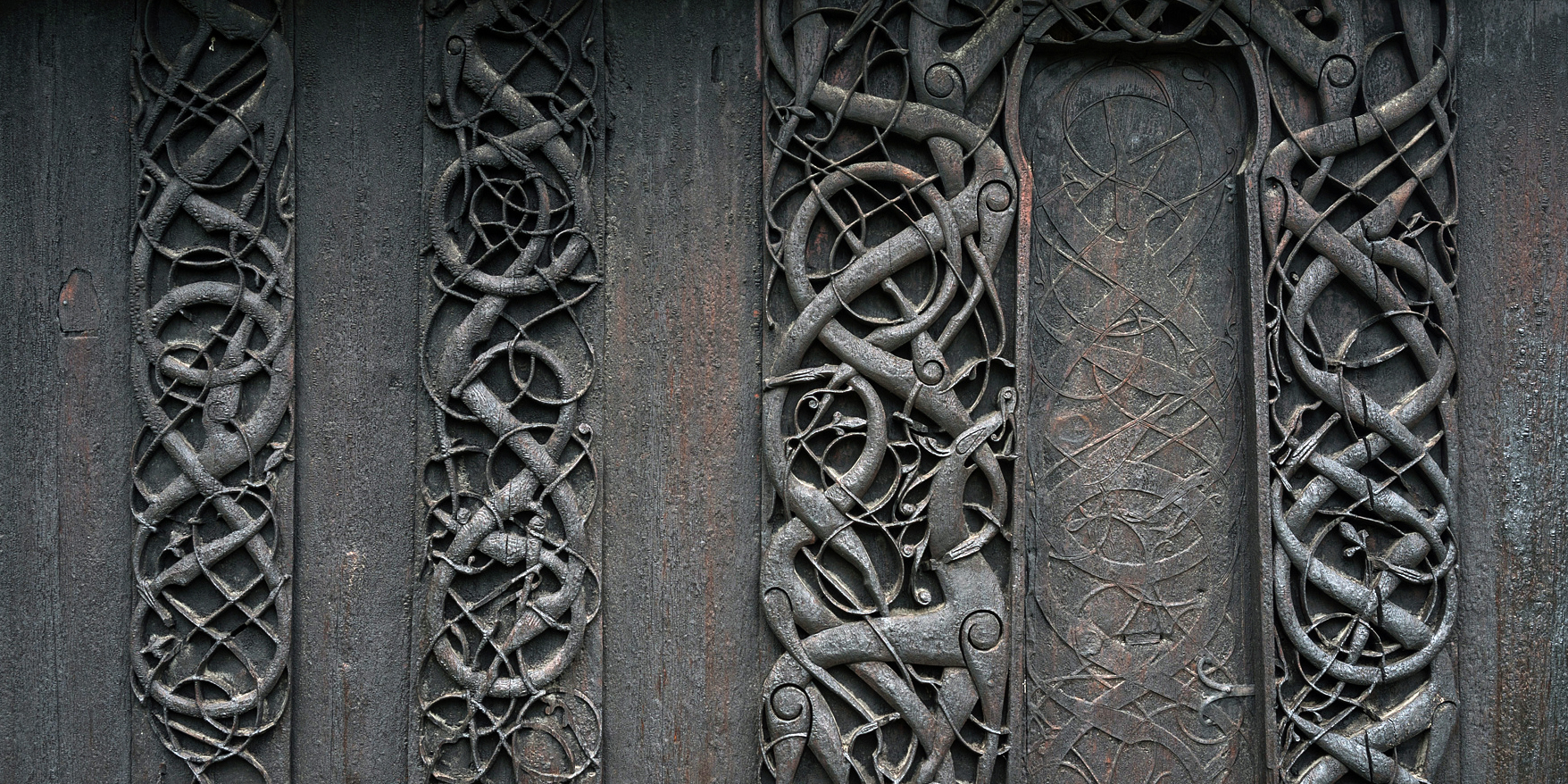
Arriving by bike, the church seems to appear out of nowhere, dark, weathered, and quiet, standing guard over centuries of history. Inside, the carvings on the portal are extraordinary: twisting vines, serpents, and beasts merging in a pattern that scholars still debate. It’s more than decoration, it’s a visual dialogue between two worlds: the fading Norse cosmology and the dawn of Christian Europe.
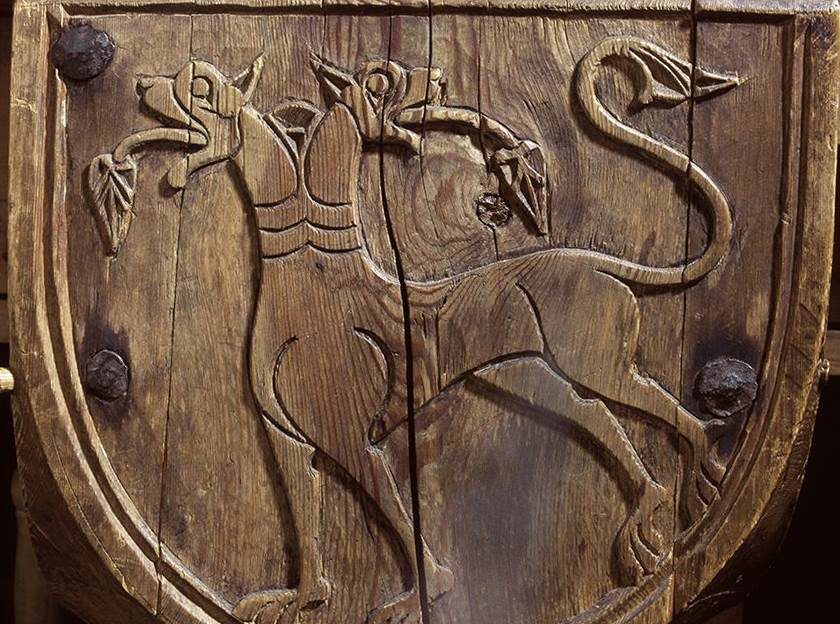
From a cyclist’s perspective, Urnes is not just a site to visit but a moment to pause. The climb to reach it is steady and rewarding, and the view across the fjord is as humbling as the structure itself. Few places capture Norway’s cultural evolution with such intimacy, and to arrive there under your own power makes it feel earned.
6. Sagastad Viking Centre, Nordfjordeid
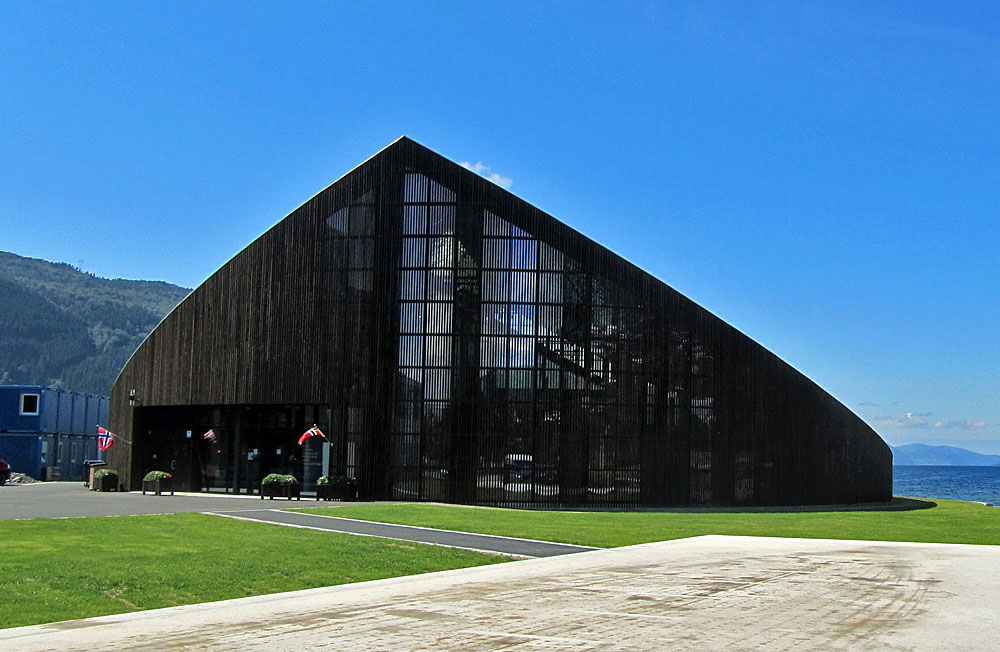
On the shores of the Eidsfjorden in Nordfjordeid, the Sagastad Viking Centre stands as one of the most striking modern tributes to Norway’s seafaring past. Its centrepiece, a full-scale reconstruction of the Myklebust ship, a 30-metre Viking vessel unearthed nearby, anchors the exhibition. Standing before it, you can almost sense the weight of history balanced perfectly between craftsmanship and imagination.
Bergen to Trondheim – Coast & Mountains →
For cyclists travelling the Bergen to Ålesund route, Sagastad is a worthwhile detour, though it takes a bit of planning. You’ll need to use a local bus through a long tunnel that’s closed to cyclists, but the short transfer is well worth it. Once you emerge in Nordfjordeid, you’ll find yourself in a welcoming town framed by fjords and mountains, with quiet roads leading down to the harbour and the glass-fronted museum reflecting on the water.
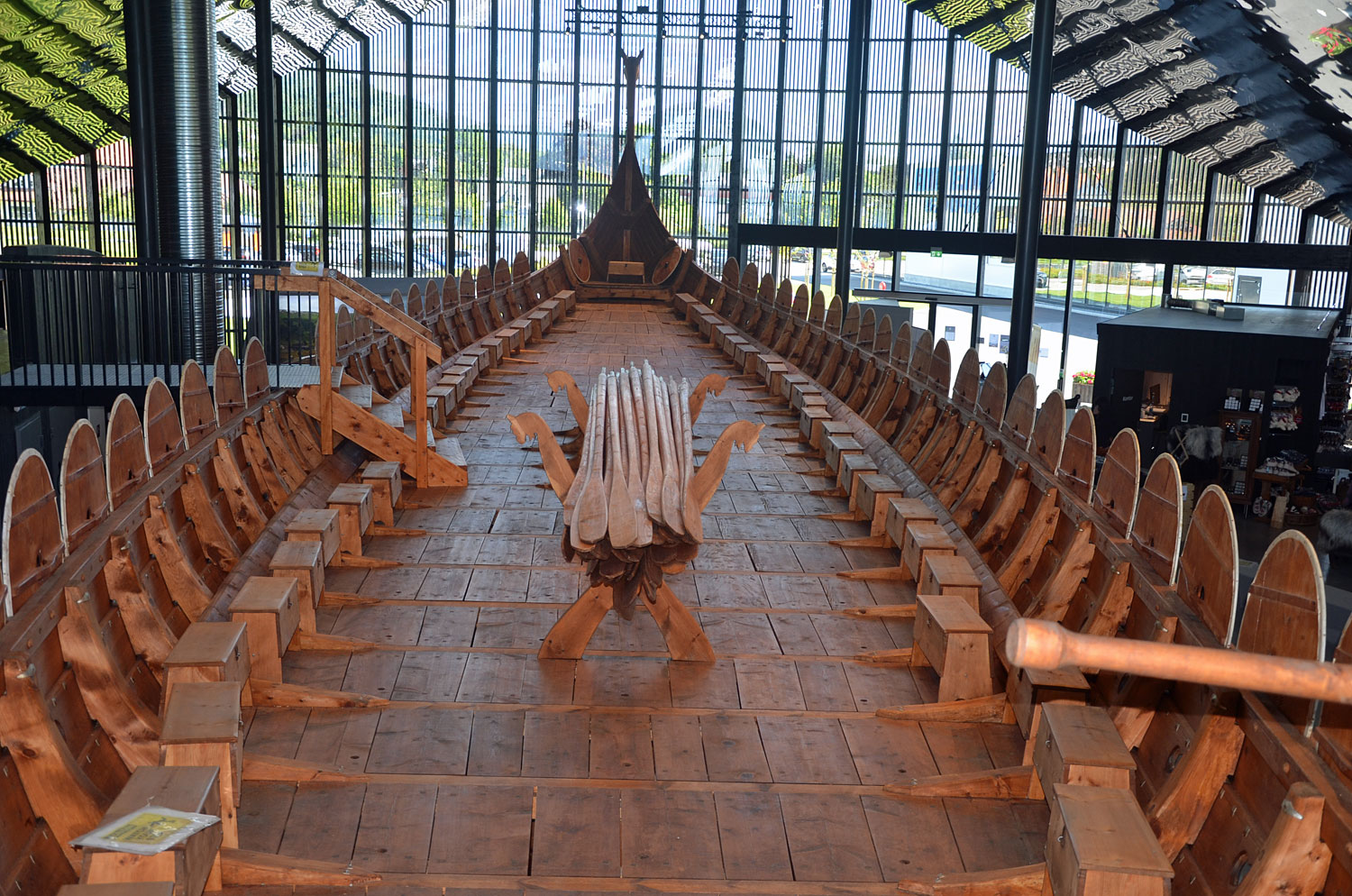
Inside Sagastad, the exhibits focus not only on Viking warfare or exploration but on the intellectual and technical mastery that allowed them to build such ships in the first place. You can step aboard the replica Myklebust ship and feel the curvature of its planks, the precision of its joinery, an achievement that rivals any modern engineering. Interactive displays, holographic reconstructions, and archaeological finds bring to life the world of the Fjord Vikings, whose reach extended from these remote inlets to the edges of the known world.
Bonus: Museum of the Viking Age (opens in 2027 in Oslo)
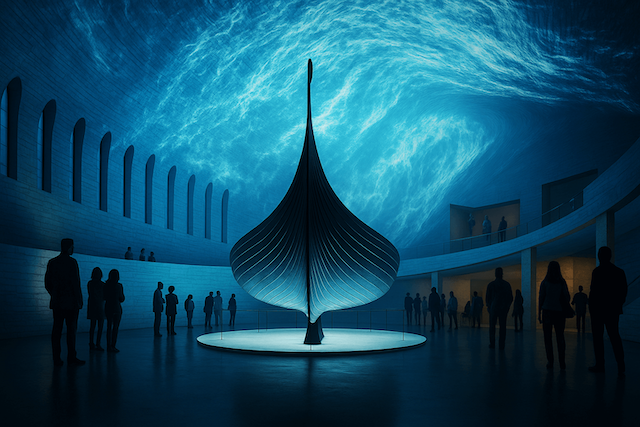
In early 2027, Oslo will open one of Europe’s most significant new museums, the Museum of the Viking Age on Bygdøy. Built on the same site as the former Viking Ship Museum, the new facility will finally bring the full scale of Norway’s Viking heritage into focus. Inside, the world-famous Oseberg, Gokstad, and Tune ships will once again take centre stage, now joined by more than 5,000 artefacts that together trace the realities of Viking life, from shipbuilding and trade to farming, burial customs, and spiritual belief.
The museum will be three times larger than its predecessor, designed with multi-level walkways and climate-controlled halls that let visitors see the ships from every angle while protecting them for future generations. State-of-the-art exhibitions will use light, sound, and digital reconstructions to show how these vessels were built, sailed, and buried, grounding their mythology in solid archaeological evidence.
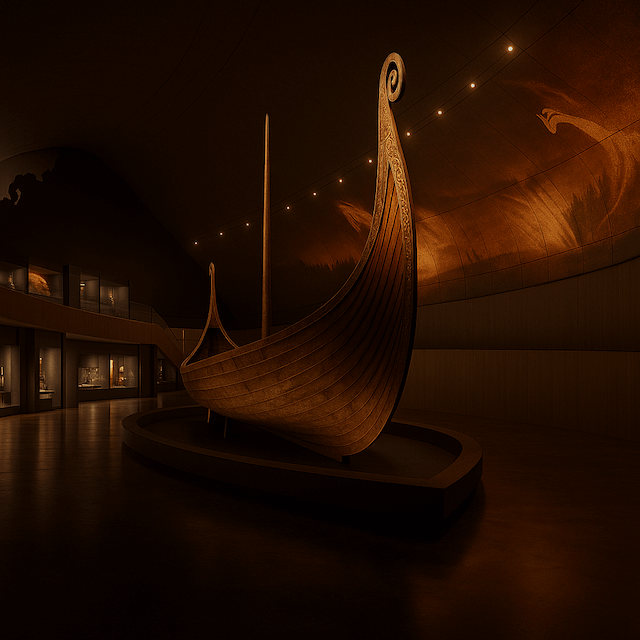
It’s easily reached by bike and fits naturally into Oslo’s growing network of cycle-friendly routes, a reflection of the city’s ongoing shift toward sustainable transport. The museum sits on the Bygdøy peninsula, which can be explored on a scenic loop combining coastal views, beaches, and several of Norway’s top cultural attractions. It’s an ideal ride for those who want to mix history, learning, and fresh air in one effortless circuit.
When it opens, the Museum of the Viking Age will stand as a modern cornerstone of Norwegian culture, not just preserving history but presenting it as a living story of innovation, resilience, and connection to the sea. For anyone visiting Oslo, it will be the defining place to understand how the Viking Age helped shape the country that exists today.
Photo Credits: All images used in this article are provided by Visit Norway and partners, and remain the property and copyright of Innovation Norway / Visit Norway, Nordnorge. Used with permission for editorial purposes only. Viking Main photo: www.fotoknoff.no/copyright, Viking boat and man – Christine Baglo, Lofoten – Roger Johansen – @nordnorge.com, Midgard – Fredrik Ahlsen/Visit Norway, Viking boat – Foap – VisitNorway.com, Viking man viewing platform – Berge/Knoff/Natural Light – VisitNorway.com. Lofoten Viking Museum & boat photos: Nordnorge – Kjell Ove Storvik.




Leave a Reply