




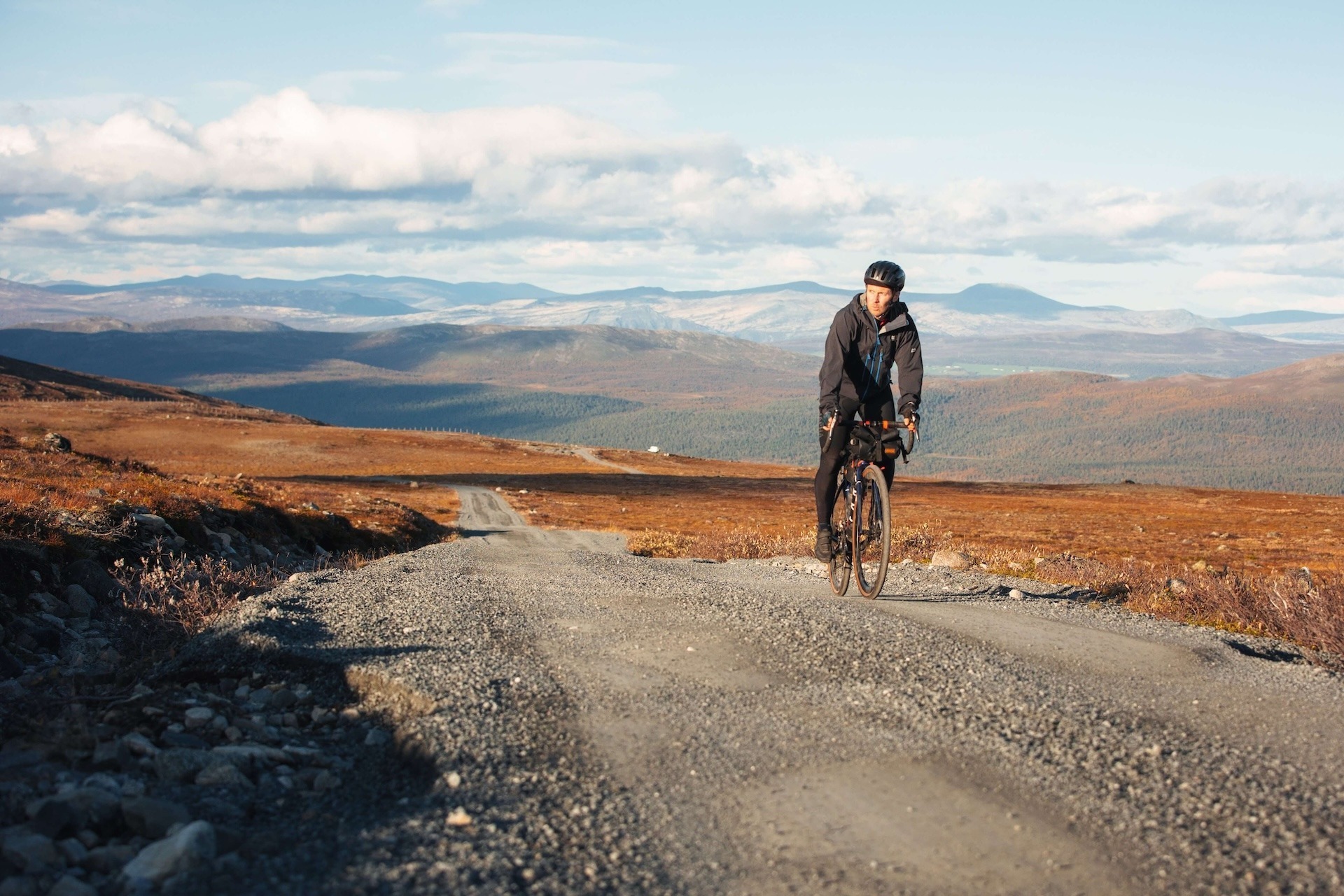
We’re picking up right where we left off with our top 10 mountain gravel routes for autumn. If you missed the first part, you can catch up on it here.
7. Aursjøvegen – 55km Gravel / 95km Paved
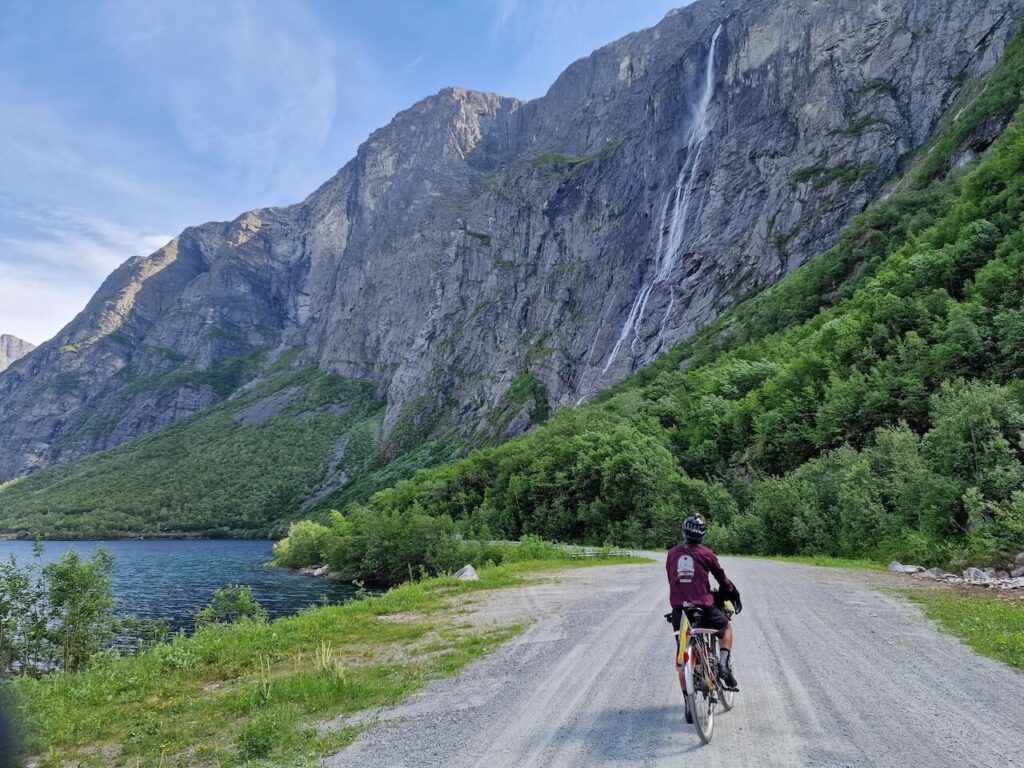
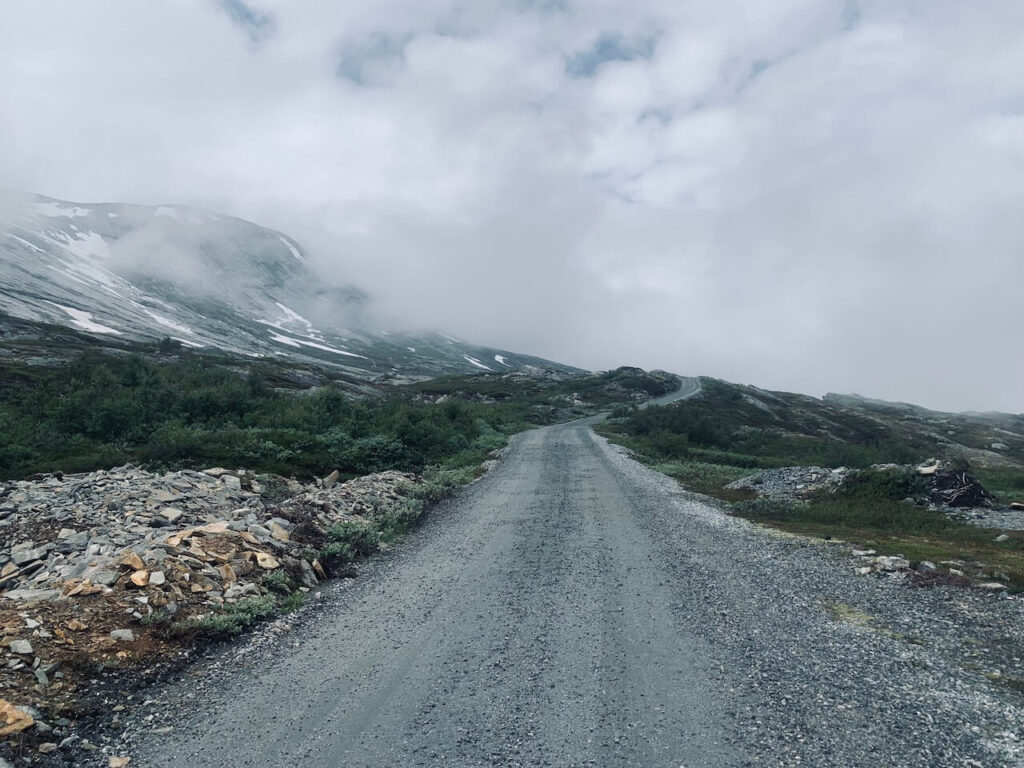
Aursjøvegen, often overshadowed by the more famous Trollstigen or Atlantic Road, is one of Norway’s best-kept secrets for cycling enthusiasts. This hidden gem, nestled in a secluded part of the country, offers cyclists an unparalleled experience of breathtaking landscapes, challenging climbs, and the tranquillity of Norway’s wilderness.
The gravel section stretches approximately 55 kilometers between Sunndalsøra in Sunndal municipality and Eikesdalen in Molde municipality. Originally built as an access road for hydroelectric projects in the early 20th century, the road has since evolved into a beloved route for adventurers seeking an off-the-beaten-path experience.
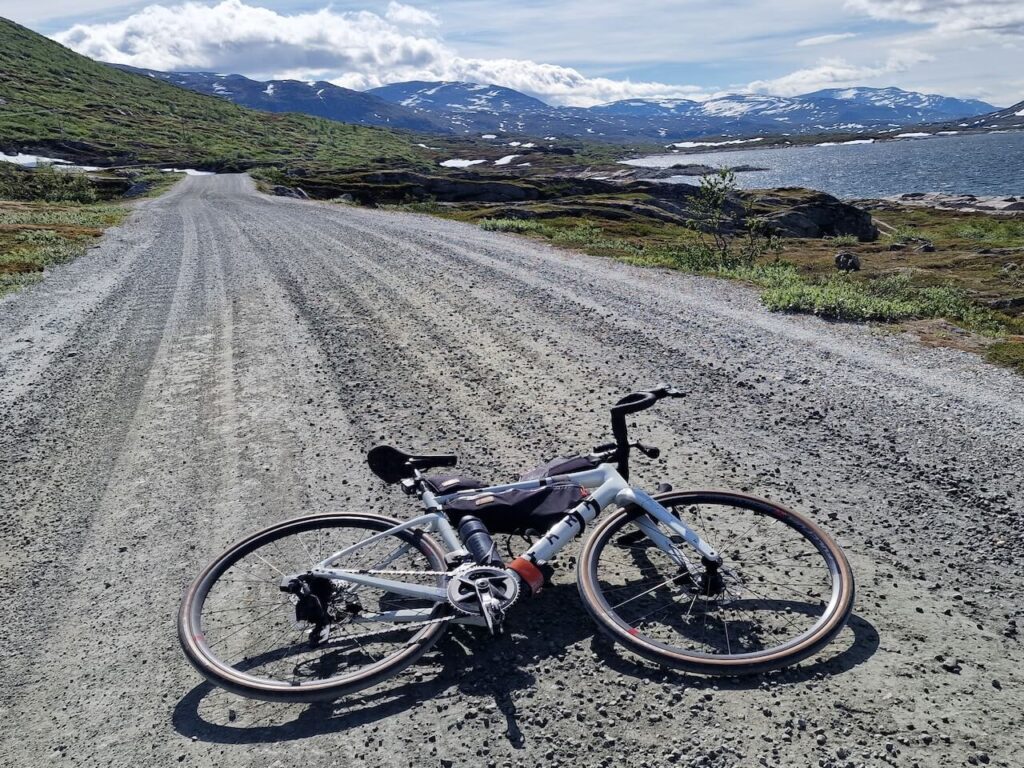
You begin in Sunndalsøra, a small town surrounded by towering mountains and deep fjords. As you start your journey, you’ll find yourself gradually ascending through the rugged terrain. The road climbs to an altitude of over 900 meters, offering sweeping views of the surrounding landscapes. The ascent is challenging, with steep gradients and hairpin bends, but the rewards are well worth the effort.
One of the most captivating features of Aursjøvegen is the view of the Aursjøen reservoir. This man-made lake, nestled amidst mountains, creates a stunning contrast of blue waters against the green and grey of the surrounding peaks. The road continues to wind its way through this dramatic landscape, offering countless photo opportunities and moments of awe.
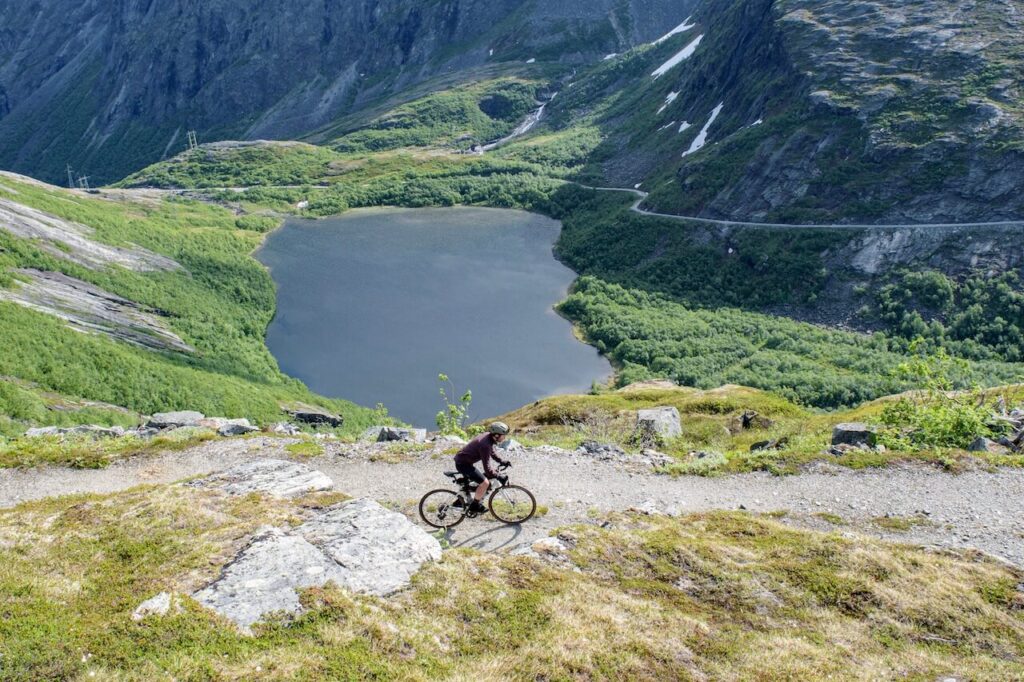
As you continue cycling, you’ll pass through untouched wilderness, with vast stretches of moorland and scattered mountain cabins. The solitude and serenity of this area are unmatched. However, we should note, cycling Aursjøvegen is not for the faint-hearted. The road’s challenging terrain and unpredictable weather conditions require careful preparation. It’s advisable to ride a gravel, mountain bike or a robust touring bike with appropriate gearing for the steep climbs. Ensure your bike is in excellent condition, as the remote location offers limited access to repair services.
Weather can change rapidly in the mountains, so be prepared with layers of clothing to keep warm and dry. Even in summer, temperatures can drop significantly, especially at higher altitudes. Carry plenty of water, snacks, and a map or GPS device, as mobile reception can be spotty.
Time of Year: 1st June – late September
Difficulty: 7/10
Bike Tyres: 35m+
Start: Sunndalsøra (Take a train from Oslo or Trondheim to Oppdal) and then cycle the wonderful road 70 down Sunndal Valley to the town of Sunndalsøra.
6. Gamle Strynefjellsvegen – 27km Gravel
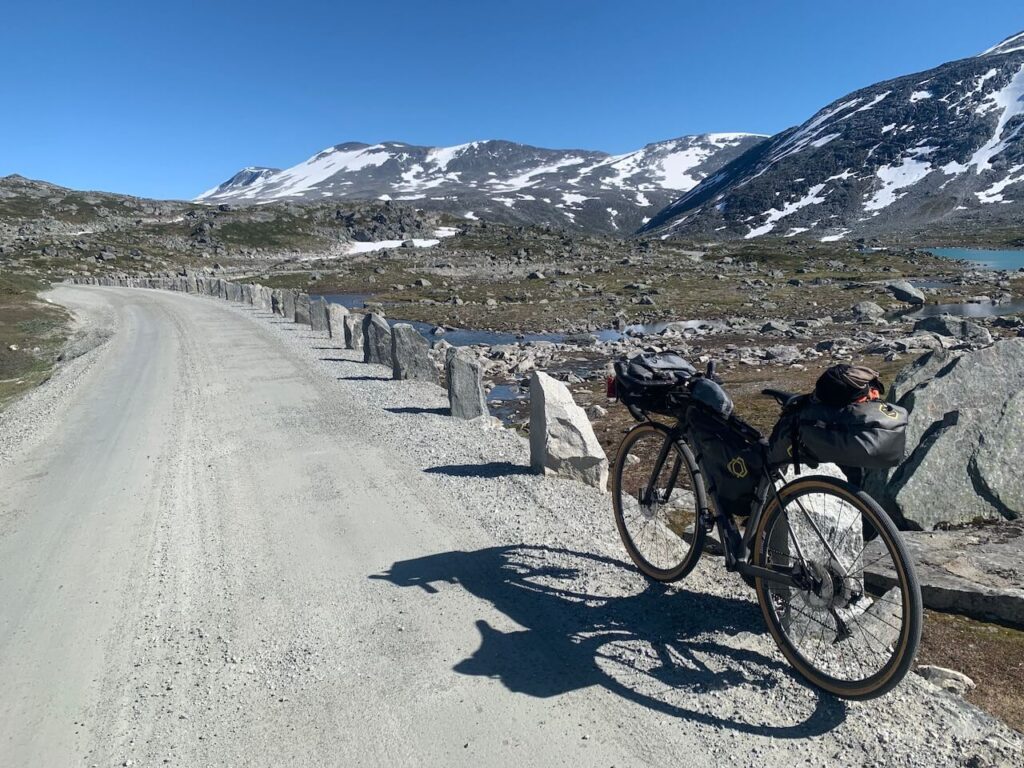
One of the greatest roads in Norway without a doubt. Built in the late 19th century, Gamle Strynefjellsvegen was originally constructed to connect the inland regions of Norway with the coastal areas. The road, stretching about 27 kilometers, was a monumental engineering feat of its time, painstakingly crafted with hand tools and hard labor. Today, it stands as a testament to Norway’s commitment to connecting its remote regions, and it has been preserved as a National Scenic Route, allowing visitors to experience its historical significance and natural beauty.
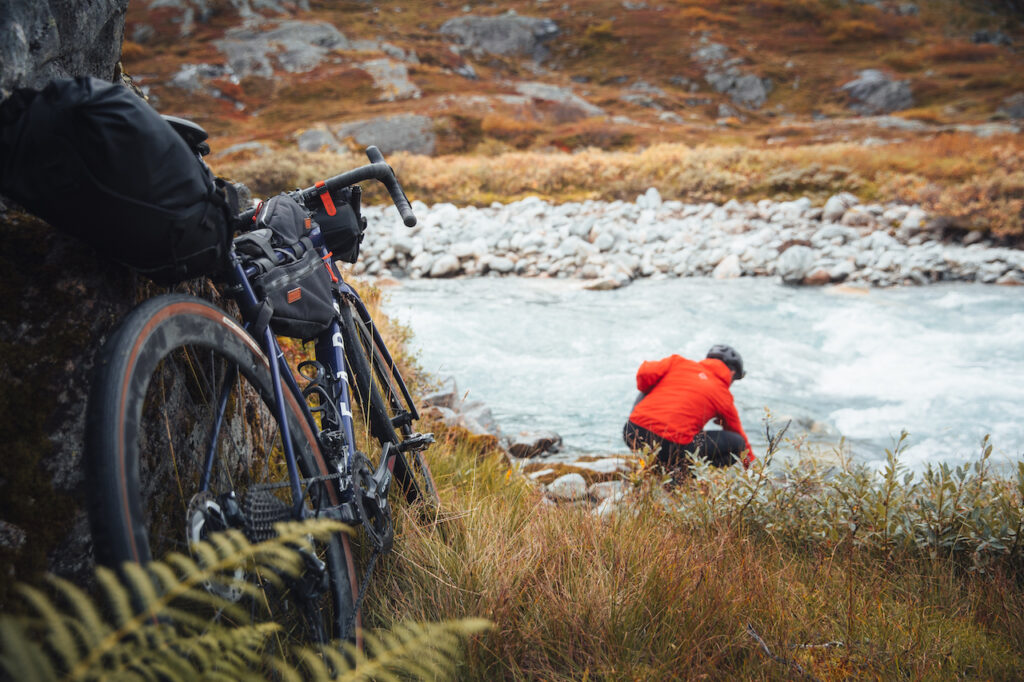
Starting from the town of Stryn, the journey along Gamle Strynefjellsvegen begins with a gradual ascent into the mountains. The road quickly reveals its unique character, with rough gravel surfaces and narrow passages that demand focus and skill from cyclists. However, the challenges are rewarded with breathtaking views at every turn.

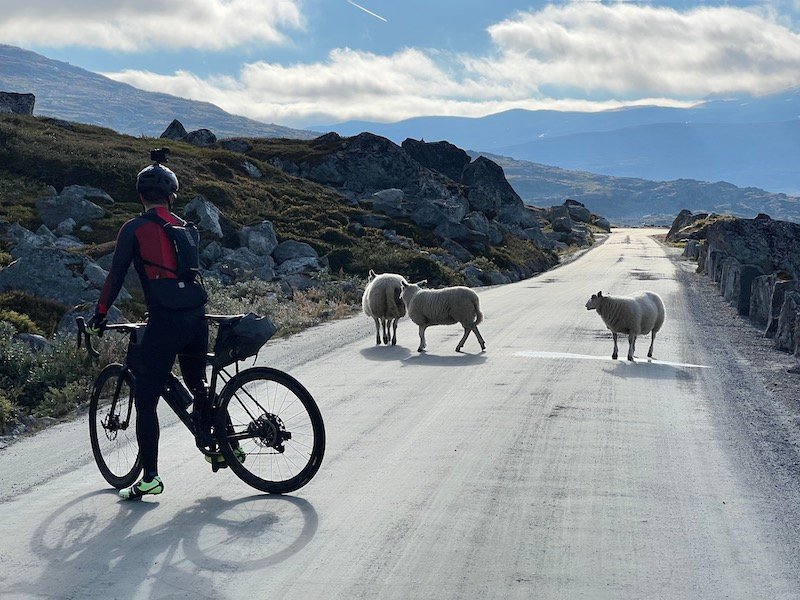
The road winds its way through a landscape shaped by glaciers, with towering peaks, cascading waterfalls, and serene mountain lakes dotting the route. The contrast of snow-capped mountains against the deep blue of the lakes creates a visual spectacle that is hard to match. One of the highlights is the sight of the Stryn Summer Ski Center, where patches of snow often remain year-round, allowing for a surreal experience of cycling past skiers in the middle of summer.
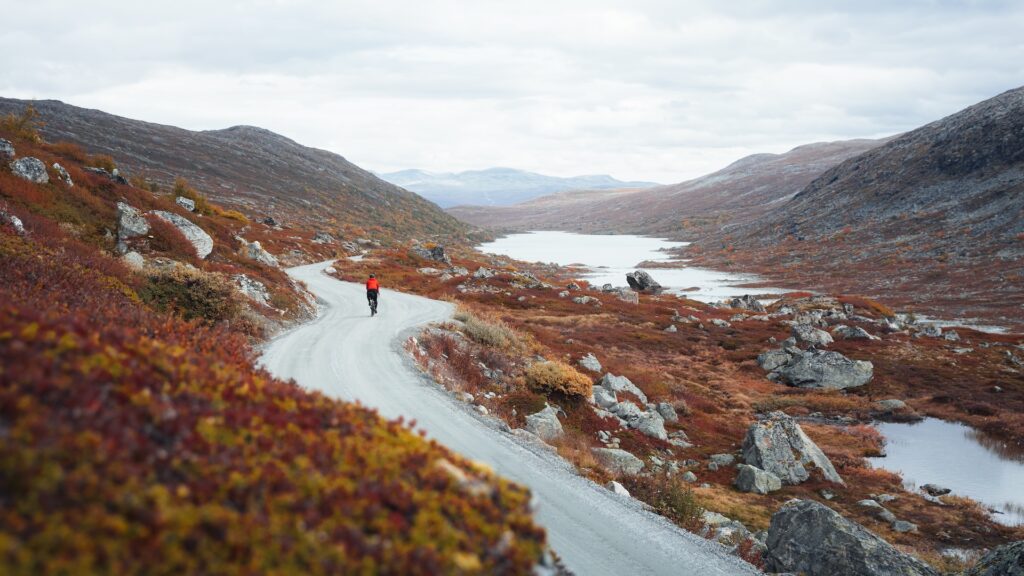
At the end of the road lies the famous Grotli mountain cabin where a nice room and meal can be booked to celebrate the incredible journey through one of the most unique parts of Norway
Time of Year: 15th June – late September
Difficulty: 7/10 (cycling from Stryne) 2/10 (from Grotli)
Bike Tyres: 28m+ (can be cycled with a road bike)
Start: Stryn or Grotli (No easy public transport options to reach the area from a major city). Most people include it as part of a longer cycling route through the area. See Fjord Norway or The Wonders of Fjord Norway.
5. Jordalen Loop – 50km Gravel / 30km Road
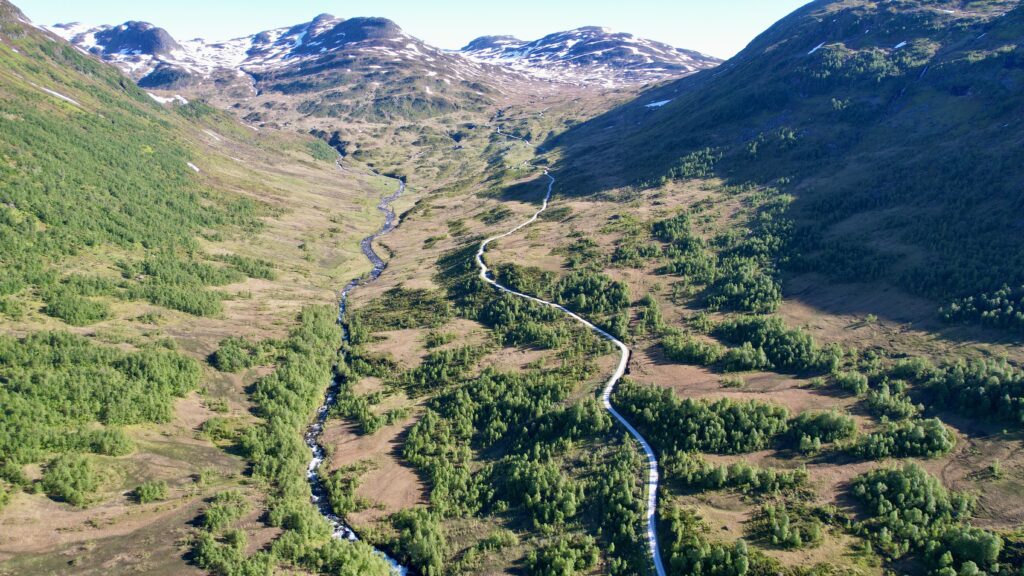
Jordalen is one of two hidden valleys you’ll cycle surrounding the main valley of Nærøydalen. A pristine white gravel road guides you through stunning landscapes, away from the tourist crowds in the valley below. The ride is demanding, featuring climbs up to 950 meters, with an optional extension to a hydro plant that reaches 1,100 meters before you retrace your route. Careful planning is crucial, especially if you’re not travelling by car, as the busy E16 road through Nærøydalen connects you to the loop and is not recommended for cycling during peak hours. Starting from Voss or Flåm is ideal, and you can also combine this route with the Rallarvegen trail from Haugastøl to Myrdal.
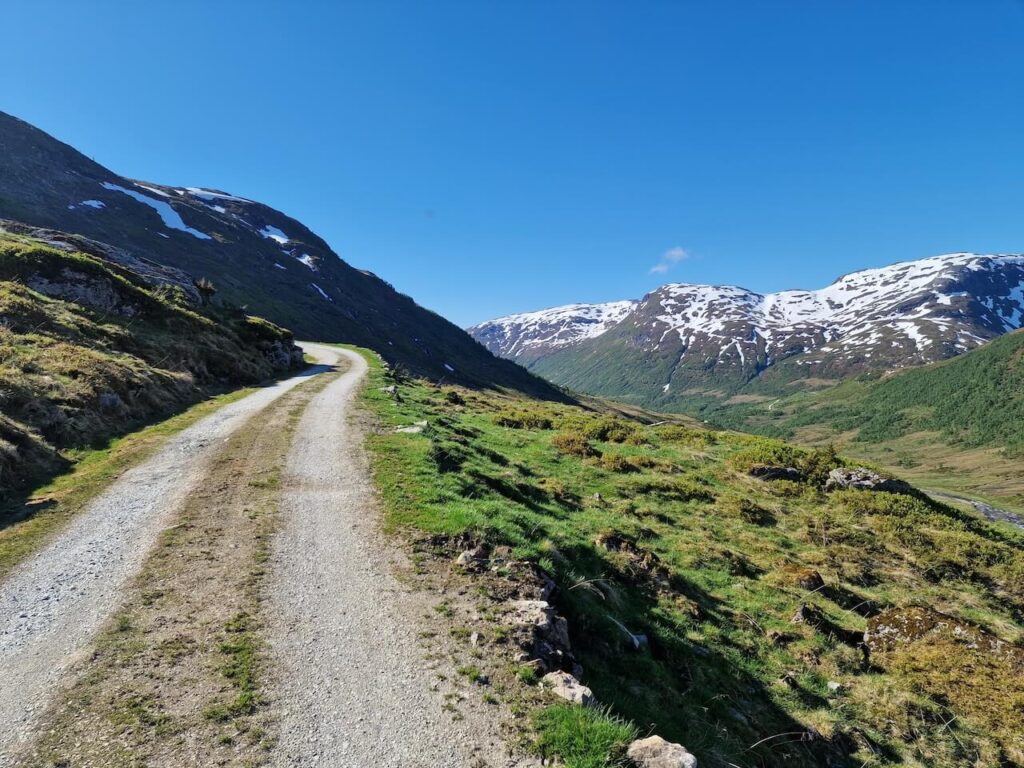
The cycling route around Jordalen Valley is roughly a 40-kilometer loop (option to extend to Hydro Planet). It begins and ends in the nearby village of Gudvangen, making it accessible for a day trip. The journey starts with a flat ride along the Nærøydalen valley on the main E16 road. If you ride this at the right time (early morning or late at night) cyclists can enjoy views of the iconic fjord rock walls rising dramatically from the valley floor.
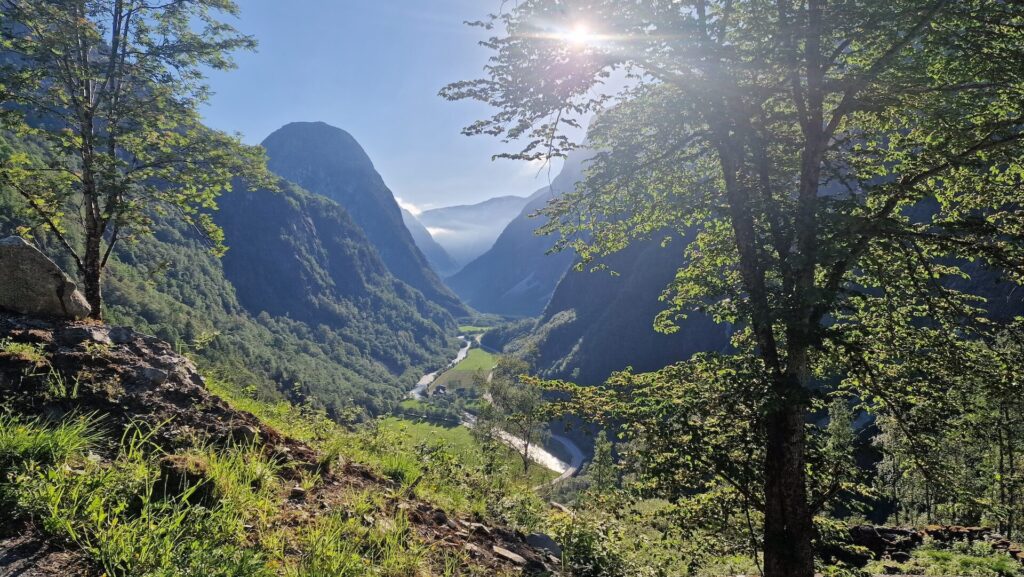
After around 10km on the E16 you will reach the turn-off up Stalheimskleiva, Norway’s steepest road. It’s relatively short but very difficult to cycle and there is no harm in walking up with your bike to the hotel above. From the top, you head right, through a gate, that leads you onto some seriously good gravel tracks along Brekkedalen.
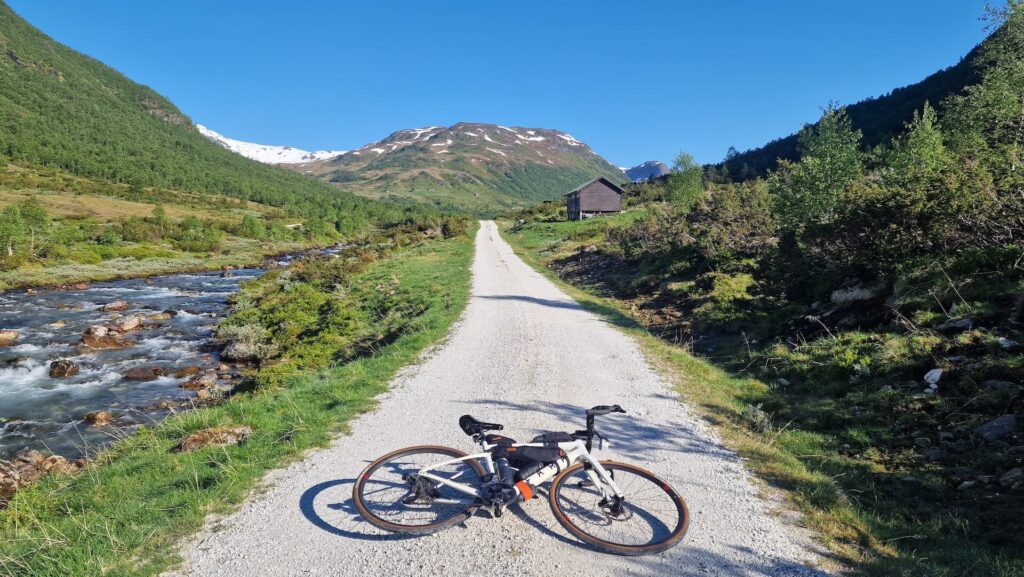
As you enter Brekkedalen, the road begins to climb, winding its way up the valley. The ascent is gradual but steady, offering cyclists the opportunity to pace themselves as they take in the surroundings. The road becomes rougher as you venture deeper into the valley, with the rugged terrain and mountains all around you. The sense of isolation here is palpable, making it a perfect retreat for those looking to escape the bustle of more popular tourist spots.
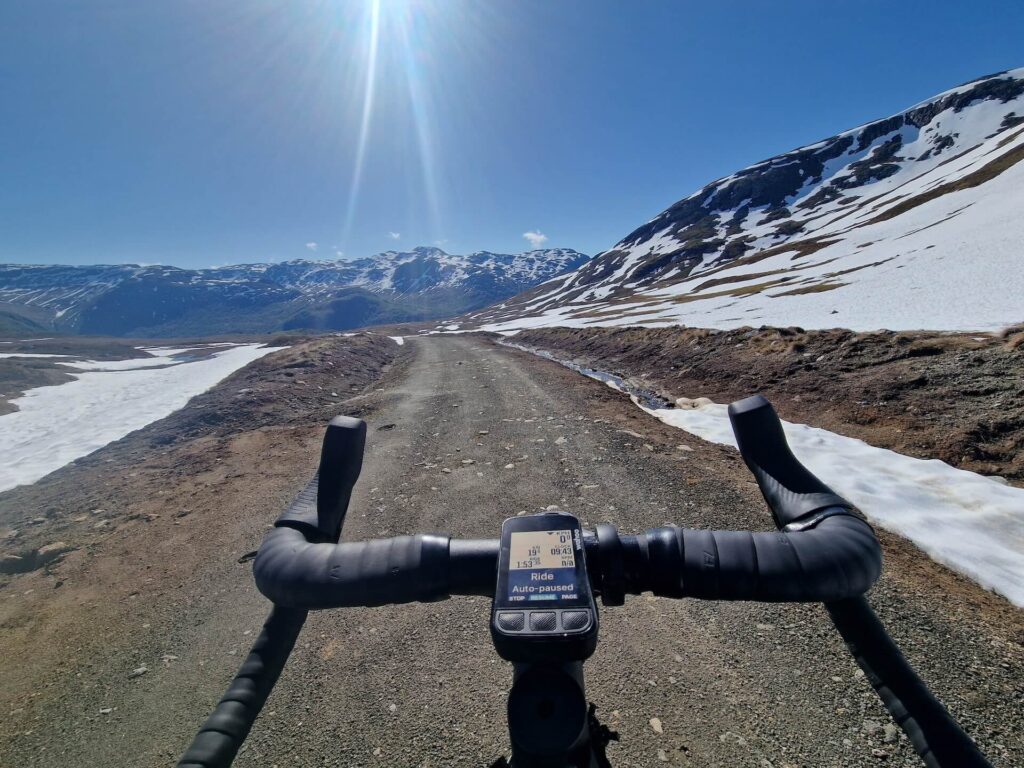
One of the highlights of the route is the view from the top of the valley, where the road plateaus and offers a panoramic view of Jordalen’s stunning landscape. From this vantage point, you can see the patchwork of green fields, the meandering river below, and the towering peaks that encircle the valley. The descent from here is exhilarating, with a series of hairpin bends that take you down to the valley floor.
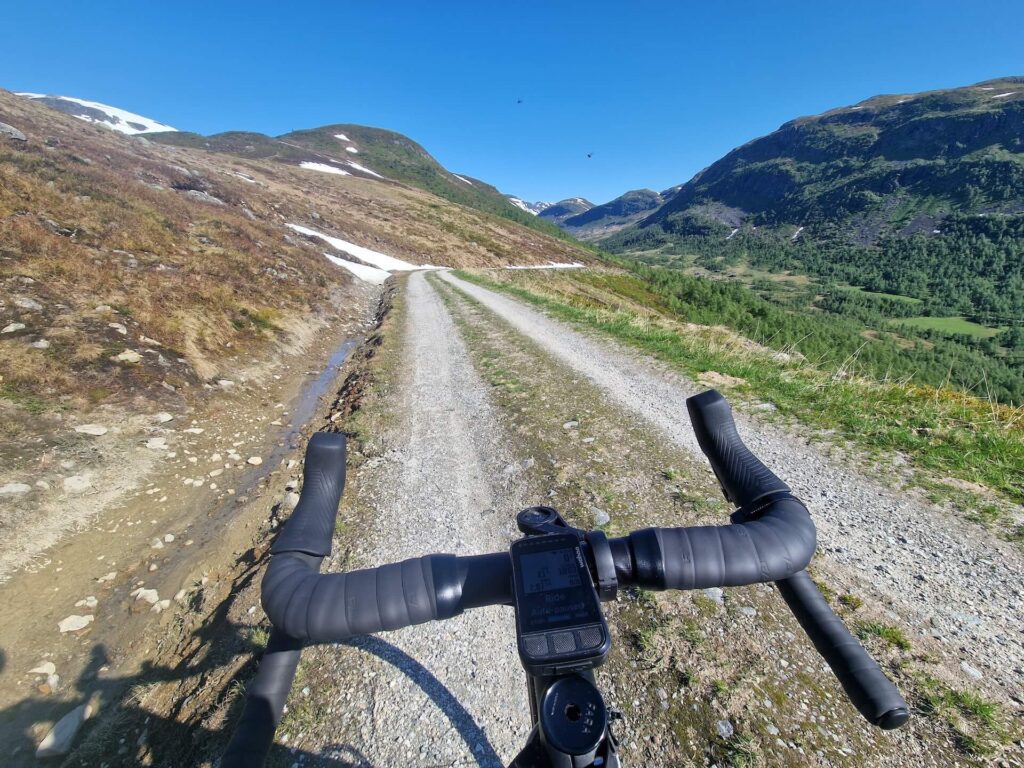
Time of Year: Mid/late June – late September
Difficulty: 6/10
Bike Tyres: 32/35m+
Start:
Gudvangen/Nærøyfjord – Take a ferry or boat from the famous tourist village of Flåm. Flåm can be reached by train from both Oslo and Bergen.
Voss – cycle the E16 road to the start point at Stalheim Hotel (This should only be cycled at quiet times as the E16 is very busy during the day).
Part 3 of this blog can be found here




Leave a Reply