



For years, I believed Innovation Norway existed to support innovation.
Not pleasant ideas.
Not preservation.
Not stability for its own sake.
Text & Photos by Matthew Tolley – Founder of Cycle Norway.
Innovation in the real sense of the word, new solutions, new structures, and new ways of doing things that materially change how an industry works.
That belief is why I waited three years before applying for funding again. It is why I invested significant time, money, and effort into a scale-up application that followed Innovation Norway’s published criteria closely. It is also why I relocated the business north, fully aware that Oslo-based companies are often deprioritised in practice.
In hindsight, that belief was naïve.
What follows is not a complaint about rejection. It is an account of a growing gap between how a public institution presents its mission and how its funding decisions are applied in practice, and why that gap matters.
Building What Didn’t Exist
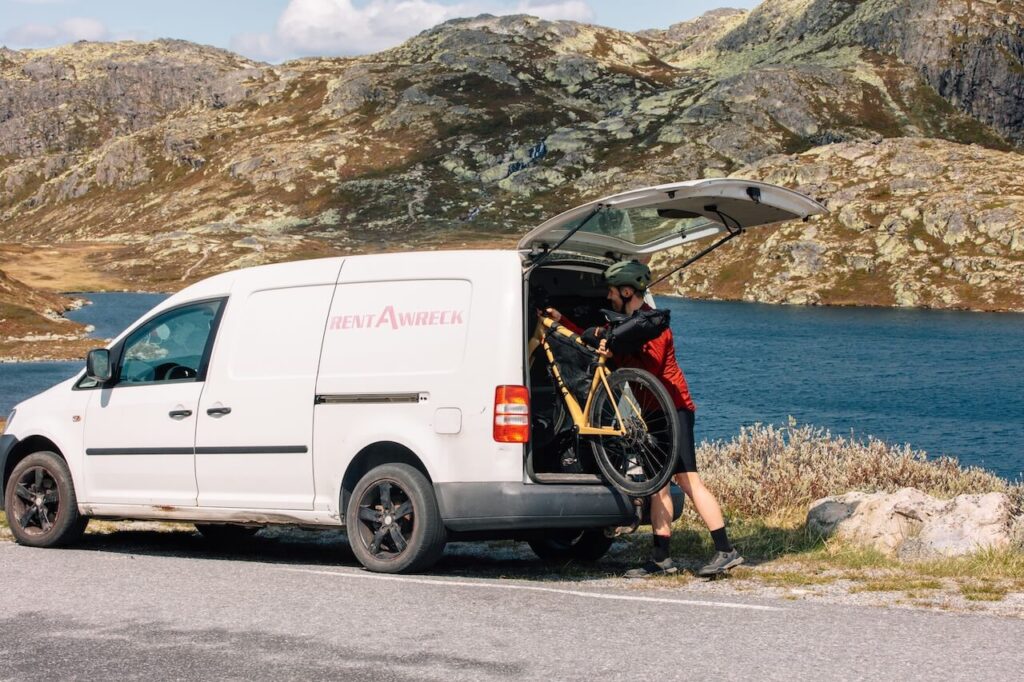
Cycle Norway was not created to chase grants. It was built because there was a gap nobody else was filling.
Norway has world-class landscapes, yet surprisingly poor national cycling infrastructure information. Routes were fragmented. Data was outdated. Regions competed instead of cooperating. Tourism continued to be funnelled into the same overcrowded destinations year after year.
So I built infrastructure.
Not a tour company.
Not a booking platform.
Not a destination marketing page.
A national digital platform that allows people to cycle Norway independently, spreads tourism geographically, supports local businesses indirectly, scales nationally with low marginal costs, and shifts travel away from cars and campervans.
It was built slowly, methodically, and in public.
Over time, the platform grew to hundreds of routes, tens of thousands of users, and close to a million annual views per year. This is not aspiration. It is operational reality.

From “Too Early” to “Still Not Fundable”
In 2022, when the business was still young, I contacted Innovation Norway. The response was straightforward: the project was too early, too unproven, and lacked sufficient scale.
That assessment was fair. I accepted it.
And I did what innovators are repeatedly told to do: I proved it.
Over the following three years, traffic grew steadily. Revenue became predictable. Partnerships formed organically. The platform demonstrated national reach and indirect economic impact across regions. Most importantly, it worked without institutional support.
By any reasonable definition, this was no longer an early-stage startup. It was a scale-up in operation.
So in 2025, I applied again, this time under Innovation Norway’s scale-up framework, exactly as described in their own materials.
The application process was extensive. It required financial forecasts, market analysis, innovation justification, risk assessment, socio-economic impact explanation, and alignment with national priorities. I did not rush it. I sought advice. I refined the language. I ensured the project matched the stated criteria.
I also made a decision that should not matter, but does.
I relocated the business to Tromsø.
Anyone familiar with the system understands the uncomfortable reality: regional anchoring often determines how seriously an application is taken. Despite Innovation Norway’s national mandate, geographic proximity still influences access. The move was not driven by business necessity, but by institutional expectation.

The Slow Retreat
Initially, the signals were positive. Confirmation emails arrived. A named adviser was assigned. There were explanations about workload, timing, and whether the project required national rather than regional handling.
Nothing was promised. Nothing was closed.
“These are not scale-ups. They are incumbents.”
Then January arrived. The phone call was calm, professional, and familiar. Budgets had been reduced. Priorities had shifted. There was no funding available for “this type of project.”
There was no critique of the model.
No discussion of innovation.
No indication of what could be improved.
After three years of proof, the outcome was effectively unchanged from the unproven stage.
At that point, the situation stopped being frustrating and became revealing.

What Is Actually Being Funded?
If a scalable national digital platform with demonstrated use is considered “not fundable,” it raises an obvious question: what is being funded?
Innovation Norway publishes its grant data, so I reviewed the 2025 tourism allocations.
The pattern is clear. The majority of funding goes to long-established hotels, campsites, alpine resorts, destination marketing organisations, regional tourism bodies, and other asset-heavy operators.
Many have existed for decades.
Many own substantial physical assets.
Many operate in mature markets.
These are not scale-ups. They are incumbents.
That does not mean they don’t deserve funding but it does highlight a contradiction between what Innovation Norway considers innovation and how it is applied in practice.

The Explanation That Closed the Case
The clearest insight did not come from the rejection itself, but from the written explanation.
Innovation Norway confirmed that the application was not assessed relative to other tourism projects, that national digital platforms fall outside internal policy priorities, and that innovation is primarily interpreted as new technology rather than new systems, models, or infrastructure.
At the same time, millions of kroner were awarded in 2025 to long-established tourism actors whose projects involved no new technology at all.
The contradiction is difficult to ignore.
Innovation is not being rejected due to lack of impact or traction, but because it does not fit a narrow internal definition that excludes system-level change by design.
When policy definitions exclude structural innovation while funding continuity under the same banner, the issue is no longer individual decisions. It is institutional.

“Hektisk hos oss”
There was also a noticeable pattern in communication.
Each delay was explained the same way: hektisk hos oss.
Busy before Christmas.
Busy with budgets in January.
Busy again afterwards.
Individually, these explanations are reasonable. Repeated often enough, they suggest something else: narrowing discretion, reduced appetite for complexity, and an increasing reliance on rigid policy boundaries.
Institutions under pressure tend to minimise risk rather than manage it. Innovation becomes something to label rather than practise.
In that context, the rejection makes sense — not because the project lacked merit, but because it required explanation.
Institutional Drift?
This is not corruption in the criminal sense. There are no accusations of illegality.
What is visible instead is institutional drift: a gradual divergence between mission and behaviour driven by incentives, risk aversion, and internal pressure.
Innovation Norway is tasked with supporting innovation and risk. Yet its funding outcomes overwhelmingly favour safety, incumbency, and familiarity. Over time, that gap erodes the very concept the institution exists to support.

Who the System Serves
The system increasingly works for those already embedded within it: organisations with institutional legitimacy, physical assets, and cultural proximity.
It works far less well for independent founders, national digital infrastructure, and those who build outside established templates.
That is not a moral judgement. It is an observable pattern.

Final Word
This is no longer about funding. That process is finished.
It is about documenting a reality many founders experience quietly but rarely articulate.
Innovation Norway does not struggle because it lacks money. It struggles because its operational definition of innovation has narrowed.
You cannot fund the future while clinging to the past. And you cannot build a dynamic economy by rewarding only what already exists.
Cycle Norway will continue. The platform will grow. People will continue cycling Norway more sustainably because of it.
Innovation will happen, with or without institutional backing.
The remaining question is simple:
Does Innovation Norway want to be part of that future, or remain a caretaker of the present?
Part 2 – Did I get a reply? Find out here




Leave a Reply