




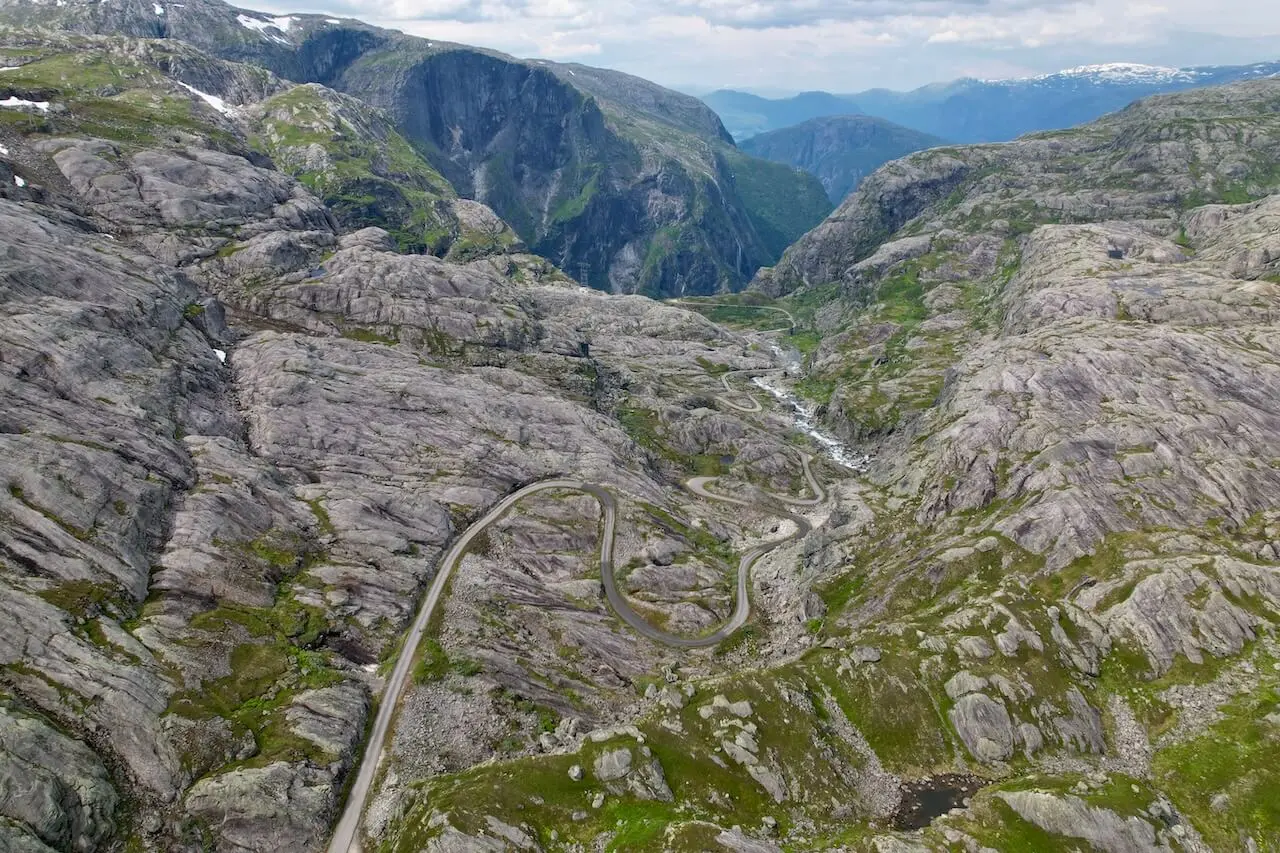
Tucked away in the rugged terrain of western Norway lies one of the country’s most challenging and least-known cycling climbs: Osafjellet. Overshadowed by more famous climbs like Trollstigen or Sognefjellet, Osafjellet quietly asserts itself as a true test of endurance, offering cyclists a combination of raw beauty, isolation, and historical depth that’s hard to find elsewhere.
Ranked as the third hardest road climb in Norway, Osafjellet is not for the faint of heart. But for those who dare to take it on, the reward is not just in the gradient or the altitude, it’s in the feeling of complete escape, of being dwarfed by the vastness of nature, and the privilege of riding a route that few even know exists.
Forgotten Roads and Fjord Histories
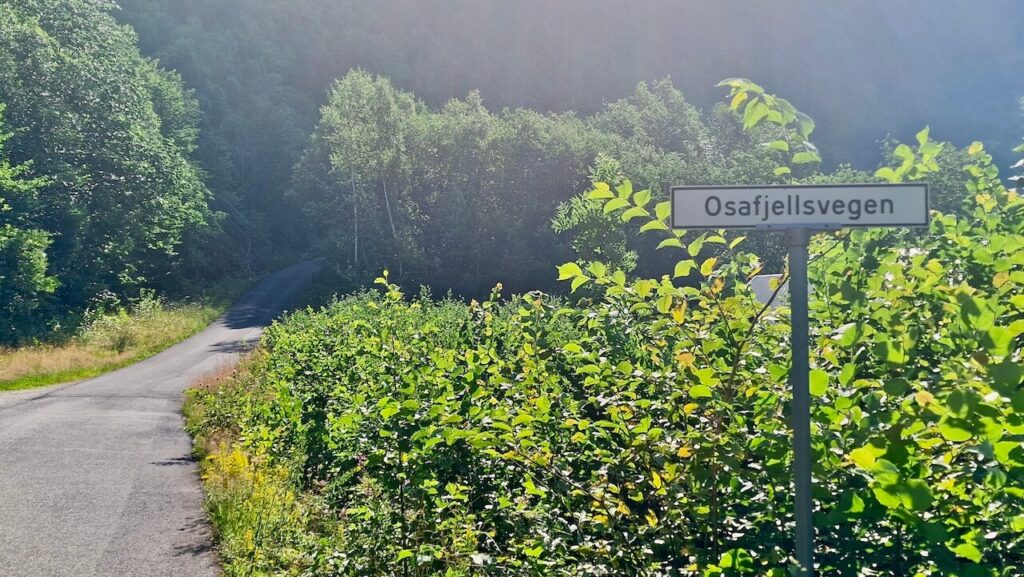
Osafjellet rises above the quiet village of Osa, located at the end of a finger-like branch of the Hardangerfjord. Osa itself feels like a place time forgot, a few scattered houses, a pier, and the bright waters of the fjord lapping gently at its edge. It was once a place of more activity, tied to logging, farming, and the seasonal movement of people through the valleys. But as Norway modernised, the roads to Osa fell quiet.
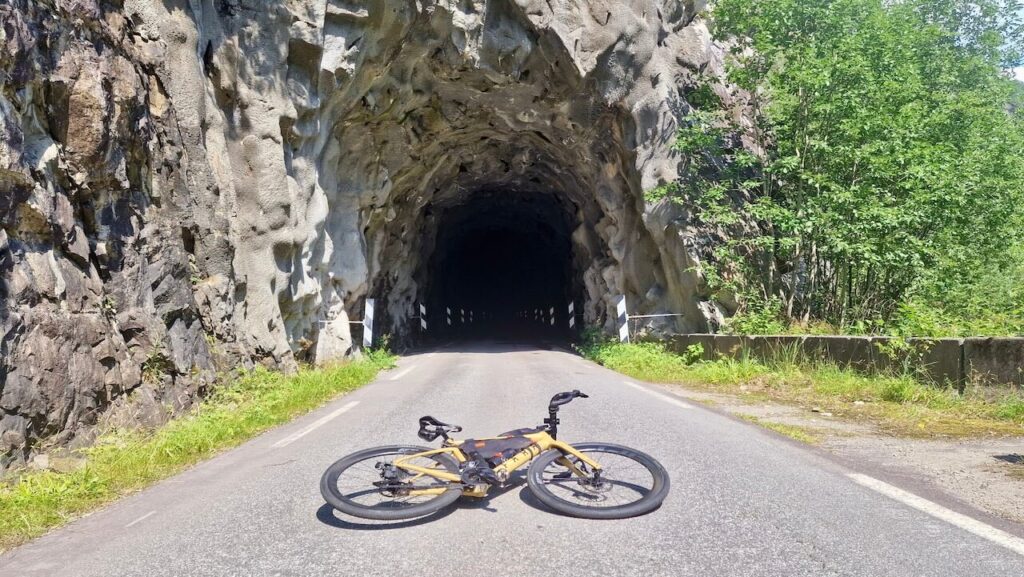
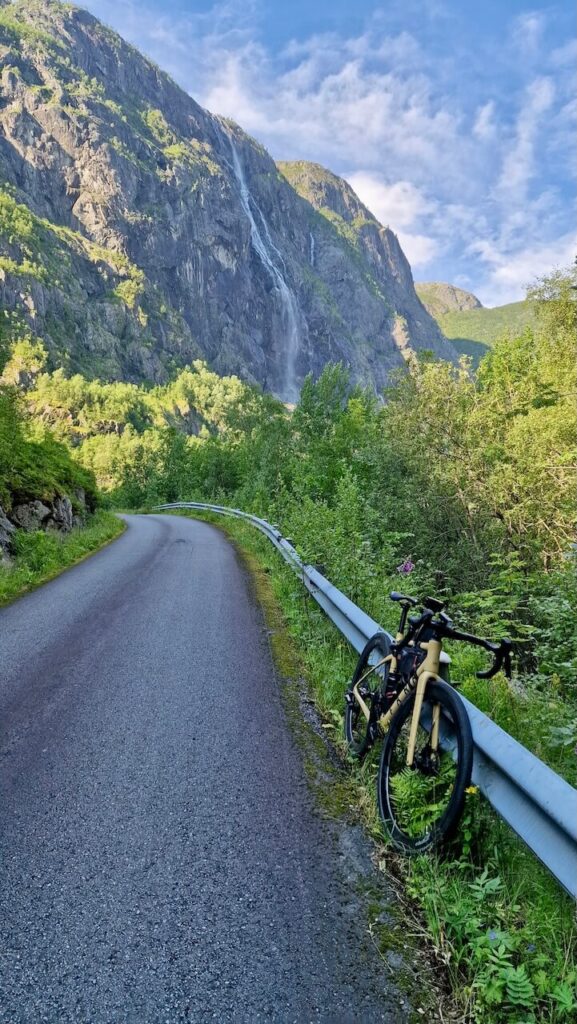
The climb up Osafjellet begins as a narrow paved road that weaves out of the village and immediately begins to climb through a small forest. It’s a road that wasn’t built for tourists or cyclists. It was constructed in the post-war era during Norway’s intense hydropower development, when engineers and construction workers pushed roads high into the mountains to build dams and harness the wild rivers. Today, these roads remain as silent monuments to that era, still in use, but barely noticed.
A Climb Few Know, and Fewer Attempt
Most cyclists have never heard of Osafjellet, let alone ridden it. There’s no café at the top, no signs pointing to it on tourist maps. It doesn’t appear in cycling tour brochures or get listed among Norway’s “must-do” routes. But those who discover it often say it leaves the deepest impression.
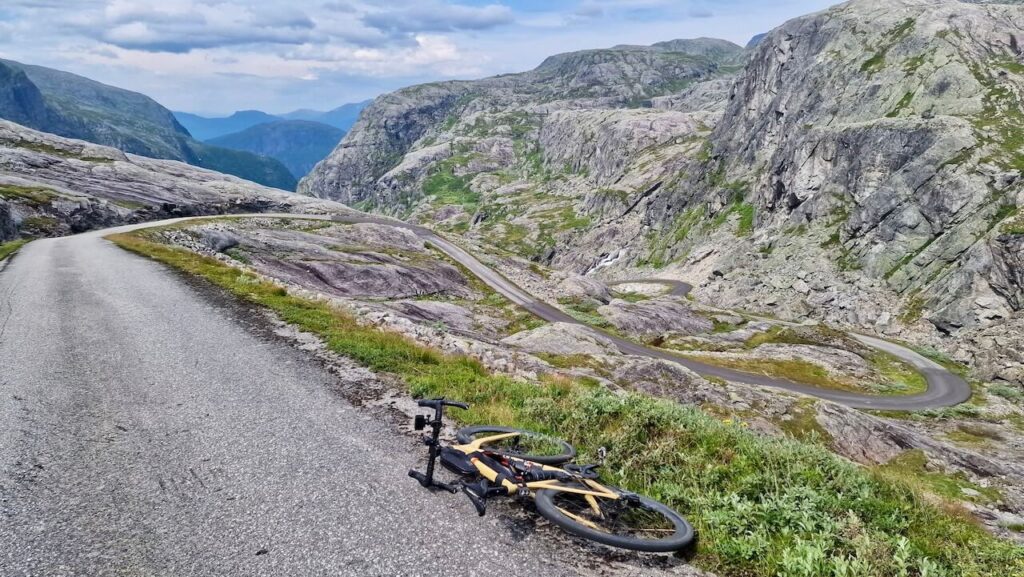
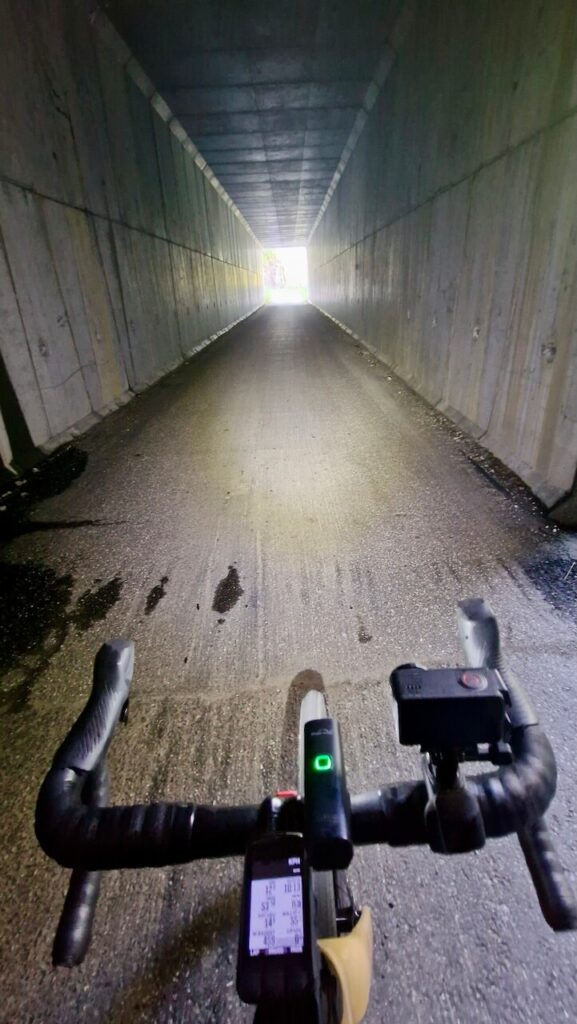
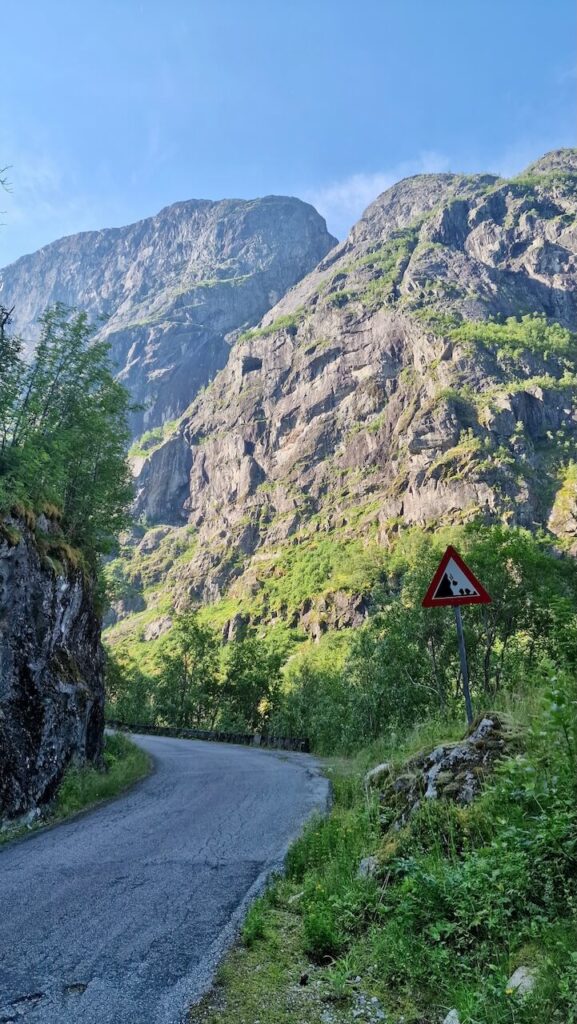
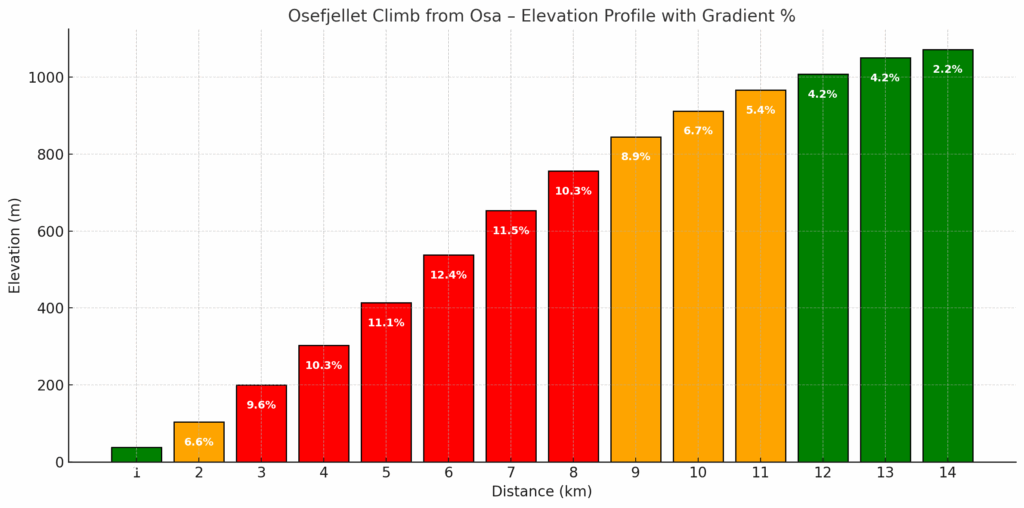
The climb itself is long, remote, and punishing. With a total ascent that pushes over 1,150 vertical meters, gradients that frequently hit double digits, and a narrow tarmac surface that ends with a small rough stretch of gravel. This is a climb that demands both physical and mental strength. There are few places to rest or find shelter, and no facilities on the way up. You ride entirely on your own terms.
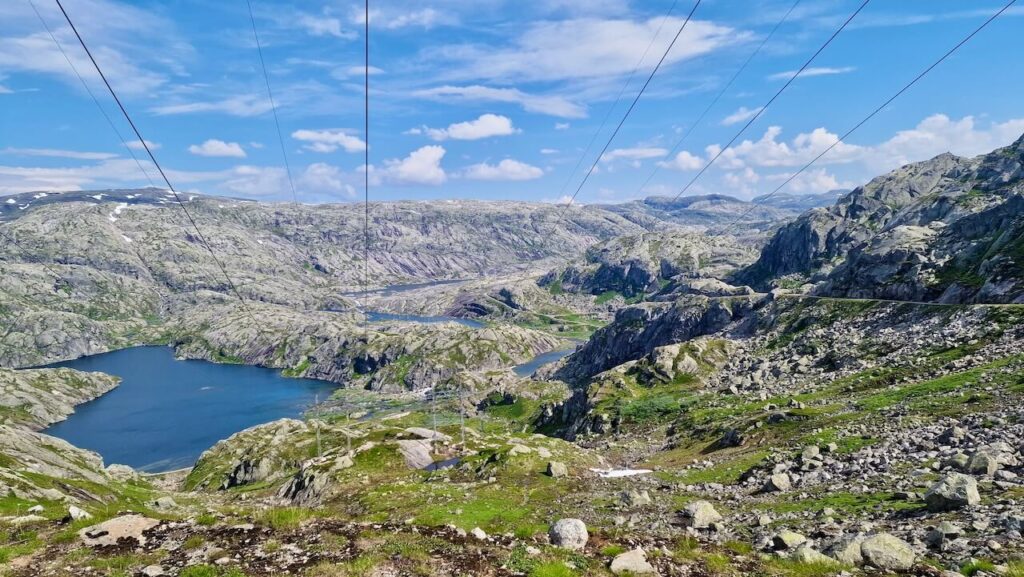
Adding to the psychological challenge is the sheer remoteness. Once you leave Osa, you are alone. No cars. No houses. No mobile signal. Just you, your bike, and the quiet churn of your legs as the mountain rises around you. The road winds through forest, then sparse birch before giving way to open mountain plateau. It is here, above the tree line, where Osafjellet reveals its full grandeur.
Twin Summits and a Choice at the Top
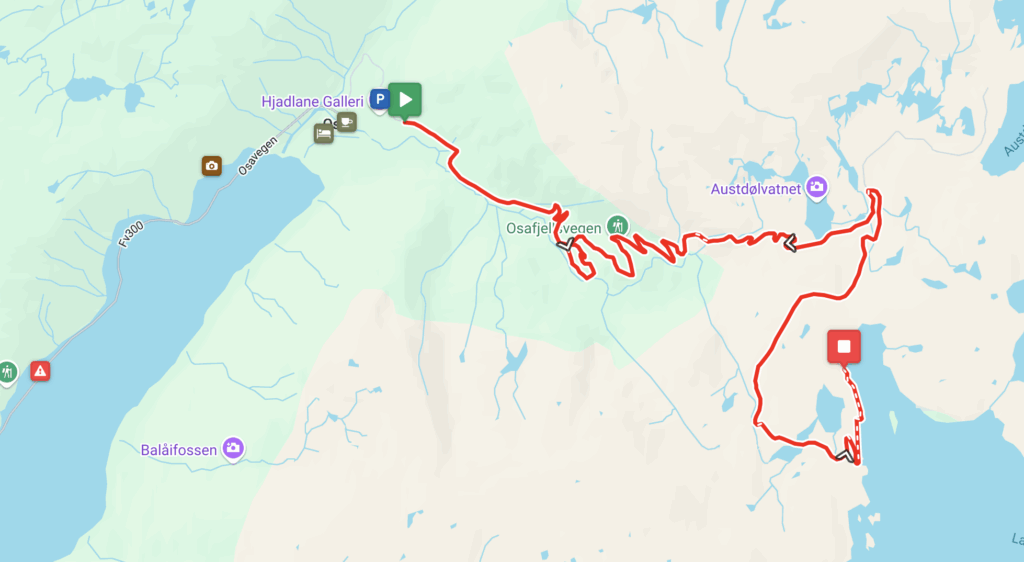
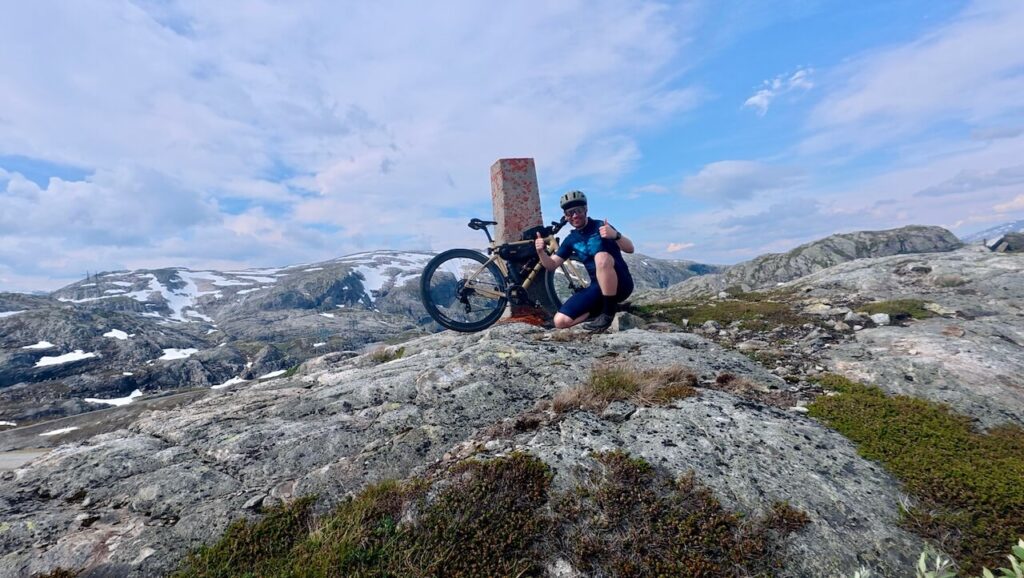
Unlike most climbs that crest at a single pass, Osafjellet has two distinct summits. When you reach the high plateau, the road splits in two. This junction feels like a fork between two worlds.
To the left, the road continues to climb gradually, leading further into the highlands toward yet more wilderness and finally a gravel stretch that comes to an abrupt end. But most locals will point you to the road on the right.
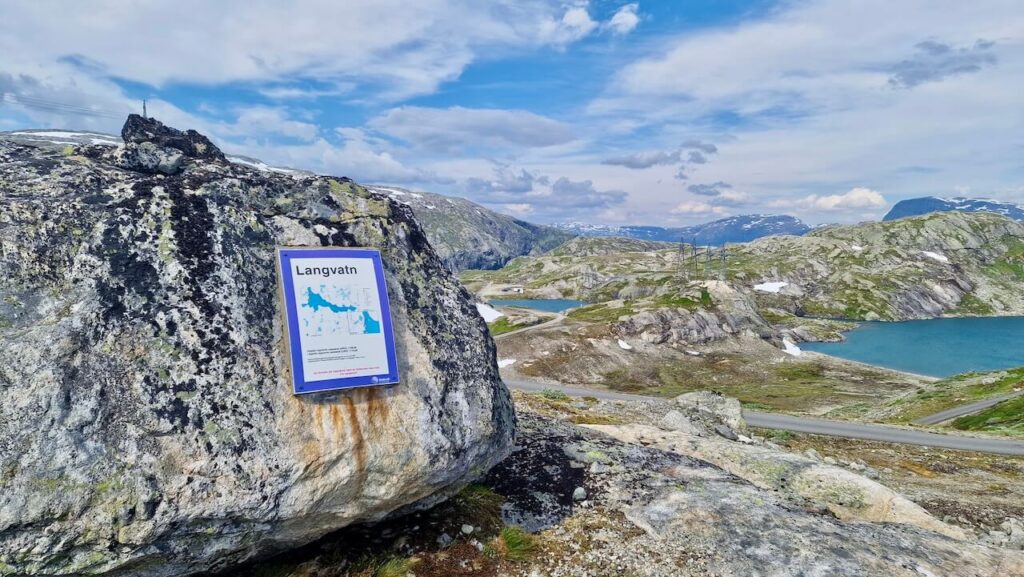
Take this turn, and the road first climbs higher before descending slightly, running along a ridge until it offers one last double-digit gradient climb that ends at a colossal hydroelectric dam. This is the Oset Dam, a massive concrete structure that holds back the azure waters of the lake behind it, Langvatnet. It’s here that the history of Osafjellet comes into focus. This whole area was shaped by Norway’s great hydroelectric push in the 1950s and 60s, when remote valleys were flooded and roads were pushed into some of the country’s harshest terrain. It’s a brutal wind swept environment that offers no shelter and pure rawness of Mother Nature.
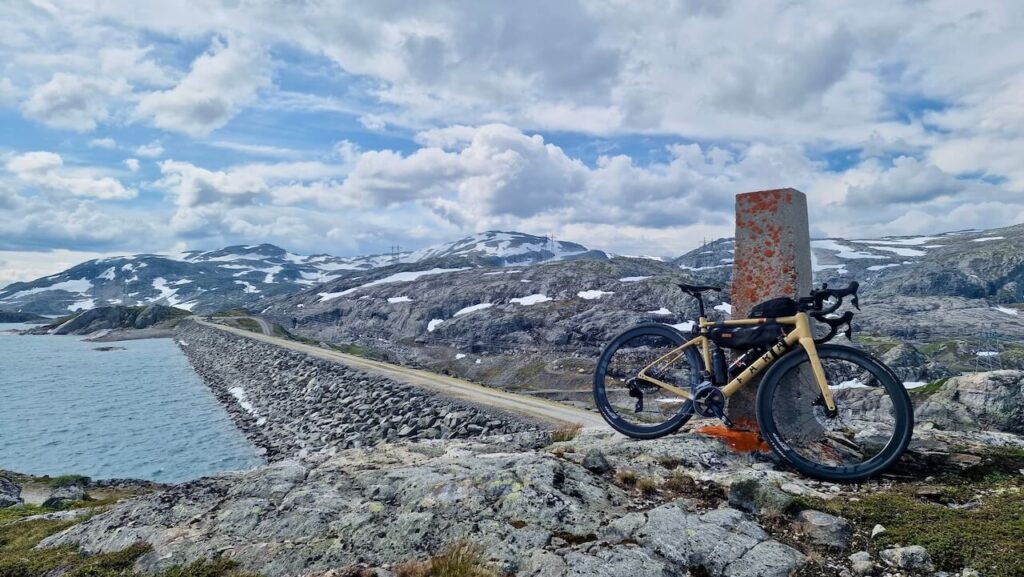
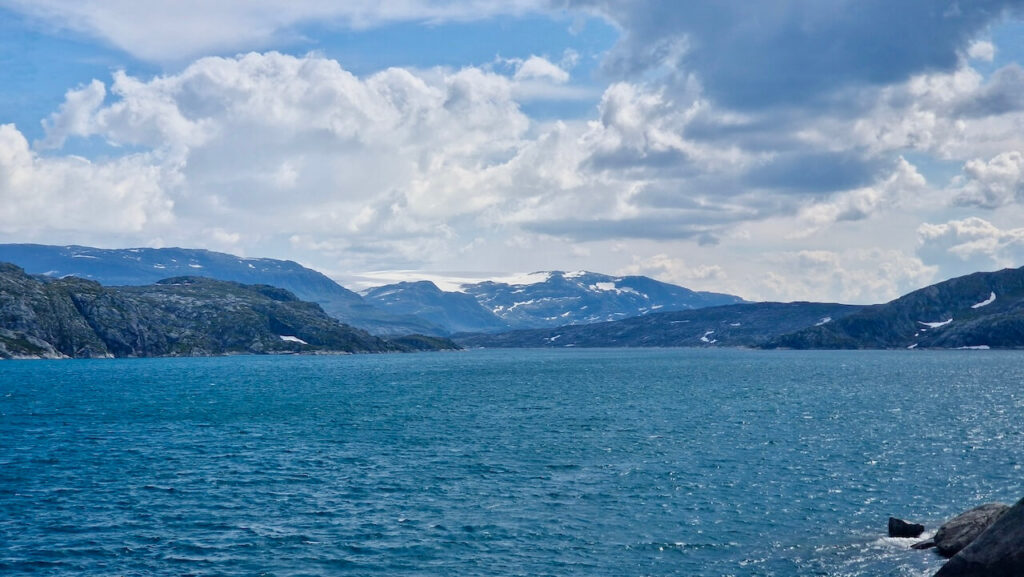
Standing at the edge of the dam, you see not just the engineering achievement, but the view that makes this climb unforgettable: the vast lake stretching out before you, framed by stark rock, rolling plateaus, and, if the skies are clear, glaciers shimmering in the distance. Hardangerjøkulen, a massive circular ice mass, appears ghostlike on the horizon. In summer, its frozen presence contrasts with the still waters below, creating a scene that feels both eternal and unshakably Norwegian.
Why Ride Osafjellet?
So why should anyone cycle Osafjellet, especially when Norway offers so many scenic, easier, and more popular climbs?
The answer lies in what cycling means at its deepest level. Osafjellet isn’t just about ticking off a bucket-list item or snapping a selfie at the top. It’s about confronting solitude. About surrendering to a landscape that couldn’t care less about your plans. It’s about letting go of expectations and embracing the unknown. I had an uncomfortable feeling before I set off, questioning if the ride was worth the suffering. I was expecting a barren, ugly world of hydro construction and no real beauty. I was completely wrong. I descended down on cloud 9, having experienced something raw, honest and more beautiful than I could have imagined.
Many Norwegian climbs impress with fjord views, alpine roads, or touristic fanfare. Osafjellet strips all that away and offers something rarer. A hidden, authentic climb into wild terrain where roads and people don’t usually go. You’ll feel you’ve been given a key to a secret world that only those who are willing to suffer can access. But that suffering is short-lived, and what remains is a satisfaction that will last much longer and be part of your cycling memories for years to come.
“The Basecamp You Didn’t Know You Needed“
At the base of the Osafjellet climb, nestled between steep mountains and a glacial river, you’ll find Hardanger Basecamp and its heart – Osa Kafeen. This is no ordinary mountain outpost. The café and basecamp sit on the grounds of a grand but unfinished hydroelectric project from over a century ago. In the early 1900s, more than 2,200 workers toiled for 11 years to build what was intended to be one of Norway’s largest hydropower plants. But the project collapsed into bankruptcy, leaving behind only a vast labyrinth of tunnels and shafts—and the Kafeen, originally constructed to serve those workers. Today, the site has been lovingly revived into a place of warmth, character, and quiet hospitality.
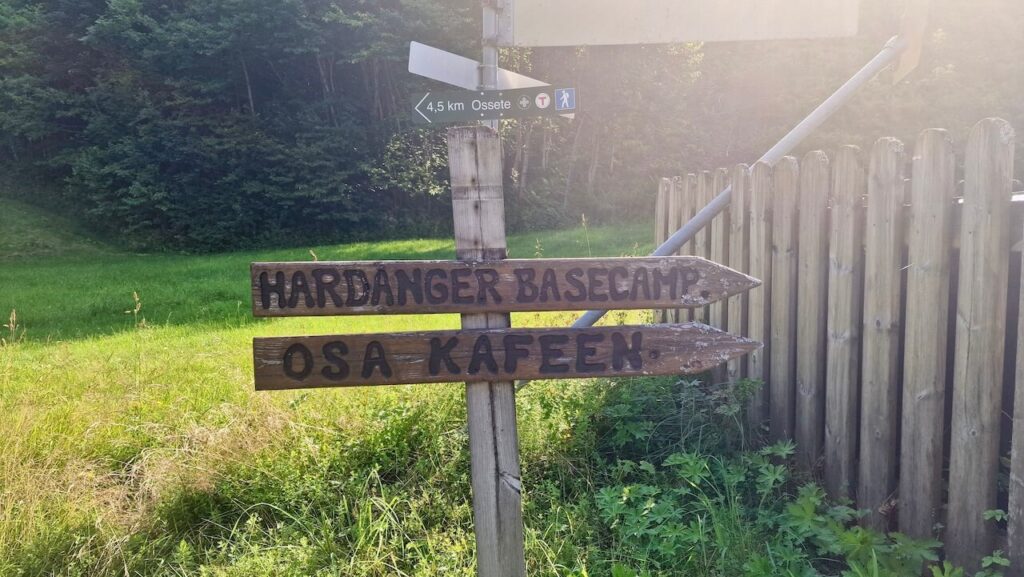
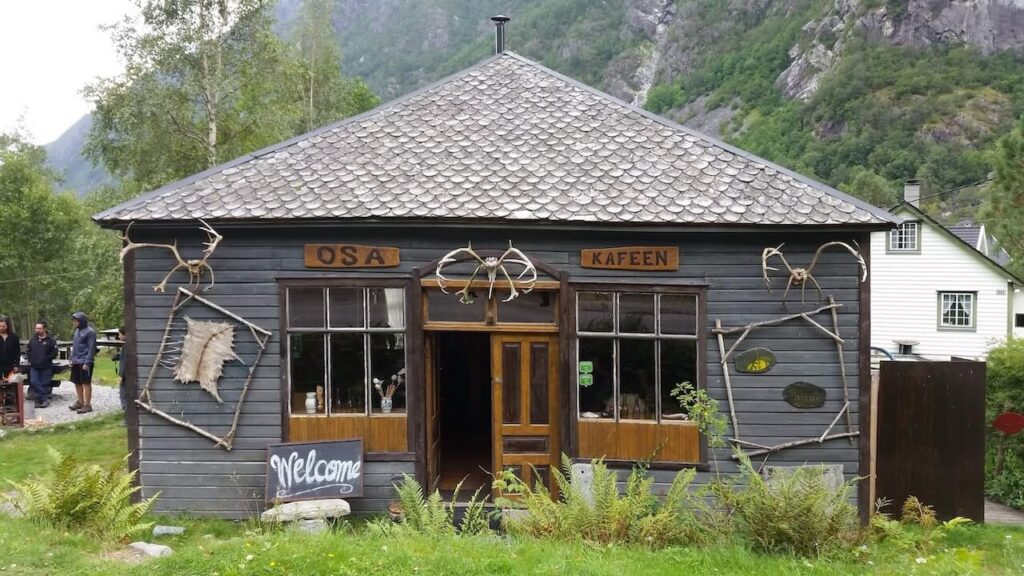
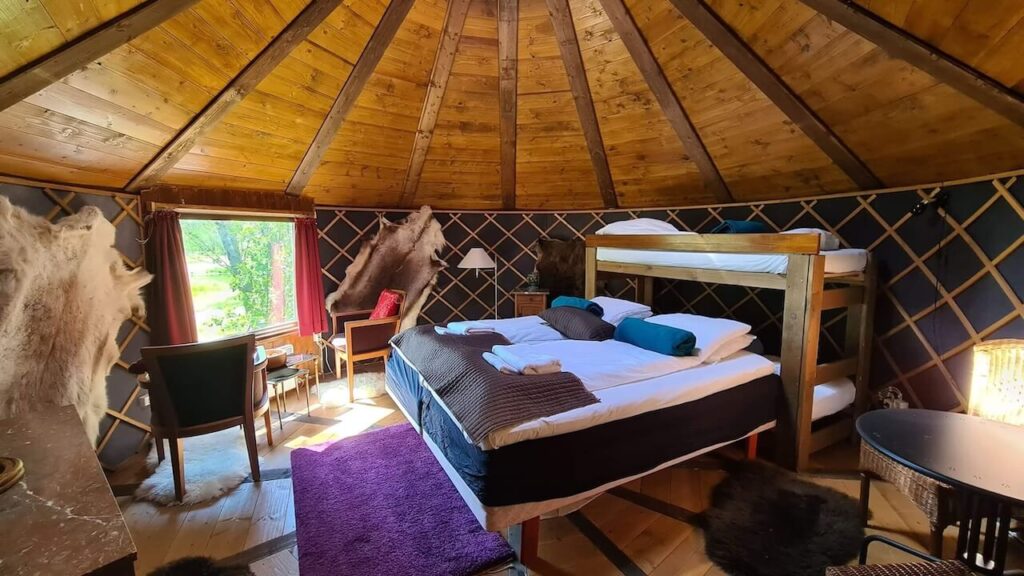
Guests can stay in Mongolian-style yurts, warmed by woodstoves and surrounded by forest, while the Kafeen itself has become a gathering point for cyclists, hikers, and travellers who appreciate places with soul. The café offers an “all you can eat” pancake breakfast for overnight guests, featuring homemade marmalades crafted from handpicked fruits and herbs, as well as Belgian sugars. For day visitors, it’s a chance to enjoy coffee, local dishes, Belgian beer, or cider while listening to the rush of the whitewater stream just meters from the garden terrace. It’s also the starting point for guided tunnel excursions, kayaking, or simply a place to rest after conquering the wild ascent of Osafjellet. Quietly tucked into the Hardanger wilderness, Hardanger Basecamp doesn’t just offer accommodation, it offers a living connection to the past, and a rare kind of peace that’s hard to find elsewhere in a region popular with tourists.
Planning Your Ride
Start Point: If coming by public transport, take the train to Voss and from there cycle to the village of Ulvik which is a perfect base to leave any heavy gear at the local campsite. From there it’s about 9km along a quiet remote road with wonderful fjord views. The climb begins in the hamlet of Osa (a few farms nothing else). You will return the same way, which is a very scenic and fast descent.
Distance: The climb is approximately 14 km one way to the dam from the village car park.
Surface: Mainly paved and in reasonable condition. The flat summit hydro road turns to gravel at the very end. Can be cycled on a road bike with 25-28mm tires.
Ascent: Roughly 1,160 meters total gain.
Difficulty: 3rd hardest climb in Norway by vertical ascent and surface conditions. Expect steep pitches and long, uninterrupted climbing. The average gradient along the main section is over 9% and the hardest section is over 12% average.
Facilities: None. Bring all food, water, tools, and clothing you need. The weather can change rapidly at altitude. Basecamp Cafe in the village before or after the climb, selling food and drink.
Best Time to Ride: June to September. Snow may linger at the top outside this window.
Written by Matthew Tolley
Founder of Cycle Norway. Storyteller and full-time seeker of Norway’s forgotten roads.




Leave a Reply