




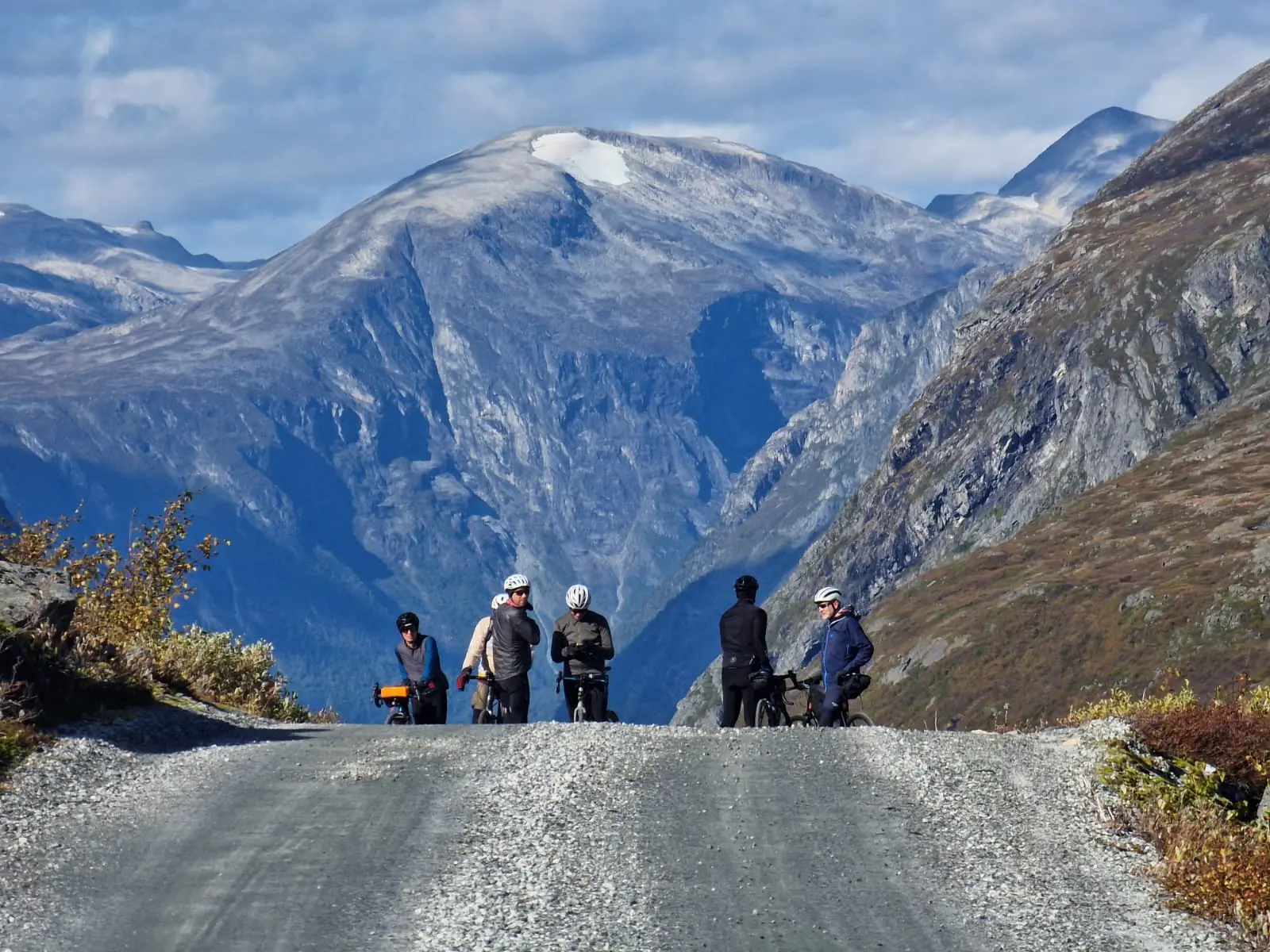
Something extraordinary is unfolding in Norway’s mountains and not in a way anyone expected. Two of the country’s most treasured gravel roads, celebrated by cyclists and promoted as models of sustainable tourism, could soon be restricted or even closed to bikes if the government’s Action plan for the Rondane wild reindeer area is implemented by local municipalities.
At first glance, the story sounds simple: wild reindeer are under threat, and the government wants to protect them. But beneath the surface, the details don’t add up. The timing is off. The science is thin. And the fallout could unravel Norway’s belief that it’s a sustainable and green country to visit.

The Roads at the Heart of It
In Grimsdalen, cyclists trace a valley of flower-filled meadows and weathered farmhouses, with Rondane’s jagged peaks watching overhead. This is the crown jewel of the Tour de Dovre, a 130-kilometre loop stitched together with government funds and marketed internationally as a showcase of sustainable tourism. It was a promise: that cycling could help local communities thrive without flooding fragile landscapes with cars and campervans.

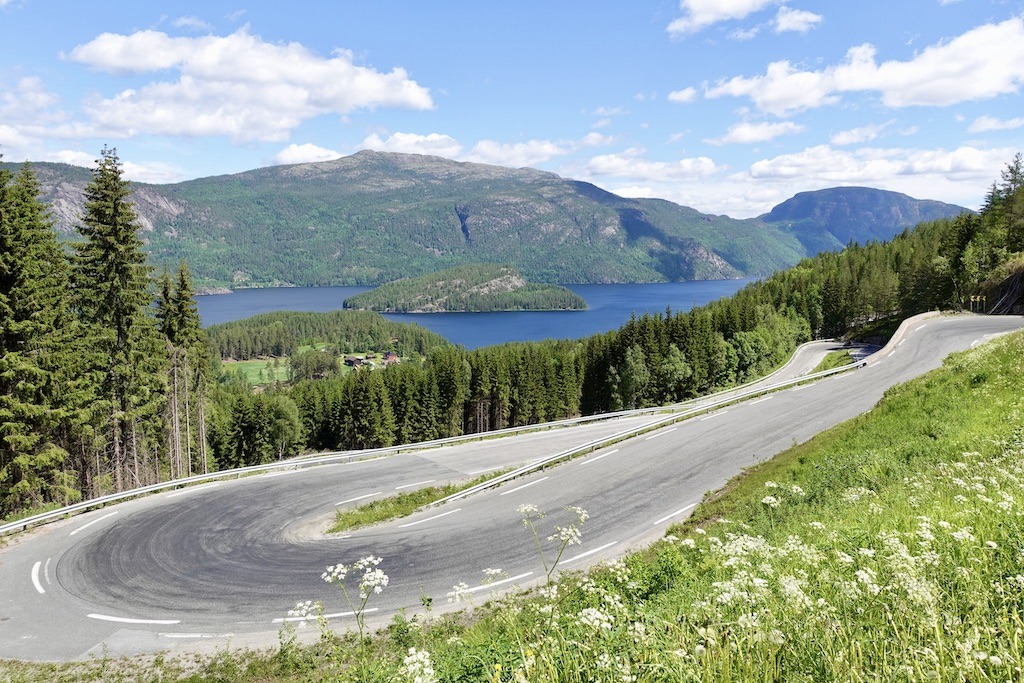
Farther west, in Møre og Romsdal, lies Aursjøvegen. It snakes up from Eikesdalen in an impossible series of switchbacks before crossing a barren, wind-scoured plateau. Built for hydro development, it has become a pilgrimage route for gravel riders seeking silence and scale.
These are not just roads. They are symbols of a future where tourism treads lightly, where the bicycle stands as an answer to the harms of mass motor traffic. And yet now, both face restrictions or even closure.

A Plan to Save the Reindeer
In September 2025, the Ministry of Climate and Environment presented new “action plans” for wild reindeer in Rondane, Snøhetta, and Knutshø. The aim is noble: halt the decline of Europe’s last truly wild reindeer populations by 2030. Decades of pressure from holiday cabins, hydro plants, motor traffic, hunting, army training grounds, and climate change have fragmented migration routes and reduced calving success.
Among the proposed measures are new restrictions on human access. Roads may be closed to general traffic, parking outlawed, camping forbidden. And buried in the details are two sentences that sent a shockwave through Norway’s cycling community: Aursjøvegen and Grimsdalen should be partial or fully closed to cyclists.
The logic? All human traffic is a disturbance, and cyclists are traffic too.


Timing Matters
On paper, the government’s logic sounds persuasive. But the reality on the ground is very different.
The most sensitive period for wild reindeer is mid-April to mid-June, the calving season. Disturbance then can cause mothers to abandon calves or herds to scatter. But here’s the catch: during almost all of that window, the roads aren’t even open to cyclists. Aursjøvegen and Grimsdalen lie under snow until early June, only ploughed and opened in the first or second week of the month. Reindeer seek high, remote grounds to give birth, away from roads and human contact.
By the time bikes appear, calves are already on their feet, well away from the roadside. Reindeer tend to avoid roads anyway. And compared with hydro traffic, hunters, or campervans, cyclists are among the lowest threats.
There is no evidence that banning a handful of cyclists from gravel roads will make any difference to reindeer survival. There is, however, plenty of evidence that construction, hydro plants, cabin development, and the motor vehicles serving them disrupt habitat and behaviour. And yet those will continue unchecked. Why? Because hydro power is deemed essential, and cabin life is politically untouchable. Cycling, by contrast, is recreational and therefore easy to sacrifice.

That is the real problem: the government is going after the soft target. Banning motorised tourist traffic on Aursjøvegen and Grimsdalen is a sensible step toward sustainability, but it won’t solve the deeper issues. Norway needs to face a harder truth: industry is carving up more wilderness each year, and sprawling cabin developments are transforming quiet valleys into ghettoes of holiday homes. Against that backdrop, singling out cyclists is little more than theatre, a way to look decisive without tackling the real causes. It isn’t about saving reindeer. It’s about saving face: Norway’s ultimate game of virtue signalling.

The Investment in Sustainable Tourism
Grimsdalen is not just any road. It is the heart of the Tour de Dovre, a cycling loop developed with millions of kroner in state and regional funds. Local businesses invested too: cabins upgraded, farm cafés opened, bike rental and guiding services launched. The route was marketed internationally as a flagship example of sustainable tourism, a way to attract visitors without overwhelming nature.

And it worked. Cyclists came from Germany, the Netherlands, Britain, and beyond. They stayed overnight, ate locally, and spread their spending across small communities. Unlike campervans that bring their own kitchens and toilets, cyclists bought food, drank coffee, and paid for beds.
Now, with one stroke of a pen, the government threatens to dismantle it all. “We built everything around the Tour de Dovre,” one cabin host told me. “If cyclists disappear, the whole foundation collapses.”
It’s hard not to see this as a betrayal. The state encouraged locals to bet on cycling, then turned around and threatened to restrict or even close the road that makes the route possible.
Aursjøvegen: A Road Already Claimed by Industry
Aursjøvegen is different but no less baffling. It was built for hydro plants. Heavy vehicles still use it. Cabins line its edges. The idea that cyclists should be the ones restricted, while industry and cabin traffic continue, defies logic.
Here, the problem is not too many bikes it is the opposite. Cyclists are still relatively few. But those who come bring stories, photos, and pride in having tackled one of Norway’s wildest roads. If they vanish, the silence won’t belong to reindeer; it will belong to diesel engines and the low rumble of hydro plant trucks.

The Silence on Hunting
Strangely absent from the government’s public rhetoric is the issue of hunting. Each autumn, licensed hunters take around 3,000–3,500 wild reindeer across Norway, in 2024 the official number was 3,269 animals according to Statistics Norway (which doesn’t include undocumented kills). Hunting is a long-standing cultural tradition in many rural areas, but it is also the most direct human pressure on reindeer populations. Bullets kill far more reindeer than hikers, skiers, or cyclists ever disturb.
The new Tiltaksplan for Snøhetta villreinområde does mention hunting but only cautiously. It proposes to “consider hunting-free zones”, “evaluate changes in hunting organisation and practice”, and “assess the timing and location of other types of hunting and dog training” in key migration areas. In other words, the authorities recognise hunting as a disturbance, but have stopped short of mandating any real reform.
Meanwhile, cycling and hiking restrictions are being fast-tracked and enforced through concrete bans and local bylaws. The contrast is striking: hunting, which directly removes thousands of animals each year, remains largely untouched, protected by cultural and political sensitivity.
Studies have shown that hunted reindeer become more wary of all human presence, reacting with heightened fear to skiers, hikers, and cyclists alike. If the government were serious about reducing total disturbance, it would start by addressing the most immediate source of stress and mortality, not the easiest targets for regulation.
Until hunting is included honestly in the conversation, the credibility of these conservation measures remains in question.
Do Cyclists Really Disturb Reindeer?
Let’s look at the science. Research shows that reindeer can be disturbed by humans, especially during calving. A hiker who approaches too closely can cause flight. Motorised traffic, particularly if it stops or creates noise, can disrupt grazing.
But there is very little evidence that cyclists riding on existing gravel roads outside calving season cause significant harm. The disturbance from a bike passing on a maintained road is fleeting compared to a campervan parked for days, or a gunshot echoing across a valley.
One reindeer researcher at NINA, speaking off the record, admitted: “We don’t have strong data on cyclists. The assumption is that they’re part of the disturbance, but compared to motor traffic, they’re minimal. The precautionary principle is driving this more than evidence.”
In other words, the ban is based more on fear than on facts.

What a Smarter Plan Could Look Like
Protecting reindeer does not require punishing cyclists. Smarter alternatives exist:
- Seasonal closures during calving, when the roads are mainly snowbound anyway.
- Strict limits on motor traffic and overnight parking, which create the most disturbance.
- Education campaigns so visitors know how to behave responsibly in reindeer country.
- Monitoring and data collection to understand actual impacts rather than guessing.
- Hunting reform, ensuring quotas and seasons align with conservation goals.
Such measures would target the real problems while allowing sustainable tourism to grow.
Hypocrisy Dressed as Environmentalism
Closing (or partially closing) Aursjøvegen and Grimsdalen to cyclists won’t save the reindeer. But it will dismantle one of Norway’s strongest examples of green tourism, squander millions already invested, betray local communities who built businesses on state promises, and drive away the very travellers most committed to protecting nature.
There is a better way. Norway can safeguard its reindeer without shutting out cyclists by regulating heavy users, addressing hunting, and managing access with precision instead of blunt bans. The true pressures come from motor traffic, cabin sprawl, hydropower, and hunting. These remain untouched, while the lightest users are punished. That is hypocrisy dressed as environmentalism.
Such short-sightedness erodes trust, wastes investment, and damages the very idea of sustainable tourism. It is not nature being protected here, but an image, at the expense of both cyclists and reindeer.

October 2025 – Email reply from Tour de Dovre: We will keep you updated.
Dear Matthew,
Thank you for reaching out, and for the great work you’re doing with Cycle Norway. It’s always appreciated that you help cyclists find accurate and responsible information about our region.
You are correct – new measures are being introduced to protect the wild reindeer populations in Dovrefjell and Rondane. However, as of now, no final decision has been made regarding permanent closure or restrictions on the Tour de Dovre route.
Here’s what we can share at this point:
- Tour de Dovre remains open for the 2025 season as usual.
- Environmental authorities (Statsforvalteren and NINA) are currently assessing different management options for 2026 and onwards.
- Seasonal restrictions may be introduced in sensitive calving periods (typically May–mid-June), but this has not yet been confirmed.
- E-bikes are currently allowed on the route, but this could be reviewed as part of future regulation discussions.
- Camping and general travel regulations remain unchanged, though visitors are always encouraged to camp only in designated or low-impact areas and follow Leave No Trace principles.
We will update the official information on nasjonalparkriket.no as soon as there are confirmed changes.
We truly appreciate your initiative in keeping international cyclists informed and responsible – and we’ll be happy to notify you once more details are released.
Kind regards,




Leave a Reply