Å komme seg til Norge
Intro

Arriving by plane will be most people’s preferred choice. Although traveling with your bike can be a logistical operation and thus we have dedicated a separate page to this very subject. For those living in a neighbouring Scandinavian or Northern (mainland) European country the ferry maybe a more practical option. If you’re travelling by motorised vehicle you’ll need to set up an ‘autopass’ account to ensure hassle free charges on toll roads and ferries.
Lastly there are trains from Sweden to Norway which connect with the rest of Europe. Unfortunately, the Swedes have a funny rule of not allowing bikes on their long distance trains. You can, however, travel with a bike box and there is one Danish train to Gothenberg. You’ll find more about this and other transport options below.
Kart
Plane

Oslo Gardermoen airport is the county’s main hub and has direct flights from most major European cities. It also has direct flights to the Middle East, North America, and a handful of Asian destinations. Torp Sandefjord which is a two hours bus ride from Oslo is Norway’s budget airline airport and is used by the likes of Ryanair and Wizz Air. Bergen’s new airport is slowly becoming a great alternative and is now reaching more of Europe directly. In the north, Tromsø is the main airport and has some direct European flights but the majority will require a transfer to Oslo or Bergen.
Other international airports include Trondheim, Stavanger, Kristiansand, and Ålesund. If you’re planning a long journey around Norway perhaps consider flying into one Airport and departing from another. Arriving in Stavanger, Bergen, Trondheim, or Tromsø and flying out of Oslo works well for many long-distance cycle routes. If Oslo is the most convenient to fly to but your planned route starts many miles away then sometimes combining the train network is a cheaper option than a flight transfer. Research both options.
For those wanting to start their journey at Nordkapp flying into Alta (via Oslo connection) and taking the bus to the top is probably the most economical solution. You can also fly to Honningvåg and cycle 30km to the top but this domestic flight might be very expensive. There are over 50 domestic airports in Norway and it’s very easy to reach other remote parts of the country with domestic flights. You will find more about this on the ‘getting around’ page.
Other related pages
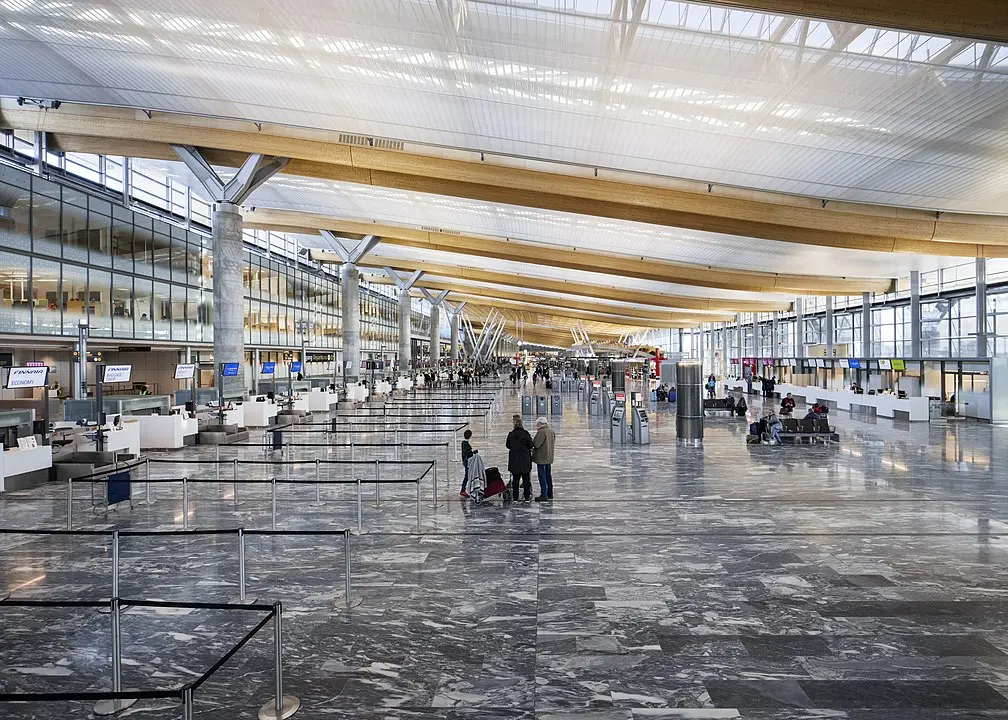
Departure hall Oslo Gardermoen airport.
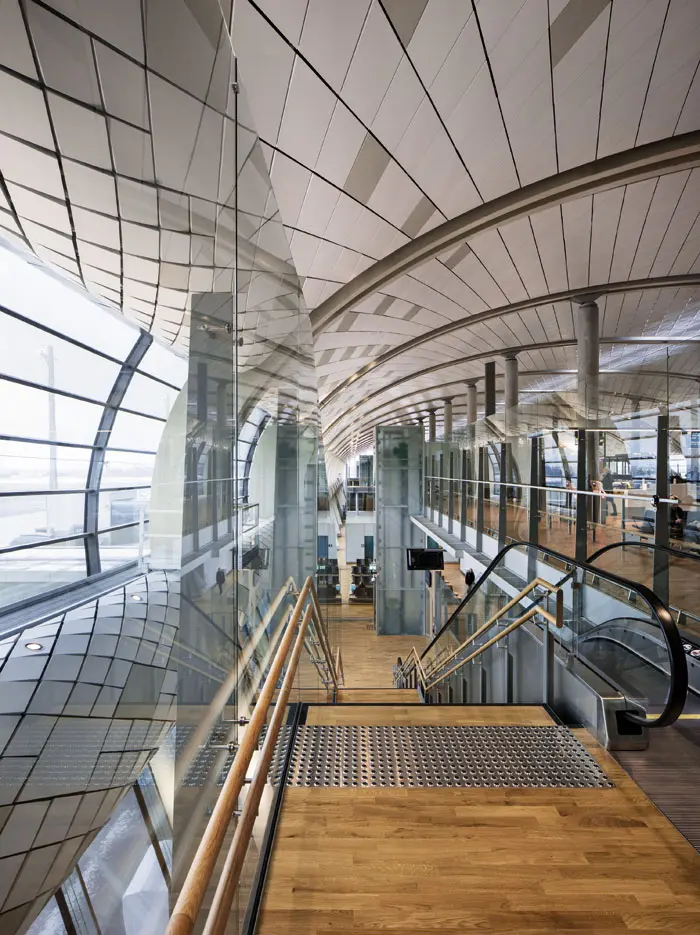
An airport is usually your first impressions of a country. Norway puts on one hell of a welcome!
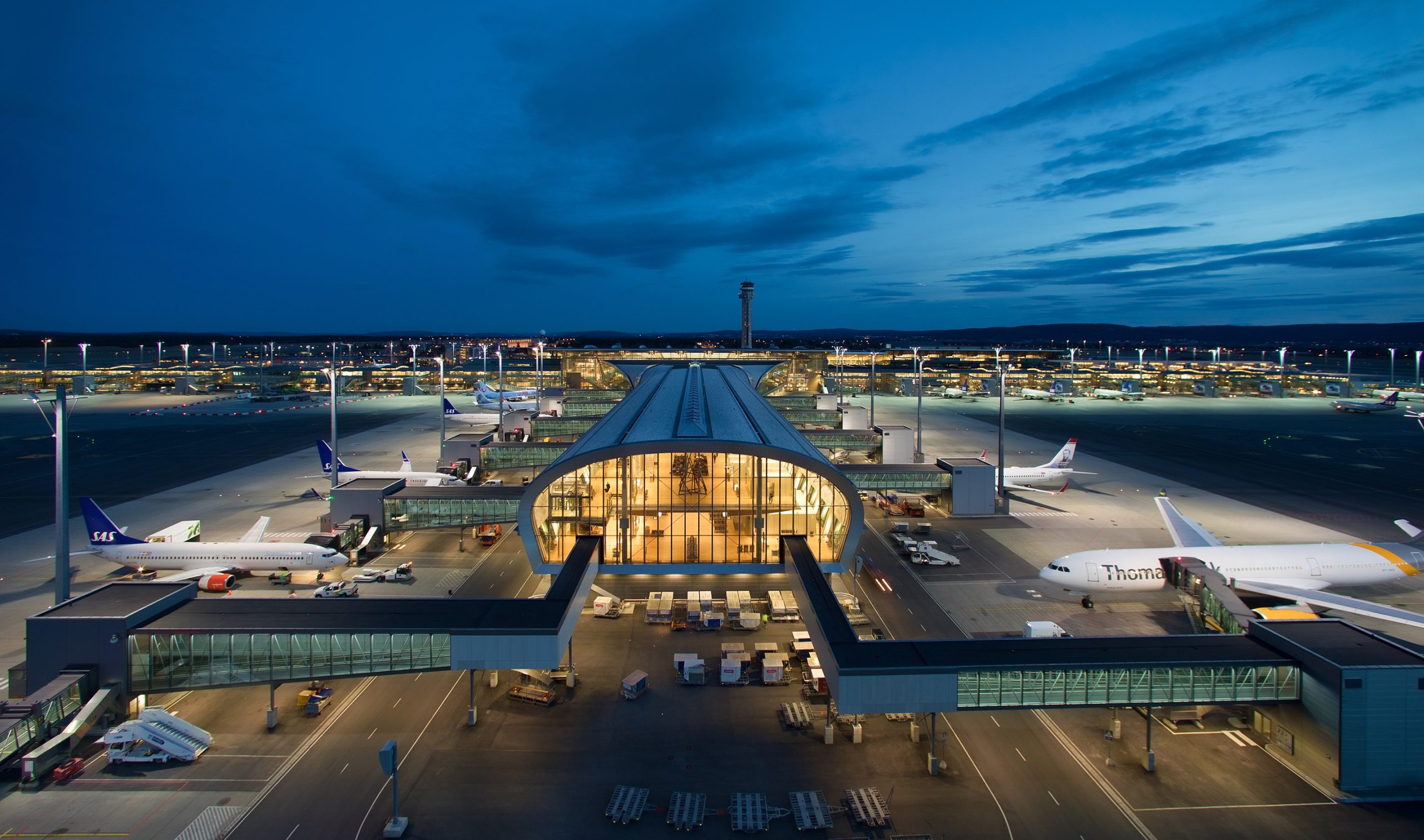
Oslo Gardermoen Airport is one of the world’s most beautiful. It’s modern, clean, stylish and incredibly efficient.
Airport Transfer
- Local Trains: All trains departing airports for the local city (Oslo, Bergen, Trondheim) allow bikes or boxes onboard and you don’t have to book in advance. Buying train tickets can be done using the Entur-appen. You can purchase a bike ticket onboard with the conductor. Note on busy trains there is no guarantee of space and in a worst-case scenario you may have to wait for the next train (not common).
- Flytoget: Oslo airport has an express train called ‘Flytoget’ and all bikes go for free and have an excellent separate compartment at the front or back of the train. Note, the cost of a ticket is more than a local train.
- Airport Express Bus (Flybuss): All major airports but especially ones that don’t have a train connection will offer an airport bus connection (usually costing 100-300kr one way). You can buy a ticket at a machine in the airport, with the app, or with the driver using your card. Your bike can fit in the undercarriage but if you’re part of a riding group (3 or more) the driver may reject you due to space limitations.
- Local Bus: They usually stop close to the airport. If you’re willing to drag your bike and luggage to find the bus stop. You will find these buses are cheaper and have an area on board for bikes, prams, wheelchairs, etc. To buy a ticket you must download the local bus app. Bike’s are usually classed as one child fare extra.
- Cycle: If the weather is nice and you’re not jet lagged riding from the airport is a nice option for some people. Oslo, Bergen, and Trondheim have cycle routes signposted in places. Some airports, such as Ålesund, are located on an island and require travel through a prohibited sea tunnel, meaning a bus is your only option.
- Taxi: There is usually plenty of taxis available at major airports and booking one is very easy. You will probably want an estate or ‘maxitaxi’ (minibus style with room for bikes). This can be a good option if you’re in a group and can share the cost. Taxi from Oslo Airport to the city center (vice-versa) starts at 799kr.
- Lastly: some airports are literally right in the town. For example, Bodø in the north is a stone’s throw from the center and the really small domestic airports may have no or limited public transport connections thus assembling your bike and riding away is the best option.
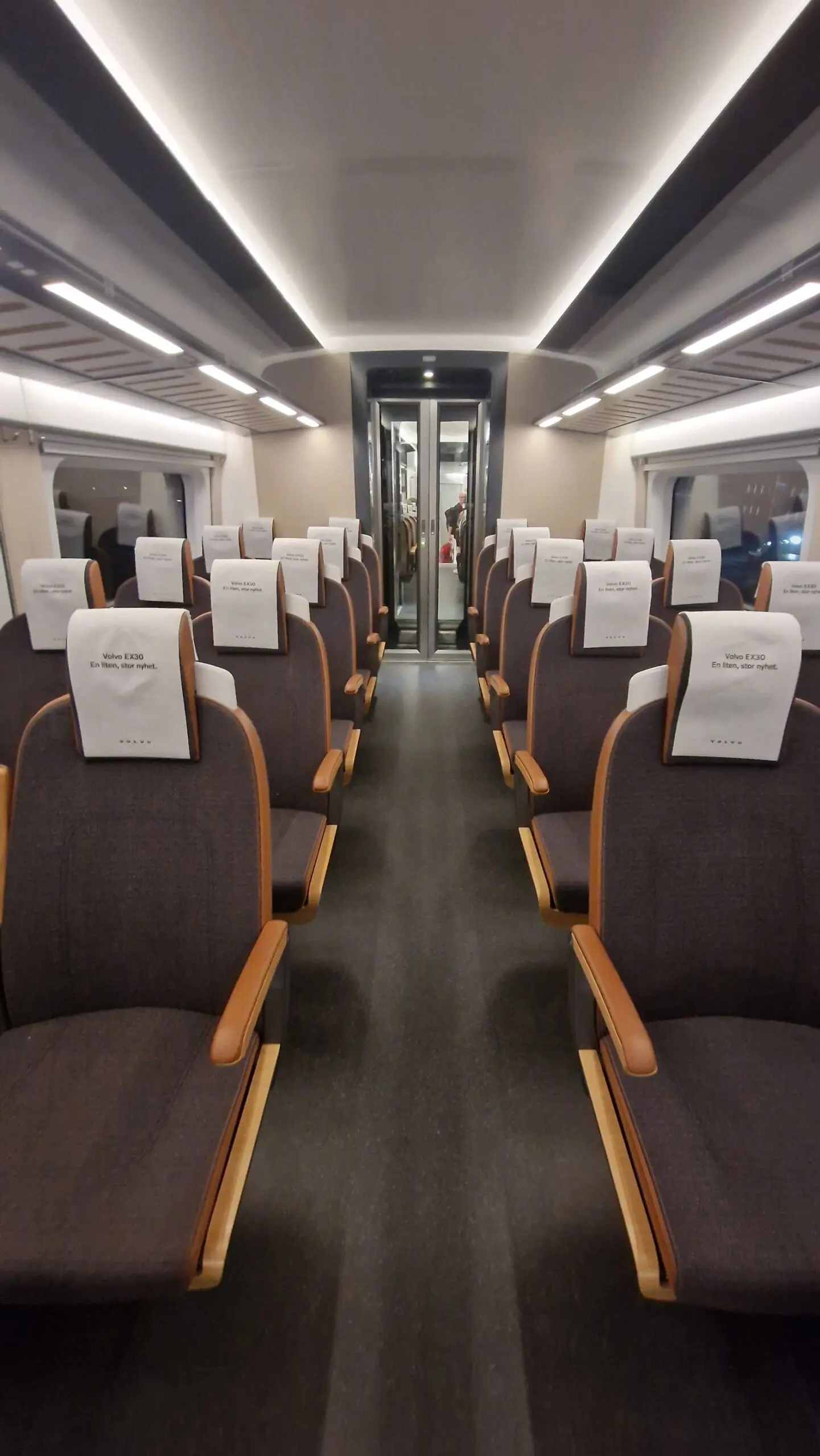
Flytoget Oslo Airport to the city centre in 19 mins
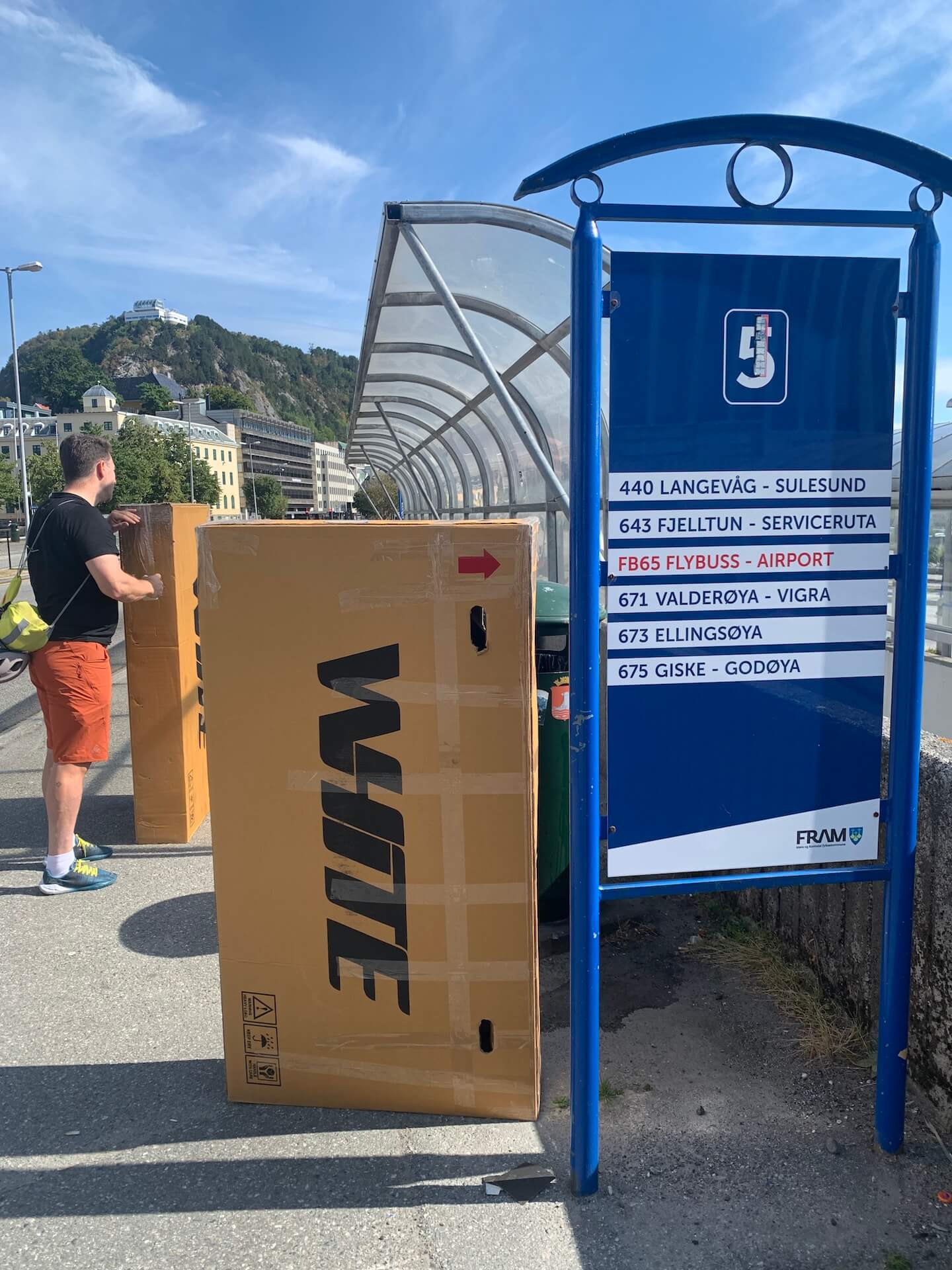
Waiting for the Airport express bus with a bike box (Ålesund town centre).
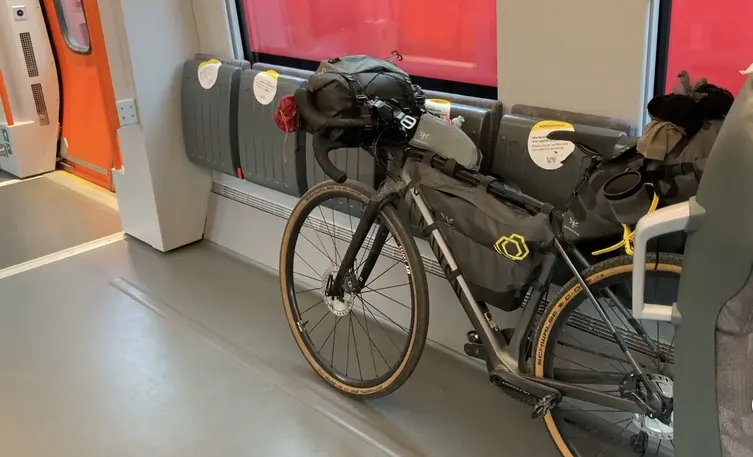
Bike on a local train heading to Oslo central.
Train
Sweden is currently the only country that connects directly to Norway by rail, making it the main gateway for cyclists travelling overland from mainland Europe.
Main International Rail Connections to Norway
- Stockholm – Oslo: approx. 5.5 hours
- Gothenburg – Oslo: approx. 3.5 hours
- Malmö – Oslo (direct train introduced in 2026): approx. 6 hours
- Åre (Central Sweden) – Trondheim: approx. 2.5 hours
- Kiruna (Northern Sweden) – Narvik (Northern Norway): approx. 2.75 hours
For many years, the main challenge for cyclists travelling to Norway by train has been Sweden’s restrictive bike policies on several intercity services. While the Gothenburg–Oslo route generally allows bicycles (booked through VY), onward travel through Sweden has often required complicated workarounds.
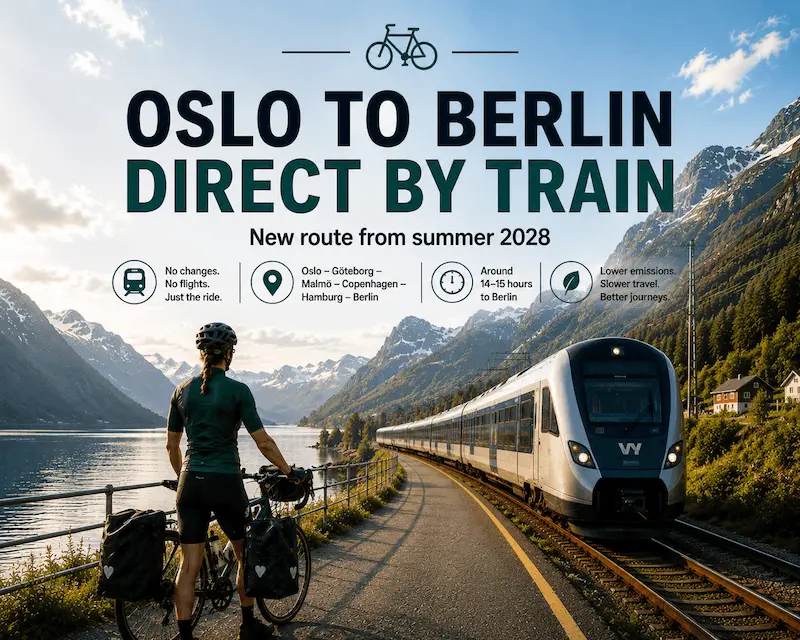
Fortunately, the situation is slowly improving. In 2026, a direct Malmö–Oslo train connection was introduced, simplifying rail access from Denmark and continental Europe. Looking further ahead, plans are also underway for a direct Oslo–Berlin night train connection, expected around 2028. If fully implemented, this would become a major improvement for cyclists travelling from Germany and central Europe without flying.
At present, one of the best solutions for cyclists remains the regional Öresundståg service, which runs frequently between Copenhagen, Malmö, and Gothenburg. These trains are bike-friendly and allow you to transport a bicycle all the way from Denmark to Gothenburg with relatively little hassle. Trains depart roughly every hour during daytime.
Tickets for the Öresundståg are most easily purchased through the Skånetrafiken App. A bike ticket is required when crossing the bridge between Copenhagen and Malmö, but beyond that, bicycle transport is often included free of charge on regional sections further north towards Gothenburg.
For cyclists travelling from the UK, France, Belgium, the Netherlands, or Germany, reaching Copenhagen or northern Danish ferry ports by train remains one of the most practical options before continuing to Norway by ferry. Denmark generally has well-established bicycle infrastructure and far more accommodating train policies for cyclists compared to Sweden’s long-distance rail network.
Finally, The Man in Seat 61 remains one of the best online resources for detailed train travel information between Europe and Oslo, including routes, booking advice, ferry connections, and bicycle considerations.

The Scandinavian Train network.
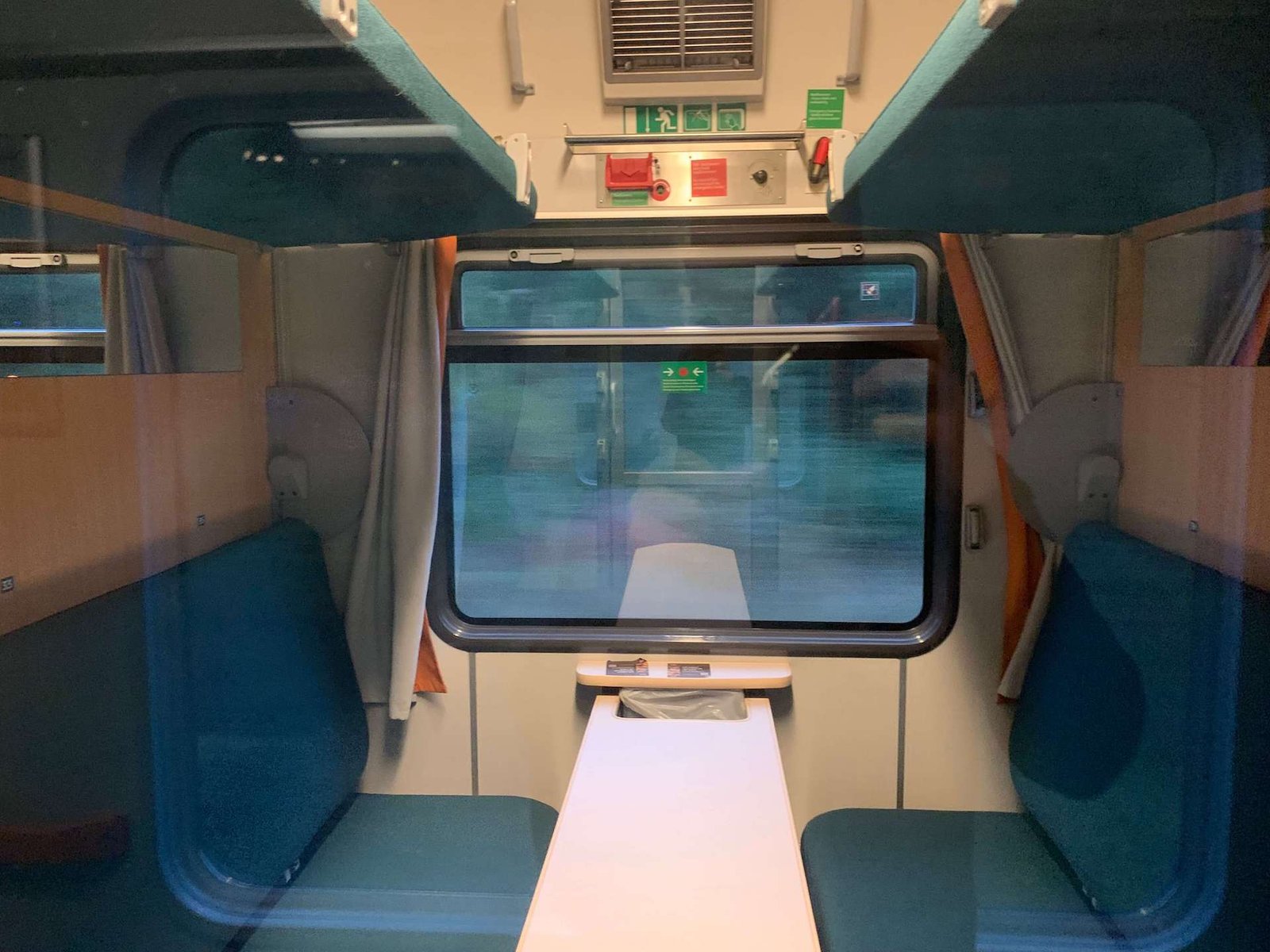
Sleeper cabin on a Norwegian train
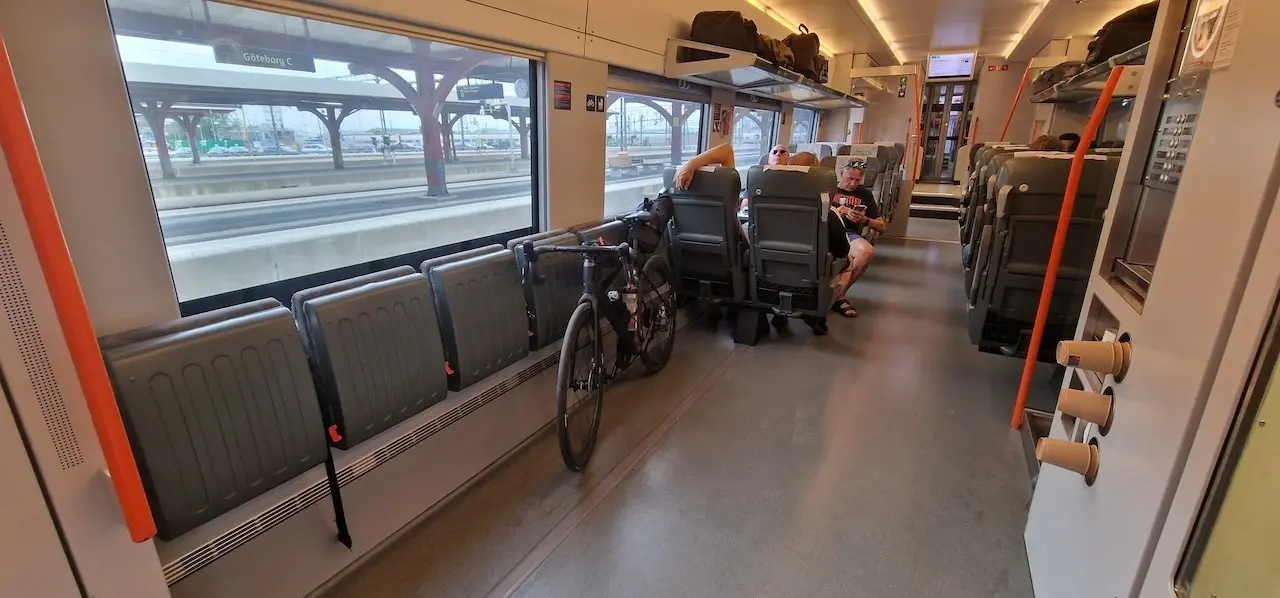
Gothenberg to Oslo Train (VY operator)
Boat

Several boat services connect Norway with mainland Europe. It’s very easy to take your bike onboard and for many, this is a great way to reach Norway. In addition, there are usually discounts for seniors, students, and children. Some ferries will require you to book a cabin which can be quite costly for single travelers. Other ferries, especially in Northern Denmark, have a seat-only option that brings the price down dramatically.
Denmark:
- Copenhagen–Oslo: 17 hours 15 minutes. Operated by DFDS, daily departures.
- Frederikshavn–Oslo: 9 hours 15 minutes. Operated by DFDS 7 times a week.
- Hirtshals–Kristiansand: 2 hours 15 minutes. Operated by Fjord Line 3 departures per day. Or 3 hours 15 minutes. Operated by Color Line two daily departures.
- Hirtshals–Larvik – 3 hours 45 minutes. Operated by Color Line, two daily departures.
- Hirtshals–Stavanger – 10 hours 30 minutes. Operated by Fjord Line, daily departures.
- Hirtshals–Bergen – 16 hours 30 minutes. Operated by Fjord Line, daily departures.
Sweden:
- Strömstad–Sandefjord – 2 hours 30 minutes. Operated by Color Line four daily departures.
Germany:
- Kiel–Oslo – 20 hours. Operated by Color Line, daily departures.
Holland:
- Eemshaven–Kristiansand – 18 hours. Operated by Holland Norway Lines. 3 round-trips a week – This company has now gone bankrupt and will not currently operate
UK: Unfortunately, there are no longer any ferries from Newcastle to Bergen, but there is a plan to reinstate this line at some point before the next ice age.
Your own boat: there are guest marinas with facilities all along the coastal towns.

A busy bike departure in Oslo from Frederikshavn, Denmark
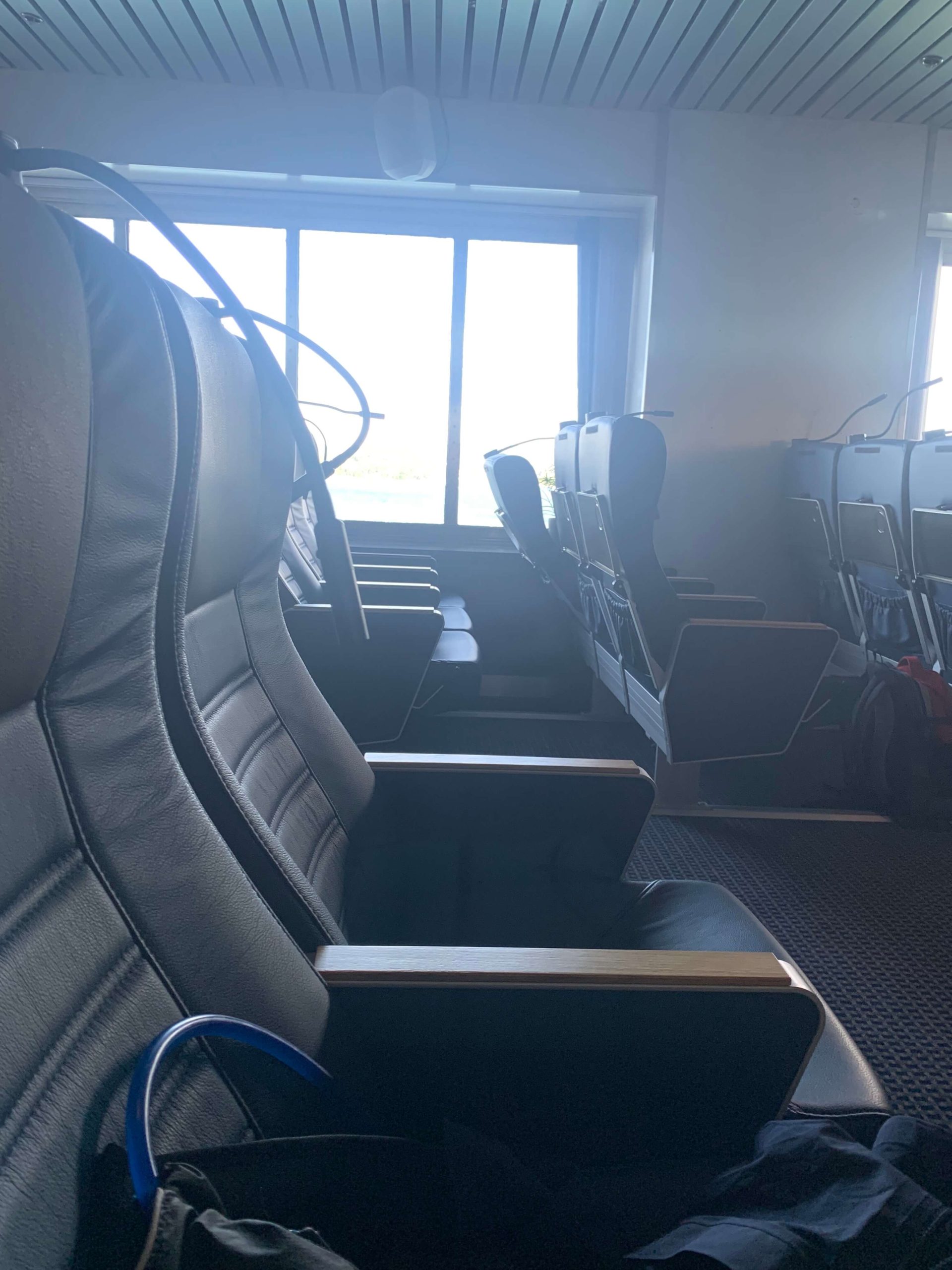
Seaside Seating – Reclining Seat (Frederikshavn – Oslo). A lot cheaper than a cabin.
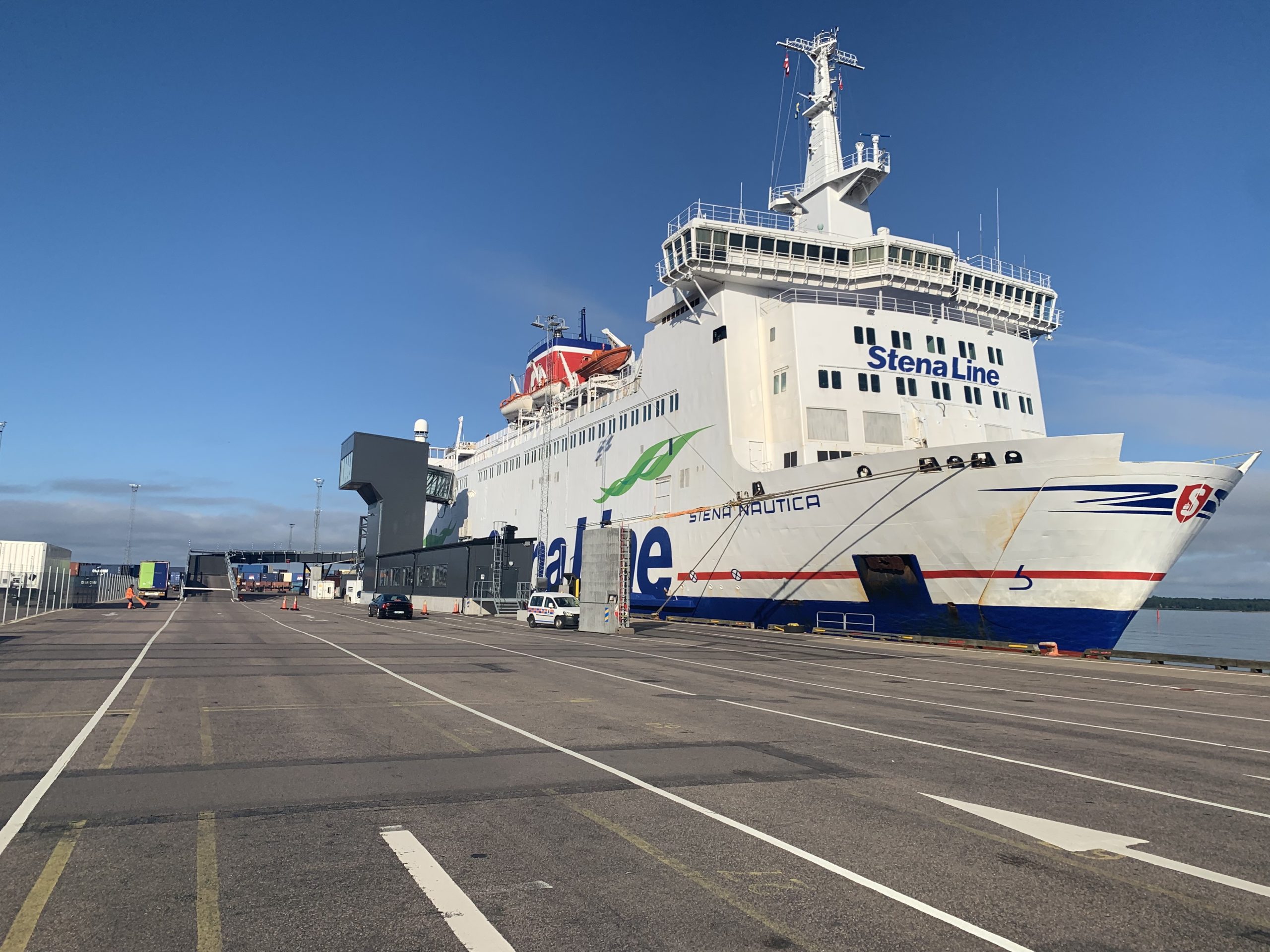
The boat from Halmstad in Sweden to Grenaa in Denmark
Bus & Car
Bus
It’s difficult to travel by bus with your bike. Sweden’s no bike rule means you will need to ensure it is in a bike box. And this does not guarantee it will be accepted in the undercarriage. The driver will have the final say based on the space available.
- Sweden & Denmark: There are buses from Stockholm, Gothenburg, Copenhagen with VY buses: https://www.vybuss.com/#!/
- Finland: departing from Rovaniemi, you can go all the way to the North Cape, as well as Tromsø and Vadsø in the summer: https://www.matkahuolto.fi/passengers
Car
Road Toll Charges: There are many toll roads in Norway, especially entering cities. This makes traveling around Norway by car expensive and it is best you register your car with auto-pass before arriving. This will ensure you are not overcharged. https://www.autopass.no
Sweden: The main E6 motorway runs through Malmö, Helsingborg, and Gothenburg in Sweden, before crossing the border at Svinesund in the south-east of Norway. There are of course other border crossings with Sweden but for most people, the southern border is where the majority of foreign traffic enters from.
Finland: The E8 motorway runs through Turku, Vaasa, and Oulu in Finland before crossing the border at Kilpisjärvi.
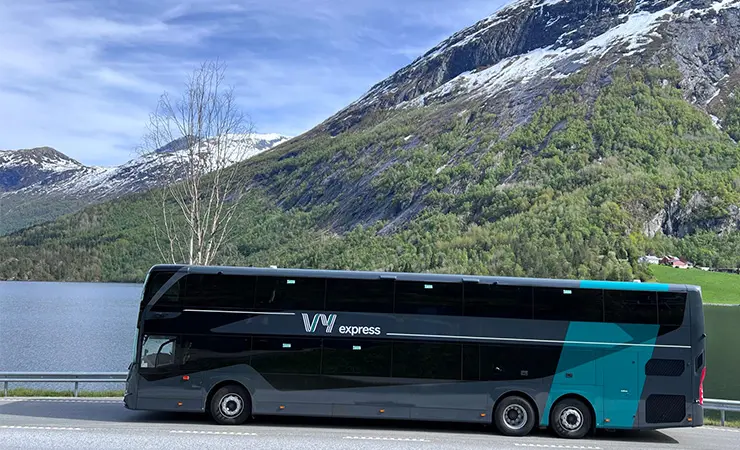
The VY express is a modern and comfortable fleet of buses connecting Norway and Sweden

You can pay for extra leg room and a wider seat
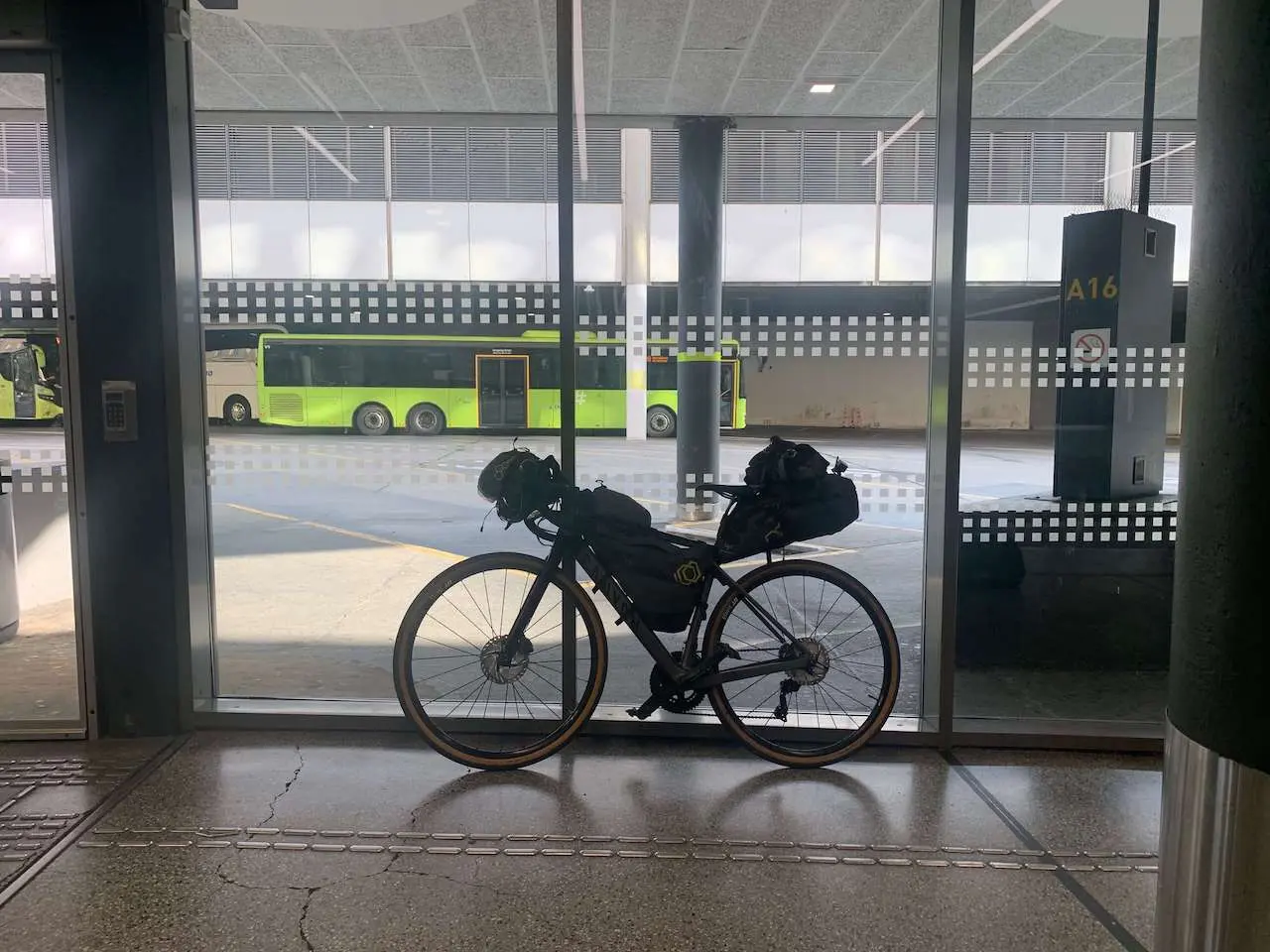
Oslo Bus Terminal waiting for the Gothenburg bus


De fantastiske selskapene bak oss