



516km
Distance
10,250m
Elev. Gain
4-9
Days
65%
Unpaved
7/10
Difficulty
40-45mm
Ideal Types
National Gravel Route 6: Klassikerne
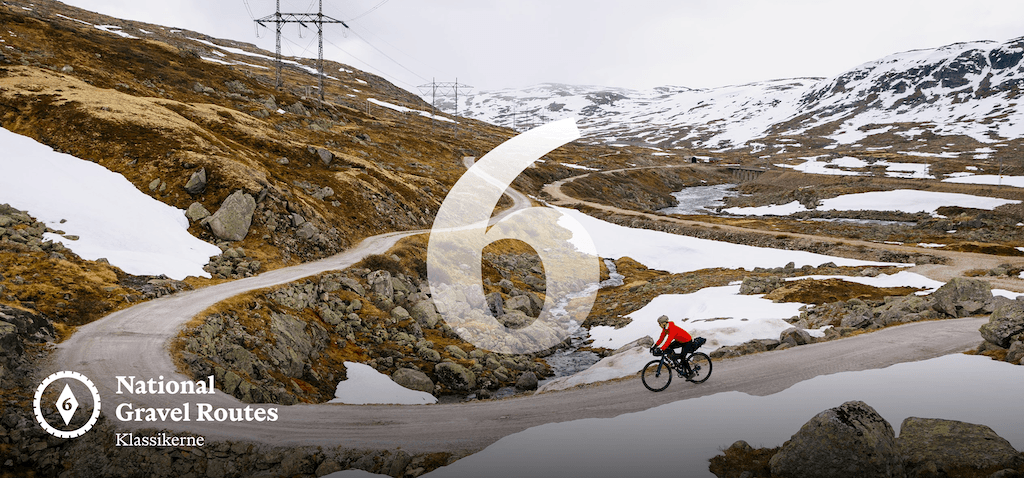
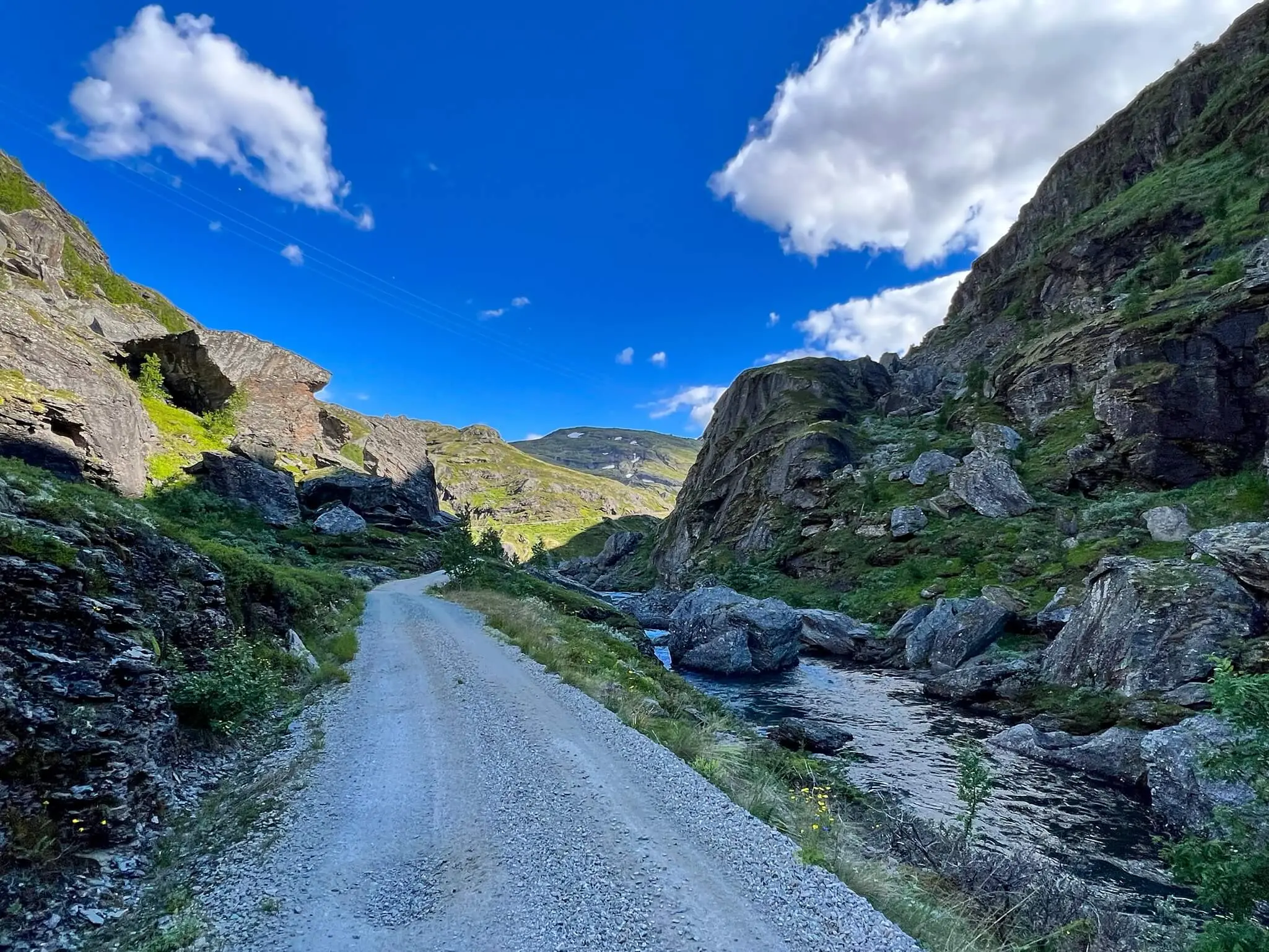
Route 6, Klassikerne, combines two of Norway’s most famous gravel roads, Rallarvegen and Mjølkevegen, into one journey across the heart of the country. If there is one route that captures Norwegian gravel riding, this is it, and for many visiting Norway for the first time, it’s the obvious choice.
Starting in Vinstra, you have the opportunity to warm up the legs and test your bike with a scenic 60km loop around the local mountains called Peer Gynt Seterveg. You can read about this section here. Once back in town the real adventure begins.
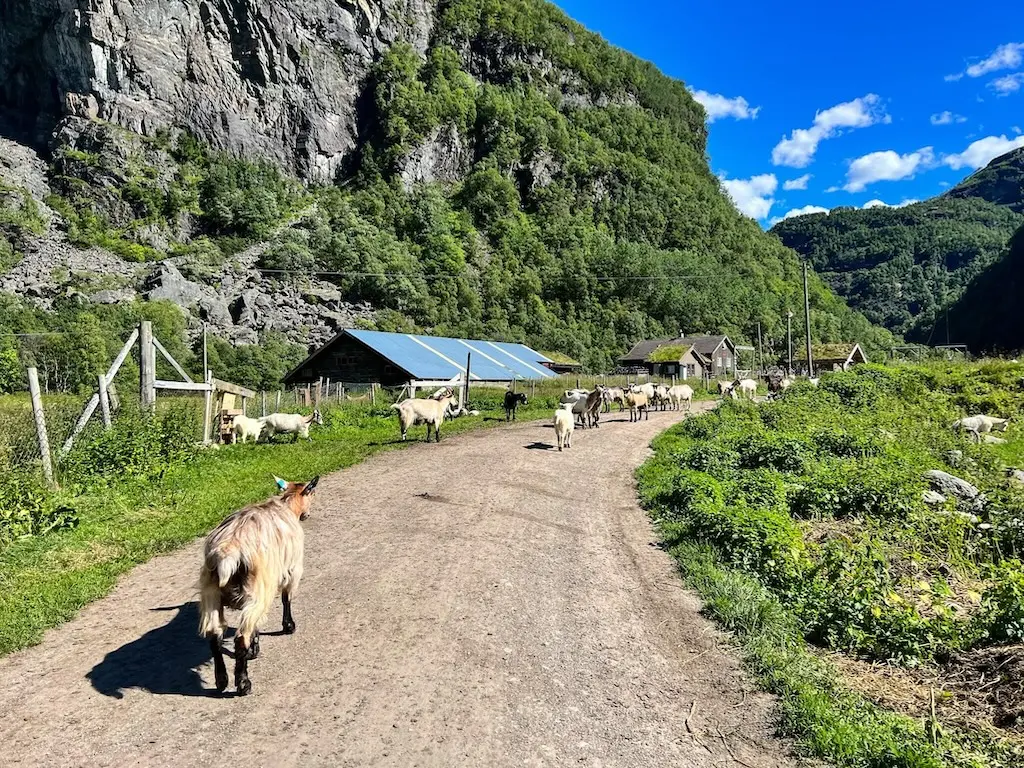
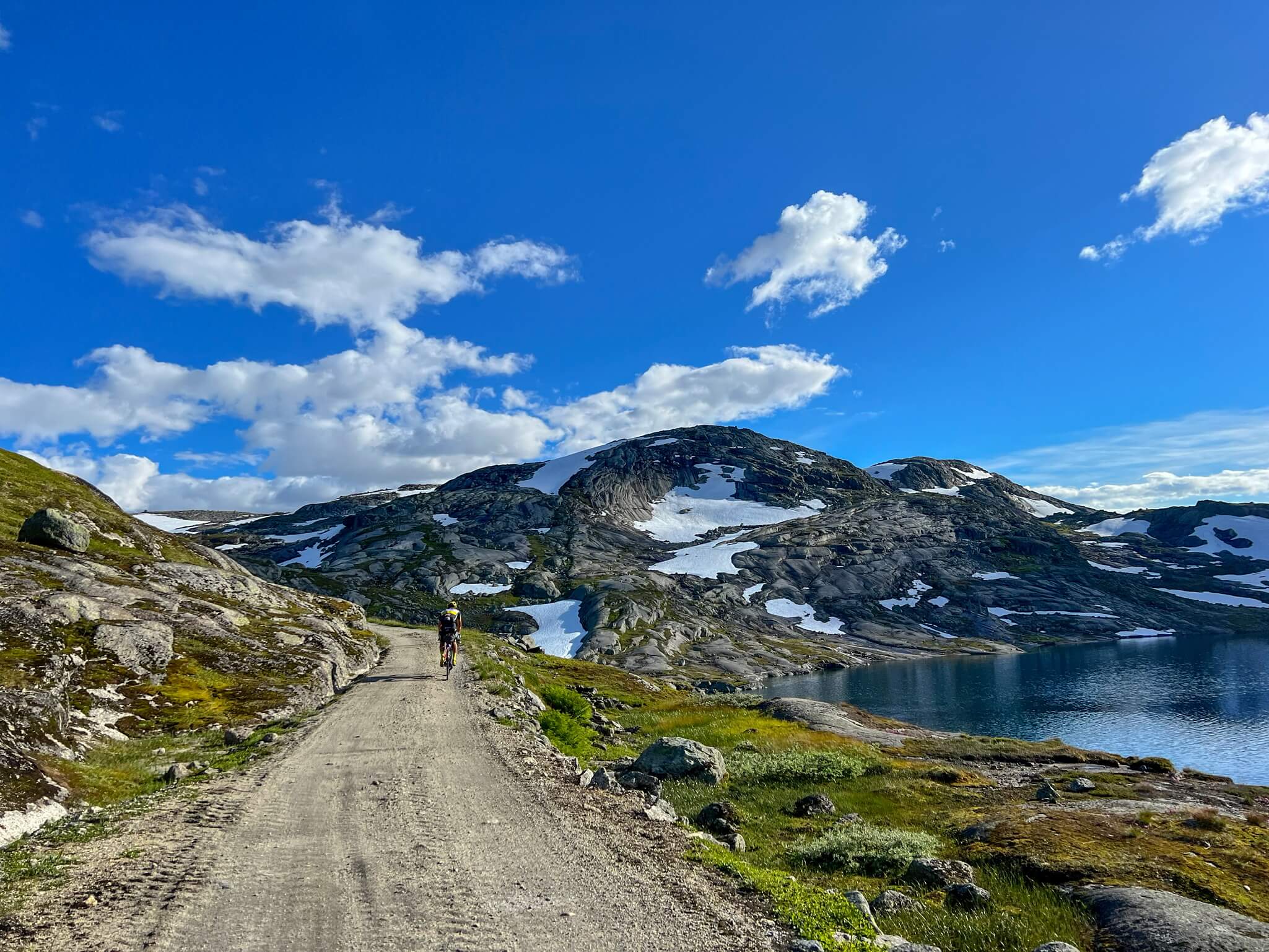
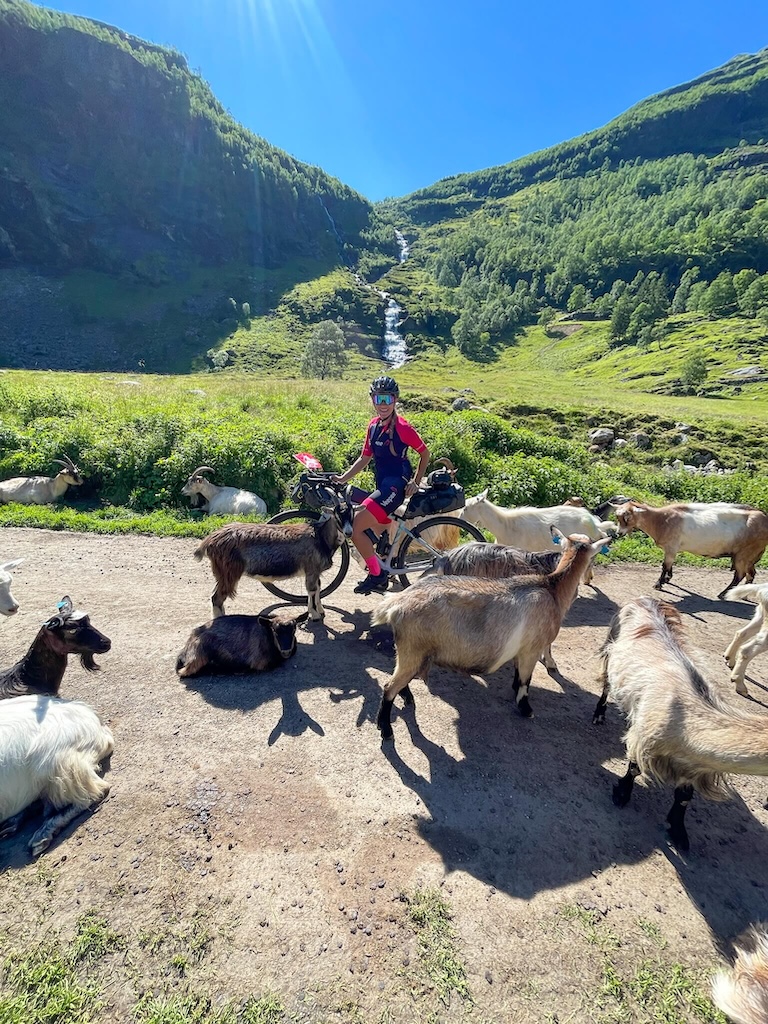
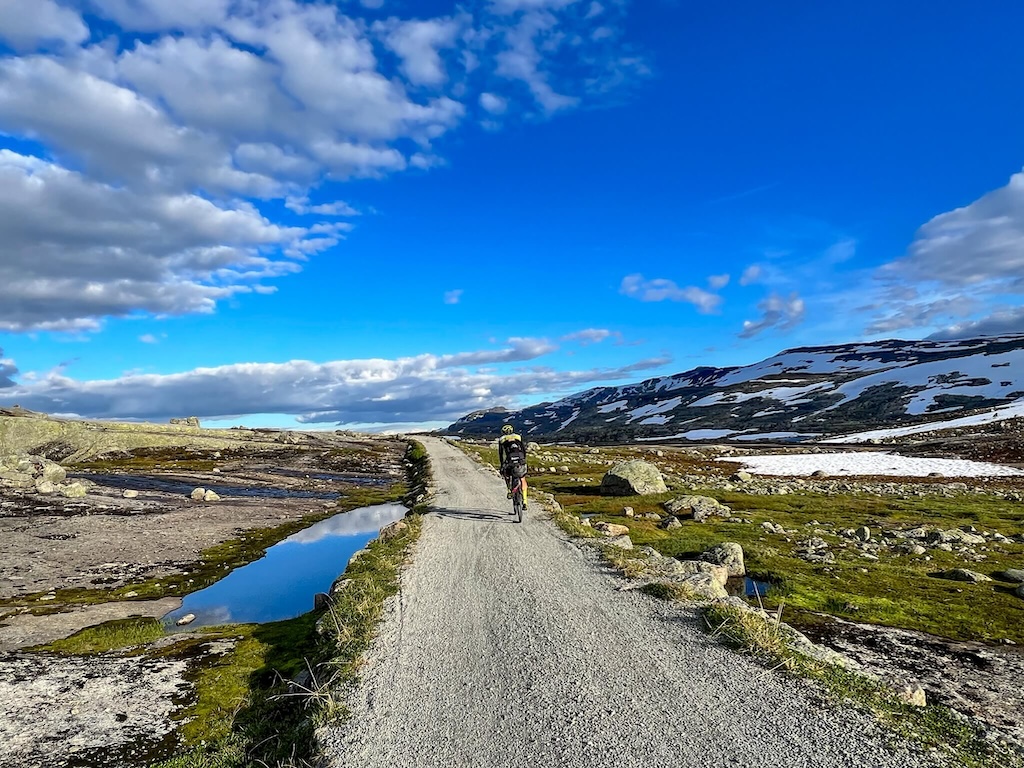
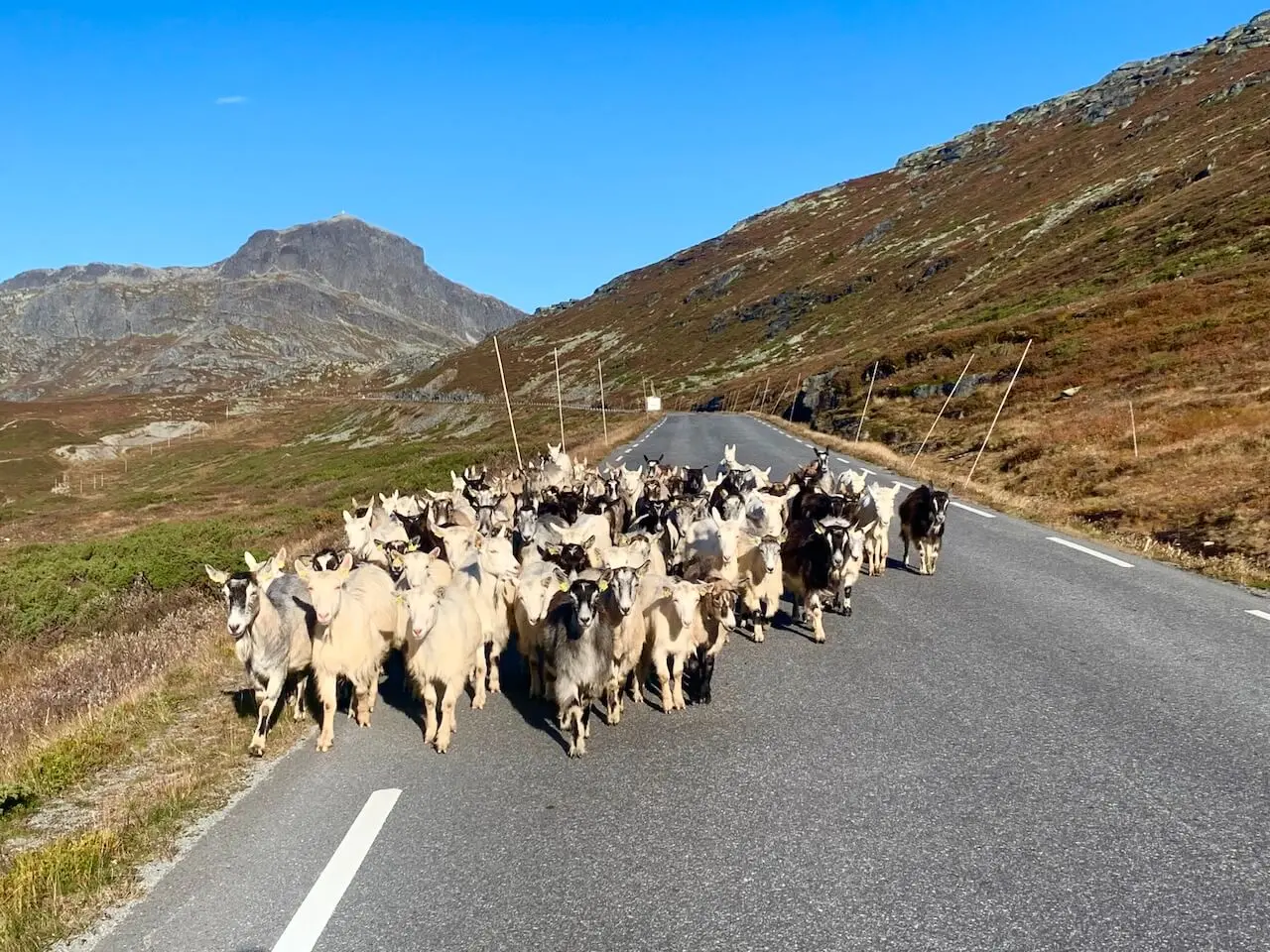
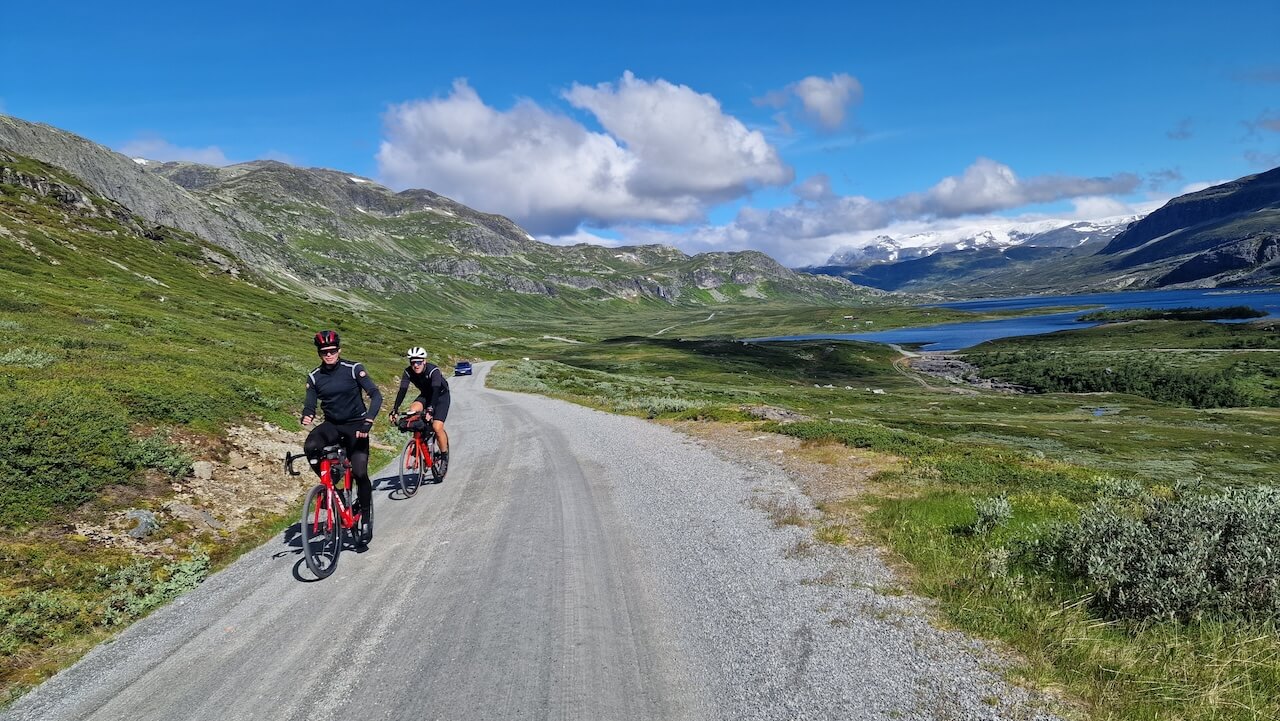
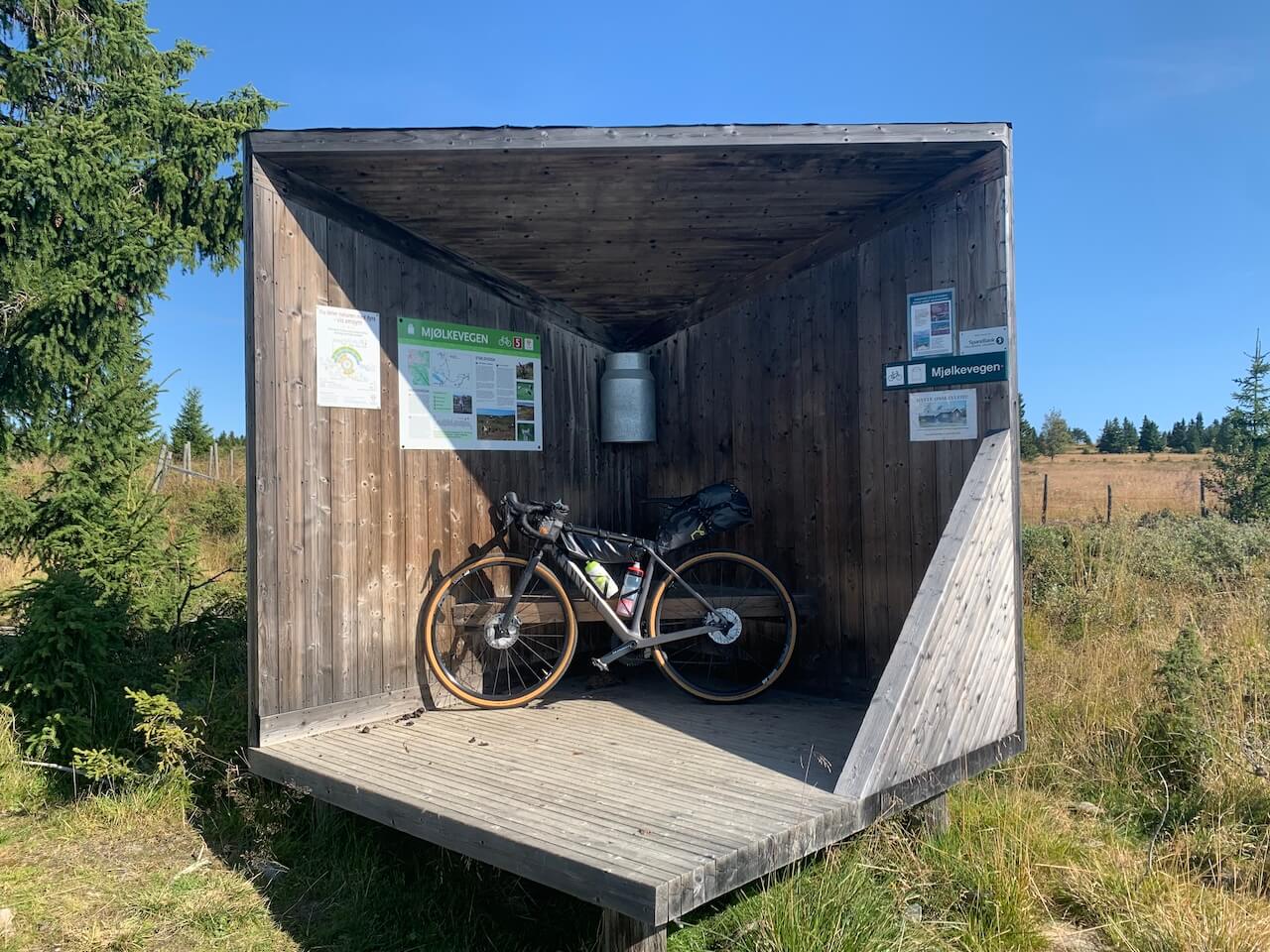
From Vinstra the route climbs west out of Gudbrandsdalen through forests and lakes before reaching the high plateaus above. Jotunheimvegen leads beneath the towering backdrop of Jotunheimen, with Bygdin providing a welcome stop before crossing Valdresflye and Slettefjellet into the open landscapes of Mjølkevegen. Here, gravel tracks wind through summer farms, mountain cabins, and rolling highland terrain before descending into Hallingdal.
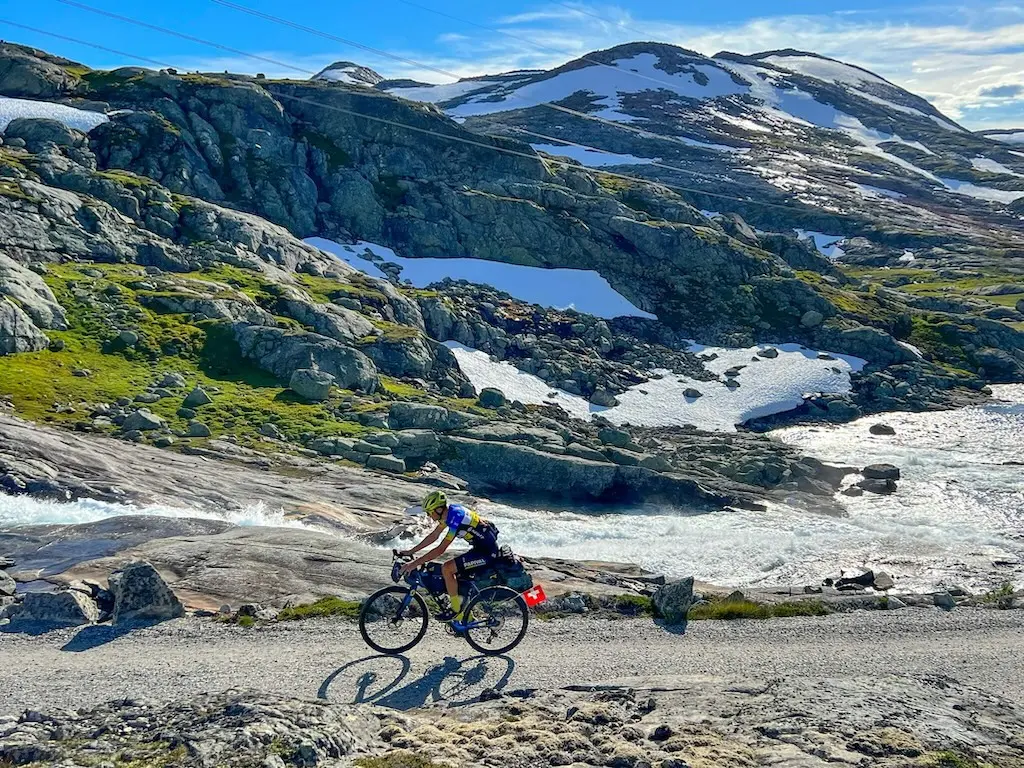
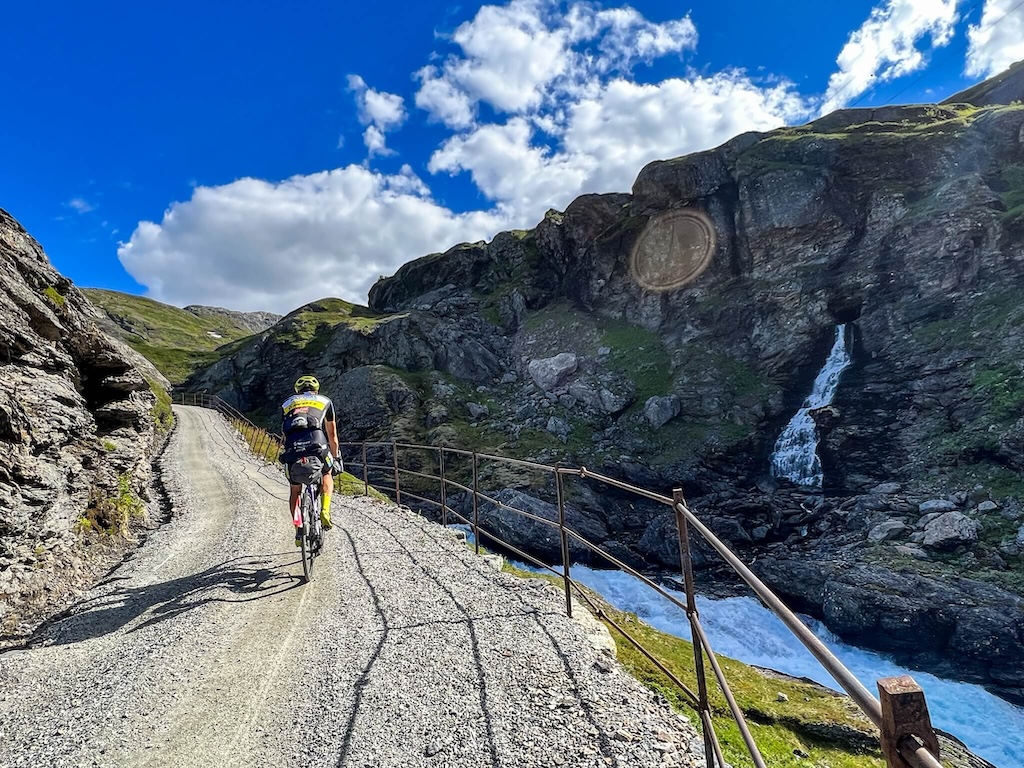
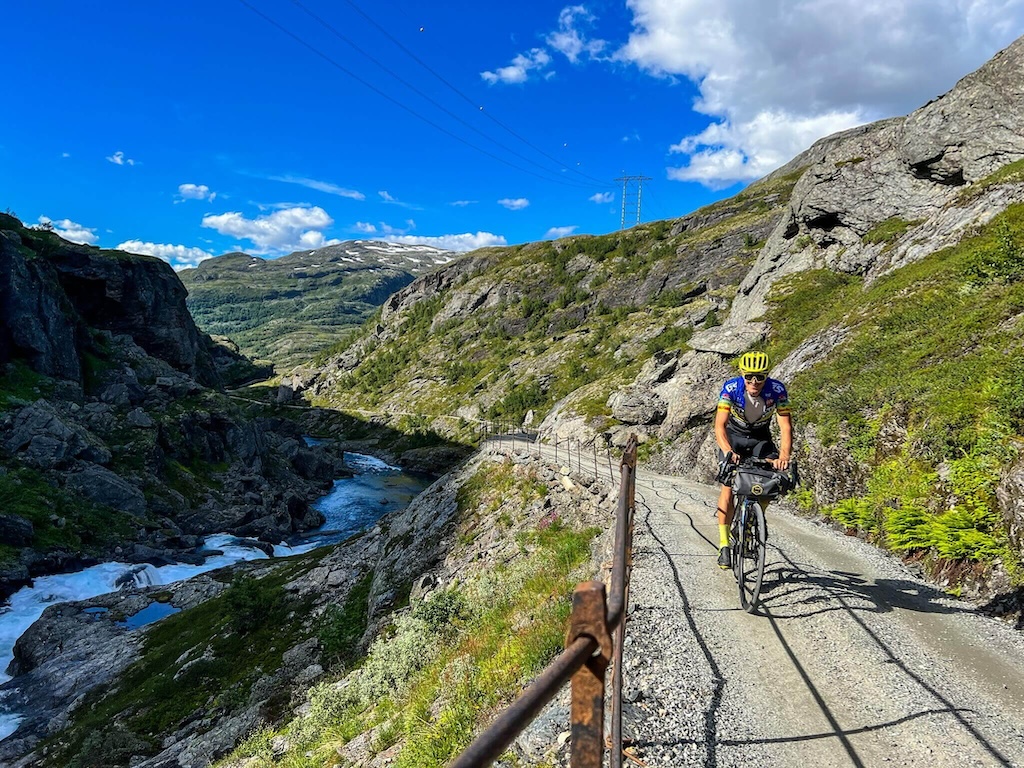
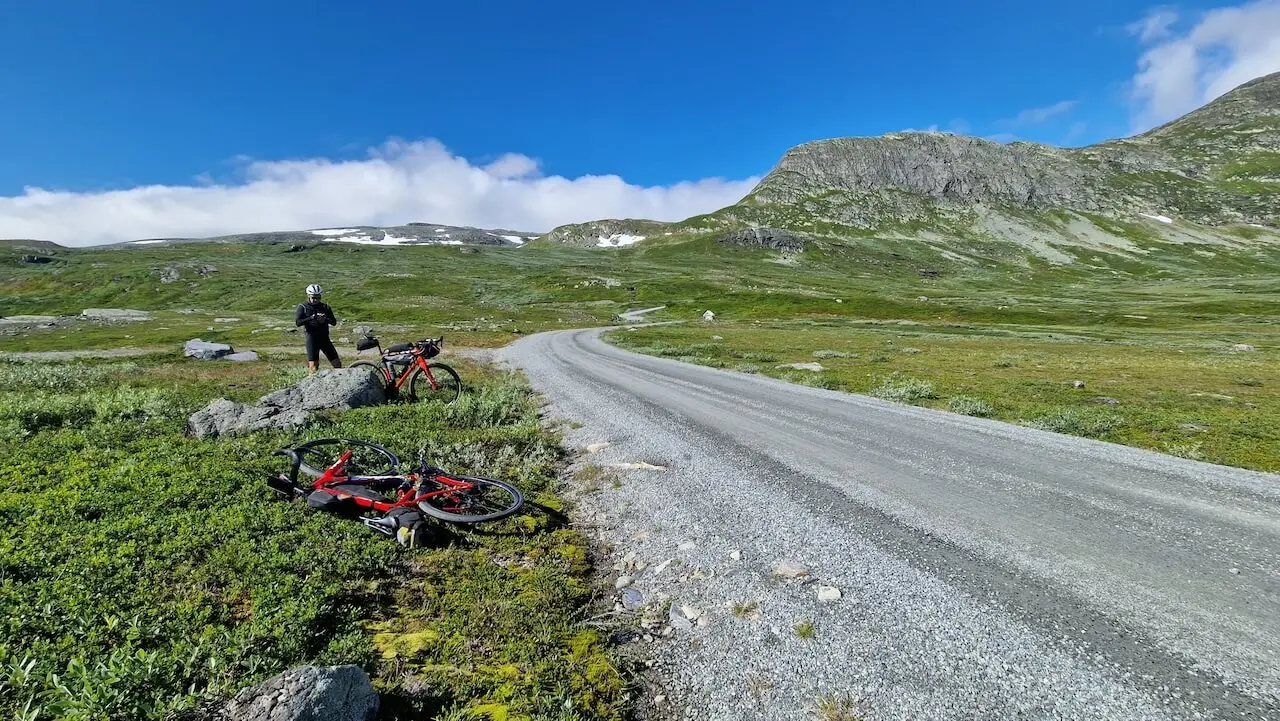
From Geilo, riders face one compromise: 22km of paved Road 7 to Haugastøl, though the train offers an alternative. From here, Rallarvegen begins – over 80 km of historic gravel crossing the Hardangervidda on one of Europe’s most celebrated cycling roads.
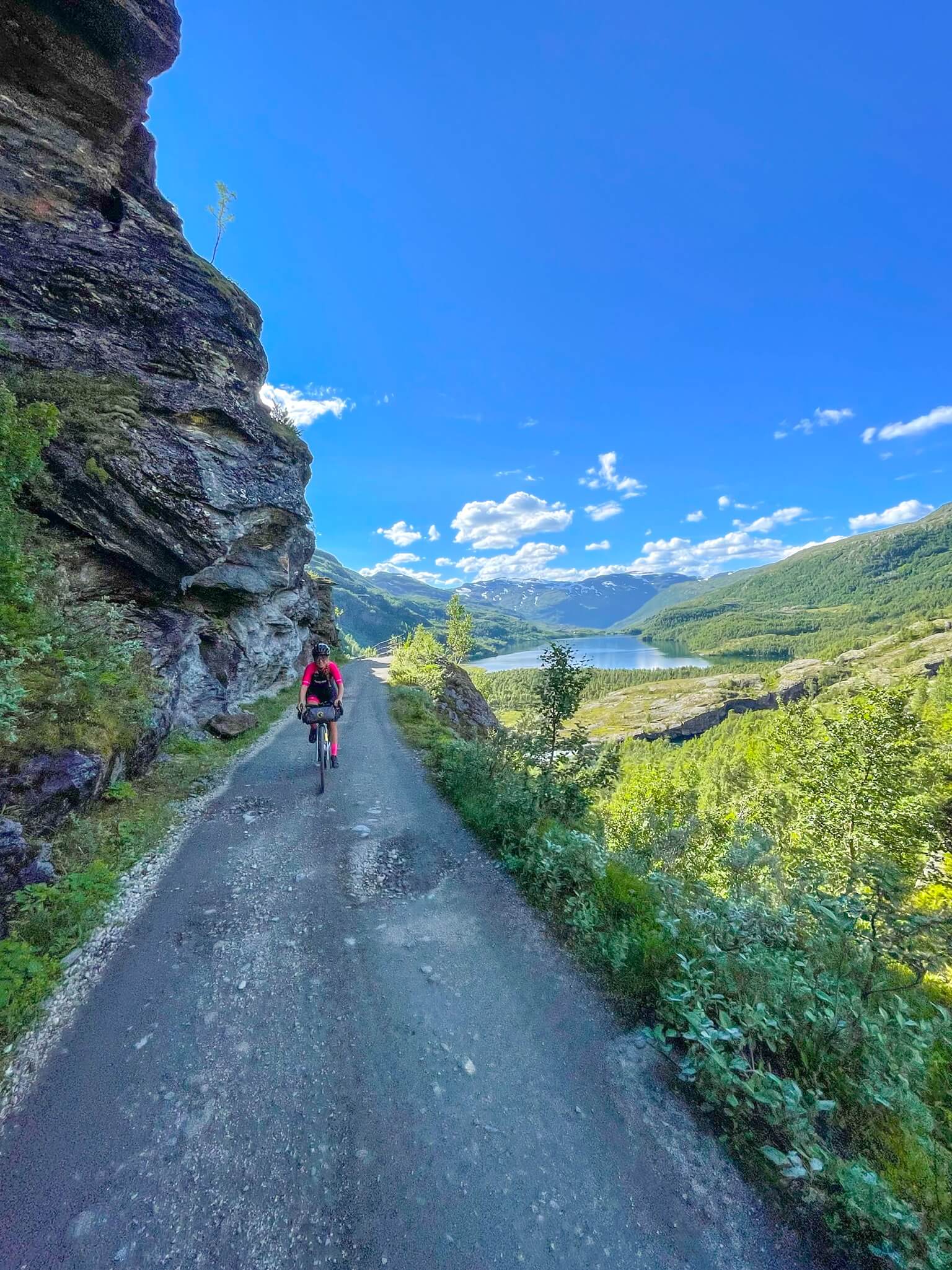
The route finishes by descending toward Myrdal, with the option to visit Flåm or continue west to Voss, completing a journey that offers perhaps the greatest variety of scenery, history, and gravel riding anywhere in Norway.
Route map
When?
- Part 1: Mjølkevegen usually opens around mid June, although in some years it can open earlier depending on snow conditions.
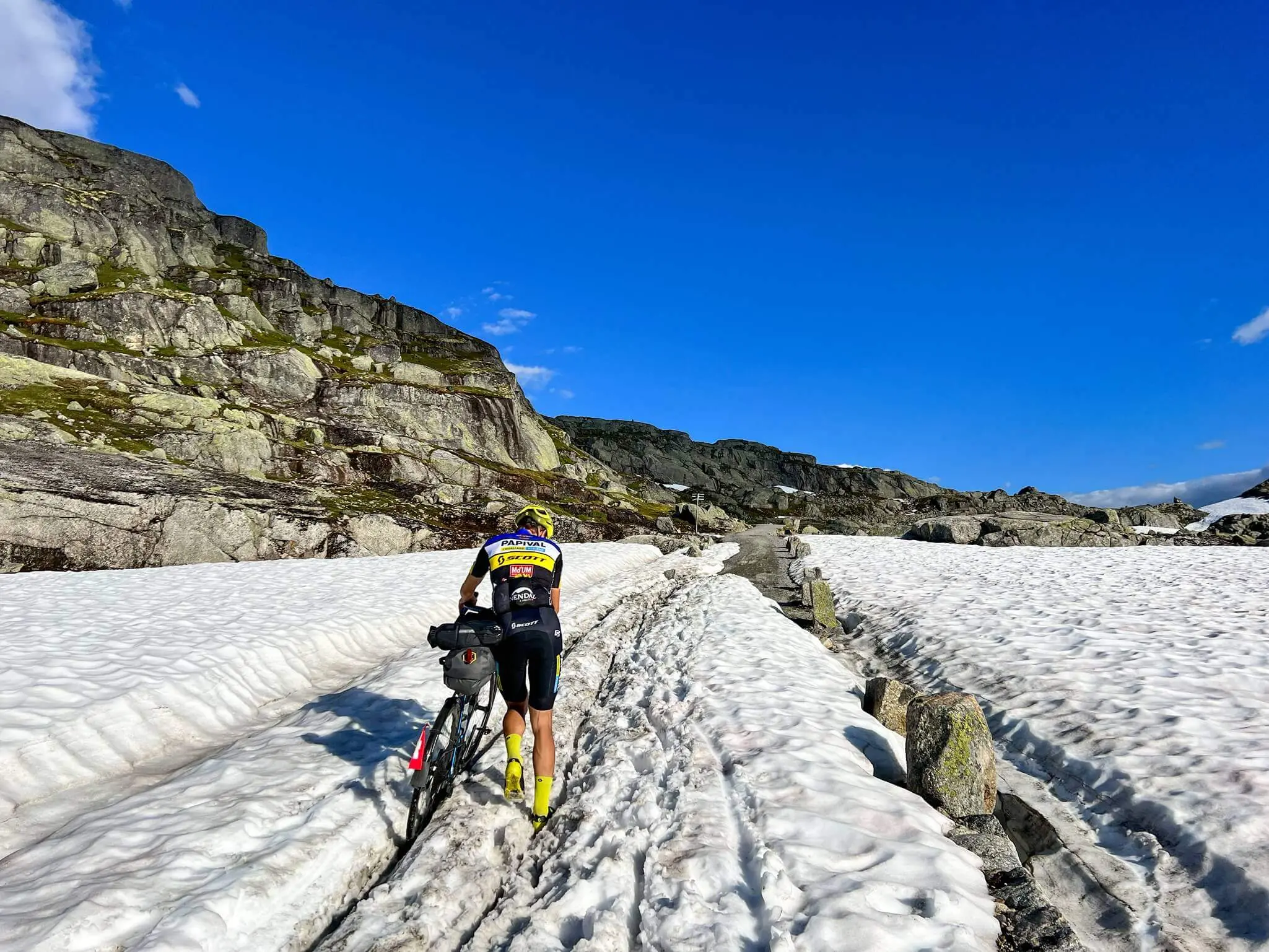
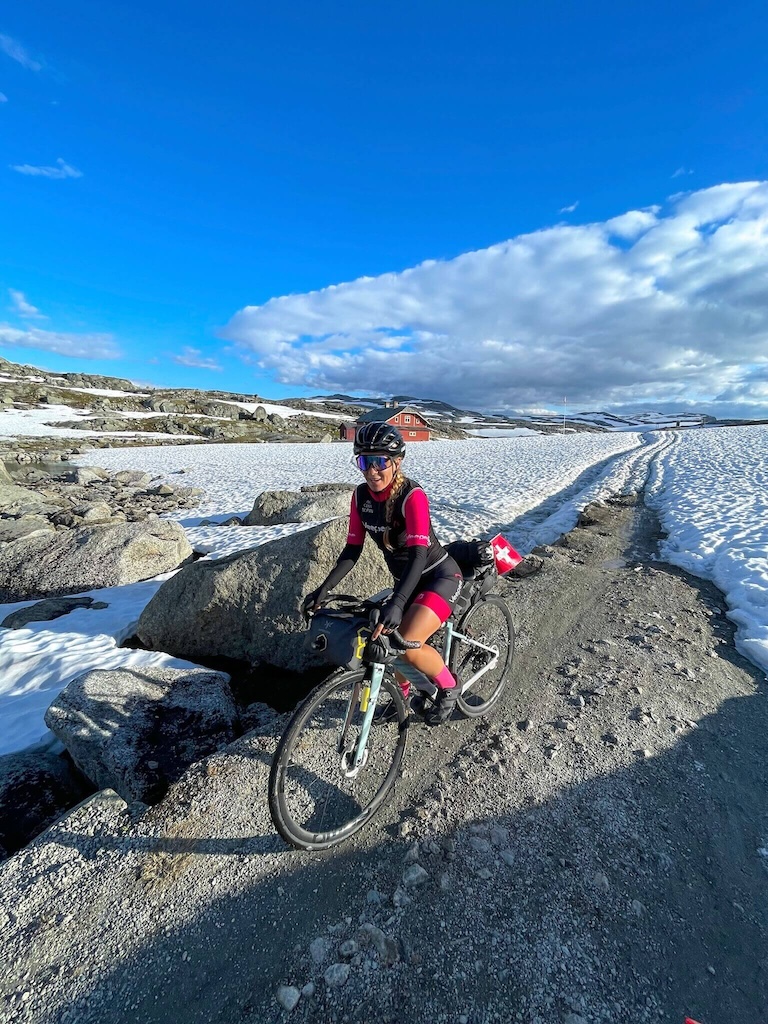
- Part 2: Rallarvegen is normally snow-free by July. In June, sections are rideable, but the highest parts often hold snow and may require skipping by taking the train at Finse.
Getting there
- Vinstra lies on the Oslo–Trondheim rail line, around 4 hours from Oslo.
- Voss, Flåm, and Myrdal all have good connections along the Bergen–Oslo rail corridor, making travel to or from Oslo or Bergen straightforward.
Hazards
- The 22km stretch of Road 7 between Geilo and Haugastøl is the least enjoyable part of the route and can be stressful during busy periods. Taking the train between these locations is recommended.
- You must take the train between Myrdal and Upsete to bypass the tunnel section. Book your ticket in advance, as trains only stop at Upsete on request. The train journey is only a few minutes.
Bike rental
- Jotunheimen Bike & Hike (Lemonsjø): E-bikes and gear, pick up locations not on the route.
- Fjellkjeden / Intersport network: Rentals at Beitostølen, Fagernes, Vaset, Tyin-Filefjell, Storefjell/Kamben, and Gol. Offers e-bikes, mountain bikes, trailers, and one-way rentals.
- Gol & Beitostølen: Best options for starting at either end; Gol shop has large capacity.
- Vinstra: Sykkelbua rents bikes locally, but not tailored to Mjølkevegen.
- Haugastøl Turistsenter – Largest and most established rental service with custom-built bikes for Rallarvegen. Pick up at Haugastøl, return at Finse, Myrdal, or Flåm.
- Flåm Bike Rental – Ideal if finishing in Flåm. Train up to Finse and ride back down.
- Norway’s Best (Finse, Kårdal, Flåm) – Rentals available at several points along the line.
- Flåm Railway Info – Overview of stations and return options.
- Voss – Outdoor Norway & Bikethefjords

If you’re visiting Norway for the first time and want a week or more of gravel riding, this is where you should start.
Local recommendations

Slettefjell
Slettefjell is the iconic climb of Mjølkevegen and offers one of the finest views you can experience by bike in Norway. The road winds steeply up, climbing over 1,000 metres to a high mountain pass. From the top, Jotunheimen National Park rises ahead, while behind you, the wide valley stretches towards Filefjell. Riding south to north makes the ascent especially demanding, with long gradients and exposed sections that test both legs and lungs

Bygdin Høyfjellshotell
Bygdin Høyfjellshotell sits on the eastern shore of Lake Bygdin at the foot of Jotunheimen and has welcomed mountain travellers since 1897. It’s a classic stop along Mjølkevegen, offering hearty local food, cozy rooms, and sweeping views across the lake and peaks. In summer, the ferry MB Bitihorn departs from the pier, linking you to Torfinnsbu and Eidsbugarden, while hiking and cycling trails start right from the doorstep, making it one of the route’s most atmospheric and practical overnight stops.

Hardangerjøkulen
As you approach the small settlement of Finse, Norway’s sixth-largest glacier, Hardangerjøkulen, comes into view. On clear days it dominates the plateau, making it one of the true highlights of the ride.

Flåm Zipline
Flåm Zipline, close to Myrdal, is Scandinavia’s longest zipline at 1,381 m, reaching speeds of up to 100 km/h and dropping 305 m through the spectacular Flåm Valley. Tickets are NOK 850 for adults and NOK 600 for children (under 15). In 2025, the zipline runs daily from 9:30 to 16:30(extended to 18:00 during July–August) between May 3 and October 11
Useful links
Booking.com – for accommodation options across Norway
Entur app – for planning public transport trips around Norway
Ferries – routes, timetables and information by Statens Vegvesen
Wild camping etiquette – important to know
Further Reading
Keep in mind
All cycling routes published on CYCLENORWAY.com are intended as planning resources and sources of inspiration to be used alongside your own research and judgement. Routes are created using careful research, but every cyclist has different abilities, expectations, and risk tolerance. Some routes may include hike-a-bike sections, muddy or wet hiking paths, technical terrain, steep climbs, descents, or remote areas that may not be suitable for everyone. Route data, mapping software, and conditions can also change or contain inaccuracies. Cycling in Norway is generally very safe. Nevertheless, if you choose to ride these routes, you do so at your own risk.


Leave a Reply