
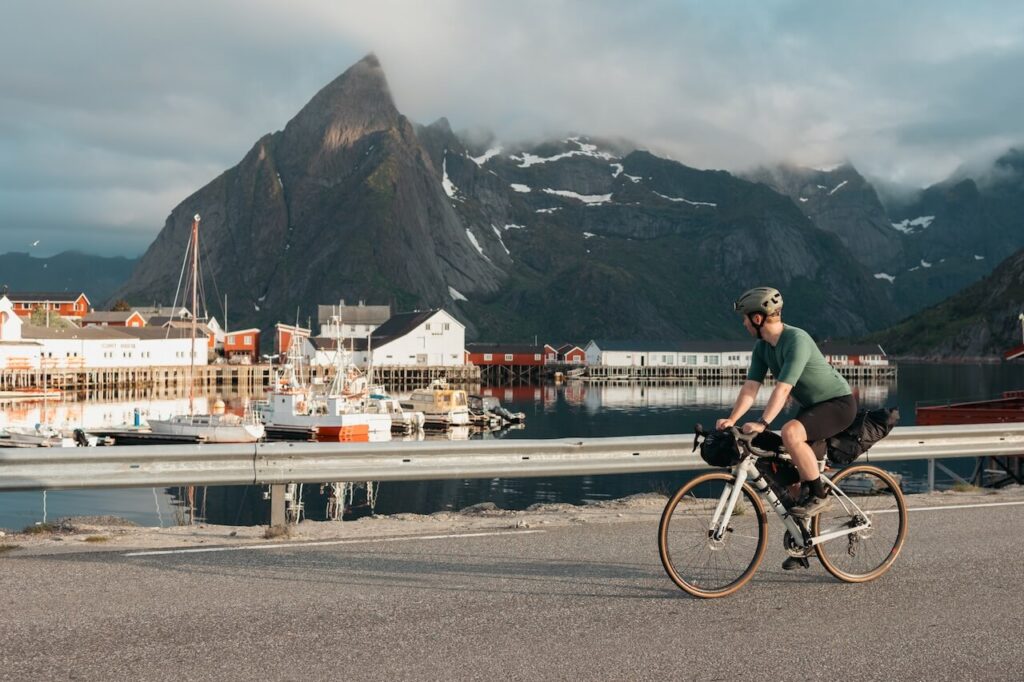
Cycling in Lofoten is a dream sold through glossy photos: empty roads, midnight sun, and mountains falling straight into turquoise sea. That dream is real, but only if you understand how the islands really work. These ten truths will help you enjoy Lofoten for what it is, not what social media pretends it to be.
1. The E10 is a necessary evil
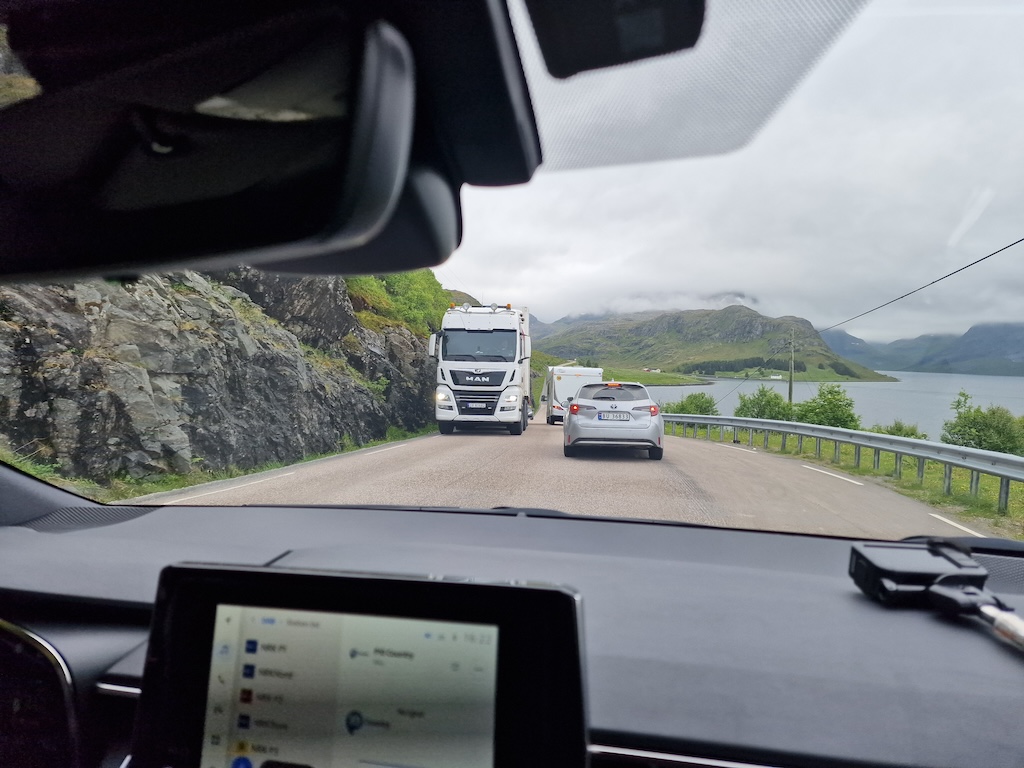
At certain points you end up on the E10. There’s no backroad alternative that threads neatly through all the islands. In summer it is narrow, crowded, and full of campervans driven by people with shaky confidence. Ride those sections early morning or late in the evening, when the road returns to peace. That timing alone can change your whole experience of Lofoten.
2. Lofoten’s climate is maritime, not deep Arctic
Despite its latitude, Lofoten is warmed by the Gulf Stream and has a maritime coastal climate. Summers are mild, winters hover near freezing, and the sea keeps temperature extremes in check. When you cross east to Vesterålen, you will feel the air grow colder and harsher under a more oceanic climate influence. It’s not a sudden drop into polar misery, but it is noticeable. Layer smartly, but don’t pack like you’re crossing Greenland.
3. The detours are the whole point
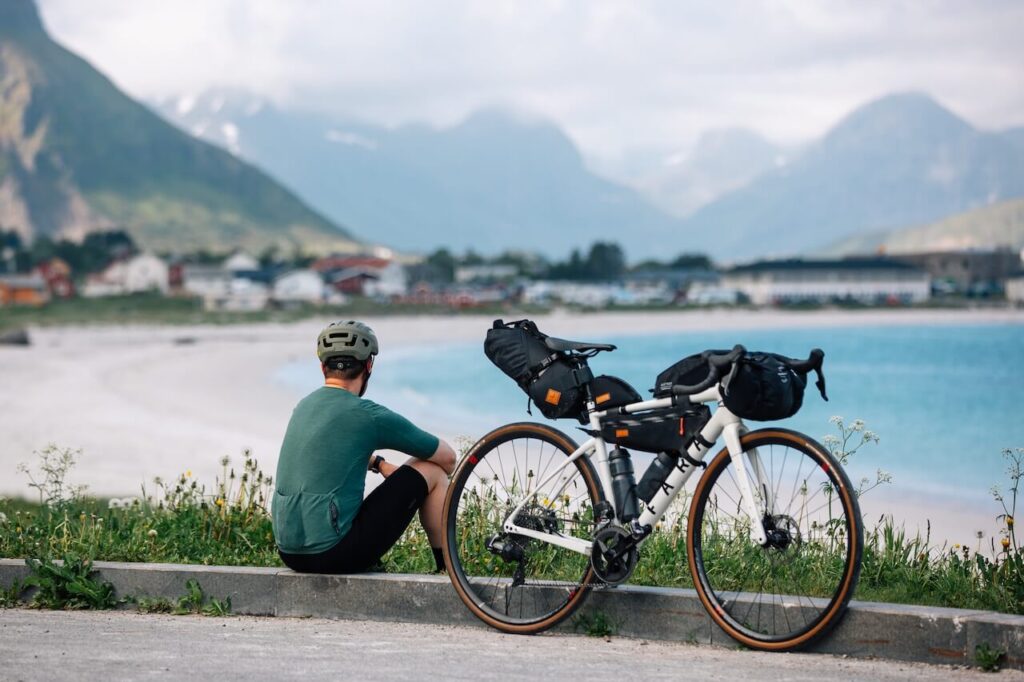
If you only ride the main road, you miss the best of Lofoten. The real magic is down the dead-end peninsulas: places like Unstad, Nusfjord, and Eggum. These quieter roads reveal why cyclists travel halfway across the world to be here. When you have settled weather, take every detour you can. Those extra kilometres are what turn a good trip into a phenomenal one.
4. The Viking Museum deserves at least half a day
Lofotr Viking Museum brings the region’s history to life with a full-scale longhouse, working crafts, and even Viking ship rowing on the sea. It’s the best cultural experience on the islands and a welcome shift from staring at scenery all day. If you care at all about the people who built this coastline, you’ll get a lot out of it.

5. The aquarium is far better than it looks
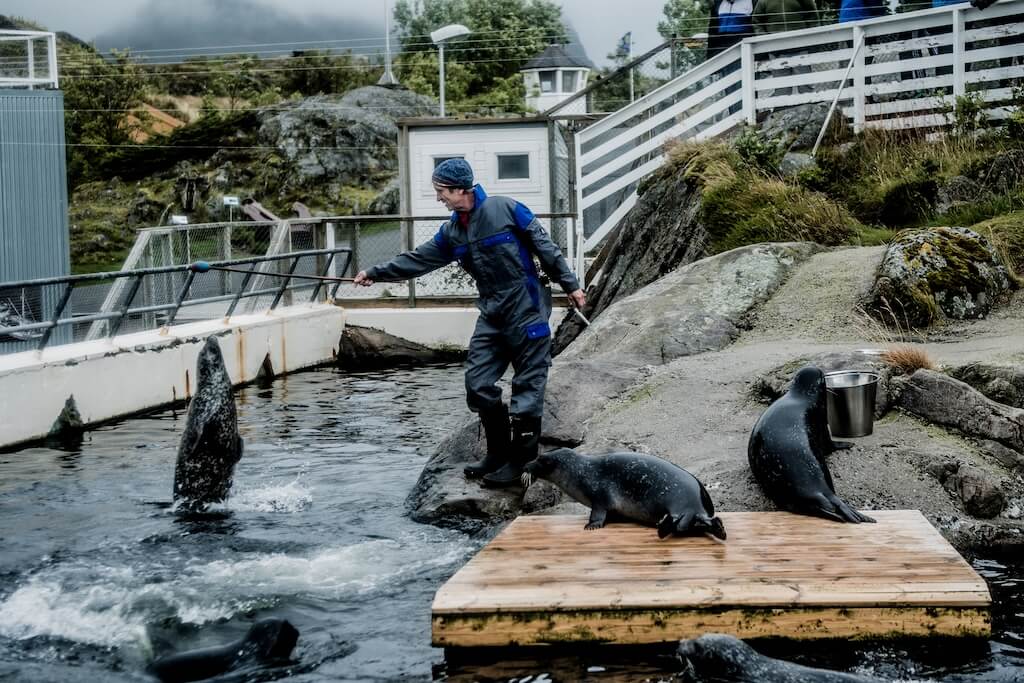
From the outside, Lofoten Aquarium doesn’t look like a must-see. Inside, you’ll find Arctic sea life that feels prehistoric and thriving in a way most people never imagine. Species here built the economy of these islands and still define local life. It will leave you more grateful for the ocean you’ve been cycling beside.
6. Reine isn’t the fairytale you expect
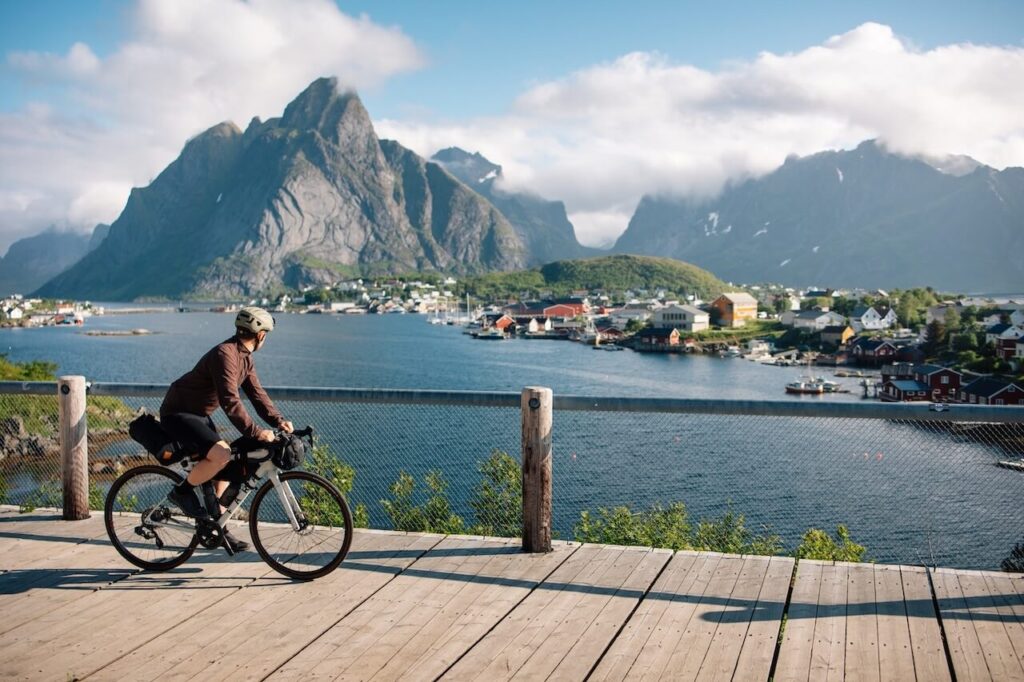
Reine looks unreal on postcards, but the village itself is worn and tired from years of mass tourism. Visitors arrive, use facilities, take photos, and leave without spending money. The local kommune even ended up in massive debt trying to cover those costs. Enjoy the famous view, but don’t expect a polished tourist village. Lower your expectations from “storybook” to “working town with a world-class backdrop.”
7. You should climb at least one peak
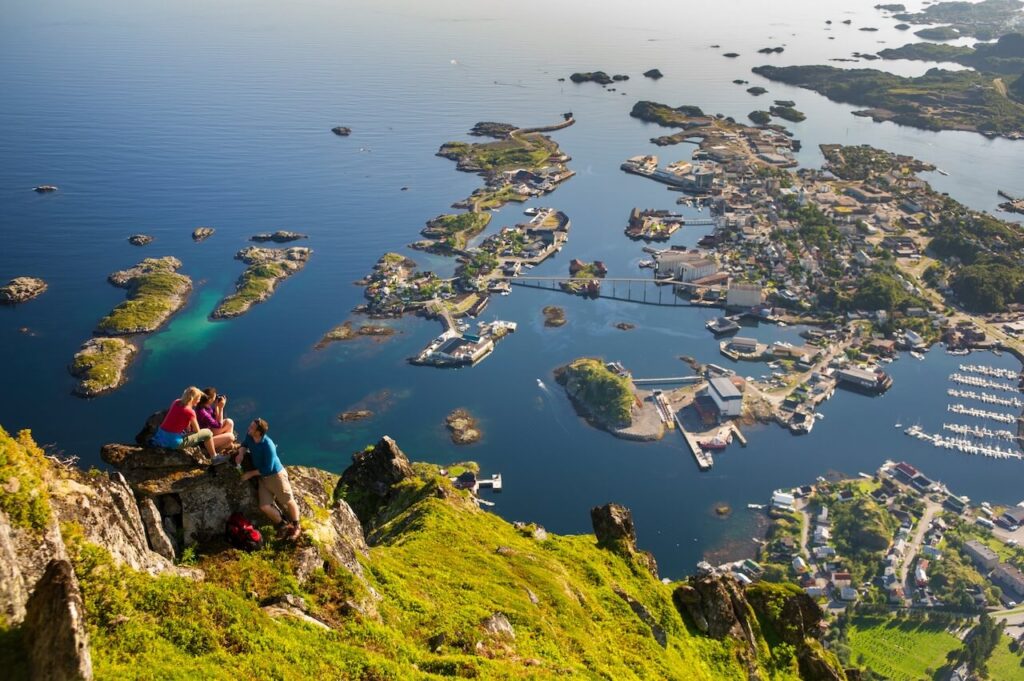
If you never leave sea level, you’ve only met half of Lofoten. Many peaks are only 300–700 m high, steep, but quick and manageable in half a day. Lock your bike somewhere safe, pack light, and earn a summit. We map the best hikes in our full guide, choose one and do it. Coming back down to the saddle afterwards feels different when you’ve seen the place from above.
8. Wild camping on Lofoten is getting harder
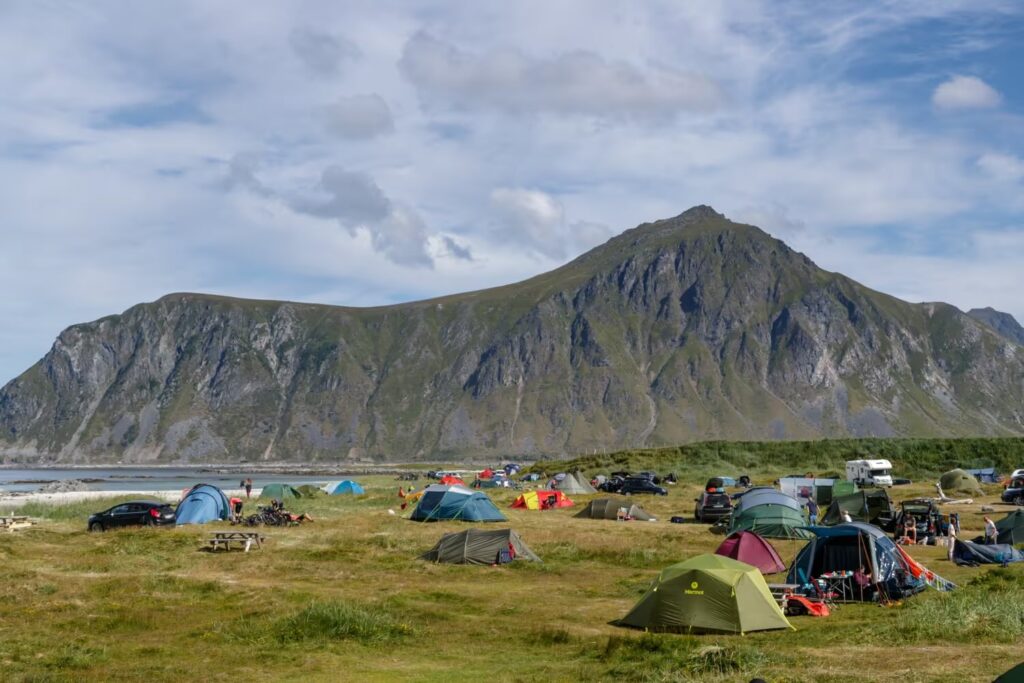
Norway’s right to roam wasn’t designed for the volume of visitors now descending on these islands. Tents have popped up in fields needed for farming, too close to homes, and in fragile areas. Locals are losing patience. Use campsites on Lofoten. Save your wild camping for Andøya and Senja, where there is space and far less pressure.
9. Bodø Ferry — Free for Walk-ons, but Space Is Limit
If you ride into Bodø without a car or trailer, the ferry across to Lofoten treats you as a “walk-on passenger.” That means no big vehicle fee, bikes alone count as pedestrians and typically ride free. But space for walk-ons is limited. The operator allocates only part of the ferry’s capacity for them, and in busy summer periods, those spots fill fast with cars, motorhomes, and prepaid passengers. If you want peace of mind and a guaranteed crossing, reserve a passenger seat (reservation fee ~250 NOK). Show-ups may work, but they’re a gamble you don’t want to take if your schedule matters.

10. You haven’t really done Lofoten until you’ve gone into the sea
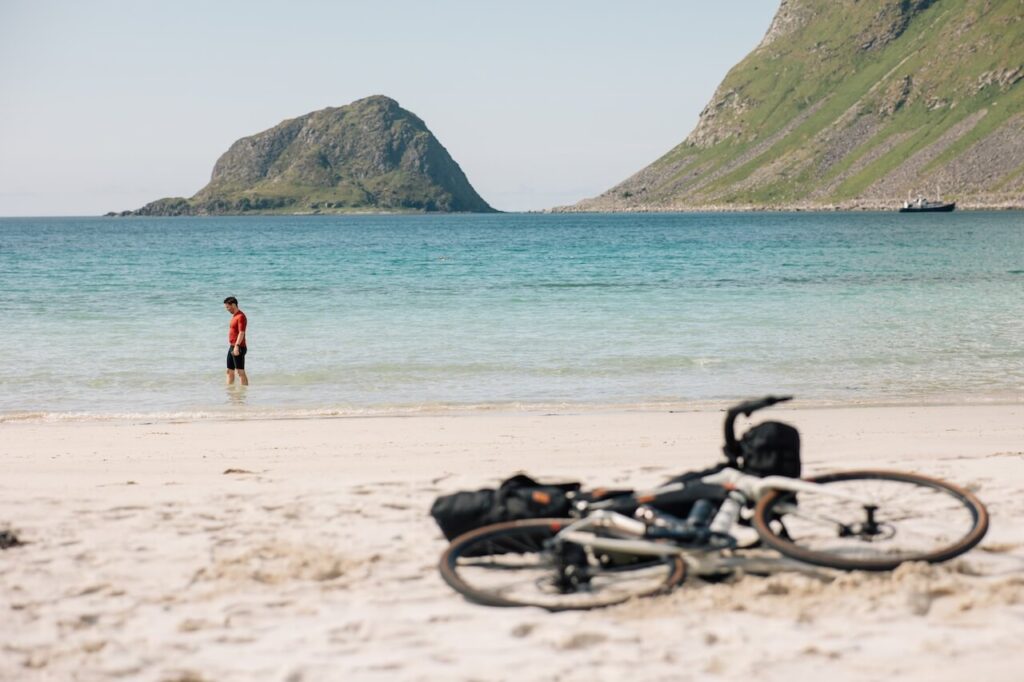
There’s something about the shock of cold water that seals the experience. The beaches, Haukland, Uttakleiv, and Kvalvika, look tropical from a distance, but they remind you of reality the moment you step in. Go under. Shout. Laugh at yourself. That jolt sticks with you longer than any viewpoint or Instagram photo. It’s the north waking you up.
More great articles from Cycle Norway
???? 12 Things You Need to Know Before Cycling Rallarvegen
Want the most complete cycling guide to Lofoten?
This article is just the start. Our Premium Members Page has the most detailed and constantly updated cycling guide to Lofoten, Vesterålen, Andøya and Senja available anywhere:
- A huge interactive map with every detour, beach, viewpoint and hazard marked.
- Up-to-date ferry info and safe ways to avoid the worst traffic.
- Accommodation recommendations and cyclist-friendly services.
- A dedicated section on safety: tunnels, weather, distances between supplies.
- Step-by-step videos showing how to tackle each island with confidence.
- Insider advice based on thousands of kilometres ridden up here.
If you’re spending the money and effort to reach Lofoten with your bike, do it properly.
Become a Premium Member and get everything you need to make your Arctic cycling trip the best you’ve ever had.
 English
  Norwegian
  German
  French