

When
20th June - September
Written by
Matthew Tolley
Distance
594m
Days
3-8
High point
1307m
Difficulty
7/10
Unpaved
40%
Total Ascent
8266m
Ferries
Tunnels
1
The southern part of this route cuts through a sparsely populated area between the counties of Telemark and Viken. You may bump into more red squirrels than people as you cycle along beautiful forest roads with lakes dotted along. The first time I cycled in Middelalderdalen (Middle ages valley) I couldn’t believe it wasn’t a national park. In any other European country, it would be, but in Norway, it’s just another valley with untouched lakes and rivers to camp by.
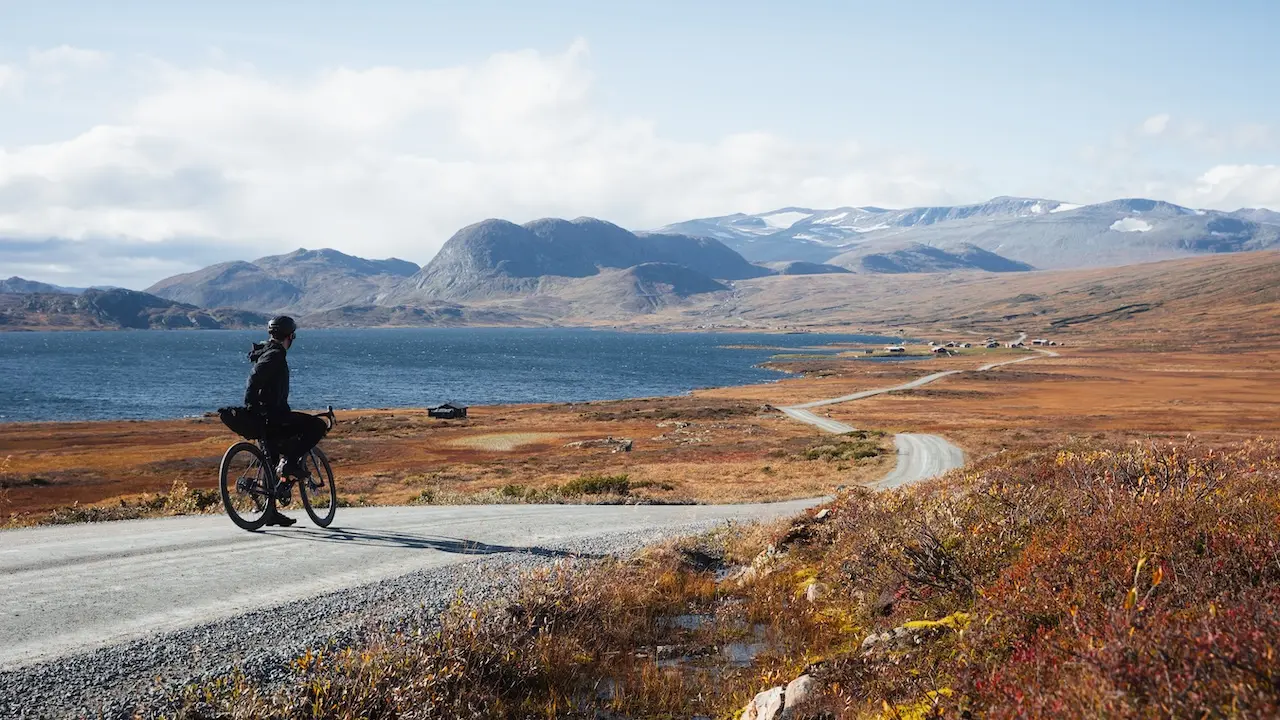
Perhaps, the crown jewel of this route lies in the north. Mjølkevegen, Norway’s premier gravel road traverses high mountain plains in one of the most unique areas of the country. Two hundred kilometers of fantastic gravel await. There is also a strong possibility you will only meet a handful of other cyclists along these roads. Why? We don’t know, but what is certain…this is one of Europe’s best-unpaved cycling experiences.
This long trip north to Geilo is reasonably easy to cycle for the first 200km. You cycle north from the coast through Numedal on a side road with limited traffic and several nice rest areas. Numedal is called the “medieval valley” because there are several beautiful stave churches that you pass by. The route is signposted and pretty easy to follow.
From Rødberg, the route changes character and rises through the peaceful and very beautiful Smådøldalen up to an altitude of almost a thousand meters. The trip continues via Geilo and Gol. From here, there is a steep climb up onto the mountain plains as you begin the gravel roads of Mjølkvegen.
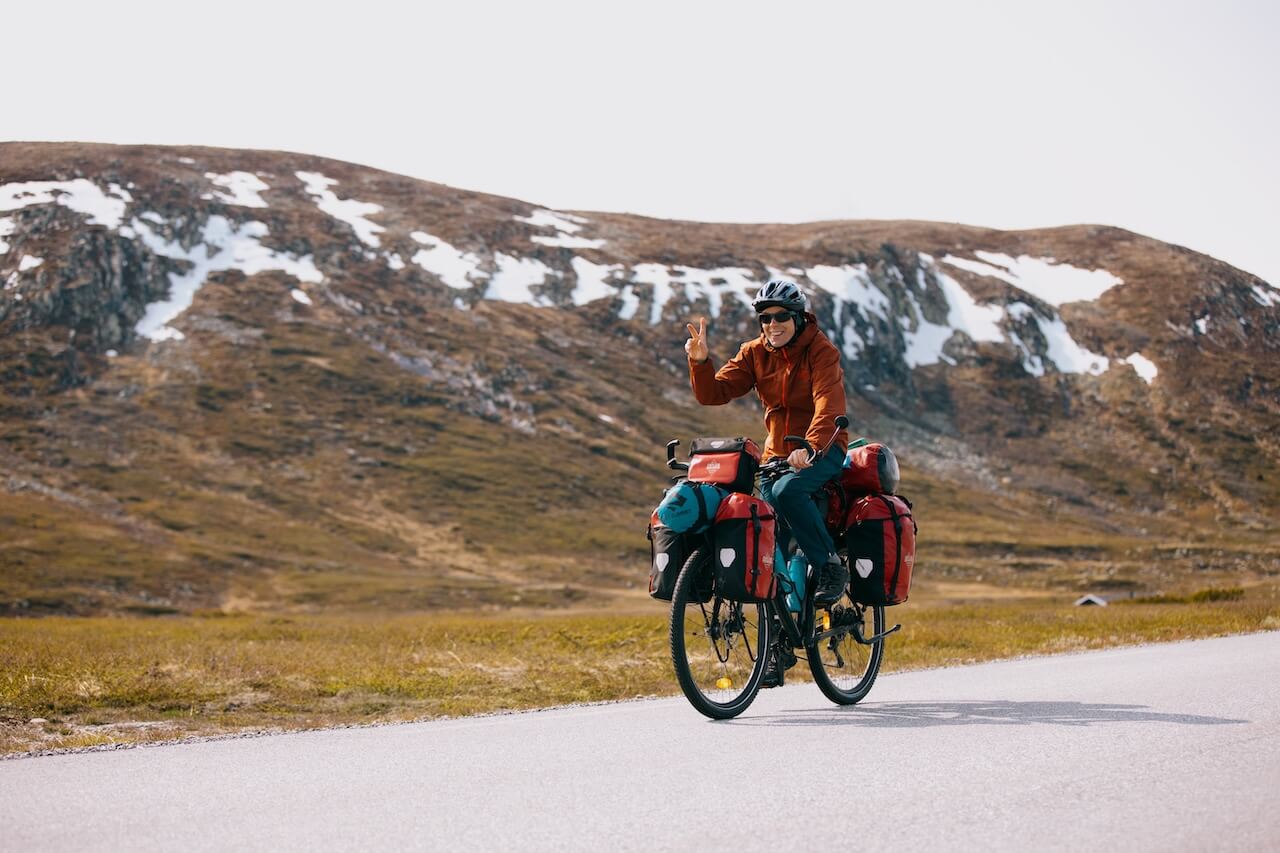
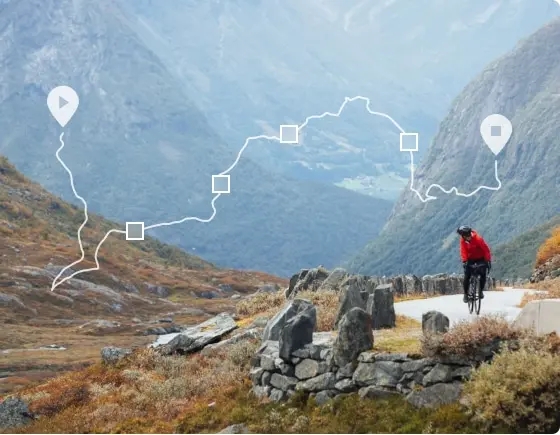
Here you cycle above the tree line for much of the time and have views of many of the country’s highest mountain peaks. The combination of magnificent nature, rustic life, and fresh air is what gravel rides should be all about. The route can be combined with hiking in the mountains, swimming, fishing, visits to støls (old milking stations), and great nature and cultural experiences.
The route over Mjølkevegen is generally very hilly, but manageable for most cyclists. There are several accommodations and food options along the way and some small shelters to protect you from any bad weather.
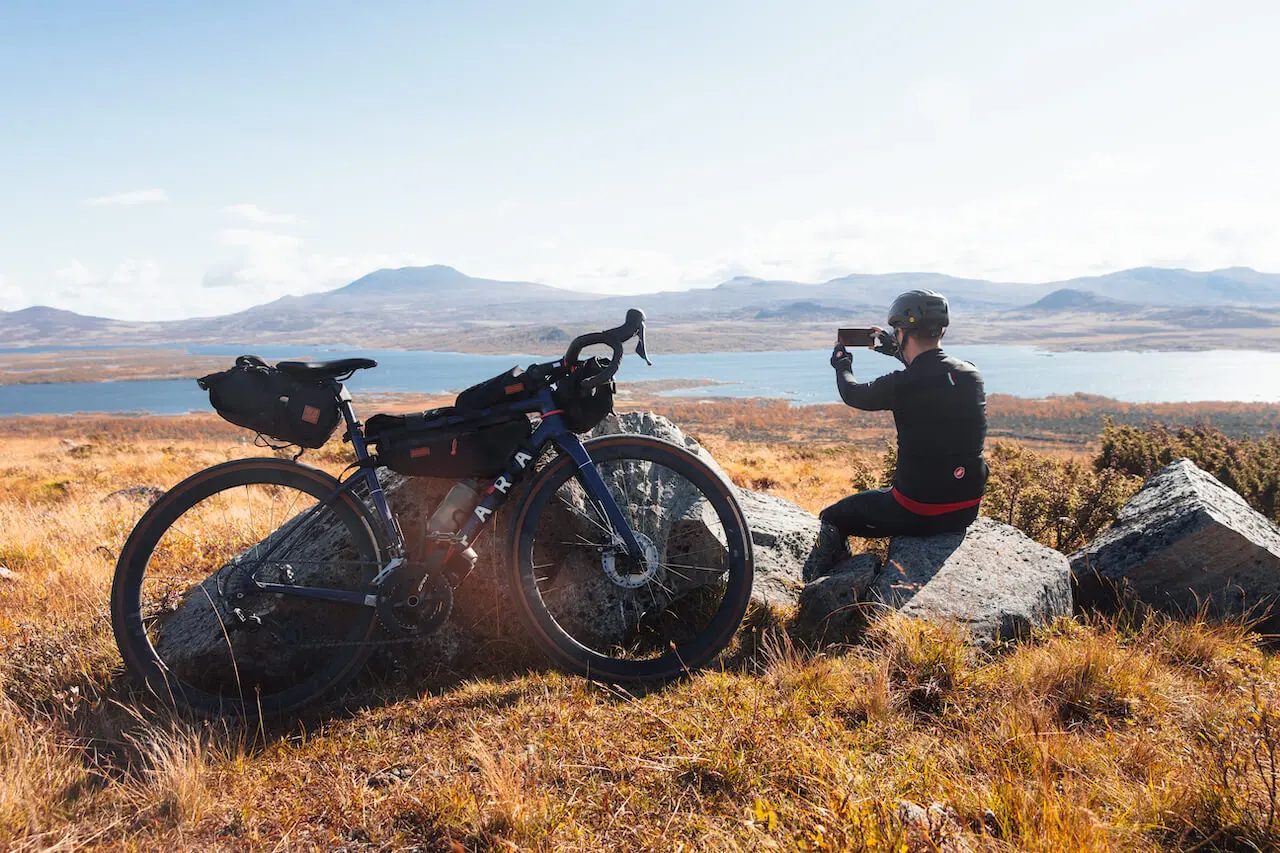
Before you reach the small popular town of Beitostølen there is a very challenging climb over Slettefjell. It’s one of the hardest in Norway but the views from the top are worth the struggle! After Beitostølen you cycle a few kilometers on the main road before another great gravel road approaches. Jotunheimvegen is iconic and perhaps provides the best gravel photos in Norway. It may take some time to cycle as your camera is in constant use.
While the route is demanding and suitable for adults who are used to cycling. Some sections are suitable for all levels and more manageable smaller routes can be followed for those less experienced. See the elevation chart on the map to see which areas are more pleasant to cycle.
We have given this a rating of 6.5/10. The first 200km is comfortable for most cyclists but the last 150km involves two climbs reaching around 1000m. One of which is on gravel. Even for experienced cyclists the second part of this route is a little tiring on the legs (but worth it)!
We have given this a rating of 7/10. A demanding hilly gravel section with a very tough climb up Slettefjell (south – north). The hilly environment is worth the hard work with all most no traffic on most parts and stunning views of Jotunheimen National Park. Many inexperienced cyclists tackle this route and manage to cycle all or most of it.
We have documented accommodation, food shops, and other important information. You can see the route is set up for bike tourists.
A great half-day gravel ride from Vinstra. Excellent to add to the finish or start of your route: https://cyclenorway.com/routes/peer-gynt-seterveg/
There is just one 52m tunnel on the whole route.
Road 40 and 51: This is a very safe route. Only a short section on roads 40 and 51 may have some (but not many) cars and campervans passing you. Overall, this is a very convenient route for traffic, and you will find yourself on empty roads in many sections.
On this route, you will encounter two main climate and weather patterns. The south is characterized by warm and mainly dry weather. As you cycle further north and climb up the highlands, expect a different world. The temperatures may drop and the weather may become more unsettled. You may have warm and sunny weather on Mjølkevegen, but you must prepare for cold and possibly wet weather over the mountain passes and highlands. Water/windproof gear is essential if the weather is unsettled. Gloves should also be in your bag even in peak summer.
Finnmark too has a certain mystique. Being about the same distance from Oslo as Istanbul, in some ways, it’s basically the last stop before the North Pole. The undoubted highlight of the journey is simply cycling the wild expanse of Europe’s last great wilderness. It will feel very lonely up here but isn’t that a reason to cycle it? The cycling heat maps of the world are full of well-ridden roads. Here you will join a small group of cyclists seeking something extraordinary. Passing wild herds of reindeer and perhaps not seeing another human for many hours is why you came – right? The ride comes to an end in the town of Kirkenes which has Russian road signs. This will indicate you have reached the boundaries of the Western world!
All cycling routes published on CYCLENORWAY.com are simply a planning resource to be used as a point of inspiration in conjunction with your own due-diligence. All route guidelines were prepared under diligent research. However, we can never for certain insure the complete accuracy of the routes. Cycling in Norway is in general very safe. Nevertheless, should you choose to cycle this route you do so at your own risk.
Check out this helpful video to see how the routes can be uploaded onto your mobile device and cycling computer.
Cycling long distance is tough, and you should not attempt routes that are beyond your level.
If you discover any inaccuracies on this page, please let us know so we can correct them.
non-intrusive, offering informative news, blog posts, videos, and more.