Når
Mai - september
Skrevet av
Matthew Tolley
Avstand
817 km
Dager
5-14
Høyt punkt
342m
Vanskelighetsgrad
3/10
Ikke asfaltert
0%
Total oppstigning
8553
Ferger
9
Tunneler
19
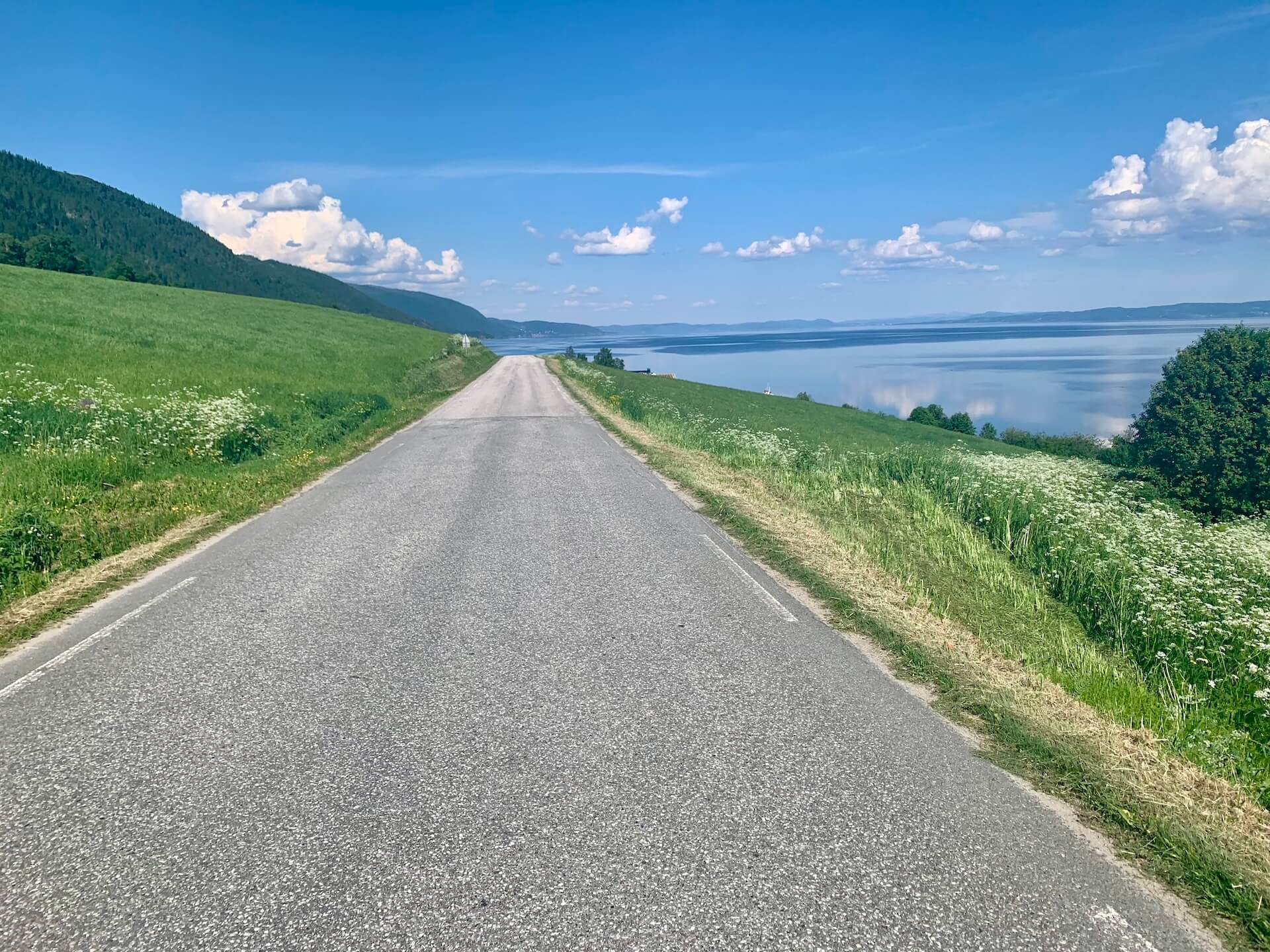
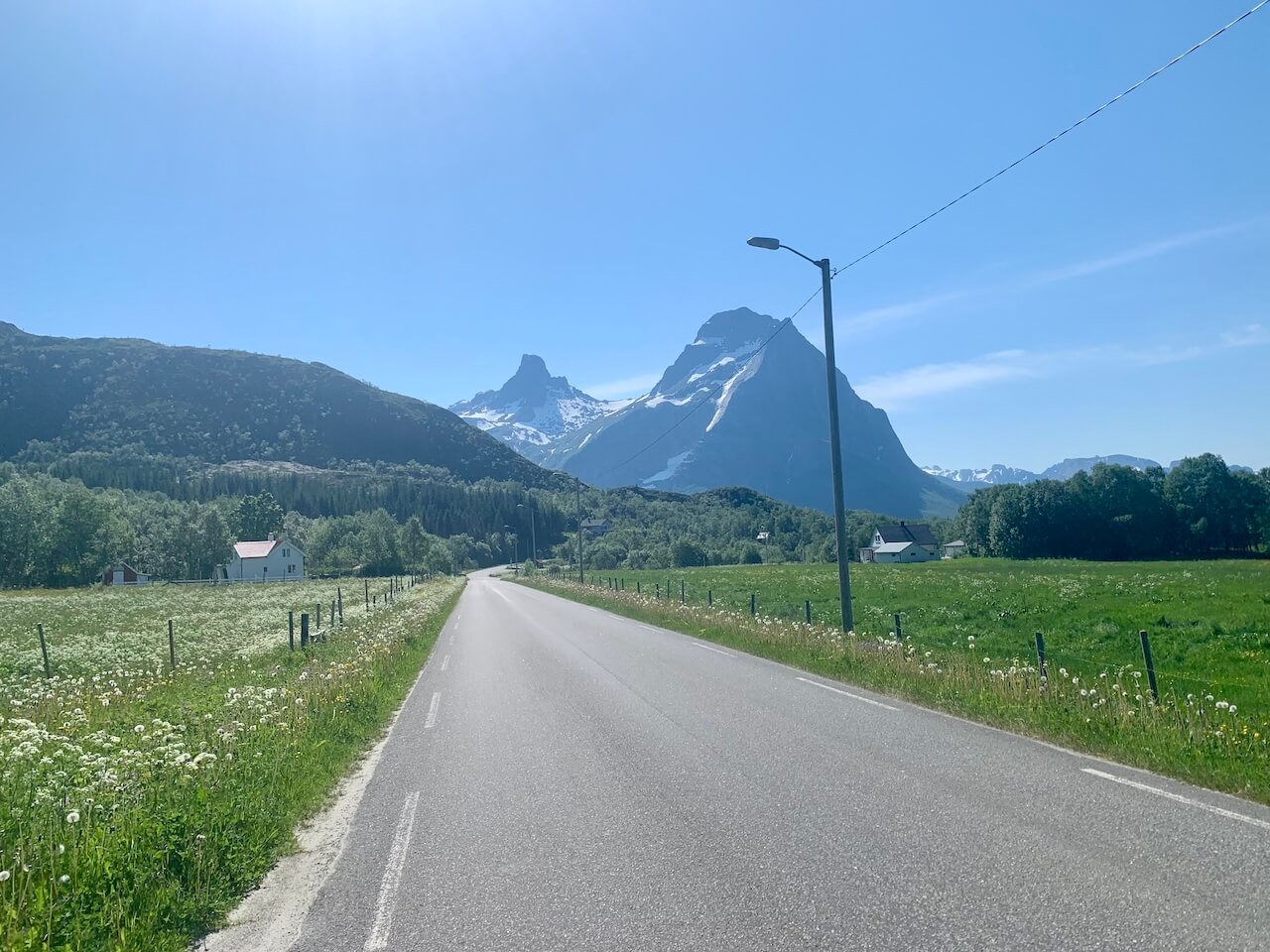
Welcome to the Coastal Route, or ‘Kystriksveien’ as it’s known in Norwegian. Running from Trondheim to Bodø, this long stretch of coast has been voted one of the finest road trips on the planet. Strangely, it remains one of Norway’s least-visited regions.
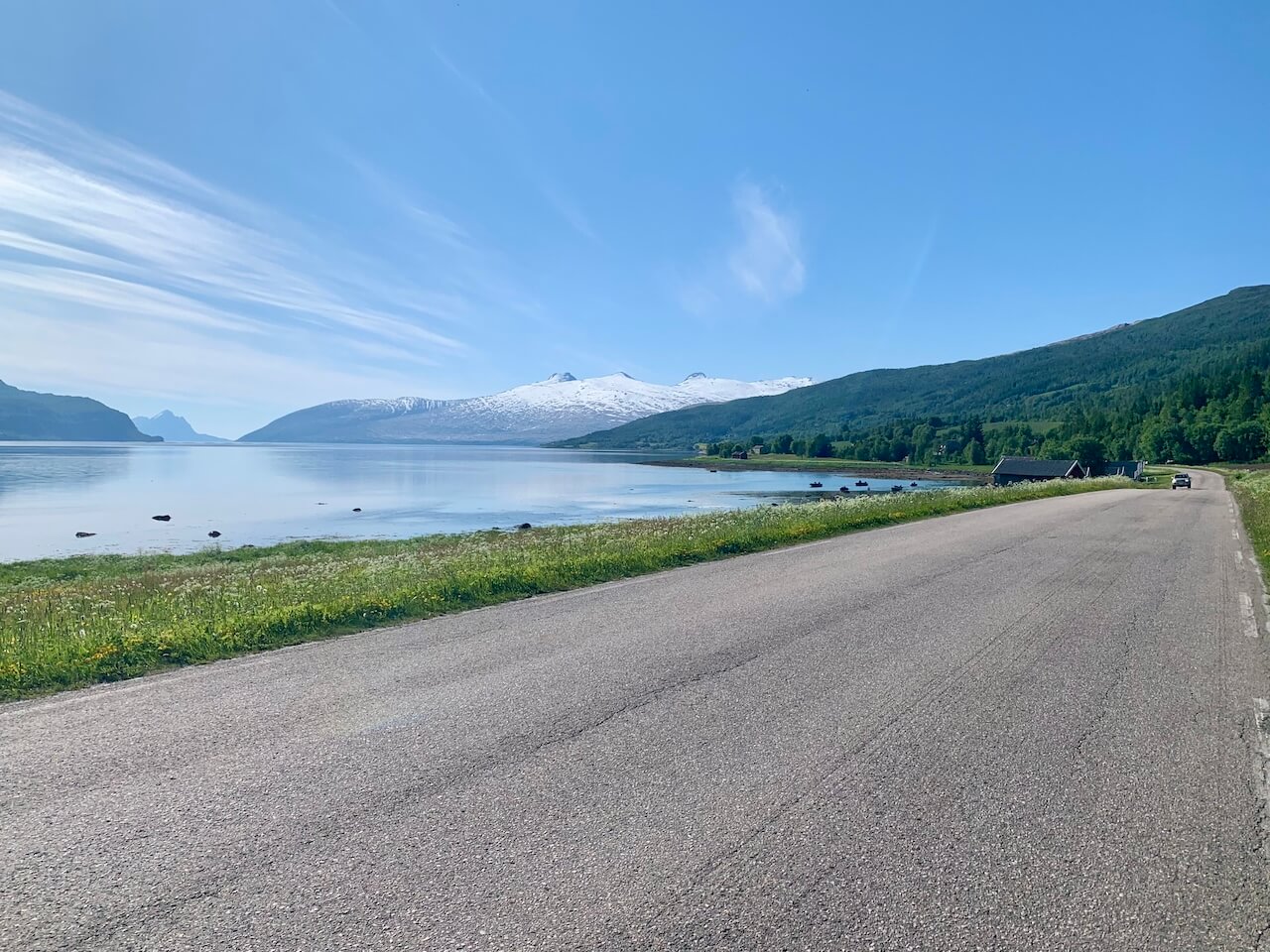
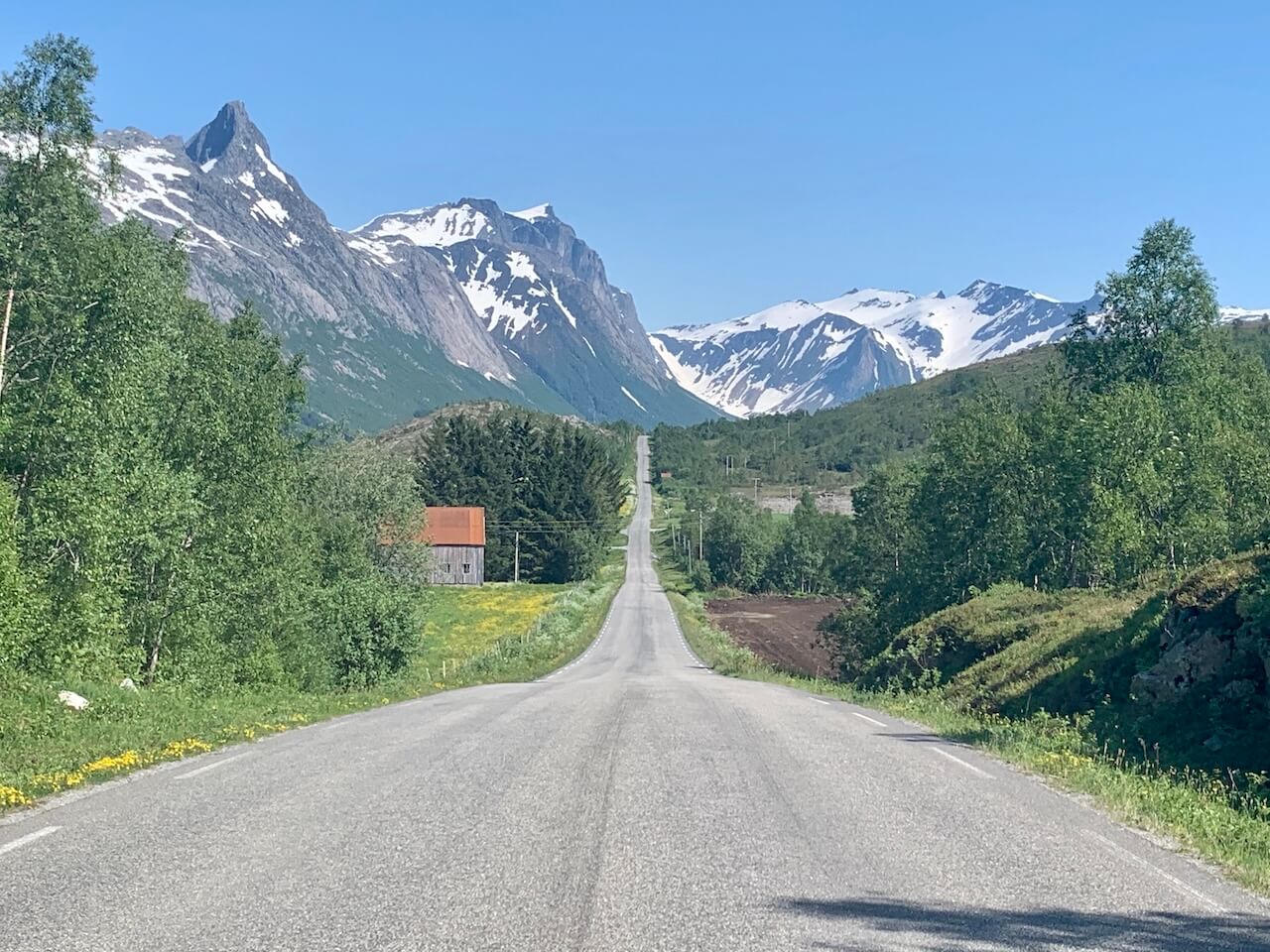
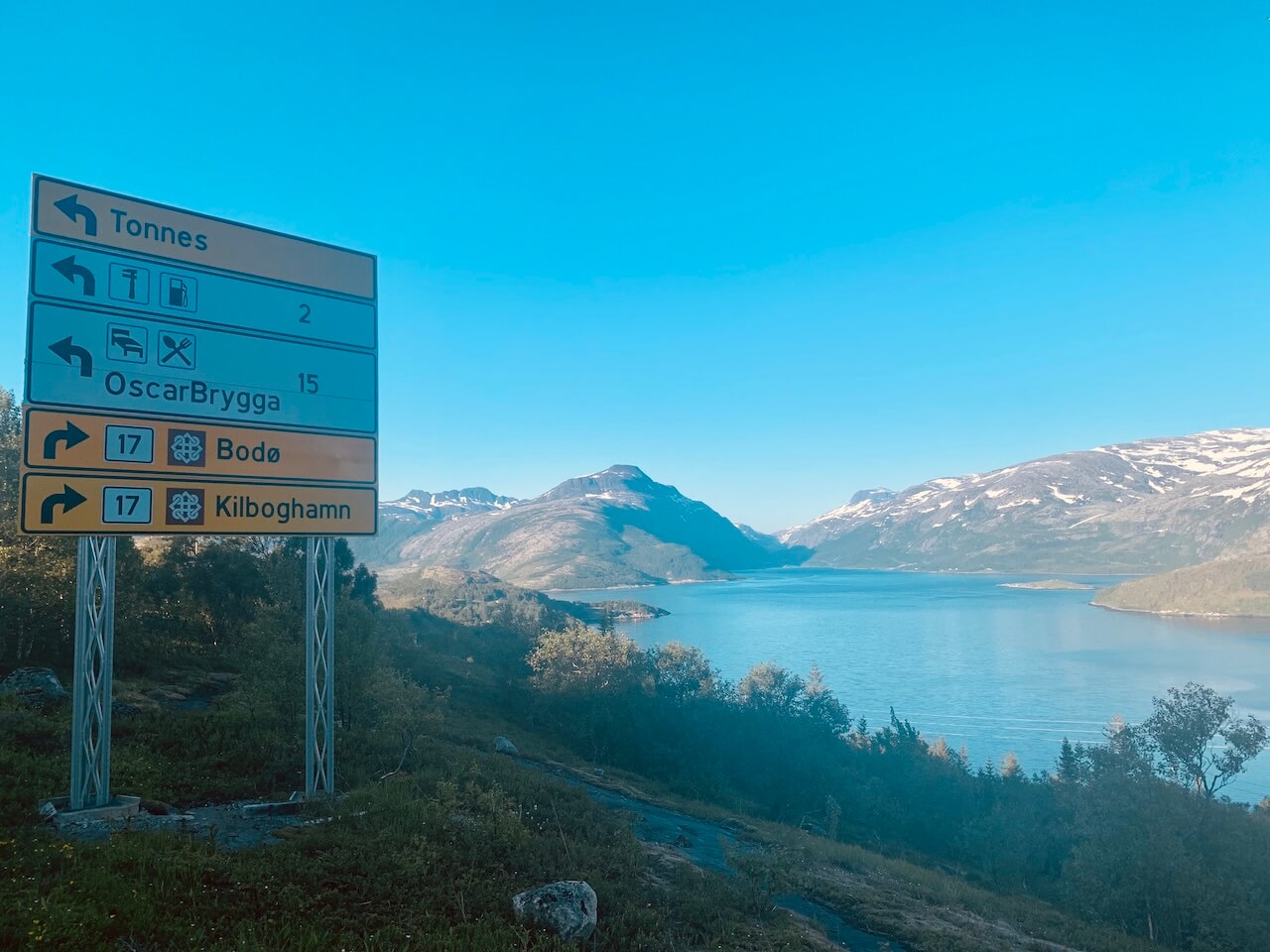
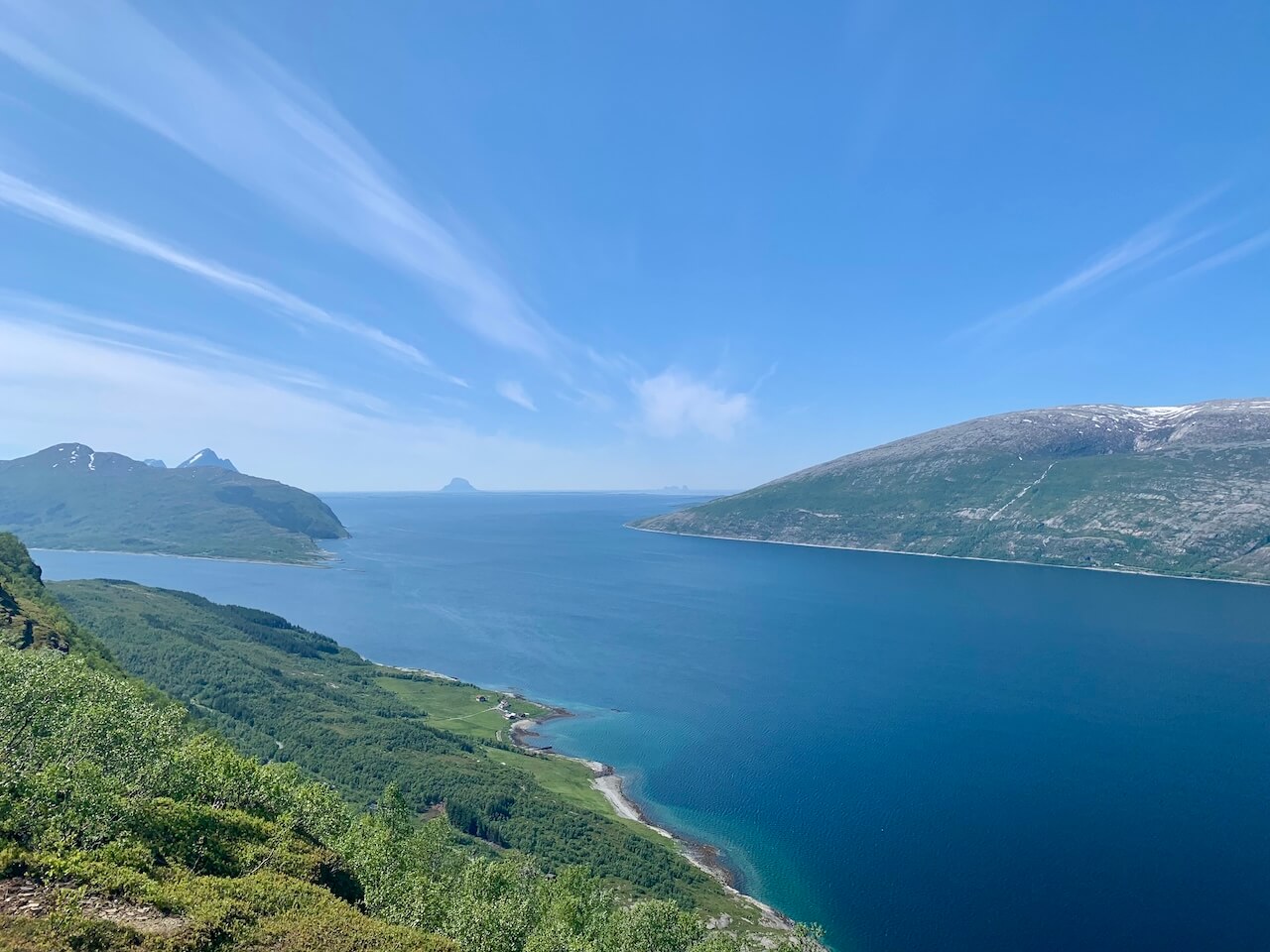
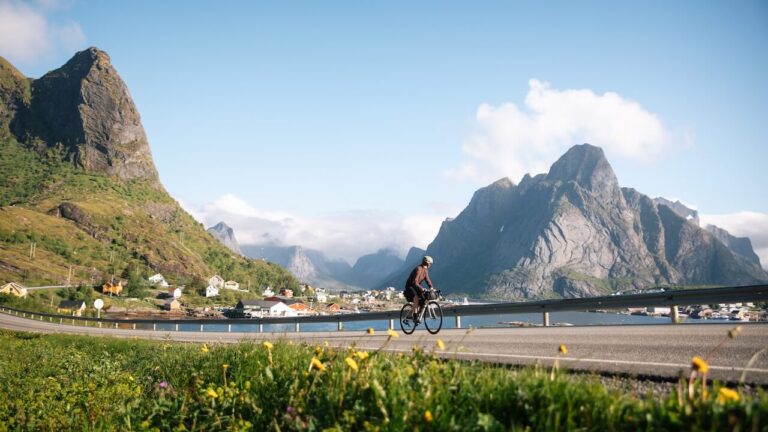
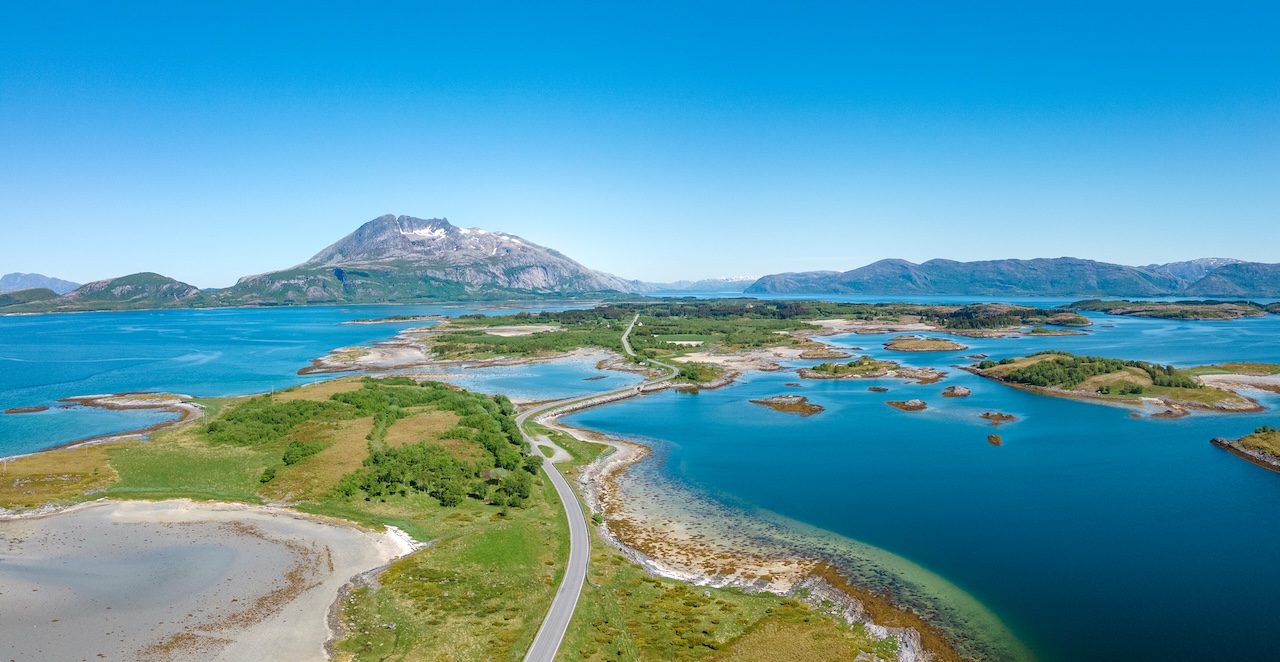
The shoreline is broken into more than 12,000 islands, with sharp, unmistakable mountains rising straight out of the fjords. It’s a landscape that keeps surprising you, hour after hour.
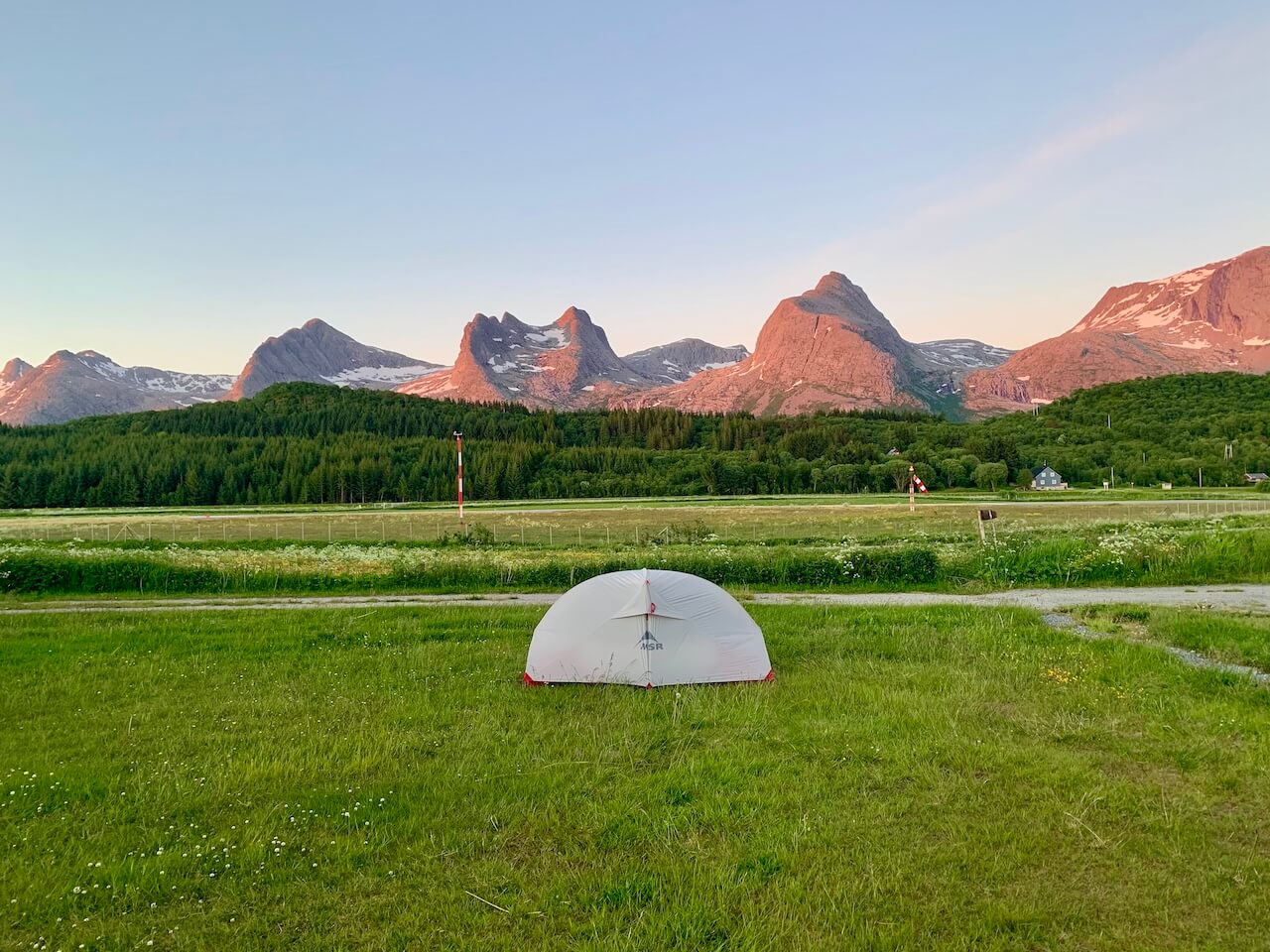
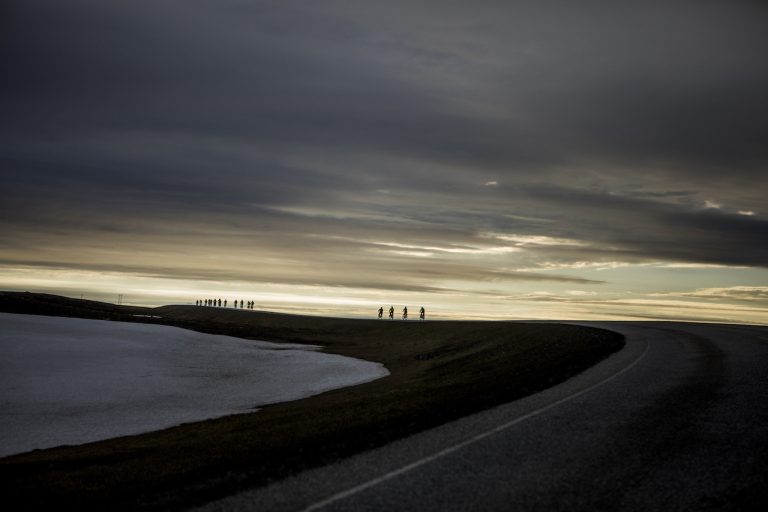
If you like the idea of sleeping on the Arctic Circle while the midnight sun skims the horizon, you’re in the right place. If you want remote islands, quiet roads, and summit hikes, you’ll find that too. When the weather settles, this is about as close to a cycling-holiday paradise as Norway offers.
Some photos on this page are provided with permission from VisitNorway.com
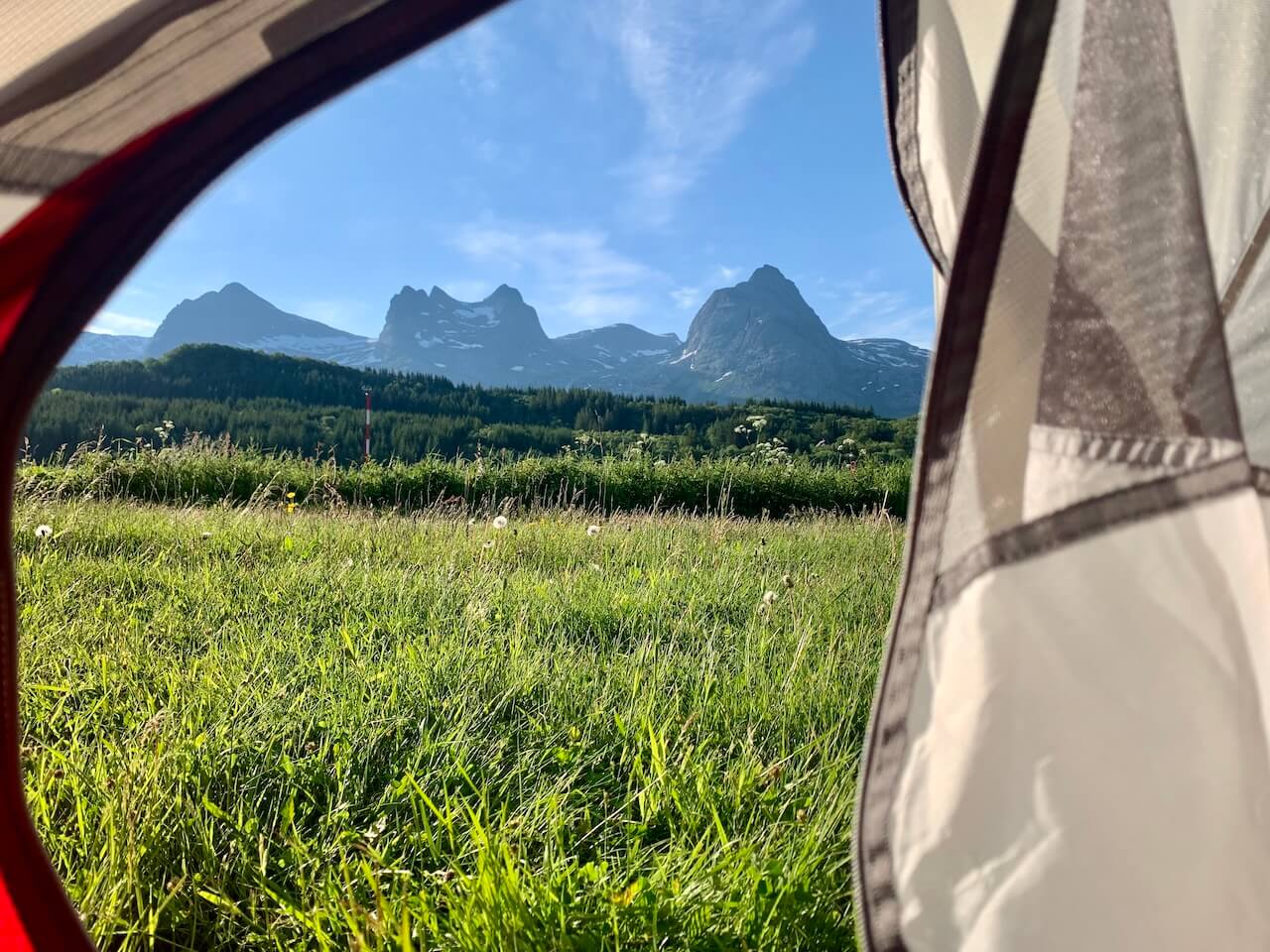
This stretch of Norway is a genuine journey into the unknown. Once you roll out of Trondheim, it doesn’t take long before you feel the pull of the frontier. The towns thin out, the noise disappears, and before you know it you’re pedalling through a landscape where only scattered farms remind you that anyone lives out here at all.
The small communities you pass carry the feel of an older, simpler Norway. You’ll see people fishing lakes and rivers that look unchanged for generations. By the time you reach Brønnøysund, you may even wonder if you’re still in the same country, the character of this region is completely different from both the north and the south. I call it “the forgotten Norway you won’t forget.”
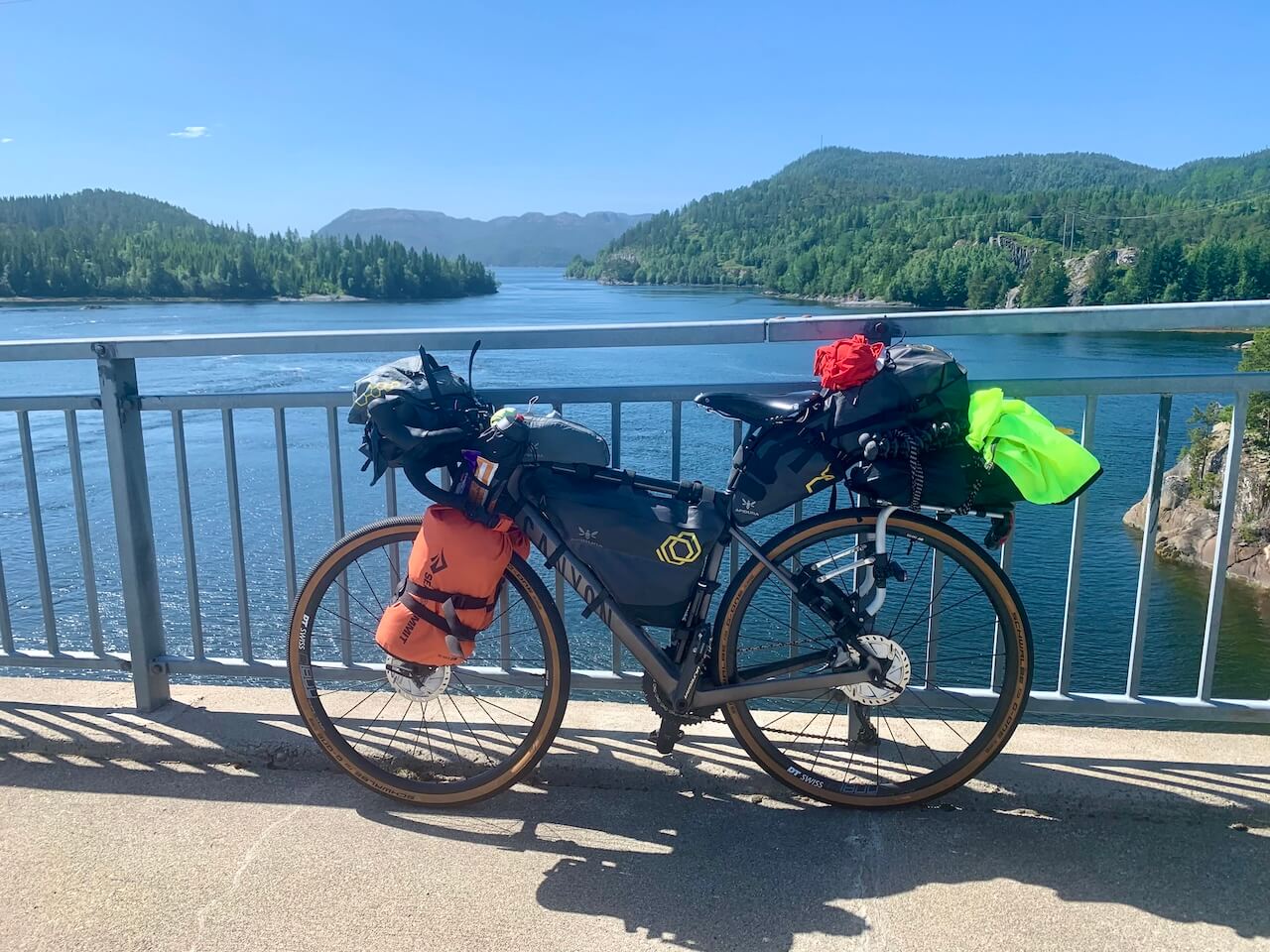
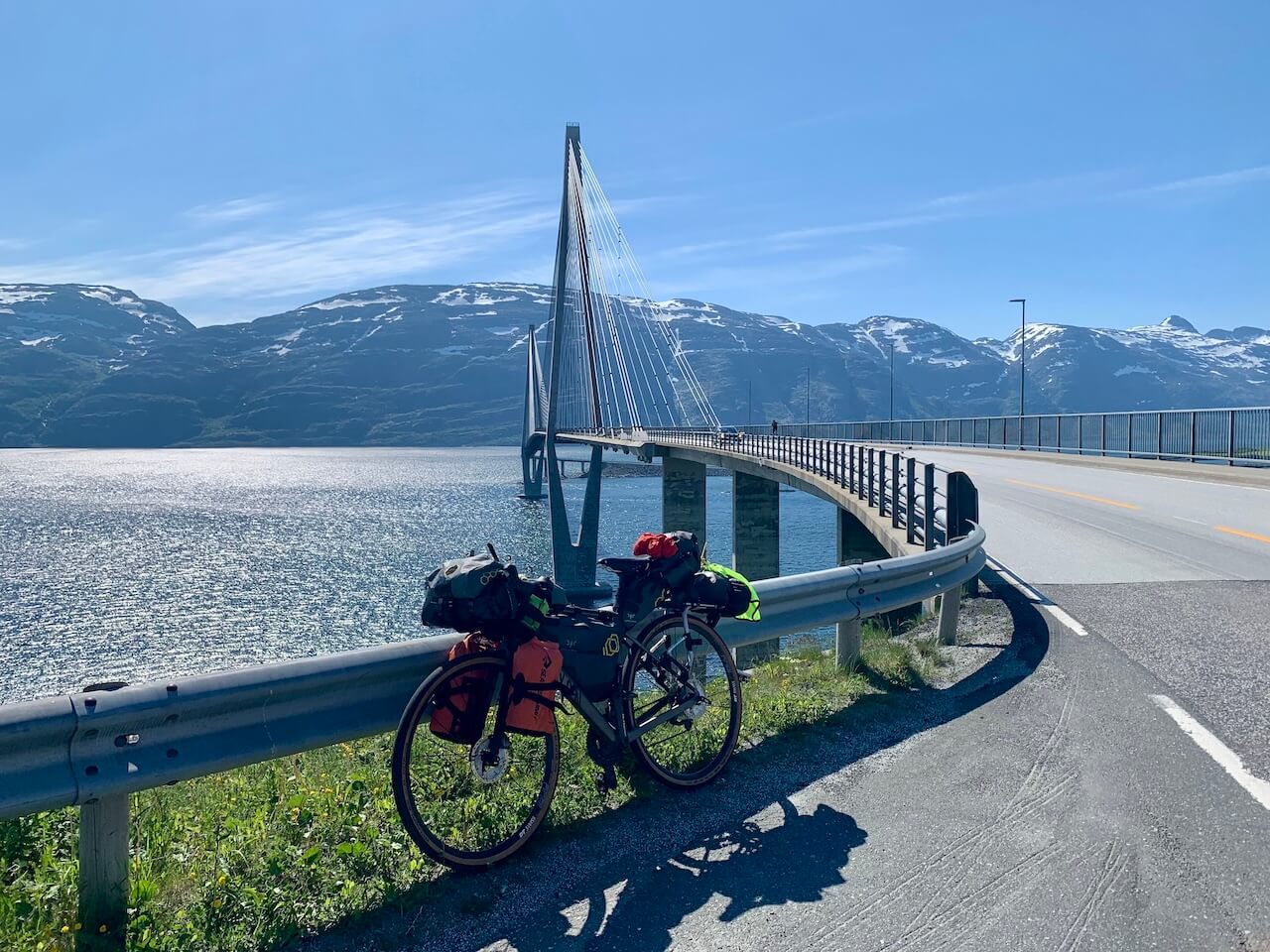
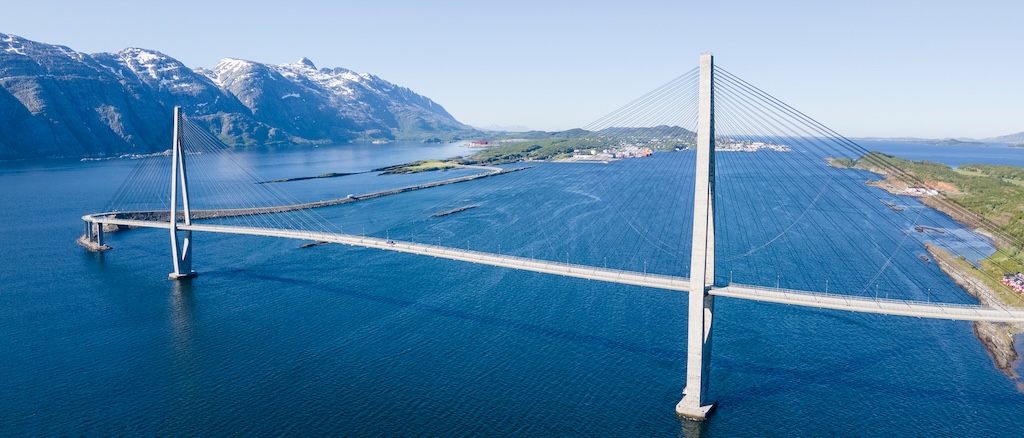
Expect ferries, at least nine of them, all free, but all running on their own timetable. You either plan them properly or accept that a couple of hours on a quiet quayside is part of the deal. There are many tunnels too, but they’re mostly calm and straightforward (although some are long)! Traffic is low, kept in check by the ferry system, and you’ll have long stretches of road entirely to yourself.
Detours are part of the magic. The UNESCO-listed island of Vega is well worth the effort, and if you’ve got the time and the legs, there’s even the chance to ride right up to the edge of a glacier arm. Details are in the maps below.
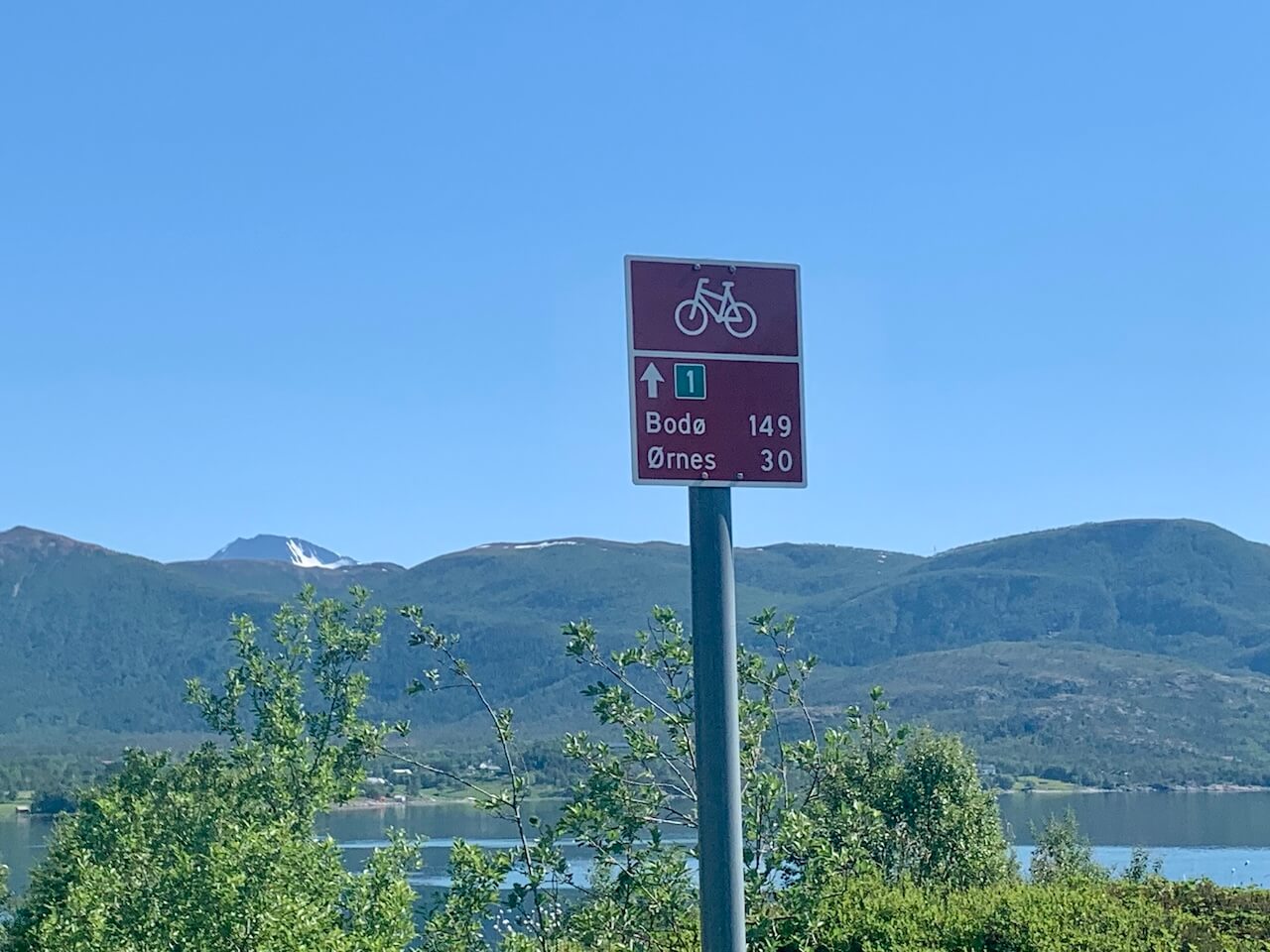
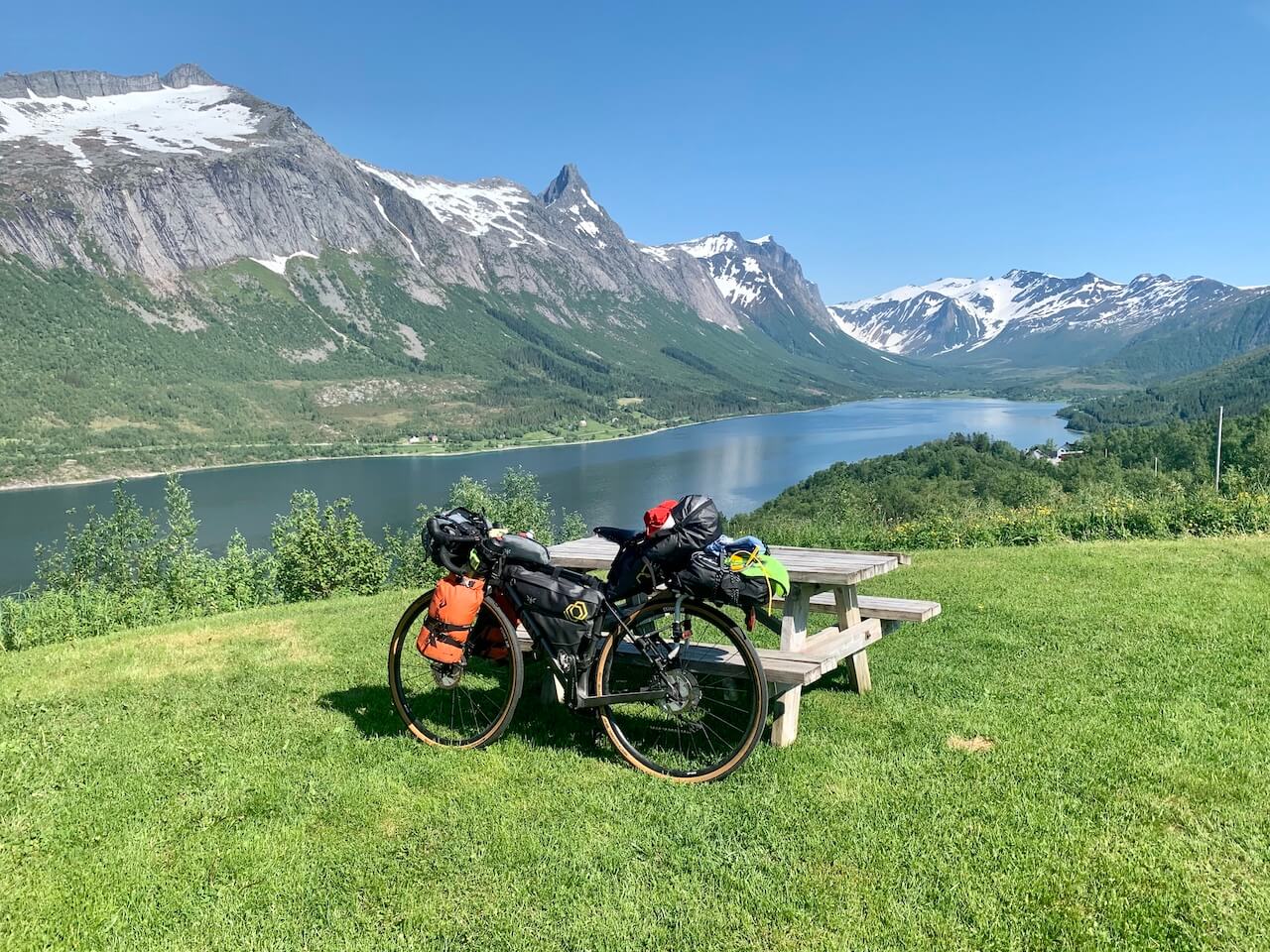
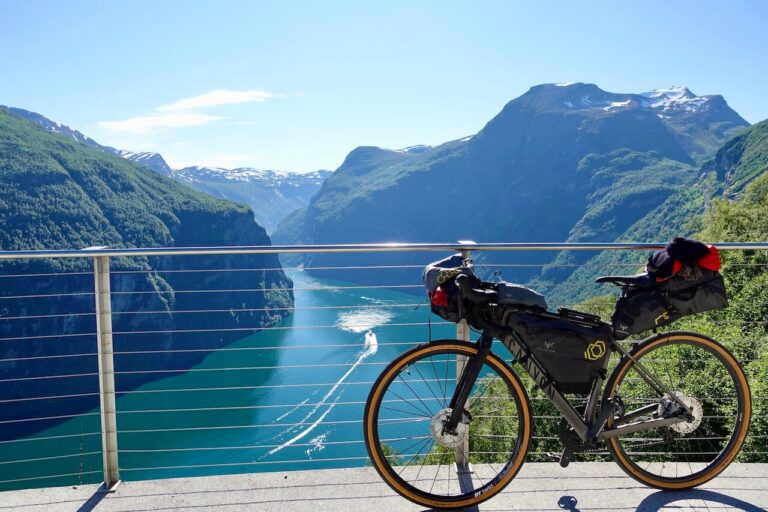
The entire route is well signposted and fully paved, with reliable road conditions throughout. Fjords, glaciers and a broad mix of mountain peaks give you something new to look at every day. And if you camp on the Arctic Circle and watch the sun skim the horizon, you’ll understand why this stretch has become a bucket-list ride for long-distance cyclists.
Difficulty of the Route
This is one of the flattest regions to cycle in Norway. Early on, you’ll meet a few hills, with one climb topping out around 300 m. After that, the terrain settles down and becomes surprisingly gentle. Later in the trip, there’s another demanding 300 m-plus climb around a stunning fjord — tough, but worth every pedal stroke for the view from the top. Be prepared for strong winds on unsettled days, especially along the exposed coastal sections.
Although the route travels through a sparsely populated region, there are enough shops and campsites/hotels to ensure you won't have many logistical problems. The route is reasonably flat for large segments and comfortable for most levels.
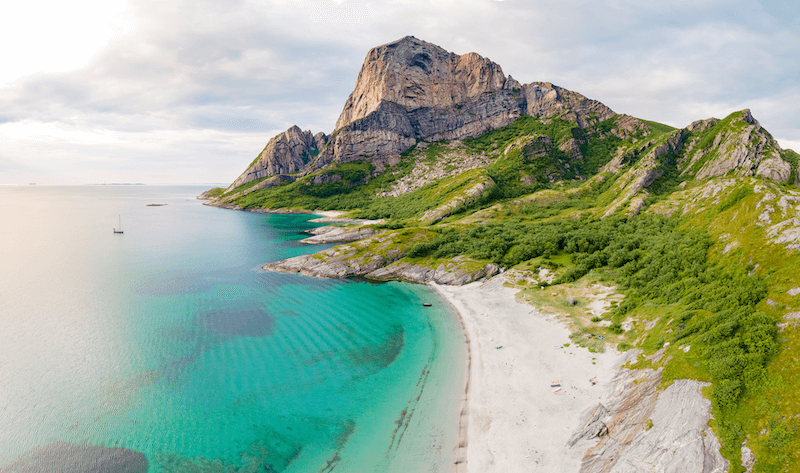
The Vega Archipelago is a world heritage site and one of the wonders of this coastline. People have been fishing in these waters for over 10,000 years, and the main island Vega has some unique rock formations that date back to 2 billion years ago. If the weather is settled it's well worth the detour to cycle. Read more about the island her

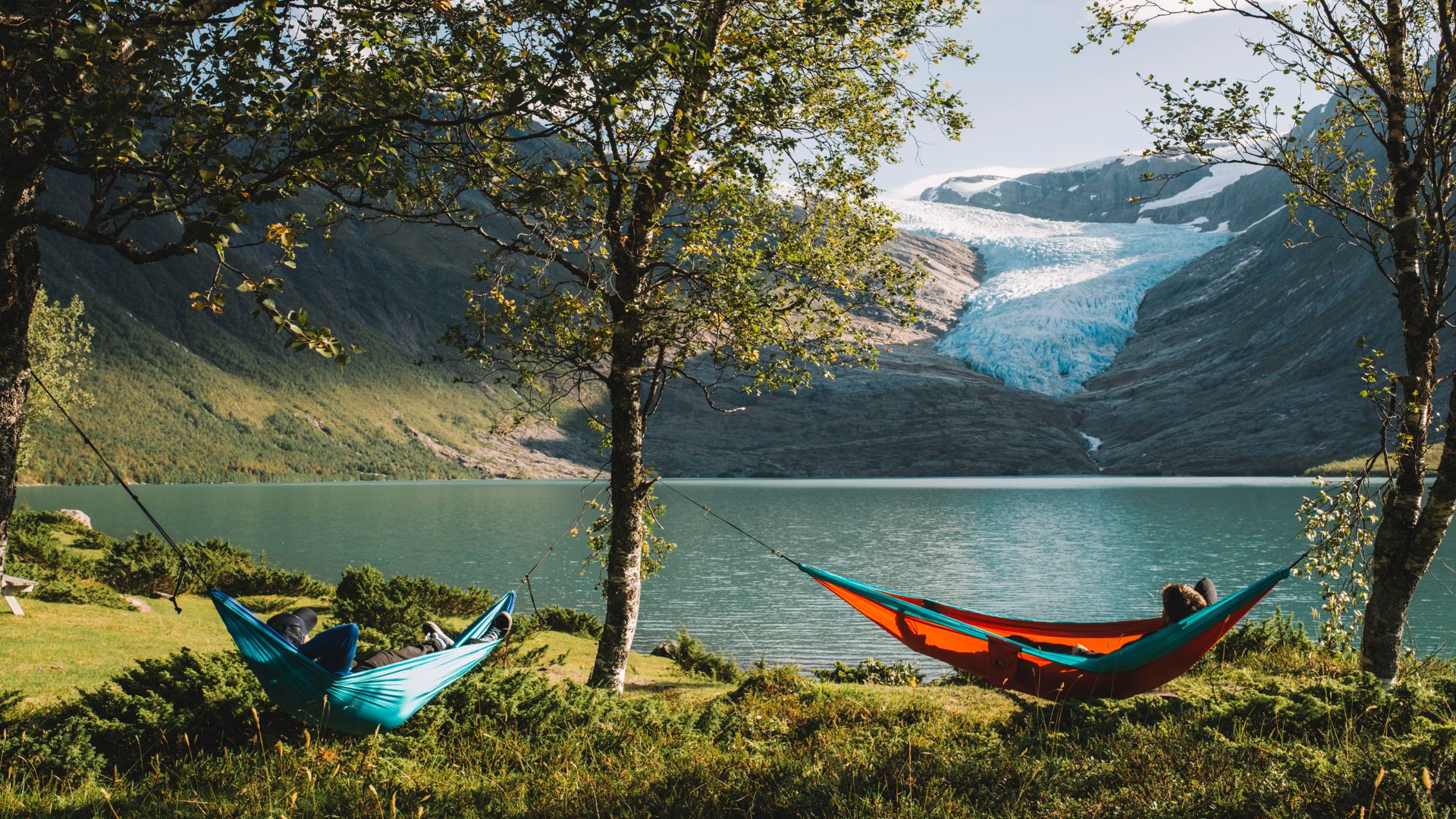
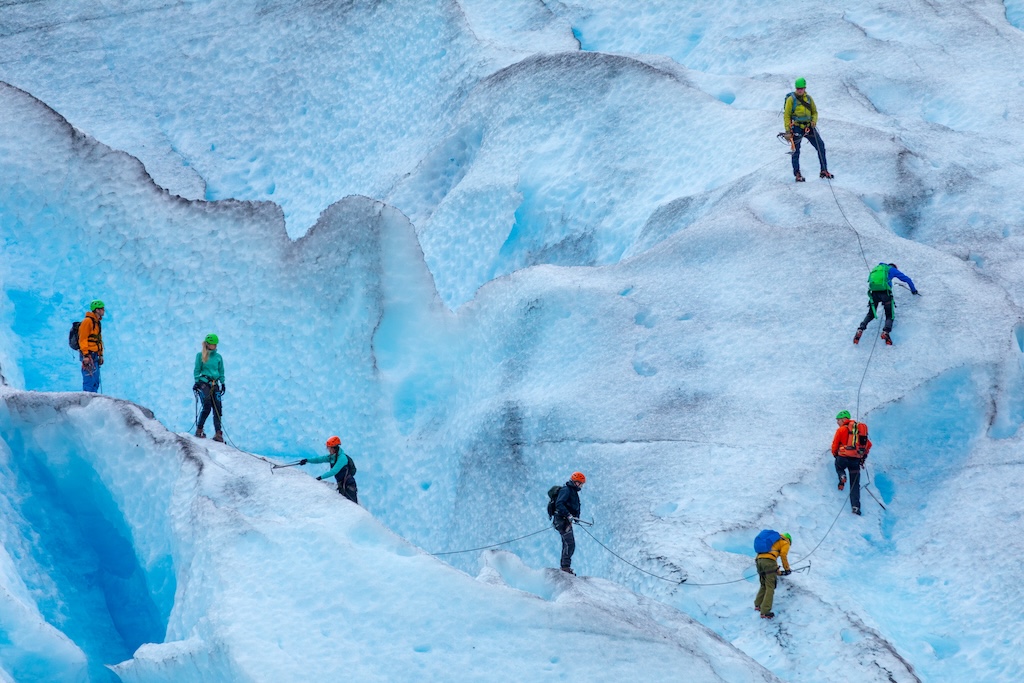
A short detour from the main route will take you to one of the most famous glacier arms in Norway. The Svartisen glacier has daily summer boat services to the glacier and if you like you join a group and walk up the glacier. Book in advance
Vill camping
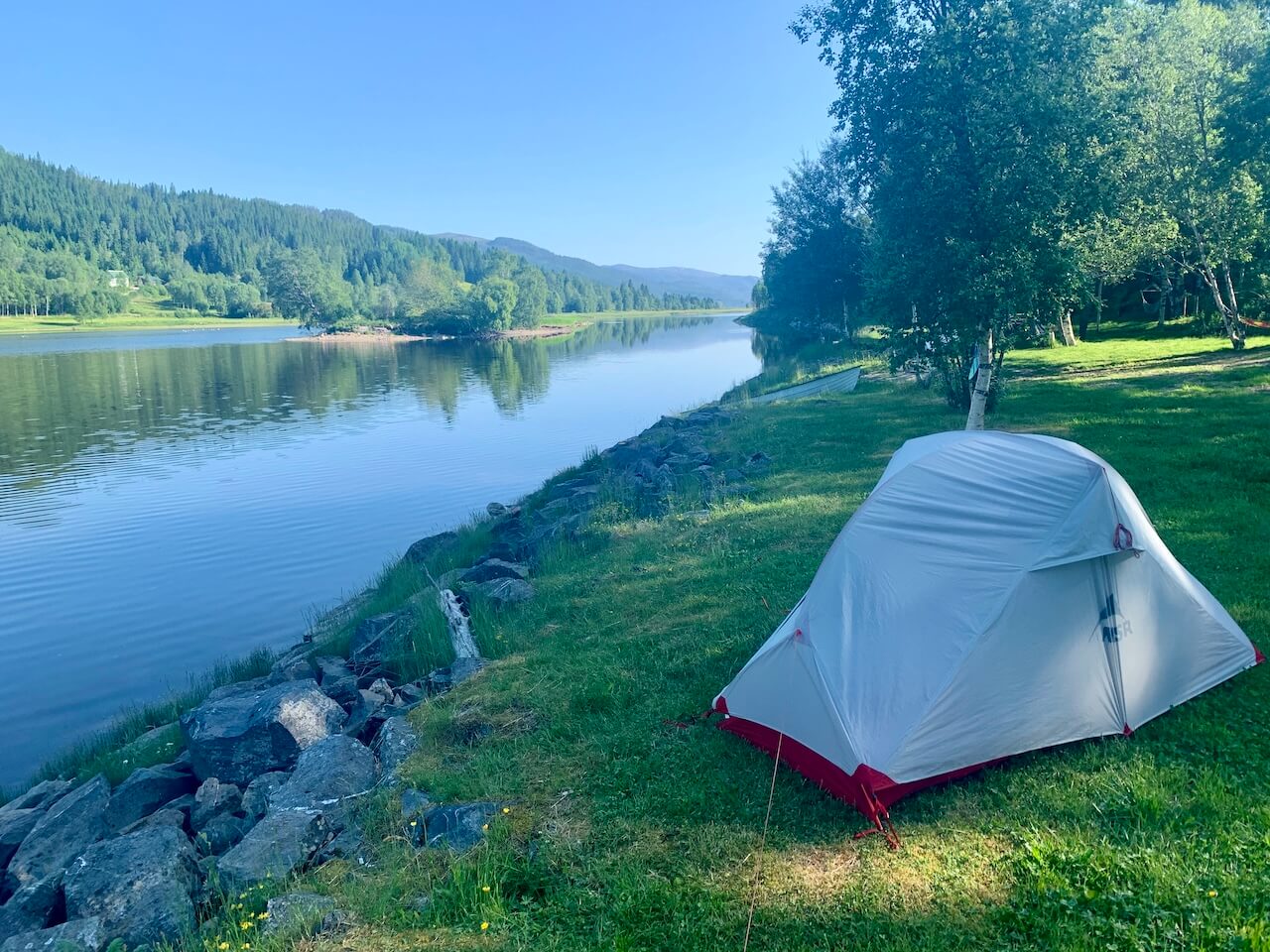
Wild camping here can be hit-and-miss. Much of the main route passes farmland, which means long stretches where pitching a tent isn’t appropriate or feels too exposed. You’ll eventually find a suitable spot, but it can take time and energy at the end of a long day. In some sections, using campsites is simply the smarter choice.
Campsites and Cabins
Campsites are common along the route and usually offer both tent pitches and simple cabins. Some even have dedicated cyclist cabins, which are basic but ideal if the weather turns. I’ve marked many recommended sites on the map.
Hotels and Hostels
You’ll find hotels consistently spaced along the coast, so carrying a tent isn’t essential if you prefer a soft bed. Don’t expect luxury, many places feel a bit dated, but they’re clean, practical and used to hosting cyclists. Staff are generally helpful and understand the rhythm of long-distance travel.
Airbnb
There are more Airbnbs here than you’d expect for such a remote region. They can be great value in small towns and often give you access to a kitchen, which helps with early shop closures and unpredictable weather.
All nine ferries on the main route are free for cyclists. If you take additional ferries to the islands, expect to pay around 100–200 NOK per journey. Island ferry timetables are marked on the route map.
Note: If you don’t want to cycle the 13 km out of Trondheim to catch the first free ferry across the fjord, you can take the passenger-only ferry from Trondheim centre for a fee of around 175 NOK.
Trondheim – Vanvikan (AtB travel planner)
Tunneler
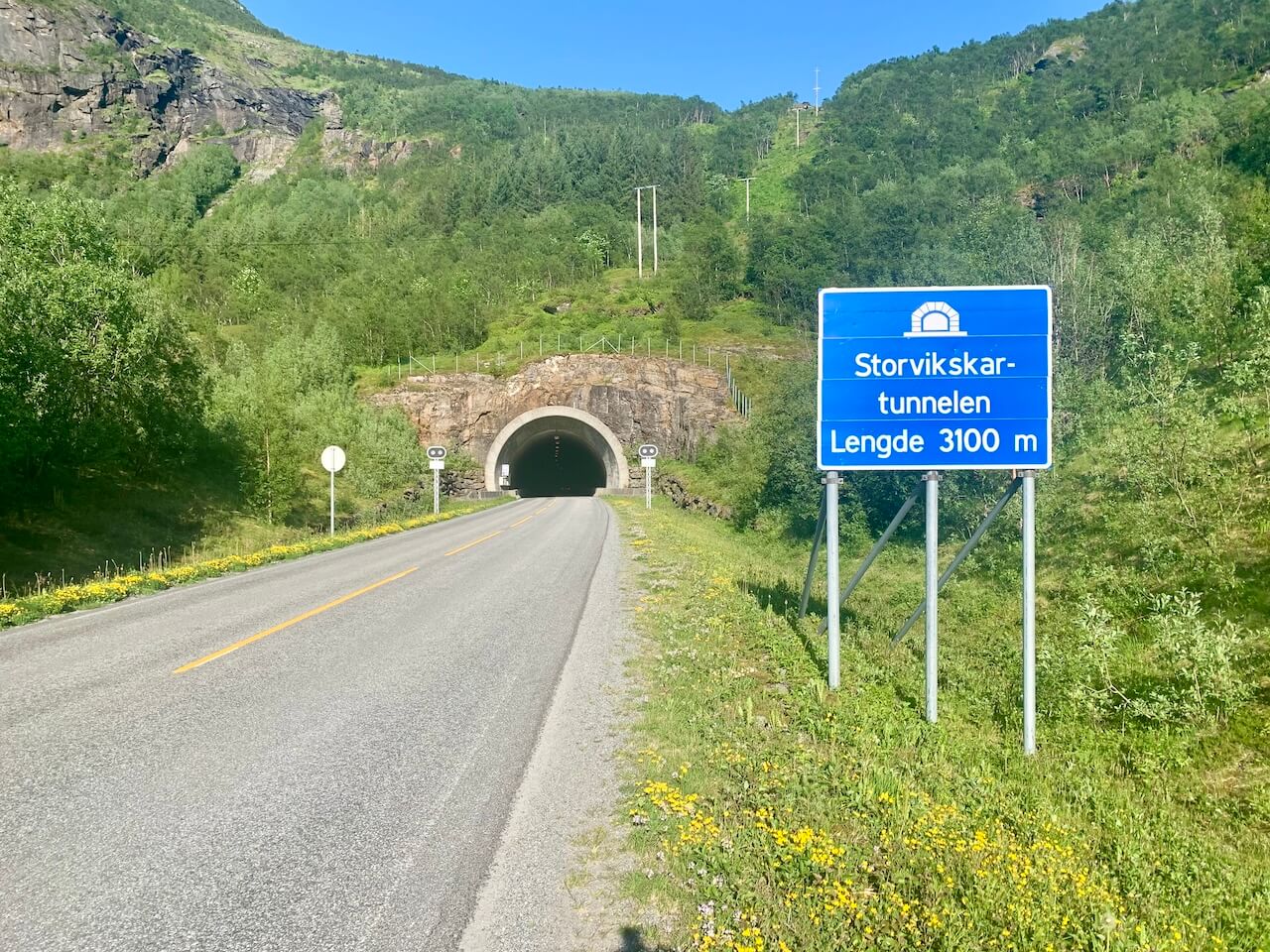
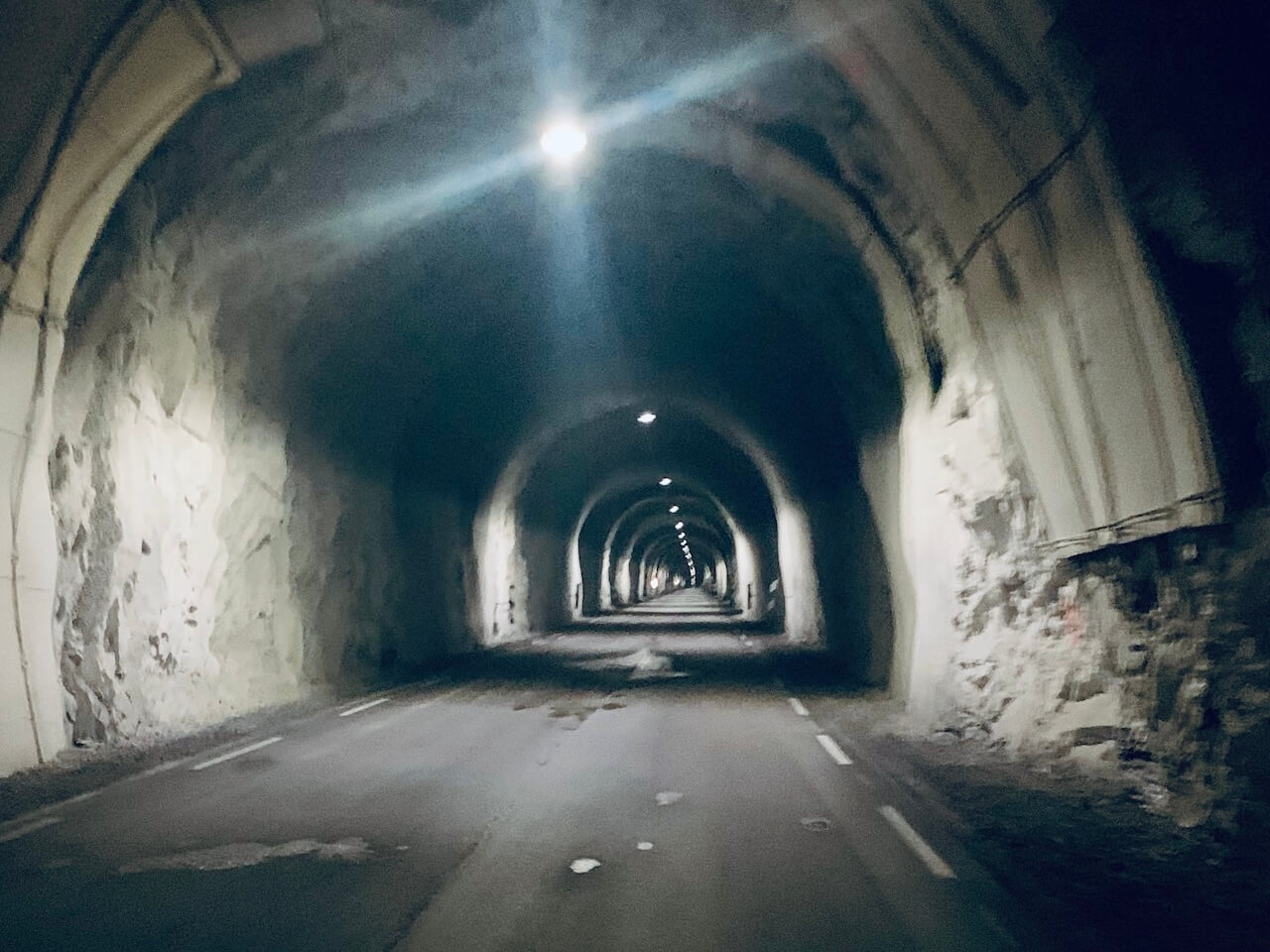
There are 19 tunnels on this route. Most are short, straightforward and sit on very quiet stretches of road. The notable ones are highlighted on the route map. Four tunnels are long enough to feel like a proper event: Sjonatunnelen (2796 m), Silatunnelen (2882 m), Straumdalstunnelen (3200 m) og Storvikskartunnelen (3100 m). You must ride through the first three — there’s no alternative — but they’re surprisingly quiet and almost enjoyable once you settle in. For Storvikskartunnelen, you can take the old mountain road, but in reality, it’s easier and quicker to ride through the tunnel.
The only tunnels I’d call unpleasant are grouped together about 100 km south of Bodø: Skauvolltunnelen (247 m), Vindviktunnelen (980 m) og Sundsfjordtunnelen (772 m). They sit on the RV17, which can have short bursts of traffic depending on ferry arrivals. They’re safe enough, but not exactly enjoyable if you happen to share the tunnel with cars.
Tips: Long tunnels (2–3 km) can be shockingly cold once you’re deep inside. Put on a layer before entering and keep gloves handy; your fingers will thank you.
Travle veier
There are very few genuinely busy sections on this route. The ferry network naturally regulates traffic: every few hours a convoy of 20–30 vehicles will pass, then the road returns to near-silence. The only stretch that consistently feels a bit unpleasant is that same RV17 section roughly 100 km south of Bodø. Apart from that, the riding is calm.
Været
Summer conditions vary hugely. You can have warm, bright days where the sun never really sets, beautiful, but draining. With 24-hour daylight, tents heat up fast, often turning into ovens by 05:00 or 06:00. Sunscreen is essential from morning to evening. When Atlantic low-pressure systems arrive, temperatures can drop sharply, even in peak summer. Expect cold rain, mist and stubborn headwinds on exposed coastal stretches. Parts of the route are wide open to the sea, so wind direction can make or break your day.
Finnmark har også en viss mystikk. Med omtrent samme avstand fra Oslo som Istanbul, er det på sett og vis siste stopp før Nordpolen. Reisens utvilsomme høydepunkt er rett og slett å sykle gjennom Europas siste store villmark. Det vil føles veldig ensomt her oppe, men er ikke det en grunn til å sykle? Sykkelvarmekartene over verden er fulle av velbrukte veier. Her blir du med en liten gruppe syklister på jakt etter noe ekstraordinært. Du passerer villreinflokker og ser kanskje ikke et annet menneske på mange timer - det var vel derfor du kom? Turen avsluttes i byen Kirkenes, som har russiske veiskilt. Dette indikerer at du har nådd grensen til den vestlige verden!
Alle sykkelruter som publiseres på CYCLENORWAY.com er kun ment som en planleggingsressurs som du kan bruke som inspirasjon i forbindelse med dine egne undersøkelser. Alle ruteanvisninger er utarbeidet etter grundige undersøkelser. Vi kan imidlertid aldri garantere at rutene er helt nøyaktige. Sykling i Norge er generelt sett svært trygt. Likevel, hvis du velger å sykle denne ruten, gjør du det på egen risiko.
Se denne nyttige videoen for å se hvordan rutene kan lastes opp på mobilenheten og sykkelcomputeren din.
Det er tøft å sykle langt, og du bør ikke prøve deg på ruter som er over ditt nivå.
Hvis du oppdager unøyaktigheter på denne siden, vennligst gi oss beskjed slik at vi kan rette dem opp.
ikke-påtrengende, og tilbyr informative nyheter, blogginnlegg, videoer og mer.