



Getting around
Introduction

Norway’s public transport system is generally what you would expect from a modern and wealthy country. In the larger cities, transport is reliable, clean, and well organised, with day passes often offering good value for visitors. Ferries operate frequently across fjords, islands, and coastal communities, while the famous Hurtigruten coastal ships travel the length of the Norwegian coastline, connecting remote settlements and major towns with countless stops along the way.
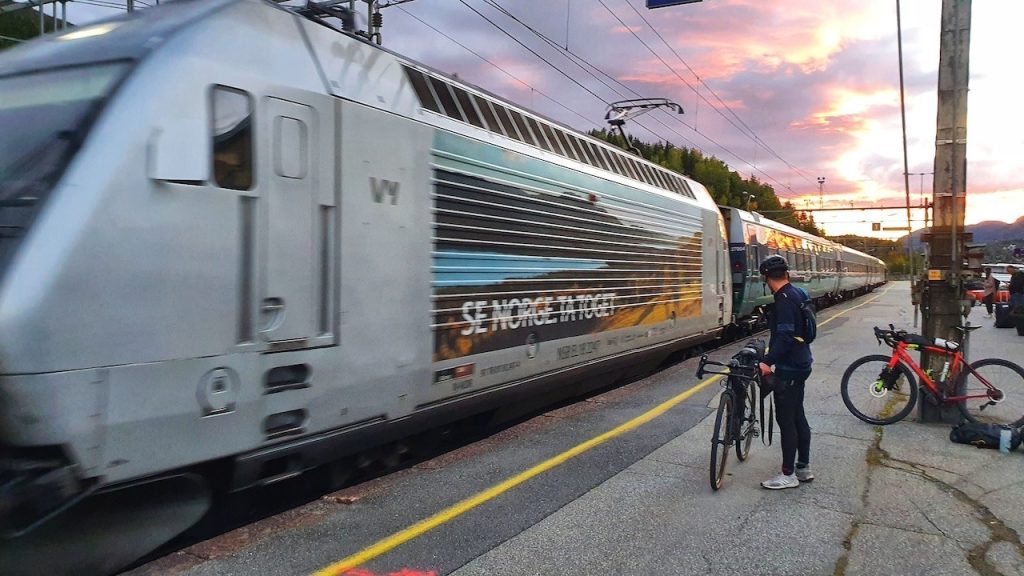
Norway’s trains are not particularly fast by European standards, but what they lack in speed they often make up for in scenery. Several railway lines pass through spectacular mountain landscapes and provide cyclists with convenient access to many popular route starting points throughout the country.
Domestic flights also play an important role in Norway due to the country’s size and geography. They allow cyclists to quickly reach remote northern regions, Arctic areas, and isolated coastal communities where some of Europe’s quietest and most dramatic roads can be found.
In addition, the Norwegian government heavily subsidises regional bus services connecting smaller towns and villages. For cycle tourists, this is often an overlooked advantage. Even on relatively remote roads, it is surprisingly common to find a bus stop nearby. If you experience a serious mechanical issue, injury, or rapidly deteriorating weather, public transport can often provide an important backup option when plans suddenly change.
Débloquez le contenu intégral
Devenez membre pour avoir un accès complet à :
- Détails des sections de l'étape et options de déviation
- Fichiers GPX et cartes interactives des POI
- Options de transport et logistique
- Recommandations d'hébergement
- Conseils de sécurité, points forts et plus encore
Pas prêt à rejoindre pour l'instant ?
Inscrivez-vous à notre lettre d'information et bénéficiez de ressources de planification gratuites :
-
Liste des bagages

PDF -
Carte de gravier
Aperçu -
Code cyclable
en Norvège


-
Itinéraires sélectionnés à la main
Testé par des experts locaux
-
Fichiers GPX et cartes
Pour une navigation facile
-

Informations fiables
Mis à jour régulièrement
-

Soutenir le voyage durable
Voyagez de manière responsable en Norvège


Les entreprises formidables derrière nous